
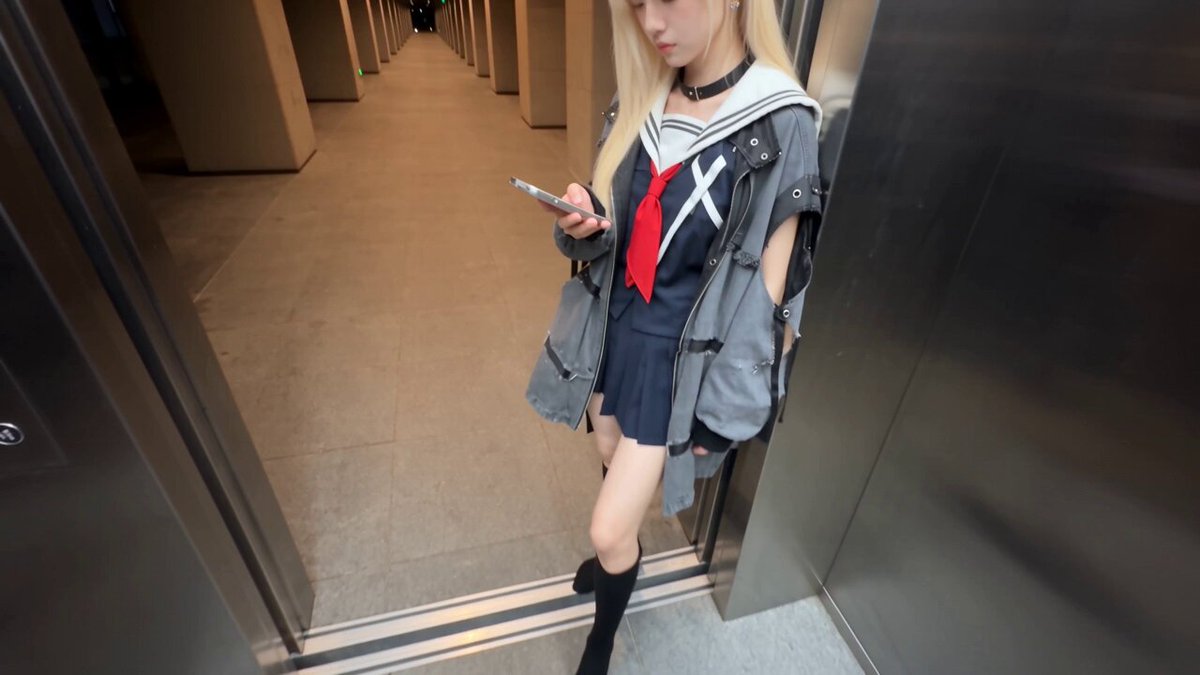

Animation has always felt like a walled garden. You needed specialized software, drawing skill, patience for frame-by-frame work, and enough budget to survive a long production. Generative AI has quietly torn down a large section of that wall. Today, a single well-made illustration can become a coherent, moving cartoon clip, and a sequence of such clips can come together as a real animated short. The technique is called image-to-video, and it sits at the center of a much bigger shift in how motion content gets made.
This guide walks a practical route from the first idea to a finished animated short built from still images. We look at how image-to-video models actually work, why model diversity gives you stylistic control, how the recurring problems of character drift and complex scenes get solved, and how you can manage computing resources without wasting your budget. The tone is practical because the goal is a working film, not a demo reel of happy accidents.
What Image to Video Really Demands of a Model
Turning a static visual concept into a coherent, dynamic short used to be a job of long hours, expensive software, and careful manual work. The model must do far more than shake a picture around. It has to understand the objects, faces, light, and material in the source, then generate the missing temporal information: how things move, how light spills and fades, how motion blur behaves, and how the scene evolves second by second.
This temporal interpolation is the hard part. The model is not animating frames that exist; it is inventing believable in-between states from a single image. That is why a gorgeous source image can still yield a disappointing clip. If the neural network lacks a strong enough scene understanding, it guesses, and those guesses turn into warping, melting geometry, or a character who suddenly has a different face.
So the foundation skill is not writing more words into the prompt. It is structuring your source and your prompt so the model has the least ambiguity to work against. A clean, high-contrast image with a single clear subject and a clear action word beats a busy illustration with a vague instruction every single time.
Why Model Diversity Is Your Style Controller
One of the least appreciated facts about modern video generation is that stylistic control often comes not from clever prompting but from choosing your model. Different models are trained on different distributions of imagery, and that training shapes their defaults. Some lean realistic, some cinematic, some painterly, some deliberately cartoonish. If your starting image is a watercolor and the model defaults to photorealism, you will fight an uphill prompt battle no matter what you type.
The concept of style drift is central. You feed the model a beautiful watercolor, but it begins to slide toward a raw photographic look because photorealism dominated its training data. The practical counter is to pick a model whose distribution already sits near your aesthetic. A model trained heavily on stylized and animated content will hold a painterly or cartoon look far more reliably than a generalist tuned for realism.
Your strategy should therefore be to maintain a small, curated set of specialist models. Keep one strong at character consistency, one strong at stylized looks, and one fast workhorse for experimentation. Before each generation, ask which of these best matches the scene, rather than defaulting to anything. Model choice is the cheapest and most reliable style lever you have.
Solving the Identity Problem
Character consistency is the make-or-break of any animated short longer than a single loop. If your hero looks different from shot to shot, the audience registers it as broken filmmaking, not as artistic license. The classic culprits are identity drift and facial drift across time, both symptoms of the model slowly forgetting who the character is.
The most effective fix is a reference-first approach. Build a small character pack before you start generating: a full-body sheet, a clear close-up of the face, and a side angle. Feed the relevant reference image into each shot. Because image-to-video treats the reference as the source of truth, this anchors identity far better than a text description ever could.
When the same character crosses between two models, the risk rises because each model interprets the reference slightly differently. In that case, lock the palette and style language across all prompts, and heavily favor the model that proved stable in earlier shots for the character's close-ups. Move the character's identity work to your most reliable model and reserve experimental models for backgrounds and environment shots where drift is less destructive.
Managing Complex Scenes and Crowds
A single character in a simple room is manageable. A crowd, a busy street, or several interacting subjects is where even good models strain. Crowds collapse into duplicated, warped bodies; complex backgrounds morph their geometry; fine props change shape. Learn to budget your complexity.
The rule that saves the most projects: split hard scenes into layers. Generate the background environment separately and keep it stable, then add the character as the clear foreground subject. If you need two characters interacting, generate them separately and combine them only after each is proven stable on its own. Compose the world before you try to populate it.
Where complexity is unavoidable, dial down ambition per clip. Shorten the shot length, reduce the number of moving parts, and lean on purposeful camera moves instead of busy action. A stable, elegant shot reads as far more professional than an ambitious one that falls apart. In animation, reliability beats sprawl.
Controlling Motion and Micro-Animation
Detail is what makes an animated short feel hand-crafted rather than generated. After the main structure is stable, go after the micro-animations: the flutter of hair, the sway of fabric, the flicker of light on a surface. These details add life that a plain pan or zoom never delivers.
Write movement with specificity. Instead of "character is animated," say "hair lifts gently in the wind, fabric ripples, the character glances left and exhales." Physical accuracy matters. Feet must connect to the ground, falling objects must obey gravity, and joints should bend like real bodies. When you review, slow the clip down and check the physics of hands, feet, and cloth, because these are exactly the places models cheat.
Camera work is your other detail lever. A slow push-in, a lateral dolly, or a subtle orbit changes the emotional read of a scene. Match camera to mood: intimacy and threat both want a slow approach, discovery wants a lateral move, dynamism wants orbit. Keep camera language simple and consistent so the cut between shots feels like one coherent production.
Working Within Compute Limits
Longer output, more scenes, and premium models all cost time and compute. Without a plan, an animated short becomes an expensive, slow slog. The saving discipline is to separate discovery from refinement.
Run all your early passes on a fast model. Validate movement, composition, and character survival cheaply. Only promote a shot to a premium model once the fast version has proven the idea. This staged pipeline means your expensive compute is spent on winners, not on exploration.
Batch your work by scenes and model types, and launch related shots together rather than one at a time, so you are not blocked waiting on a single slow queue item. Keep premium renders for the shots the audience will study most, usually close-ups and hero frames, and use the fast model for transitions and wide shots that read quickly.
Assembling the Clips into a Short
A collection of good clips is not yet a film. The assembly phase is where a short gains a beginning, a middle, and a point. Start with a simple plan: establish the scene, introduce the action, land the payoff. That is enough structure to hold three to five clips together.
Keep continuity when you assemble. Match lighting and palette shot to shot so the cut does not yank the viewer between unrelated moods. Keep camera weights similar so the rhythm does not feel random. If a motion does not continue correctly across a cut, fix the broader language in both sides before you settle.
Small finishing touches elevate the whole thing. Add a consistent grade or color treatment, lock audio so it supports the pacing, and end on a frame that makes a viewer want to replay it. Replay value is the quiet signal of a successful short.
Frequently Asked Questions
Do image-to-video models reproduce my image faithfully?
They aim to, but they are not photocopiers. Faces, small props, and fine textures can drift. Expect to validate and regenerate, and reduce ambiguity with strong references and specific prompts.
Which model should I use for a stylized cartoon look?
Prefer a specialist model trained on stylized or animated content. A general realism-tuned model will pull your artwork toward photorealism no matter how you prompt it.
Why do my crowds turn into warped bodies?
Crowds and complex scenes overload the model. Generate the environment and the characters separately, keep subject counts low per clip, and add population only once stability is proven.
How can I make my character consistent across multiple shots?
Build a small character pack of reference images and feed the same references into every shot. When you must switch models, keep the character's close-ups on your most stable model.
Is image-to-video animation cheaper than traditional 2D or 3D animation?
For a solo creator, almost always. Traditional animation demands software, drawing skill, and time per frame. Image-to-video replaces much of that with model compute and iterative prompting, letting one person test many ideas cheaply before committing effort to the winners.
Designing for Motion Before You Generate
A strong still image is only half the battle; the other half is planning what the motion will be before the model ever sees the frame. The most common source of disappointment is expecting the model to invent brilliant action on its own. In practice, the movement you get is strongly shaped by the physical setup already encoded in the source image.
Think about the story before you animate. Where is the character going, how fast, and why? If the composition already suggests a direction, such as the character facing left with space ahead of them, the model can more easily animate a leftward move. If the character is centered and static, the model has little to work with and will invent timid or arbitrary motion. Arrange your composition to signal the intended action.
Plan a clear start and end state for each clip. A movement that ends back where it began makes a satisfying loop; a movement that ends somewhere new sets up a cut to the next shot. Decide which you want before generating. That single decision dramatically changes how your clip fits into a sequence.
Use these motion plans as the scaffolding for your prompts. Write the intended action, the camera move, and the emotional register up front. The model reads your prompt against the composition of the source image, so the two should agree. When composition and prompt pull in the same direction, the output is characterful; when they fight, the output is mushy.
When to Reuse Versus Regenerate
Not every failed clip deserves regeneration. One of the larger time-saving skills is knowing when a generation can be coaxed into the right shape and when it should simply be discarded.
Establish a cheap save threshold early. If the movement is correct but the camera is slightly off, or the motion is right but a color drifted, these are promising candidates that the model can often fix in one or two targeted retries. Change a single instruction and resubmit. If, by contrast, the character identity broke, the physics look wrong, or the whole scene reads as generic, those are signs the fundamentals failed. Chase them no further; regenerate from a fresh seed.
Order your retries from cheap to expensive. Fast passes cost little and let you iterate the movement and framing. Only escalate to a premium pass once the idea genuinely works. A disciplined creator reuses a winning prompt with a new reference rather than re-spinning a broken one, because the reference is usually the source of the problem, not the prompt.
Keep a note about which seeds and prompt patterns produced stable winners. That record is an asset. It allows you to reuse reliable templates across projects and subjects, which is how a practitioner compresses weeks of iteration into a repeatable weeks-to-days pipeline.
A Practical Takedown
Animation shorts from still images will not replace the craft of a studio overnight, and they do not have to. What they give a solo creator is the power to move from an idea to a viewable story in days instead of months, with consistent characters and a controlled style. The discipline of modeling choice, reference-first character handling, careful scene budgeting, and staged compute is what separates a watchable short from a stack of rejected loops. Build the habit of planning the character pack before you generate, testing fast before you go premium, and verifying motion and physics at every stage. Do that and the wall around animation stops being something you break through and starts being something you simply walk around.
