

Generative video has reached a critical turning point. Text-to-video models are moving beyond short, unpredictable clips toward creating cinematographically coherent and physically plausible scenes. A year or two ago, producing a clean ten-second clip was considered an achievement; today, professional tools aim for longer, consistent, and controllable output.
This article offers a practical look at three of the most talked-about names in AI video — Sora, Kling, and PixVerse — and how they fit into a real creator's workflow. It is not a marketing roundup. It is an attempt to give you clear criteria for comparing models, choosing the right tool for a scene, and integrating them into a production pipeline that respects realism, motion, and narrative.
Why the AI video landscape changed so fast
The landscape of generative video is defined by an unprecedented speed of innovation. Models now understand world rules better, tracking objects longer and respecting physics more convincingly. This shifts what creators can promise a client: instead of a novelty clip, they can deliver plates for a short film, a commercial, or a branded sequence.
The move from prototype to industrial standard is the defining change. Early text-to-video produced vaguely animated imagery; the new generation produces scenes you can cut, color, and finish. That maturity is why so many professionals now regard AI as a production tool rather than a toy.
Sora: a new frontier in understanding scenes and storytelling
Sora, from OpenAI, has become a benchmark for realism and long-horizon structure in generative video.
Strengths
The most striking feature is the model's ability to hold a scene together over time. Camera movement feels more deliberate, and the model appears to reason about what should remain stable while the action unfolds. For projects that need a coherent long take or a narrative with several consecutive beats, Sora shines. It is particularly good at producing footage that reads as cinematic rather than synthetic.
Considerations
As with any flagship model, cost and access are real factors for heavy use. Sora also excels at certain visual languages better than others, so it is worth testing against your specific subject matter before committing entire campaigns to it.
Kling: a strong competitor with a focus on speed and precision
Kling, developed in Asia, has challenged western models on motion quality and prompt adherence.
Strengths
Kling tends to handle dynamic motion well, which makes it a strong choice for action, dance, and fast-cut sequences. Its speed and attention to physical consistency mean you can iterate quickly, testing variations with less delay. For creators who produce a high volume of clips, Kling's responsiveness is a genuine advantage.
Considerations
As with every model, Kling has its own aesthetic leanings. Test it on fabric motion, faces, or whatever is central to your work to see whether its output matches your taste. Its strengths in motion sometimes come at the expense of a more "filmic" color.
PixVerse: control and creative flexibility
PixVerse has carved a niche around giving creators more direct control over the generation.
Strengths
The platform emphasizes fine-grained control, letting you work from a reference image, control the camera, and direct the composition more explicitly. This is valuable for creators who want reproducibility, not just a lucky result. PixVerse is often chosen for commercial work where the client needs a specific look delivered reliably.
Considerations
Ideal when you need to keep exact control over an asset, but as with any model, its output quality depends heavily on prompt quality and reference images. Expect to iterate rather than rely on a single pass.
Comparing the three: a practical rubric
Do not choose a model by reputation; choose it by criteria that matter for your work.
| Criterion | Sora | Kling | PixVerse |
|---|---|---|---|
| Realism and cinematic feel | Excellent | Strong | Strong |
| Long-horizon narrative coherence | Excellent | Good | Good |
| Dynamic motion handling | Good | Excellent | Strong |
| Creative control and reproducibility | Moderate | Good | Excellent |
| Iteration speed | Moderate | Fast | Good |
Use this as a starting point and test with your own prompts. The right model for a luxury commercial may differ from the right one for a fast-paced social clip.
Beyond the big three: an open ecosystem
The video AI field is far from settled. New models and updates arrive constantly, integrating realism, style transfer, and multimodal inputs. A resilient workflow does not lock you into one provider; it treats the model as a swappable resource.
Multimodality and video-to-video
One of the most useful capabilities in a modern pipeline is video-to-video: converting existing footage rather than always generating from scratch. This lets you restyle raw clips, change the background, or unify the color across multiple sources. It is especially valuable for keeping brand consistency across a library of footage.
Closing the consistency gap
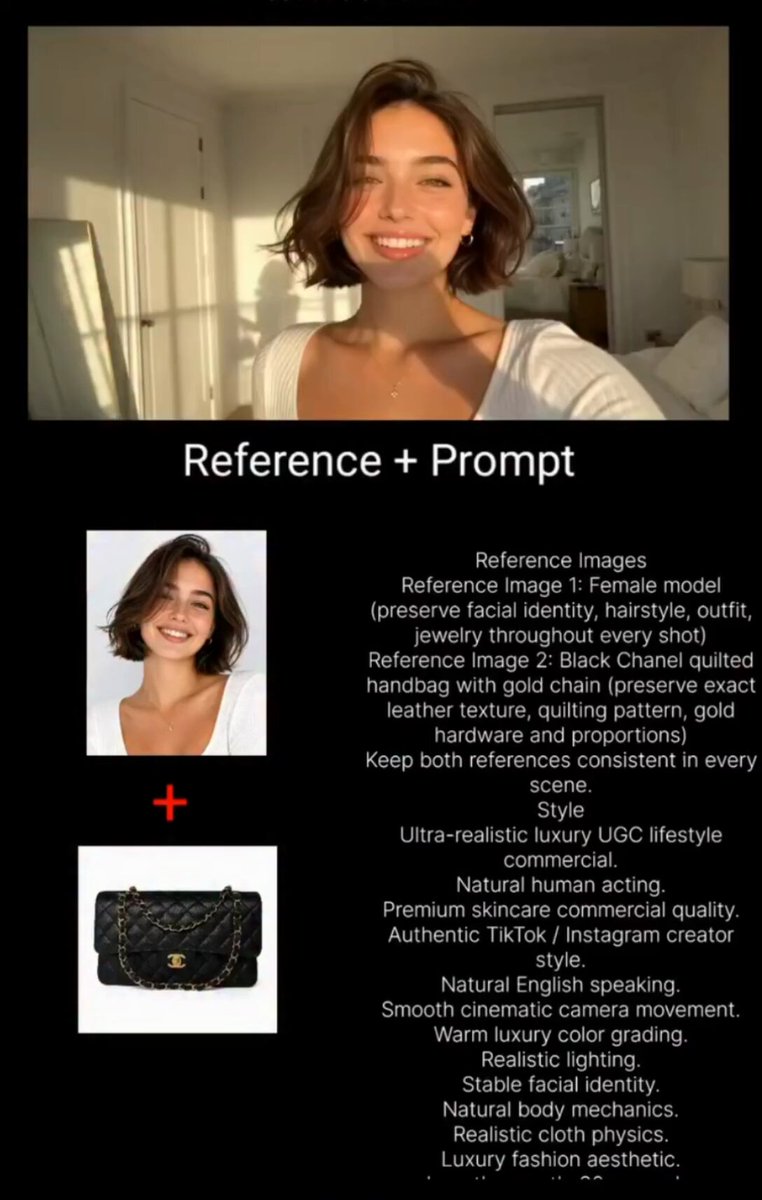
Maintaining the same character or object across multiple videos used to be nearly impossible. Reference-based generation closes that gap: you feed a reference image and the model keeps the subject recognizable across scenes. Combined with a modular pipeline, this makes series and multi-scene productions feasible.
Integrating leading models into a real workflow
Beware of platform lock-in. A smart approach builds your pipeline around features that are transportable: a library of reference images, a prompt template system, and a documented set of per-scene model choices.
Build a transportable asset library
Keep your character references, style sheets, and palette guides separate from any single tool. That way, when a better model arrives or a current one changes, you can adapt without starting from zero. Your creative decisions live in your library; the model is just the executor.
Manage compute deliberately
High-quality generation is expensive. Reserve the most powerful model for the shots that matter most: hero shots, continuity-critical scenes, and final renders. Use faster or cheaper models for exploring ideas and blocking out sequences. Understanding compute and capacity lets you allocate budget where it produces visible returns.
Establish an iteration discipline
Generate, review, select, refine. Treat each scene like a first draft. Test a small set of variations, compare them against your reference and brief, and only then invest in the final version. This discipline is what separates consistent producers from those producing a pile of near-misses.
The director layer: beyond single prompts
The most interesting development is the move from prompting to direction. Instead of writing one description and hoping for the best, you describe an entire sequence — shot by shot — and a director-style layer composes the footage, maintaining the rhythm, blocking, and character continuity across the whole scene.
This is where AI video starts to resemble actual filmmaking. You make the creative decisions: the story, the style, the pacing. The software handles the mechanical choreography of turning a description into coherent moving images. For brands producing series content and director-led campaigns, this layer is much more powerful than a one-off prompt.
A practical example: building a short sequence across models
To see how these ideas come together, walk through a short sequence that uses Sora, Kling, and PixVerse for different purposes.
The brief is a ten-second brand spot: an opening product shot, a fast insert of motion, and a closing scene with the product in a lifestyle setting. Open with Sora for the hero shot, because its strong world understanding gives the product a realistic, polished first impression. Use Kling for the fast motion insert, where its speed and motion handling shine. Finish with PixVerse for the controlled final scene, leaning on its fine-grained camera and composition control.
Midway, keep the product consistent by feeding the same reference image to each model, so the product does not drift between scenes. Then assemble the three clips in an editor, color-correct them to match, and add a simple audio bed. The result showcases how choosing the right model for each job produces a stronger whole than forcing one model to do everything.
The lesson: orchestration wins
This example is not hypothetical. It reflects how most professional teams actually work: they route each scene to the model best suited for it, anchor consistency with references, and finish in a traditional editor. The competitive edge lies in the routing decisions and the discipline around references, not in any single model's marketing claim.
Managing realism versus style expectations
One of the biggest sources of disappointment in AI video is mismatched expectations. Different models deliver different readings of edges, motion, and stylization, and it is worth knowing what to expect.
Photorealistic, filmic output tends to come from models that prioritize world consistency and physics, like Sora. Fast, expressive motion often favors models like Kling. And when you need strict control over a commercial asset, a platform with fine-grained controls like PixVerse is often the safer bet. None of these is universally better; each is tuned differently.
Set expectations per scene as you work. For a hero shot, expect realism and test for physics and object stability. For an action insert, expect energy and check that fast cuts hold together. For a controlled asset, expect reproducibility and verify the output against your reference. When you align your expectations with each model's strength, the process feels far less random.
Building trust in generative output
AI video output still requires review. No tool eliminates the need to check the work before it ships. The way to build trust in a pipeline is to bake verification into the process rather than hope for perfection.
Define a short checklist per deliverable: character consistency, object stability, motion plausibility, color fidelity, and legibility of any text. Run the checklist on every scene before it is considered final. Store the checked outputs and their settings, so if a reviewer flags something later you can trace and regenerate.
With a clear verification step, you turn generative output into dependable production material. The checklist becomes the difference between a creative exploration and a client-ready deliverable.
Licensing and commercial use
Before you use any generated footage in commercial work, check the licensing terms of the models and platforms you use. Questions worth asking early:
- Does the tool's license allow commercial use of generated output?
- Do the reference images you supply belong to you or are they cleared for use?
- What happens to generated assets after a subscription ends or a platform changes?
- Are there restrictions on using output for competing purposes?
Answering these questions up front avoids painful surprises later. Keep your reference library and licenses organized, so you can prove ownership of both the inputs and the outputs if anyone asks.
Frequently asked questions
- Do I need to learn a different skill for each model? Not really. The underlying craft is prompt writing, referencing, and editing. Models are tools you pick per scene; the workflow stays similar.
- Is one model enough for most work? For simple, uniform projects, yes. The moment you need narrative variety, motion-heavy shots, and reproducible assets in one project, a multi-model approach becomes practical.
- How do I avoid model lock-in? Build your pipeline around portable assets (references, prompt templates, parameter records) rather than platform-specific features. This keeps you flexible as tools change.
- What if a model I rely on changes? Because you document settings and keep references, you can adapt to a model change without redoing the whole project. Treat model updates as a normal maintenance task.
Practical next steps for creators
If you want to build a real AI video workflow, start small and scale deliberately.
- Choose one project and define its brief: story, style, reference images.
- Test two or three models on the same scene and compare with your rubric.
- Build your reference library and prompt template system.
- Set up a pipeline that lets you swap models without redoing work.
- Establish a review discipline: generate several options, then select.
- Document settings so you can reproduce successful outputs later.
Conclusion
The future of AI video is not a single model that does everything. It is an ecosystem of models, each with distinct strengths, wired together by a workflow that preserves control and consistency. Sora, Kling, and PixVerse each advance the state of the art in their own direction, but the real competitive advantage lies in how you combine them. Understand the capabilities, test them against your own criteria, and build a pipeline that is resilient to change. That is how you turn the tools of today into finished, professional video tomorrow.
