

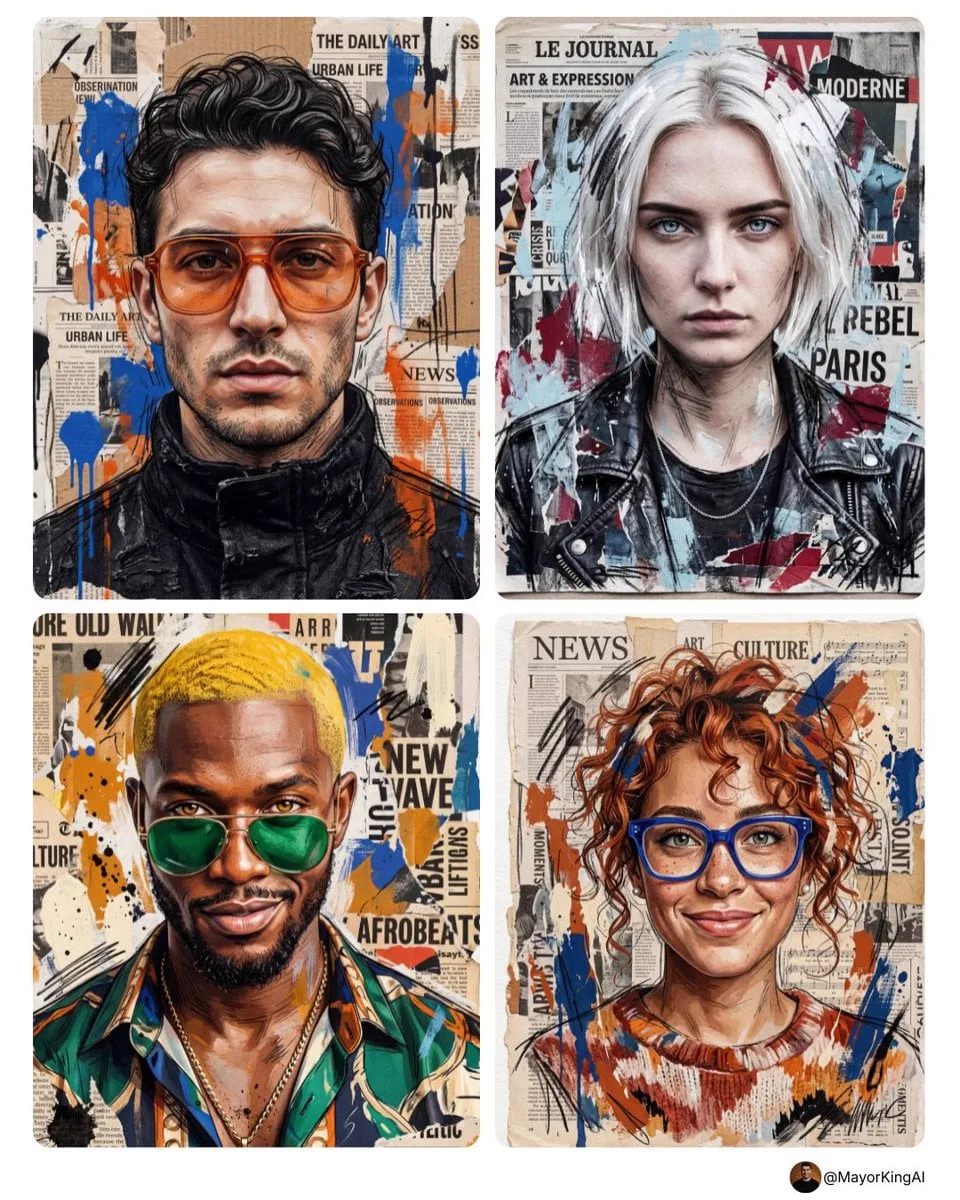
For years the single most frustrating problem in AI-generated video was the vanishing act a character performed between scenes. Ask for the same hero twice, and the face drifts, the costume wanders, the proportions shift, and your would-be story fractures into a series of actors who merely resemble one another. This is the consistency problem, and it has been the wall between nifty one-off clips and actual storytelling. The technology that finally pushes past it is multi-image fusion: blending several reference images of the same subject into a stable internal identity that a generation model can carry from scene to scene, even across dramatically different styles. Understanding how fusion works, and how to control it, is the difference between characters that hold together and characters that dissolve.
Why a Prompt Alone Cannot Hold a Character
A generative model, at its core, turns short text plus a little noise into an image. Two runs with the same prompt are not guaranteed to produce the same person, because the model samples from a probability space and every draw lands slightly differently. Without something to anchor the identity, the face and body are free to wander within the model's notion of what the description means. A prompt can say “hero with a scar and a blue coat,” but the model has many valid scar-and-coat people and it will pick a different one each time. Text describes a type; it does not pin an individual.
Reference images change that equation. When you hand the model a picture of the person, it has concrete geometry to lock onto: a specific face, a specific build, a specific costume. Multi-image fusion takes several such reference images and merges them into a single, richer identity signal, combining the detail available in each shot, the front view, the profile, the expressive mouth, into one stable representation. That fused representation is what the generation model reaches for every time the character appears, which is how the same person finally survives a scene change.
The Visual DNA Idea
Think of a character's identity as a kind of visual DNA: the set of features and proportions that stay recognizably the same no matter the lighting, camera angle, or wardrobe. A real person is recognizable from the front, the side, angry, happy, dressed up or dressed down, because those core identifiers survive transformation. Multi-image fusion tries to give a generated character the same invariant core.
Extracting Stable Features, Not Averages
The key subtlety is that fusion is not arithmetic. Averaging several reference images would just produce a blurry, featureless compromise that matches no one. The useful method extracts the invariant features from each reference, the eyes, the bone structure, the distinctive marks, and discards the changing parts, the lighting, the expression, the background, so the resulting identity is built from what is actually constant across all the references. This is what gives the model a coherent person rather than a soup.
Resolving Conflicts Between References
Real reference sets contain contradictions. One photo has different lighting, another a different expression. A good fusion process resolves these conflicts by weighting consistent signals higher and treating disagreements as noise, so a crooked grin that appears in one image does not weaken the identity if the rest of the face agrees across all images. The you-feel of multi-image fusion depends on this reconciliation step working well.
The Fusion Workflow, Step by Step
Building a consistent character is a repeatable process. It helps to follow the same order each time.
- Capture a strong reference set. Gather several images of the character from different angles and expressions. More variety in pose and light makes the identity more robust, but the references must be the same person; a mixed set produces a muddled identity.
- Let fusion build the visual DNA. Run the reference set through the fusion step so the stable features are extracted and the contradictions are reconciled into one internal identity.
- Freeze the identity. Lock that fused identity as the project's canonical character asset before doing any scene work.
- Reference the identity, not a fresh description, for every scene that features the character. Reuse the same fused anchor so the model has one fixed thing to reach for.
- Spot-check on real beats. Generate a couple of test scenes and verify the character still reads the same. Regenerate against the anchor at the first sign of drift.
Fusing Characters Across Styles
One of the most powerful promises of fusion is a character that survives a style change, the same hero rendered photoreal, then as a glossy 3D animation, then as a painterly storybook. When the identity is captured as invariant features rather than a specific rendering, it can be re-expressed in a new style while keeping the recognizable core.
Separate What Stays from What Changes
The trick is deciding which traits are the identity and which belong to the style. Face shape, eye structure, distinctive features, and body language read as identity. Rendering texture, palette, line weight, and surface finish read as style. Fusion that stores identity separately from aesthetics lets you swap the style without erasing the person, which is precisely what serials and multi-format projects require.
Keeping Style Rules Consistent Across the Series
Within one stylistic world, reuse a fixed style reference so the look, not just the person, stays stable. When you move the same character into a second style, change the style reference but keep the identity anchor untouched. That separation is what lets your hero look like the same person in a cinematic trailer, a comic panel, and a mascot loop, which is a genuinely impressive creative capability.
Character Consistency in Multi-Scene Storytelling
Once a character is stable, the next challenge is applying that stability across a full narrative instead of a single clip.
Build Keyframes the Hero Can Carry
Freeze your key visual decisions early: the hero's look, the costume, the palette, the world rules. Every scene inherits the same anchors, so a shot generated on Monday and a shot generated on Friday belong to the same person and the same world. Keyframes that are decided once and reused everywhere are the backbone of a coherent series.
Watch the Whole Cut, Not Single Frames
Judge scenes together. A face that looks fine alone can read wrong beside the neighboring shot because of expression drift or a costume detail that changed. Review your beats as a sequence and correct drift before it propagates through the edit.
Rebalance Costume, Hair, and Props
Identity is not just a face. A hero's distinctive jacket, hairstyle, or signature prop is part of recognition. Include those elements in your reference set so the fused DNA carries the whole look, not only the features. When the wardrobe matters to recognition, make it invariable across scenes or change it with deliberate, story-supported intent.
Practical Tips That Save Projects
Start With a Strong Reference Set
One blurry selfie will not fuse well. Collect crisp, varied references that all show the same character. A set of three to five well-lit images beats twenty poorly matched ones, because the fusion step depends on seeing stable features clearly.
Avoid the Average Look Trap
If your fused character looks washed out or generic, the references may be conflicting or you may be over-averaging. Cull inconsistent images and give the model references that strongly agree on the essentials so the identity comes out defined rather than compromise.
Be Deliberate About Style Changes
Changing a style mid-project is legitimate only if it serves the story. When you do it, keep identity constant and change only the aesthetic variables. A character that silently changes rendering every scene looks broken, no matter how each frame looks on its own.
Don't Fight the Tool; Feed It Good Input
The quality of fusion is capped by the quality of the references. Shots with varied but consistent views of the same person, in good light, with the accessories you care about, give fusion the raw material to build a strong identity. Spending effort on the reference set is the highest-leverage part of the whole workflow.
Frequently Asked Questions
How many reference images should I use?
Enough to show the character from several angles and expressions while keeping everyone consistent. Three to five strong, agreeing references are usually better than a large pile of sloppy ones, because the fused identity is only as coherent as the input.
Can multi-image fusion carry a character through a full series?
Yes, that is its main purpose. Freeze the identity as a project asset and reuse it for every scene. The same character then survives scene changes, palette shifts, and even deliberate style changes without looking like a new actor.
Does fusion work for non-human characters?
It works for any subject with a stable identity: creatures, mascots, vehicles, even environments. As long as the references agree on what the subject is, the fusion step can build a usable anchor and keep it consistent.
Will my character look identical in every frame?
No pixel-identical copy is guaranteed, but identity will hold: the same face, build, costume, and recognizable features across scenes. The value is narrative continuity, a viewer believing it is the same character, not pixel-level duplication.
What is the most common mistake?
Letting the reference set drift. If your references stop being the same character, or if you describe the character fresh for every scene instead of using the fused anchor, the identity will wander and the film will fall apart scene by scene.
The Future of Consistent Characters
Advanced Fusion: Multiple Characters and Shared Worlds
Consistency is not only about a single hero. A full narrative often needs several characters who must each stay stable while also belonging to the same world. Fusion scales to that if you treat each character as its own frozen identity and then manage the interactions between them in a controlled way.
Keep One Character Per Reference Set
Never mix two characters into a single reference set. Each character deserves its own fused identity built from images that only show that character. Mixing them tempts the fusion process to average two people into a hybrid nobody matches, and it does not take many blurred crossovers to ruin a whole project. Clean separation at the reference stage is the cheapest insurance you will ever buy.
Coordinate the World They Share
Characters move through a common world, and that world needs its own consistency rules. Palette, lighting logic, and the architecture of the main locations should be fixed once and applied across every character's scenes, so the different heroes feel like they inhabit rooms in the same building rather than renders from different universes. When the characters meet, matching world rules is what makes the encounter believable.
Manage Group Shots Carefully
Group shots are the hardest continuity case because several frozen identities must appear together without blending. Generate the group from the individual frozen references, and spot-check each face against its solo render. If one character drifts in the group, regenerate that character's pass in isolation, then composite, rather than accepting a single blended result that quietly changes everyone.
Consistency Across Long Timelines and Series
The most ambitious use of fusion is a multi-episode production where weeks separate one shot from the next generation. Consistency under those conditions is a documentation problem as much as a technical one.
Version Your Character Assets
As your hero's look evolves across a series, track it. Keep a record of which reference set was used for each episode and generation batch, so you can roll back or explain any drift. A simple version note, episode number, reference hash, date, saves hours of detective work when you need to reproduce a specific era of a character's look.
Lock Timeline Rules for Aging and Change
If a story spans time, decide how the character changes and when. An aging hero or a costume change should be a deliberate, documented decision, not an accident of drifting references. Set the milestone at which the character's fused identity updates, and apply that new identity consistently from the milestone forward, so change reads as story, not error.
Measuring Consistency So You Can Trust It
Consistency is easy to feel and hard to define, but a little measurement makes it manageable. Rather than relying only on your gut, adopt lightweight habits that catch drift before the audience ever sees it.
Keep a Reference Sheet Beside Every Render
Print or display the frozen hero reference next to each new generation and compare the face, costume, and proportions directly. A side-by-side check catches subtle drift that a frame alone hides. This is the kind of discipline that separates production work from ambient generation.
Watch the Edges of the Costume and Silhouette
Faces get the attention, but costume and silhouette drift just as easily. Check that the jacket zips the same way, the hairline is consistent, and the body shape has not quietly inflated or shrunken between scenes. Small invariants read as believability, and losing them reads as sloppy production.
Keep a Small Consistency Log
Note the handful of things that tend to drift in each scene, what you fixed, and what held. Over a project this log turns into a personal playbook of failure modes, so you start each new sequence knowing exactly what to watch. Consistent characters are the reward for consistent checking.
Choosing When to Enforce and When to Let Go
Not every frame demands maximum identity lock. There is a real cost to chasing perfect consistency, so it pays to be selective about where you spend that effort.
Lock Hard for Hero and Close-Up Beats
The moments the audience sees up close, the hero's face, a signature gesture, a branded object, deserve the strongest consistency controls. Drift here is obvious and damaging, so invest the reference effort and the checking habit here first.
Let Ambient and Background Beats Relax
For wide establishing shots, busy crowds, or distant action where the viewer cannot read a face, strict identity control matters far less. Relaxing the constraints there saves effort and lets you spend your consistency budget where it actually shows.
Multi-image fusion marks the moment AI video stops being a series of lucky single shots and becomes a usable tool for real storytelling. When a character can hold its identity across an entire sequence, across styles, and across a series, creators can finally think in terms of worlds and series rather than isolated clips. It is not a gimmick that makes prettier frames; it is the structural capability that turns generation into production. The craft requirement that remains is discipline: build a good reference set, freeze the identity, reuse it everywhere, and review in sequence. Do that, and story projects that used to be impossible quietly become routine.
