

Short films and independent cinema have always been the part of filmmaking where risk is cheapest and creativity is freest. Independent filmmakers can try an idea, fail at low cost, and carry the lessons into bigger work, which is why so many celebrated directors came up through shorts. But the independent path has also carried stubborn disadvantages: small budgets, limited distribution, and the constant tension between artistic vision and the cost of production.
Artificial intelligence is changing that equation in real, measurable ways. AI video production tools lower the cost of generating footage, let filmmakers iterate on concepts without expensive location shoots, and open distribution channels that did not exist a generation ago. None of this replaces the craft of storytelling, which remains the irreducible core of any film, but it removes many of the practical barriers that used to decide which stories got made and which died as unfunded scripts.
This guide is for independent filmmakers and short-film creators who want to use AI without losing their voice. We walk through the full arc of an AI-assisted production: developing the concept and script, keeping costs under control while choosing between different generation tools, protecting character and location consistency shot to shot, getting the film in front of an audience, and building a mix of revenue streams around both your films and the models that help you make them.
The Creative Advantages of Starting With a Strong Concept
Generative tools are not a substitute for a point of view. The films that succeed, whether at a festival, on a streaming platform, or in a creator feed, begin with a concept that only the filmmaker could have had. AI removes friction, but it amplifies the concept you bring to it. A sharp, specific idea rendered with AI feels bold and current. A vague idea rendered with AI looks like every other AI demo.
So start before the tools. Write the premise in one or two sentences until it is undeniable. Define the protagonist's goal, the obstacle, and the change the story makes. A short film that can state its core conflict crisply is already ahead of most projects because the filmmaker knows exactly which shots matter and which are padding. That clarity then makes every production decision, including tool choice, faster and more confident.
The concept also determines how justifyably you use technology. If your film is a character drama, AI helps with consistent environments and efficient coverage. If your film is a visual spectacle, AI becomes the canvas itself. Matching the technical approach to the emotional goal is the difference between technology that serves a story and technology that buries it.
Script Development and Low-Cost Iteration
Independent production has always been constrained by the cost of revision. Rewriting a script is cheap, but generating the concept art, storyboards, or test footage that lets you feel a script has traditionally been expensive. AI collapses that cost, which changes how early you can validate a story.
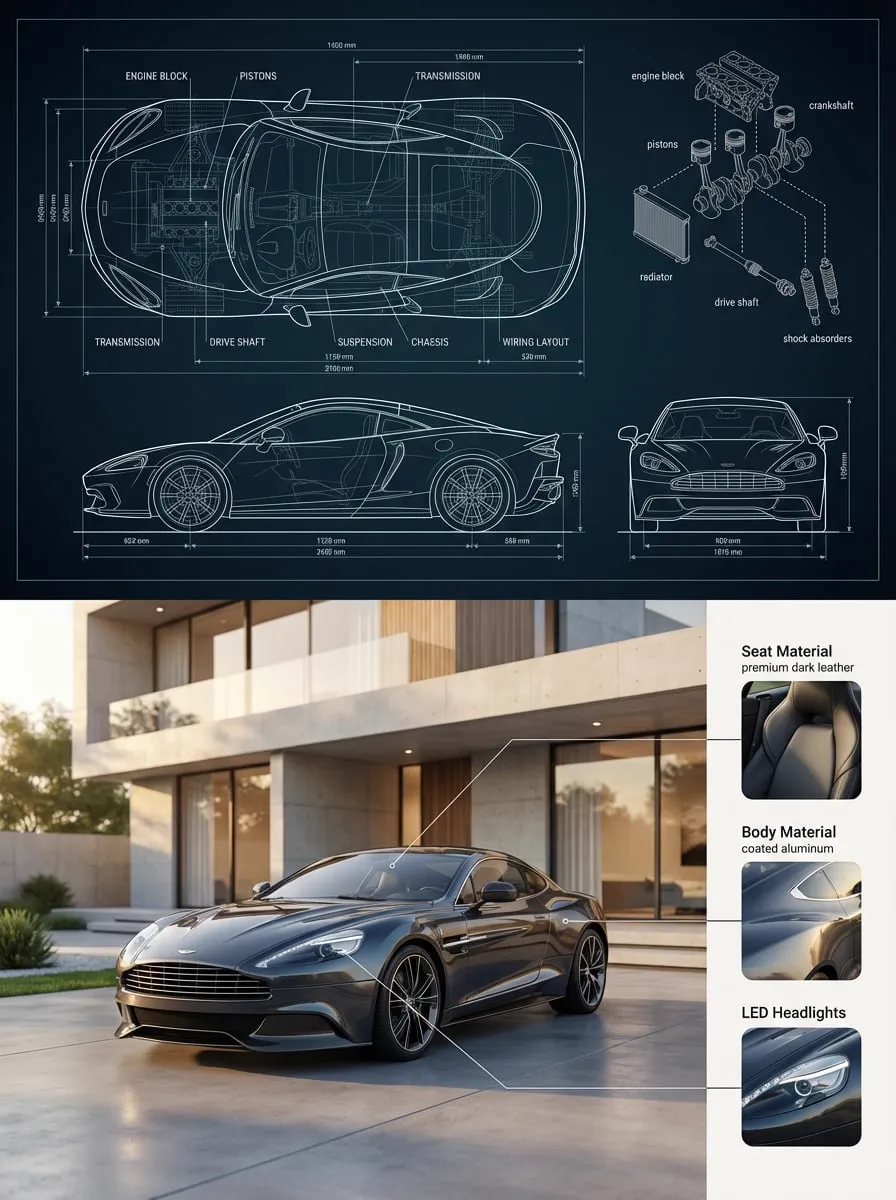
Use AI to generate concept stills directly from script beats. Early in development, you do not need a full film to know whether a location, a costume, a lighting scheme, or a palette is working. A handful of concept images lets you and your collaborators react to the visual reality before you commit to a shoot or to a generation run. This iterative cycle, script beat to concept image to feedback to revision, turns development into a fast, cheap loop.
Even the screenplay itself can be stress-tested with AI. Describe alternate versions of a scene, generate short test clips of the emotional tone, and compare how different approaches feel. The goal is not to automate writing, it is to give the human director more concrete material to react to. The more valid options you can try before you commit, the better the final choice is likely to be.
Controlling Costs With Dynamic Tool Selection
Independent productions survive by being cost-sensitive, and generative video adds a new variable to the budget equation: each generation run consumes resources differently. The discipline is to match the tool and the run to the importance of the shot. A throwaway transition, an atmospheric insert, or a background element does not need the top-tier, highest-fidelity option. A hero shot that carries the film or a close-up of the protagonist's face may justify it.
Think of generation runs as a budget to spend deliberately. Sketch out your shot list and mark each shot's importance: essential emotional moments, important story beats, and expendable atmosphere. Allocate your generation resources proportionally, spending generously on the shots that define the film and cheaply on the ones that are optional. This prioritisation keeps the overall cost manageable while protecting the scenes that matter.
Keeping a running ledger during production is also essential. Note what each shot took to produce, how many attempts it required, and whether the result was usable. That ledger becomes the plan for the next project, because you learn exactly where the budget goes and where you can safely trim before you ever start shooting.
Protecting Character and Location Consistency
The quickest way for AI-generated footage to feel fake is inconsistency. A character whose face subtly changes between shots, or a location that rearranges furniture between cuts, breaks the illusion and tells everyone the film was machine-assembled. Consistency is what separates rough demos from films audiences can believe in, and it has to be engineered deliberately.
Lock the character before you generate. Write a detailed character bible: hair, wardrobe, build, defining features, and the exact descriptions that will be reused in every prompt. Where the platforms support reference images, keep a canonical reference for each character and environment and reuse it across all shots, so the model recognises the same identity every time. Consistency is not something you hope for in the results, it is something you design through disciplined, repeated inputs.
Restraint is the partner of consistency. The most believable AI films limit the number of characters, locations, and lighting setups. A small, well-defined world whose details are stable reads as intentional filmmaking, while a sprawling set of half-realised places reads as uncontrolled. Keep the cast small and the locations few, then move the story within a world you can hold steady.
Staging, Coverage, and the Language of the Camera
Audiences read camera language without thinking about it. A wide establishing shot tells them where and what. A close-up tells them whose emotion matters right now. A tracking shot changes the energy. Independent filmmakers who understand this vocabulary use AI tools to plan coverage that serves the story, rather than accepting whatever a generic prompt produces.
Build a shot list with real shot variety: wide establishing frames, medium master coverage, tight close-ups, inserts on details, and motivated camera moves. A film cut entirely from medium shots feels flat and stagey. A film that rises from a wide establishing frame to an intimate close-up carries the audience into the scene. The shot list is your contract with the model, and a precise shot list produces far more usable footage than an open-ended request.
Camera moves deserve the same attention as shot size. A slow push-in heightens tension. A whip pan can land a transition. A subtle handheld feel can make a drama feel immediate. When you describe motion deliberately, in the prompt and in the plan, the generated footage supports the emotion you are after instead of fighting it.
Lighting, Color, and Mood
Two independent films with identical plots and actors can feel completely different purely because of light and color. In AI production you control these in two places: in the prompt that generates the footage and in the color grade you apply in post. Using both deliberately gives an independent filmmaker cinematic control that used to require a gaffer, a colorist, and a bigger budget.
For each scene, define the light before you generate: the direction, the quality, the color temperature, and the mood. A golden-hour backlight, a cold neon wash, a single practical lamp, each communicates something about the scene. Writing lighting into your prompts makes the footage dramatically more useful, because it lands closer to your intended look and needs less correction downstream.
Finish every film with a consistent color grade. Even if the footage comes from several different generation runs, a unified grade in post ties the shots together and gives the film a single visual identity. This is a relatively inexpensive step that disproportionately improves how professional the result feels. The audience will not know why the film looks coherent, they will simply believe it was made by someone who knew what they were doing.
Motion, Pacing, and Rhythm
A film is a sequence of durations, and rhythm is how you control the audience's sense of time. Independent shorts can use AI to tune pacing with unusual precision because you can regenerate a shot to adjust how long an action takes, or add a transition beat that the edit needs. This tightens the edit into something that feels composed rather than improvised.
Decide the emotional pace scene by scene. Fast cutting creates urgency and energy; longer takes create tension and space. When you plan the edit, note the intended rhythm for each beat and generate or select footage that supports those durations. Letting a slow moment breathe, or truncating a transition that drags, is the micro-work of editing that separates professional from amateur.
The final rhythm of the film is decided in the edit, not at the shoot, and AI helps by giving you more usable material and the freedom to try multiple cuts. Because regeneration is cheap, you can afford to explore two different rhythmic approaches, screen both, and keep the one that lands.
Distribution for the Short-Film Audience
A finished independent short still needs an audience, and the distribution landscape has both expanded and fragmented. The classic festival circuit remains a valuable signal for prestige and for connecting with financiers and distributors. At the same time, direct platforms and creator feeds reach enormous audiences without gatekeepers. The strongest strategy uses both, in order.
Since the explosion of AI-generated content, a short that is openly and skillfully using AI can both ride current interest and stand apart if it is built on real craft. Audiences and programmers respond to a film that uses the technology toward a purposeful story rather than as the whole point. The distribution story should be honest about how the film was made and centered on why the story matters.
Festivals reward a film that does one thing brilliantly. Direct release rewards a film that compresses its appeal into a shareable minute or two, often a strong cutdown of the full short. Prepare both: a festival version that serves the full artistic intent and a punchy vertical or short cut that travels on feeds. One film, two carefully considered packages, doubles your reach.
Building Revenue and a Lasting Practice
Independent film has never been paid for by one source, and AI-era distribution is no different. The sustainable filmmaker treats income as a portfolio: festival awards and grants, direct distribution licensing, platform revenue sharing, commissioned work where a brand or studio hires your signature style, and increasingly, revenue from the models you train for your own films.
When your film uses a distinctive custom model, that model is a reusable asset. License it to other creators or sell it in a marketplace, and you earn from the capability you built while making your own production. Workshops, tutorials, and stock assets are further ways to convert the skills you developed into recurring income. The goal is to reduce dependence on any single check while letting your creative reputation compound.
A sustainable practice also means reinvesting. Use a portion of every income stream to fund the next, better project, to improve your datasets, and to support the community that sustains you. Independent film remains a marathon, but AI has made it a faster, cheaper, and more democratic one for those who combine craft with a smart business.
The Bottom Line
AI is not making independent cinema easier by removing the need for taste; it is making it easier by removing the costs that used to prevent taste from being seen. A strong concept, disciplined character and world consistency, deliberate camera and color language, and a distribution plan that mixes festivals with direct reach are still the core of a successful short. What AI adds is the ability to iterate, test, and produce more than an independent budget traditionally allowed.
The filmmakers who thrive will be the ones who treat AI as a production partner that serves their vision, who control the details that make footage believable, and who build a sustainable practice around both their films and the capabilities that power them. Start with one focused short, run the full arc from concept to screening, and let each project teach the next.
