
Mastering AI video: a practical guide to text-to-video and image-to-video
The ability to turn a sentence or a single still image into moving footage has shifted from a research curiosity to a core production skill. Text-to-video lets you describe a scene and receive a clip that matches it, while image-to-video animates a picture you already have, preserving its subject, composition, and style. Both are now central to how independent creators, agencies, and brands produce short-form and campaign content.
This guide distills the practical craft of working with these models. It explains how they differ, what makes a strong prompt, how to keep characters and style consistent, and how to choose the right model for the job. Along the way it covers common mistakes, realistic expectations, and answers to the questions people ask most. The focus stays on what you can apply in your next project rather than theory.
What changed: why these models matter now
Video generation feels different in this generation than it did a few years ago. Early tools produced short, wobbly fragments that were useful only as novelty. Today's leading models generate clips with coherent motion, readable text, and much better temporal stability across several seconds.
Three consequences follow for creators. Production timelines compress because scouting, shooting, and covering live footage can be replaced with well-crafted prompts for many shot types. Cost structures change, since there is no crew, location, or schedule to coordinate for a generated clip. And creative range expands, because a model will attempt almost any scene you describe, no matter how exotic, fantasy-infused, or physically impossible it would be to shoot.
None of this fully replaces a camera. Generated video struggles with specific real-world products, real people who must appear accurately, and long narrative coherence. But for conceptual scenes, effects shots, background B-roll, and rapid iteration, it has become a genuine production tool rather than a toy.
Text-to-video versus image-to-video: knowing which to reach for
The two major input modalities solve different problems, and mixing them effectively is a large part of the craft.
Text-to-video starts from language only. You describe a subject, setting, action, camera behavior, lighting, and mood, and the model invents the visuals. Its strengths are pure imagination and speed of iteration. You can test ten scene concepts in the time it takes to storyboard one. Its weakness is control. The model can add details you did not want or interpret your words differently than intended.
Image-to-video takes an existing still and animates it. This gives you far more control over composition, subject identity, and color, because the model must respect what is already in the frame. It is the natural choice when you have concept art, a character design, a product photo, or a frame from existing footage and you need it to move. Scene identity and, with the right techniques, character identity can carry over from the source image.
A mature workflow uses both in sequence. Use text-to-video for exploration and early concepts, then lock anchors with image-to-video once a visual direction is settled. This lets creativity run free early and control clamp down late, which is a good arc for any production.
The building blocks of a strong prompt
Prompt quality is the single largest lever on output quality. Models reward specificity, structure, and the deliberate inclusion of constraints.
Write a prompt that answers at least four questions: what is in frame, what is happening, what is the visual style, and what are the technical parameters. A vague statement like a city at night generates something generic. A structured prompt like a rainy cyberpunk alley at night, a lone figure in a glowing jacket walking away, slow lateral tracking shot, shallow depth of field, teal and neon pink, heavy atmosphere, 4K detail produces a far more deliberate result.
Camera language matters. Directional words such as dolly in, pan left, handheld, aerial view, and close-up materially change generation. So do lighting terms like golden hour, soft diffused, harsh rim light, and volumetric fog. Style references such as cinematic, documentary, retro film, anime, and photoreal anchor the aesthetic. Consistently including motion, atmospheric, and lighting terms yields richer output.
Length, duration, and negative constraints belong in the prompt too. If the model tends to add text, say no text or clean surfaces. If motion is erratic, request slow stable camera. Learning what your chosen model over-produces, and instructing against it, is the fastest path to cleaner results.
Choosing a model for the job
Model libraries vary in capability, cost, and consistency, and the differences are meaningful. Premium generators tend to lead on resolution, motion quality, and scene fidelity. They are the right choice when the shot is a hero moment, a client deliverable, or something destined for a large screen.
More accessible models trade some fidelity for speed and economy. They are ideal for ideation, drafts, placeholder shots, and high-volume content where the requirement is good-to-solid rather than best. For feed content, a mid-tier model often produces perfectly serviceable results at a fraction of the cost of a premium pass.
Specialized engines serve niches: some are trained heavily on anime or illustration, others on realistic people, others on specific creatures or natural motion. Matching the model to the subject matter improves results more than simply choosing the most expensive option. A one-click pipeline that quietly picks the right engine for each prompt is worth more than manual expert selection in high-volume work.
The practical rule is simple. Know your three tiers, use them deliberately, and treat the library as a toolbox rather than a single hammer. Cost control and output quality both improve when the model choice matches the shot's importance and subject.
Keeping characters and style consistent across shots
Long-form consistency remains the hardest problem in generative video. A character who changes face rapidly between shots, or a style that drifts scene to scene, breaks immersion and marks the work as AI-generated.
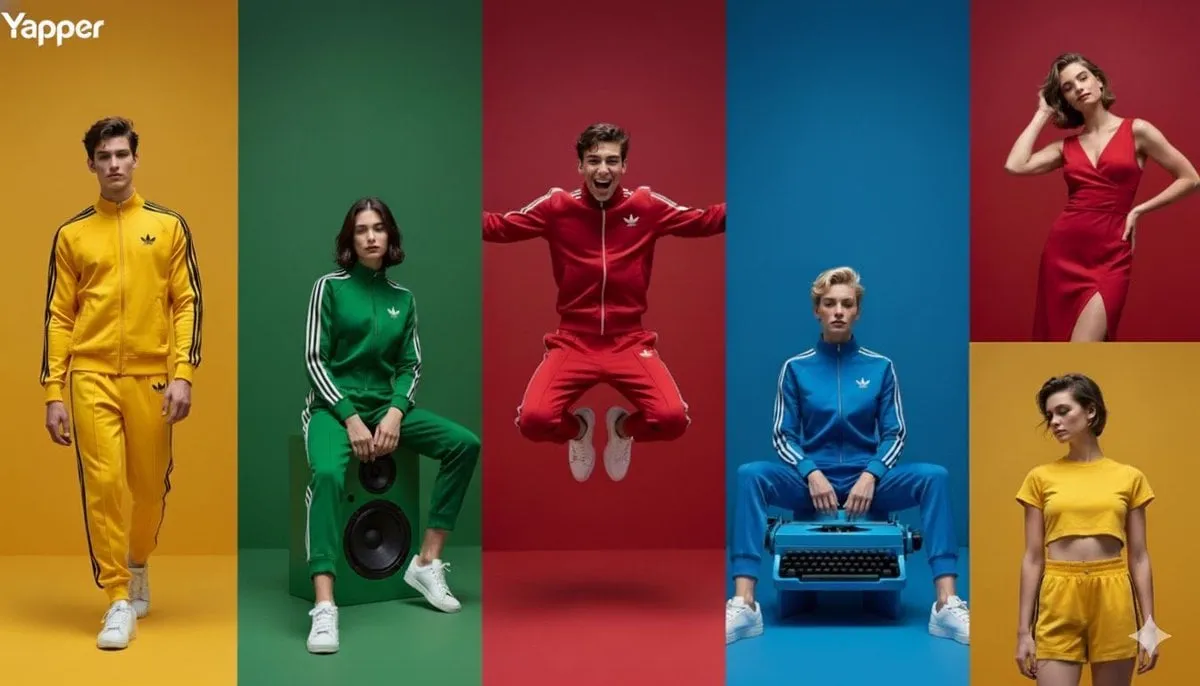
Fusion and multi-reference techniques address this. By feeding the model one or more reference images of the character, setting, or style, you anchor identity across separate generations. The model uses the references to keep the person's face, outfit, and color palette stable even as the action changes. This is the same reason using a consistent style reference across a project yields a cohesive rchive rather than a patchwork.
Style consistency extends past characters to the whole look. Save a style reference and a color grade, and apply them to every shot so the project reads as one coherent piece. Document your references per project so revisits stay on-brand.
When a character must appear across many scenes, building and reusing reference imagery is close to mandatory. Skipping this step is the most common reason a promising animation falls apart tonally by the end.
Building a repeatable production workflow
A production-minded routine keeps results consistent and fast. Treat each video as a pipeline with distinct stages rather than a single generation event.
Start with purpose: is this a concept, a draft, or a deliverable? That decision sets model tier, iteration budget, and how careful you need to be. Next, write the script and storyboard, mapping each shot to text, image, or a mixed generation source. Then produce assets, generating keyframes and style frames first so later shots have anchors.
Generating follows, shot by shot, with references locked. Review is a checkpoint: zoom in for artifacts, watch for motion glitches, and confirm identity stayed put. Accept what works and regenerate selectively. Assembly stitches the accepted clips into a sequence, applies any music or captions, and exports to the needed platforms.
Documenting prompts and settings per project means you can reproduce a look later and learn from what worked. The difference between a producer and a hobbyist is largely the reliability of a repeatable pipeline.
Common mistakes and how to fix them
Several errors recur across users. Name them and they become easy to avoid.
Overstuffing the prompt triggers instability. Cut the prompt to the essential elements and let one strong idea carry the shot. Ignoring references breaks consistency. Always pass a subject or style anchor when continuity matters. Expecting realism from a model not built for it sets up disappointment, so match model tier to the requirement. Editing in haste without reviewing individual clips ships glitches a single check would have caught.
The most misunderstood expectation involves length. Most models generate short clips, and longer videos are assembled from several generated segments. Planning for that assembly, with consistent references across segments, produces smooth long pieces where a one-shot generation would fail.
Frequently asked questions
Can AI video fully replace real footage? No, not yet. It is superb for conceptual and effect shots and hopeless for scenes requiring specific real people, products, or locations.
Which is easier to control, text or image input? Image input gives far more control over subject and composition. Text is for exploring and inventing.
How do I get the same character across shots? Use a consistent reference image and the same style references across all generations. Never generate a recurring character without an anchor.
How long can a generated clip be? Most tools produce a few seconds per generation. Longer pieces are assembled from multiple generated segments.
Do I need a powerful computer? No. Generation runs on remote servers, so a modest laptop that can browse is generally enough to queue and review work.
How do I avoid artifacts and glitches? Keep prompts focused, match model tier to the task, review each clip, and regenerate selectively rather than patching flaws in an editor.
Building a library of prompts and references
The most organized creators treat prompts and reference images as reusable assets rather than one-off attempts. Whenever a prompt works well, save it with a clear name and a note about what it produces. Whenever a reference image anchors a character or style, keep it in a project folder you can reach again.
Over time this library compounds into a personal creative toolkit. When a new brief arrives, you open your catalog, pull the closest prompt style and the matching character reference, and adapt rather than starting from a blank box. This is what separates fast, consistent producers from people who re-learn every job from scratch.
Keep three kinds of saved items: proven prompt templates organized by type of shot, reference images keyed to characters and environments, and settings for each model tier you use. Revisit and prune the library every few projects so it reflects what actually works now rather than what once did.
Practical ways to make generated video feel human
A common fear is that generated video looks sterile. It often does when the prompt over-perfects every frame. Breaking that uniformity improves believability. Add small imperfections on purpose: a slightly loose camera, an organic color grade, a character who reacts before the main action, ambient noise rather than silence.
Tight close-ups on hands and faces read as more human than wide, static compositions. Let the subject have a recognizably human movement, a glance, a breath, a pause. Editing that includes cutaways and varied shot sizes mimics how real footage is assembled and hides the tells of generation.
These are creative choices available to everyone, not advanced features. A plain but believably imperfect scene usually outperforms a technically perfect one that feels untouched by human hand.
Final thoughts
Text-to-video and image-to-video are complementary tools in a modern creator's kit. Text opens doors to anything you can describe. Image brings discipline and continuity to what you build. Together they compress timelines, cut costs, and expand creative range in ways that were impossible only a short time ago.
The skill is not in the single most dramatic generation. It is in the system around it: writing precise prompts, choosing the right model tier, locking references for consistency, and following a reviewable pipeline. Master that system and generated video becomes a dependable production asset rather than a gamble.
Start small. Pick one concept, write a structured prompt, lock it with an image anchor, and iterate. Every project teaches the model choices and prompt patterns you will use for years to come, and the compounding effect is exactly what separates consistent AI-fluent creators from everyone else.
