

Ad Agency Video Costs vs AI Video Production Budgets
Oct 16, 2026


Why Video Production Quotes Are So Hard to Compare
Ask three marketing teams what they paid for a thirty-second brand film and you will get three numbers that seem to describe entirely different products. One team paid a few thousand to a freelance duo. Another paid six figures to a full-service agency with a director, a casting session, and a colorist. A third produced twenty localized variants of the same concept for roughly the cost of a single agency edit. Same runtime, wildly different economics.
The reason is that "the price of a video" is never one number. It is a bundle of decisions about labor, time, equipment, legal exposure, and how many times you are allowed to change your mind. Traditional agencies price that bundle as a fixed project fee built from estimated hours, talent rates, and overhead. AI-assisted pipelines price it as a mix of software seats, compute usage, and internal review time. Those two models behave very differently when a brief changes halfway through, when you need twelve localized versions, or when a campaign is cancelled after two weeks.
This guide breaks both models down line by line so you can build a budget that matches how your team actually works — not how a rate card assumes you work.
What Actually Drives the Cost of a Traditional Agency Video
A conventional production quote looks like a single lump sum, but underneath it are four cost centers. Understanding them is the fastest way to sanity-check any proposal you receive.
Pre-production: the invisible 30–40 percent
Treatment writing, storyboards, location scouting, casting, wardrobe, permits, and scheduling consume a large share of the total budget before a camera is ever switched on. A day of a director's time in pre-production is often billed at the same rate as a shoot day, and it is easy to underestimate. Every additional stakeholder round of notes adds hours here, and those hours are usually the first thing that balloons.
Production days: the most expensive unit of time
Crew size, equipment package, studio rental, talent fees, and catering are all billed per shooting day. Ten people on set for eight hours is not a linear multiplier — it is a step function. Adding a second camera, a stunt coordinator, or a child actor with limited working hours can each add thousands to a single day. Weather contingency days are frequently written into quotes as optional lines that clients forget to read.
Post-production: hours that expand with notes
Editing, sound design, color grading, motion graphics, and versioning are almost always billed hourly or by estimated day blocks. The trap is that post-production scope is defined before anyone sees the footage. When the footage does not match the board, the edit takes longer, and the change order arrives after the creative has already been approved internally.
Licensing and usage windows: the cost that grows after delivery
Talent, music, and stock footage are licensed for a defined territory, medium, and duration — often twelve months in a single market. Extending to paid social, adding a second territory, or renewing for another year can cost a meaningful percentage of the original production fee again. This is the line item most likely to surprise a team that budgeted only for the shoot.
Hidden Line Items That Quietly Inflate Agency Invoices
Beyond the big four, several smaller categories routinely appear once work begins.
- Change orders. Revisions beyond the agreed number of rounds are billed hourly, and the rate is rarely the same as the original blended rate.
- Versioning fees. Cutting a fifteen-second and a six-second from the same footage sounds trivial but often adds a day of editorial plus separate sound mixes.
- Adaptation and localization. Subtitling is cheap; re-recording voiceover in five languages with native talent and new legal review is not.
- Stock and music upgrades. A track that was "just a placeholder" during the pitch may need a commercial license before broadcast.
- Archive and storage. Some contracts include a defined retention period, after which masters are held for a fee.
- Agency markup on third parties. Pass-through costs such as catering, transport, and rental are frequently marked up, which is standard practice but worth understanding when comparing bids.
The practical takeaway: always request a quote structured by phase, with explicit revision limits, usage terms, and a stated hourly rate for out-of-scope work. A vendor that resists that structure is telling you something.
How AI-Assisted Production Rewrites the Cost Equation
AI-assisted video production does not remove cost — it relocates it. Labor hours shrink, while software seats and metered compute usage become the new variable. The shift matters most in three areas.
Usage-based pricing instead of fixed project fees
Most AI video platforms charge a subscription for access plus metered usage for generation. That means a simple concept test can cost almost nothing, while a heavily iterated hero spot with dozens of regenerations can consume a noticeable slice of a monthly allowance. Budgeting becomes a forecasting exercise: how many candidate generations per shot, how many shots per video, how many variants per campaign.
A useful planning heuristic is to assume that roughly one in four generations produces a usable clip for the final cut, so multiply your shot count by four to estimate consumption. For a fifteen-shot explainer, that is sixty generated clips — a number you can model in advance rather than discover at invoice time.
The economics of iteration collapse
In traditional production, every revision has a marginal cost measured in crew hours and re-booking. In a generative pipeline, the marginal cost of trying a different camera move, a different wardrobe color, or a different time of day is measured in seconds and a small amount of compute. That changes creative behavior: teams test more directions, kill weak ideas earlier, and stop treating the first approved board as sacred.
Consistency tools reduce re-shoot risk
Character consistency, reference-image conditioning, and multi-image fusion allow a single approved look to carry across many shots without re-establishing it manually. The cost benefit is indirect but real: fewer reshoots, fewer continuity fixes, fewer "we need to match the earlier scene" emergency sessions.
A Side-by-Side Budget Model for a 15-Second Explainer
The most honest way to compare models is to cost the same deliverable in both. Below is an illustrative planning model for a fifteen-second digital explainer with three characters, two locations, and voiceover. Figures are directional only — market rates vary widely.
| Cost category | Agency model | AI-assisted model |
|---|---|---|
| Concept and script | Fixed fee, 3–5 days of creative time | Internal script, half a day |
| Pre-production | Casting, location, permits | Reference images and style selection |
| Principal production | 1–2 shoot days, crew and talent | Prompting and generation time, 1–2 days |
| Post-production | Edit, sound, color, graphics | Edit, sound, light cleanup, 1 day |
| Versioning | Billed per cut | Near-duplicate cost per cut |
| Licensing | Talent and music windows | Platform licensing, no talent residuals |
| Timeline | 4–8 weeks typical | 2–5 days typical |
| Scaling to 10 variants | Multiplies production | Mostly multiplies compute |
The pattern is consistent: the agency model has a high floor and a steep slope for extra variants, while the AI-assisted model has a low floor and a slope dominated by how many times you regenerate. The crossover point usually arrives somewhere around the third or fourth localized variant of the same concept.
Decision Criteria: When an Agency Still Wins and When AI Wins
Neither model is universally cheaper. The right answer depends on what the video has to accomplish.
Choose a traditional agency or production company when:
- The piece depends on real, recognizable people — founders, athletes, customers — speaking on camera.
- Legal or regulatory review requires documented consent, chain of custody, and clear provenance for every asset.
- The brand's visual language is highly specific and unproven in generative tools.
- You need a single, prestige flagship asset where craft and human performance are the entire point.
- Stakeholders will only sign off on something they saw physically produced.
Choose an AI-assisted pipeline when:
- You need high volume and fast iteration — performance creative, A/B variants, regional adaptations.
- The concept is conceptual, stylized, or animated rather than documentary.
- The deadline is measured in days, not weeks.
- You want to test a story before committing to a real shoot.
- Your budget is better spent on media than on production.
A pragmatic hybrid is increasingly common: use generative tools for storyboarding, animatics, and pre-visualization even when the final asset will be shot traditionally. It shortens the pre-production cycle and reduces the chance of a costly creative pivot after the shoot.
A Practical AI Video Workflow From Brief to Delivery
A repeatable workflow is what keeps costs predictable. This sequence works for most short-form commercial content.
- Lock the script first. Text is nearly free to revise; generated footage is not. Get sign-off on the words before generating anything.
- Define the visual system. Write a short style brief covering lighting, lens feel, palette, wardrobe, and motion. Save it as a reusable preset for the whole campaign.
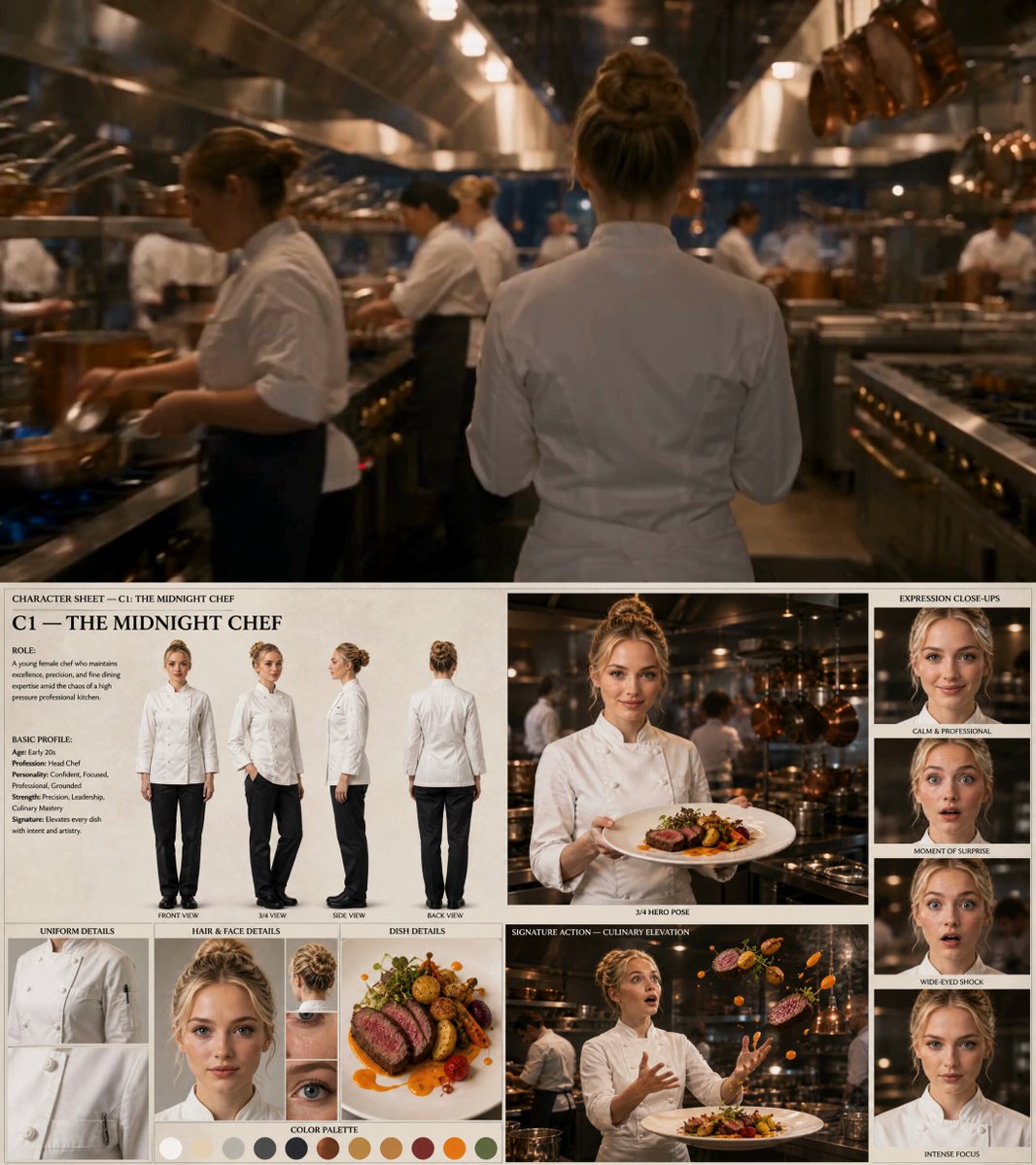
- Build character references. Generate or upload clean reference images for each recurring character and lock them into a consistent look before shot production begins.
- Storyboard as stills. Produce one still per shot. Approving stills is far cheaper than approving video.
- Generate clip by clip. Keep clips short — three to five seconds — so failed takes are cheap to discard.
- Assemble a rough cut early. Edit as you generate rather than after, so you notice coverage gaps while regeneration is still easy.
- Polish audio and captions. Voiceover, music, sound effects, and burned-in captions are what make generative footage feel finished.
- Version deliberately. Once the master is approved, create variants by swapping the opening hook, the end card, or the voiceover language — not by regenerating everything.
Track how much usage each stage consumes. Most teams are surprised to find that pre-production generation tests — not final renders — dominate their consumption.
Common Budgeting Mistakes and How to Avoid Them
Mistake: budgeting for the deliverable, not the process. A fifteen-second video is not a fixed unit of work. Budget the number of shots, variants, and revision rounds instead.
Mistake: ignoring review latency. Generative pipelines compress production, but stakeholder review still takes days. Build calendar buffers for approvals, not just for rendering.
Mistake: treating the first approved concept as final. Reserve ten to fifteen percent of the budget for a course correction after the first rough cut.
Mistake: forgetting localization. If you plan to run in multiple markets, script with that in mind. Retrofitting subtitles and re-recorded voiceover later is more expensive than planning for it.
Mistake: skipping the license review. Every generated asset still needs a rights check — platform terms, model training disclosures, voice and likeness consent, and music licensing.
Mistake: measuring only cash. The real comparison is cost per approved variant, including internal review hours. An agency quote that looks expensive per asset can be efficient if it eliminates three internal rounds.
Approval, Legal, and Brand Safety Checks Before You Approve
Cost savings evaporate if a finished asset cannot be published. Before delivery, run a short checklist:
- Likeness and voice: does any generated person resemble a real, identifiable individual? Get documented consent for any real person used as a reference.
- Platform terms: confirm the commercial-use terms of every tool in the pipeline, including the version you used.
- Disclosure: some markets and platforms require labeling of synthetic media. Check the published rules rather than assuming.
- Claims and substantiation: the same advertising standards apply to generated footage as to shot footage.
- Music and stock: verify that any track or image has a commercial license covering the intended territory and duration.
- Accessibility: captions, contrast, and audio description if required by your market.
Documenting this once turns it into a reusable approval template rather than a recurring scramble.
FAQ
Is AI video production always cheaper than hiring an agency?
No. For a single flagship asset with real talent on camera, a professional crew is often the more efficient path. AI pipelines win on volume, speed, and iteration-heavy work.
How do I forecast usage-based costs?
Estimate shots per video, multiply by a waste factor of roughly three to four, then add variants. Review actual consumption after the first project and calibrate.
What is the biggest hidden cost in an agency quote?
Usage and licensing windows, followed by change orders. Both are usually disclosed but easy to skim past.
Can I mix both approaches in one campaign?
Yes, and it is often the smartest option: generative pre-visualization, traditional capture for hero footage, and AI variants for performance channels.
How long should a fifteen-second explainer take?
A traditional pipeline typically runs several weeks; a well-run AI-assisted pipeline can deliver a first cut in days, with review time as the main variable.
Do I need new legal review for AI-generated content?
You need a rights and disclosure check, not necessarily a new legal process. Add synthetic media and likeness clearance to your existing review.
What should I ask a vendor before signing?
Ask for a phase-by-phase quote, explicit revision limits, usage terms, out-of-scope hourly rates, and a clear statement of which tools and models will be used. Those five answers tell you more than any showreel.

Alexander
More Blogs
Read MoreVidu Q4 Alternatives: 4K AI Video Models Compared (2026)
Vidu Q4 alternatives compared: Kling 4.0, Seedance 2.5, Wan 3.0, and Runway Gen-4 — 4K support, input modes, durations, audio, and what each costs in credits on Domer.
Top 4K AI Image Generators in 2026: 5 Models Compared on Real Costs
The top 4K AI image generators on Domer compared: Flux 3 Klein, Nano Banana 2.1, GPT Image 2.5, GPT Image 2, and Nano Banana Pro — 4K credit costs, reference limits, and speed.
Nano Banana 2.1 vs GPT Image 2.5: Which Image Model Should You Use? (2026)
Nano Banana 2.1 vs GPT Image 2.5 Flare compared: credit costs per resolution, aspect ratios, reference images, text rendering, and which tasks fit each model.