
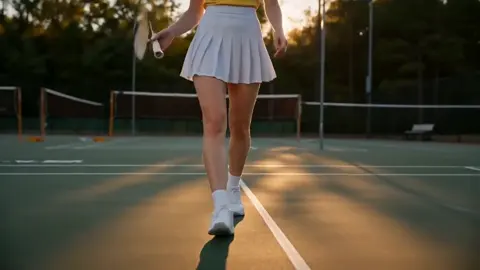
AI Video Workflows That Power Influencer Marketing Campaigns
Oct 16, 2026

Why Video Still Wins Attention in Influencer Campaigns
Short-form video remains the most efficient way to earn attention on social platforms, and that single fact shapes nearly every decision in a modern influencer campaign. A static image competes with dozens of other images in a feed. A well-built video competes only with the viewer's own impulse to keep scrolling. The formats that win are rarely the most expensive ones — they are the ones that establish context, tension, and payoff inside the first few seconds.
Generative AI has changed the cost side of that equation without changing the creative side. Shots that once required a crew, a location, and a week of scheduling can now exist as drafts in an afternoon. The result is not that craft disappeared. Craft simply moved. Instead of spending budget on logistics, teams spend it on ideas, iteration, and the judgment required to know which version of a shot actually works.
This guide is a practical workflow for marketers, agencies, and creators who want to use AI video tools inside influencer campaigns without sanding off the human texture that makes influencer content perform in the first place. It covers planning, character consistency, tool selection, prompting, editing, measurement, and the mistakes that quietly drain results.
The Production Velocity Mindset
Velocity is not about publishing more. It is about shortening the distance between an idea and a testable asset. A team that can produce twelve concept variations in a day learns more about its audience than a team that produces one polished hero video in a month — provided those twelve variations are built on a clear hypothesis.
Building a Repeatable Pipeline
A durable AI video pipeline has five stages, and each one should end with a reviewable artifact:
- Concept brief — one paragraph describing the hook, the promise, and the desired reaction.
- Shot list — six to ten numbered shots with duration, framing, and motion notes.
- Generated drafts — raw clips produced from prompts or reference frames.
- Assembly — cuts, captions, music, and pacing adjustments.
- Distribution variants — aspect ratios, hooks, and thumbnails for each platform.
The pipeline matters because it isolates where failures happen. If a campaign underperforms, the problem is usually in stage one rather than stage three. Teams that skip the brief tend to blame the model for what was actually a vague idea.
Where Speed Quietly Breaks Quality
Velocity becomes a liability when three conditions appear together: no style reference, no shot discipline, and no editing pass. Generated footage that is never storyboarded tends to look like a demo reel — technically impressive, emotionally random. The fix is unglamorous. Lock a look, lock a shot list, and treat generation as photography rather than as a slot machine.
Designing a Character and Style System
Consistency is the difference between a campaign and a collection of unrelated clips. Influencer work depends on recognition: the audience should know within half a second whose content they are watching.
Build a Style Bible Before You Generate Anything
A style bible for AI video does not need to be long. It needs to be specific. Capture:
- Palette — two or three dominant colors plus one accent.
- Lighting — soft window light, hard overhead, neon practicals, golden hour.
- Lens character — wide and intimate, or long and compressed.
- Wardrobe and props — the three items that appear in every scene.
- Motion language — handheld drift, locked-off, slow push-in.
- Texture — grain level, contrast curve, and color temperature.
The moment these choices are written down, they become reusable prompts, reference images, and review criteria. Reviewers stop arguing about taste and start checking against a standard.
Keeping a Character Recognizable Across Shots
The most reliable approach is to generate a small set of approved reference frames first — a frontal portrait, a three-quarter view, and a full-body shot — then drive subsequent clips from those frames rather than from text alone. Image-to-video generation preserves facial structure far better than pure text prompts, because the model has concrete pixels to anchor to.
When a character must appear in different environments, change one variable at a time. Swap the background while keeping pose and lighting stable. Then swap the pose while keeping the background stable. Batch-changing everything at once makes it impossible to tell which prompt change broke the resemblance.
Choosing the Right Generation Approach
Not every shot deserves the same technique. Match the method to the job.
| Shot type | Best approach | Why it works |
|---|---|---|
| Talking-head for a creator who cannot reshoot | Video-to-video restyle with face preservation | Keeps real performance and voice |
| Product beauty shot | Image-to-video from a hero still | Control over composition and lighting |
| Abstract transition or pattern break | Text-to-video | Fast, cheap, no continuity required |
| Multi-shot narrative sequence | Image-to-video from a locked storyboard | Consistent characters and framing |
| B-roll of an environment | Text-to-video with style reference | Broad coverage without a location |
General Models Versus Specialized Models
General-purpose video models are strong at realistic motion, camera movement, and broad scene understanding. Specialized and open models often do better on narrow tasks: stylized animation, physics-heavy motion, product renders, or consistent character work in a fixed art direction. A practical campaign uses both. Generate coverage with a general model, then run the shots that need a distinct look through a specialized one.
The decision criteria are simple: if the shot requires realism and natural motion, start general; if it requires a specific aesthetic or extreme repetition of the same character, start specialized. If a shot needs both, generate the base movement generally and restyle it afterward.
Controlling Motion Without Losing Continuity
Two controls do most of the heavy lifting. The first is frame anchoring — supplying both a starting and ending frame so the model knows where the shot must land. The second is motion intensity, which decides whether the camera drifts gently or the subject sprints. Most amateur AI footage fails because motion intensity is set high while frame anchoring is absent, producing clips that look energetic and narratively useless.
A useful rule: fast motion for transitions under one second, moderate motion for action beats, and gentle motion for anything carrying dialogue or text.
Prompting and Directing AI Video Like a Filmmaker
The difference between a mediocre prompt and a strong one is almost always specificity about the camera, not about the adjectives.
Write Prompts as Shot Descriptions
A weak prompt reads: a stylish woman walks through a city, cinematic, beautiful. A strong prompt reads: medium shot, handheld, slight drift right, subject in beige trench coat walking toward camera on a wet sidewalk, overcast light, shallow depth of field, background traffic softly blurred.
The second version gives the model a subject, a framing, a movement, a light condition, and a depth cue. Those four or five variables produce more controllable output than a paragraph of mood words.
Use a Shot List as a Prompt Queue
If the campaign has ten shots, write ten prompts in the same order as the edit. Group them by location so continuity stays stable across a session. Reuse the tail of each prompt — the lighting, palette, and lens description — and vary only the head. This is the same logic a photographer uses when they keep the camera on the same tripod and change only the subject.
Iterate in Small Batches
Generate four variations per shot, not forty. Review, pick one, note what worked, and adjust one variable. This is slower on the first shot and dramatically faster by the tenth, because the prompt has converged instead of drifting.
Platform-Native Formats and Editing Workflow
A clip that performs on one platform rarely performs unchanged on another. Plan for the adaptation before generation begins.
Shoot Vertical First, Then Protect the Frame
Generate with the vertical composition as the primary target, but keep the subject inside a safe central area so a square or landscape crop remains usable. This single habit eliminates most re-generation requests later in the campaign.
The Editing Pass That Makes AI Footage Feel Real
Generated footage tends to feel synthetic for predictable reasons: uniform motion, no sound design, and no rhythm. Three editing moves fix it:
- Cut on motion. Trim two frames before a movement completes so the eye is pulled forward.
- Add diegetic sound. Footsteps, fabric, traffic, and room tone do more for realism than higher resolution.
- Break the smoothness. Insert one imperfect shot — a slightly off-center frame, a quick rack focus — so the sequence has texture.
Layering captions that appear word by word, synced to speech, improves retention on muted autoplay feeds and also gives the algorithm clean text signals.
Measuring What Actually Matters
Views are a vanity metric inside a campaign that has a business objective. Track a small set of numbers that connect to decisions.
The Core Creative Metrics
- Hook rate — the percentage of viewers still watching at three seconds.
- Hold rate — the percentage reaching the midpoint.
- Completion rate — the percentage watching to the end.
- Save and share rate — the strongest signal of perceived usefulness.
- Click-through and conversion — the business outcome.
If hook rate is low, the first frame or first line failed. If hold rate is low but hook rate is fine, the middle is padding. If completion is high but conversion is low, the promise and the offer do not match.
Run Structured Creative Tests
Change one variable per test across at least five variations: hook style, opening frame, caption treatment, music bed, or call to action. Log results in a shared sheet with the prompt and style reference attached, so a winning formula can be reproduced instead of remembered.
Working With Influencers: Briefs, Rights, and Disclosure
AI-assisted production does not replace the influencer relationship. It changes what that relationship produces.
The brief should describe the audience, the single message, the required disclosure, and the deliverables — never the exact wording. Creators who are allowed to write their own hook consistently outperform those reading a script, because authenticity is the entire value of the channel.
On rights, confirm three things in writing: who owns the generated assets, whether the creator's likeness can be used in future AI-assisted content, and how long the brand can run paid amplification. Likeness terms matter more now than they did before generative tools existed, and they should be explicit rather than assumed.
Disclosure is non-negotiable. Sponsored content must be labeled clearly in the caption or on-screen text, and AI-generated or heavily altered visuals should be identified whenever the audience could reasonably mistake them for a real event or a real person speaking.
Common Mistakes That Sink AI Video Campaigns
- Starting with the tool instead of the idea. The model cannot supply a reason to watch.
- Changing everything at once. Infinite variation without a control variable teaches nothing.
- Ignoring audio. Silence reads as low quality on every platform.
- Over-polishing. Frames that are too clean break the native feel of a social feed.
- Skipping the first frame. The thumbnail and opening frame decide the campaign before the script does.
- Treating generated clips as finished assets. They are footage, and footage needs editing.
- No archive. Teams that do not tag prompts and outputs repeat the same experiments six months later.
FAQ
How many AI-generated clips should a campaign produce?
For a single influencer partnership, plan on twenty to forty generated clips to yield eight to twelve usable shots, then edit down to three to five final videos per platform. Coverage is cheap; selection is where quality comes from.
Can AI video replace filming with the influencer entirely?
It can, but the results usually underperform. Audiences follow people, not pixels. The strongest pattern is hybrid: real footage of the creator for the moments that require trust, AI-generated footage for b-roll, concept shots, and scenes that would be impossible or expensive to film.
Which is better, text-to-video or image-to-video?
Image-to-video wins whenever continuity, framing, or character identity matters. Text-to-video wins for abstract transitions, textures, and rapid concept exploration where no continuity is required. Most campaigns need both.
How do you keep a character consistent across many clips?
Lock a reference set, drive generation from those frames, change one variable at a time, and keep lighting and lens descriptions identical across prompts. Consistency is a documentation problem as much as a model problem.
What resolution and length should clips be?
Generate at the highest resolution your workflow can handle, then downscale for delivery. Keep individual clips between two and five seconds in the edit — short clips cut together more naturally and hide generation artifacts better than long continuous shots.
How do you avoid AI footage looking uncanny?
Reduce motion intensity, cut faster, add real sound, avoid extreme close-ups of faces in motion, and introduce one deliberate imperfection per sequence. Slight framing irregularity reads as human camera operation.
Do AI-assisted campaigns need different legal review?
Yes. Check likeness rights, model training and usage terms, music licensing for AI-generated audio, and platform-specific synthetic media policies. Disclosure rules vary by region and platform, and they change more often than most marketing playbooks.
How do you prove ROI on the video itself?
Attribute with unique links or codes per creator and per variant, then compare hook rate, hold rate, and conversion against the same creative produced without AI assistance. The honest benchmark is not the tool — it is the previous campaign.
Putting the Workflow Together
A campaign that uses AI video well looks unremarkable from the outside. The audience sees a creator they recognize, a hook that lands, and a payoff that arrives before attention runs out. What changed is everything behind the camera: the storyboard was generated before lunch, the character stayed consistent across nine shots, the vertical crop was protected from the first frame, and the winning hook was identified after five structured tests rather than after five weeks of guessing.
Start small. Pick one campaign, build a style bible, write a shot list, generate a controlled batch, and measure the hook rate. The team that treats generative video as a production discipline instead of a novelty will keep the velocity advantage long after the novelty wears off.

Alexander
More Blogs
Read MoreVidu Q4 Alternatives: 4K AI Video Models Compared (2026)
Vidu Q4 alternatives compared: Kling 4.0, Seedance 2.5, Wan 3.0, and Runway Gen-4 — 4K support, input modes, durations, audio, and what each costs in credits on Domer.
Top 4K AI Image Generators in 2026: 5 Models Compared on Real Costs
The top 4K AI image generators on Domer compared: Flux 3 Klein, Nano Banana 2.1, GPT Image 2.5, GPT Image 2, and Nano Banana Pro — 4K credit costs, reference limits, and speed.
Nano Banana 2.1 vs GPT Image 2.5: Which Image Model Should You Use? (2026)
Nano Banana 2.1 vs GPT Image 2.5 Flare compared: credit costs per resolution, aspect ratios, reference images, text rendering, and which tasks fit each model.