

Advertising teams are under constant pressure to produce more video, faster, without letting quality slide. Generative AI has moved from a curiosity to a practical production tool, and short promotional clips are one of the clearest use cases. But the difference between clips that quietly get skipped and clips that drive real performance is not about having the fanciest tool. It is about how you match models to campaign goals, keep characters and visuals stable, direct the narrative, and manage production resources.
This guide is written for marketers, content leads, and creators who want to stop treating AI video as a gimmick and start treating it as a disciplined part of their production workflow. It covers the strategic choices that matter most, the practical steps to keep output consistent, and the common mistakes that waste time and budget.
What changes when ads are generated instead of filmed
Traditional ad production is expensive, slow, and hard to iterate. A reshoot costs time and money, and a last-minute creative change is painful. Generative production flips that dynamic. You can generate a near-final version of an idea in minutes, test multiple variations against the same audience segment, and tailor the message to specific platforms without rebuilding the material from scratch.
The consequence is a different kind of creative process. Instead of locking a single concept early and hoping it lands, you produce a family of variations from a shared foundation. Different aspect ratios for different platforms, different lengths for different placements, and different openings for different audience groups all come from the same underlying idea.
Because the cost of a single variation is low, the emphasis shifts to testing and iteration. Teams that used to argue over one script can now produce several and let the data decide. That does not mean abandoning craft; it means using craft more deliberately and measuring the results sooner.
Matching the model to the ad's visual goal
The most important strategic decision is choosing the right generation tool for the job. Every ad campaign has a visual intent, and no single model handles every intent equally well.
If the campaign needs photorealism so the product looks like a filmed image, you reach for a model that handles skin, reflections, and lighting realistically. This is the right choice for product-heavy ads, testimonials, and lifestyle spots where authenticity drives trust.
If the goal is a stylized, animated, or branded look, you need a model that can reproduce that specific visual language consistently. Animated explainers, playful brand characters, and stylized backgrounds all benefit from tools that understand a defined aesthetic.
If the campaign is about speed and volume, you use fast, inexpensive models for drafts and variations. These help you iterate on concepts cheaply before spending premium resources on the shots that actually reach the audience.
The key is to define the visual intent before opening any tool. Teams that start from a clear goal select models deliberately; teams that start from a shiny tool and look for a use tend to produce generic results.
Keeping characters and products consistent
Ad campaigns often run as a series: the same spokesperson, the same product, the same brand world across multiple clips. Without discipline, generated characters drift, products change shape, and the campaign loses its identity by the third version.
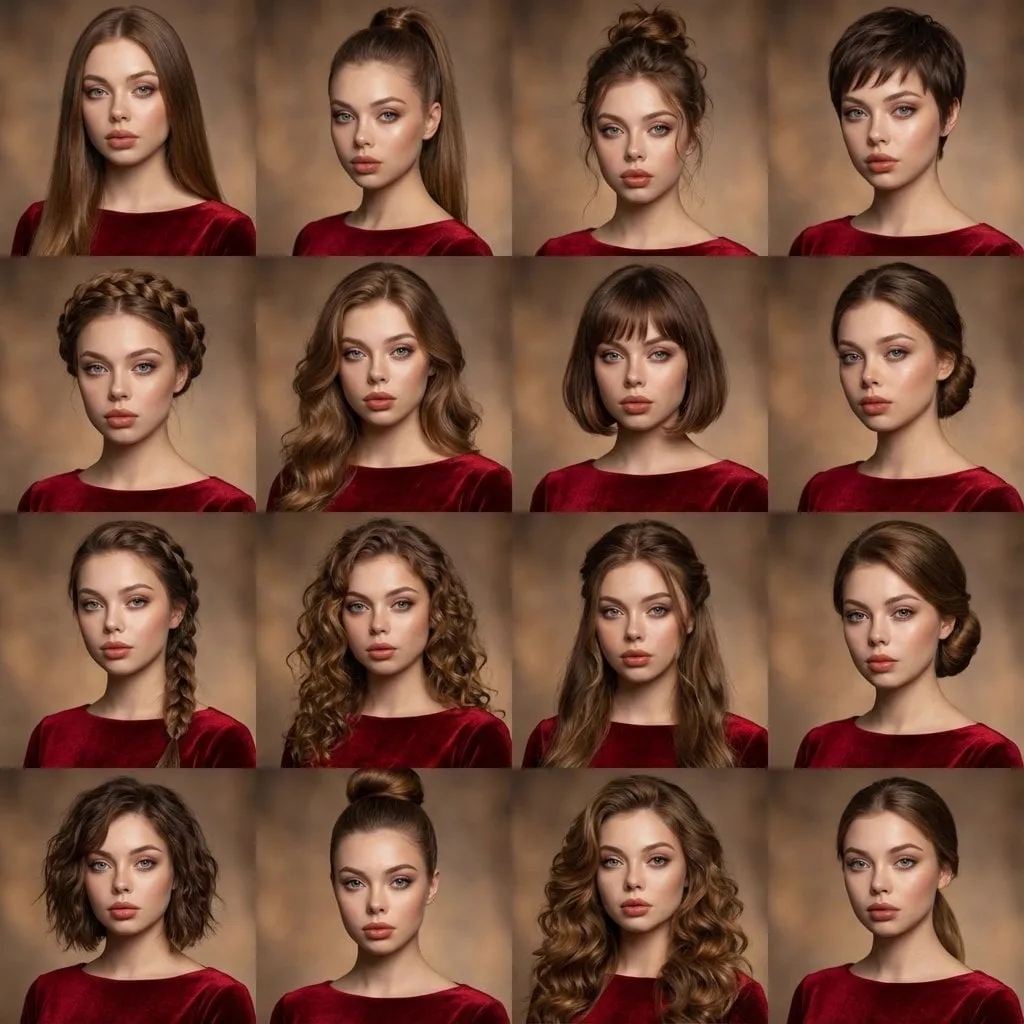
Consistency starts with reference images. Establish a small, curated set of reference images for the main character, the product, and the overall look. Work from those same references every time you generate a scene. If the goal is a series, this reference set becomes the foundation that every clip shares.
Keep the reference set stable. Update it only when a genuine improvement is found, and document which references produced the best results. A simple log of models, prompts, and references means you can reproduce a look weeks later instead of guessing.
Consistency also depends on controlled variation. It is tempting to let a new prompt fully reimagine the hero each time to keep things fresh, but that is exactly what breaks a series. Instead, vary the setting, the copy, and the call to action, while holding the character and the brand world fixed.
Directing the narrative like a brief, not a prompt
The biggest leap in quality happens when you stop typing prompts and start directing. An effective AI ad comes from a clear creative brief, broken into scenes with a beginning, a middle, and an end.
Start with a one-line hook that tells the viewer what this clip is about and why they should care. Shape the opening to stop the scroll, build the message in the middle, and close with a clear action. This narrative skeleton guides how you write the generation requests for each scene.
Use an agent or director-style approach where the system helps translate this brief into composition, scene breakdown, and consistent visual framing. Instead of reinventing the message for every frame, you keep the narrative arc fixed and let the tooling execute the scenes.
This is where a production director is worth a dozen skilled prompt writers in isolation. The director holds the brief, checks that each scene serves the story, and refuses to ship a beautiful shot that does not fit the message.
Camera and cinematic control beyond the text
Early text-to-video tools were famous for surprising results. The models chose the framing, the movement, and the mood. For advertising, that unpredictability is rarely acceptable. You want to tell the camera what to do.
Modern generation models expose parameters for camera movement, framing, and steering. You can request a slow push-in on a product, a tracking shot following a character, or a static wide that establishes a scene. If the material needs the character to hold a pose or the camera to follow a specific path, prioritize tools that give you that control.
Cinematic control is also about coherence. When the camera behaves deliberately, the viewer reads the piece as intentional rather than accidental. It is worth learning the control vocabulary of the models you use, because the ability to direct is what separates produced-looking ads from random generations.
Keeping quality high while controlling cost
Generative production makes it easy to spend a lot quickly. Premium shots are expensive, and dozens of failed variations drain the budget before a single usable clip exists. Controlling cost without sacrificing realism requires structure.
Use a tiered approach. Drafts, storyboards, and concept tests run on fast, inexpensive models. Reserve premium generation for the hero shots that will actually reach an audience. Most of the mistakes are made in the draft phase, and catching them there is almost free.
Set a clear definition of done. Before generating, decide what makes a shot acceptable: correct composition, consistent character, on-message action, usable resolution. Iterate against that bar instead of chasing endless, unspecified improvements.
Finally, reuse successful work. The best frame from an accepted shot becomes a reference for the next one, tightening consistency and raising the pass rate of later generations.
Scaling production with task and resource management
When a campaign grows from a handful of clips to dozens, generation stops being a series of one-off moments and becomes a managed pipeline. The same principles used to run large productions apply.
Queue and batch the work logically. Group scenes by the model they need, so you switch tools less and use each one's strengths consistently. Track which scenes are waiting, which are generating, and which are accepted, so nothing falls through the cracks.
Integrate video generation with the rest of the production stack. If your ad includes voice-over and music, generate or match the audio alongside the visuals so the tone aligns from the start, rather than forcing a mismatch to be repaired in post.
Manage the team around the pipeline. In larger setups, some people own the references and the brief, others own specific models, and others review and assemble. Clear ownership prevents drift and keeps the repeated quality consistent.
Personalizing ads at scale with custom data
One of the strongest opportunities in AI ads is mass personalization. Because a generation can be conditioned on reference material, you can adapt the same base ad to different markets, languages, or audience segments without reshooting.
A common pattern is to keep the structure and the character stable, then vary the details that matter to each segment: the spoken copy, on-screen text, region-specific settings, or the featured product variant. A single creative foundation yields a full family of localized ads.
This works best when you plan for it. Structure the base ad so its replaceable parts are clearly separated from its fixed parts. Document what changes per segment and how. The result is a lean production that can feel personally targeted at scale.
Measuring whether the ads actually work
Generated media changes production, but it does not change the fundamentals of advertising: you still need to know whether the work moved the metrics you care about. Set up measurement from the start so the speed of production does not outrun the evidence.
Decide the primary metric for each campaign before generating anything. It might be click-through rate, completion rate, conversions, or brand recall depending on the goal. For short social formats, completion rate within the first seconds is often the most telling, because it reflects whether the hook works.
Because the cost of a variation is low, run controlled tests. Compare two versions that differ in exactly one element: a different opening, a different spokesperson, a different call to action. This isolates what actually drives performance instead of guessing.
Review and feed results back into production. If a particular opening style consistently earns more completions, adopt it as the default for the next wave. If a certain model produces shots that test poorly, change how you use it. The pipeline should treat every campaign as a learning cycle, not a one-off.
Finally, keep the loop fast. The whole point of generated advertising is that the time between an insight and a working ad is short. If your review and approval process still takes weeks, you waste most of the advantage. Build a cadence that lets a winning variation move to production in days.
A worked example: one product, many placements
To make the strategy concrete, imagine launching a single consumer product across three placements.
For a television-style hero spot, you use your premium photorealistic model. A spokesperson from your reference set presents the product in a clean studio. You direct the camera with a slow push-in, hold the product consistent with its reference set, and generate the few hero shots that will define the campaign.
For social media, you produce a family of short variants from the same foundation. The spokesperson and product are fixed, but the opens differ by platform: a fast, playful hook for one, a story-driven start for another. These run through your fast model for the first pass, then only the strongest variations move to premium quality.
For a specific regional segment, you personalize. The base structure stays, but the spoken copy, the on-screen text, and a couple of region-specific details change. Everything renders against the same references, so the family still reads as one consistent campaign.
This single setup yields a hero spot, a suite of social versions, and a set of personalized regional ads, all coherent, produced in days rather than months, and ready to be tested against the metrics that matter.
Common mistakes that waste production budgets
A few mistakes explain most failed AI ad projects.
The first is skipping the brief. Teams jump straight to generating and end up with beautiful clips that say nothing, because there was never a clear message or audience in mind.
The second is using the wrong tool for the goal. Forcing a single model to do everything produces weak results across the board, whether it is stylized work that should use a dedicated model or a mass production that is burning premium budget.
The third is inconsistent characters and products. Without reference images and stable settings, a campaign loses its identity within a few versions.
The fourth is neglecting audio. The emotional punch of an ad lives heavily in voice and music. Matching sound to the visual direction early makes a clip far more effective than adding it as an afterthought.
FAQs about AI ad production
Do I need many models to produce good ads? No. Start with a small, well-understood set that covers the goals you actually have. Add tools when a clear gap appears in your results.
How do I keep the product's look consistent? Create a stable reference set for the product and reuse it for every scene and every variant. Refine the set sparingly and document what worked.
Are generated ads as effective as filmed ones? For many placements, they are. The advantage is speed and iteration. Effectiveness depends less on the source and more on whether the message, the audience, and the execution align.
Should I personalize every ad? Personalization pays off most when your audience breaks into clear, meaningful segments. For a narrow audience, a single well-made ad usually beats many thin variations.
Conclusion
The strategic use of AI in advertising is not about replacing craft with a one-click generator. It is about building a disciplined pipeline: define the visual intent, select the right model, hold characters and products consistent, direct the narrative like a brief, and manage cost and scale with structure.
Teams that make the effort to set up references, briefs, and a clear bar for quality will find that AI throws an enormous creative leverage. They produce more variations, test more hypotheses, and adapt faster to the market. The tooling keeps improving, but the advantage belongs to those who have built a repeatable method around it.
