


E-commerce has moved far beyond the simple act of buying and selling online. What started as a digital storefront has grown into a sprawling ecosystem where immersive experiences, artificial intelligence, and short-form video are rewriting how brands attract, convert, and keep customers. This guide maps the future of e-commerce, lays out the scope of what modern digital marketing actually involves, and gives you a practical strategy for navigating the shift toward automated, AI-driven content.
If you run an online store, a marketing team, or a content studio, the changes of the past few years are impossible to ignore. The rules of attention have changed. Customers no longer browse product pages the way they once did; they discover through feeds, watch short clips that showcase products in motion, and form decisions quickly. Understanding both the landscape and the tactical techniques behind it is the difference between a business that scales and one that gets left behind.
The new shape of e-commerce
Digital commerce has become vastly more complex than a catalog of products and a checkout button. Today the entire customer journey — from discovery to the moment of purchase and beyond — is stitched together from multiple channels and formats. The store is no longer a single destination; it is wherever the customer happens to be, whether that is a social feed, a search result, a video, or a physical space that connects with the online experience.
The rise of immersive and omnichannel retail
Two forces are reshaping the storefront. The first is immersion. Virtual showrooms, augmented reality try-ons, and interactive product views let customers explore goods in a way that static images never could. When someone can see how a piece of furniture fits in their room or how a garment moves, they buy with far more confidence.
The second force is omnichannel. Brands no longer treat each platform as an island. A campaign might start with a short video on a social platform, move to an email with a personalized recommendation, and finish at a checkout that remembers the shopper's history. Consumers expect this seamless continuity. The brands that deliver it consistently see better retention and higher repeat-purchase rates.
The role of artificial intelligence in marketing workflows
AI has graduated from being a buzzword to becoming the engine at the center of modern marketing. It no longer just personalizes a recommendation; it helps you produce the content that fills your funnel. Generative tools can draft ad copy, create product descriptions, design campaign visuals, and even generate the video assets that drive discovery. The result is a workflow where a small team can produce what once required an entire agency.
The practical effect is speed and scale. Where producing a new campaign used to take weeks, an AI-assisted team can iterate in days — and test multiple variations to see what actually resonates. The creative partner is not replacing judgment; it is amplifying output and freeing people to focus on strategy, tone, and the final polish.
Short video as the connective tissue of the journey
Short-form video has become perhaps the single most influential content format for commerce. People discover products in clips, watch them in action, and gauge whether something looks as good in motion as it does in stills. For brands, this means video is not an optional extra; it is a core part of the content pipeline. From teasers to full product showcases, the ability to produce video quickly and consistently now shapes how well a brand stays visible in crowded feeds.
Building a data-driven and AI-first marketing strategy
Vague ambition without a system will not survive contact with a crowded market. A serious strategy rests on data, structured workflows, and a relentless focus on repeating what works.
Using advanced AI models for visual differentiation
One of the fastest ways to stand out is through distinctive visuals. Because generative tools now allow for detailed control over style, lighting, and subject matter, a brand can carve out a recognizable look that cuts through the noise. Consistency matters as much as creativity: when every piece of content shares a visual language, customers come to recognize the brand at a glance, and that recognition is a form of trust.
The technique is simple in principle but demanding in practice. Define a visual identity — the palette, the mood, the recurring motifs — and apply it across every piece of generated content. The strongest brands treat their AI-generated assets with the same care they would give any professional production.
Turning customer data into narrative
Data is not just for dashboards. It is the raw material for storytelling. When you understand what your customers search for, which questions they ask, and which objections stop them from buying, you can shape your messaging to answer exactly those concerns. A product page, an ad, or a video that speaks to a genuine pain point will outperform generic content every time.
The art lies in using data to inform, not to paralyze. Collect signals from searches, engagement, and purchase behavior, and translate them into concrete content briefs. This closes the loop: better content drives engagement, engagement produces more data, and that data informs the next round of content.
Building systems and communities around content
Sustainable marketing is not a campaign; it is a system. Brands that succeed build repeatable content pipelines, standardize their creative briefs, and maintain a cadence that keeps them present in the feed. Equally important is the community around the content. When audiences engage, share, and comment, they extend the reach of every asset and generate the social proof that newer customers rely on.
The recipe is to combine automation with human touch. Use tools to produce and schedule at scale, but keep the voice, tone, and responsiveness that make a brand feel human.
Optimizing content production with video fusion techniques
As brands lean harder on video, the technical challenge shifts to consistency. A product or spokesperson that looks different from one clip to the next undermines the entire visual identity. This is where video fusion techniques and character-consistency methods become commercially critical.
Keeping characters and products consistent across scenes
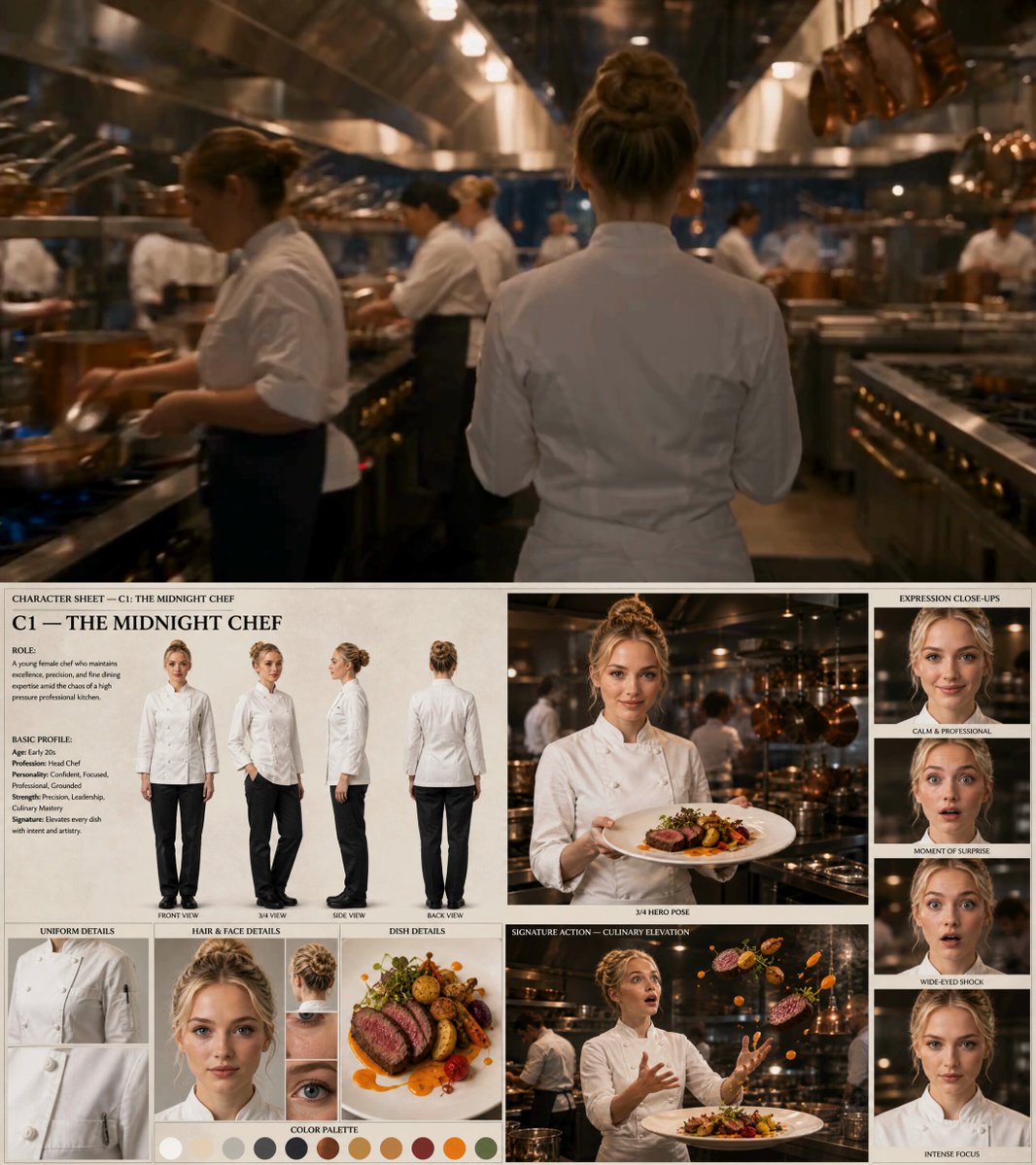
The technique of multi-image fusion solves a problem that once plagued generative production: the way a subject drifts visually between shots. By anchoring a character or product to one or more reference images, the generation pipeline extracts a stable representation of its identity and carries it across every scene. The protagonist stays recognizable whether the scene is a bright studio or a dark alley, and the product keeps its exact look from every angle.
For a brand, this is the difference between a cohesive campaign and a disjointed set of clips. Consistency is not merely aesthetic; it is what allows a customer to recognize a product and builds the familiarity that drives repeat purchases.
Standardizing the creative workflow
To produce video at scale without sacrificing quality, standardize the process. Establish reference images for every recurring subject, define the direction of art once, and reuse prompt structures across clips. This turns a chaotic, one-off creative exercise into something closer to an assembly line — without losing the room for experiment. The goal is to make quality reproducible, so that every new piece of content starts from a strong baseline rather than from scratch.
The results speak for themselves. Teams that systematize their production can fill feeds with consistent, on-brand video, respond faster to trends, and maintain a professional look even at high output volumes.
A practical roadmap for modern e-commerce
Putting all of this together, a workable roadmap looks like this. Start by auditing where your customers actually spend their attention, and commit to being present there. Build a small visual identity system that all your content will follow. Stand up an AI-assisted content pipeline that can produce both imagery and video quickly. Anchor recurring subjects — spokespeople, products, mascots — to reference images so they stay consistent. Use data from searches and engagement to feed your next round of briefs. Then, layer in community: respond, engage, and let your audience amplify your reach.
The order matters. Without a consistent visual identity, scaling quickly only reproduces a mess at higher speed. Without the video pipeline, you miss the format where discovery now happens. And without the data loop, you are creating content in the dark.
Measuring what actually works
Good marketing is measurable, and e-commerce is one of the easiest places to see cause and effect. The metrics worth watching go beyond the obvious. Yes, revenue and conversion rate matter, but so do engagement on the discovery side: how many views your clips earn, how often they are saved or shared, and how much time people spend with your content. A piece that earns thousands of saves yet converts modestly is still doing its job at the top of the funnel. The deeper signal is whether content drives movement — whether people move from seeing a clip to viewing the product page, adding to cart, and ultimately buying.
Build the habit of reviewing this on a regular cadence. Look at which formats, styles, and subjects overperform, then produce more of what already works. The data will rarely tell you exactly what to create, but it will reliably tell you what to stop doing. That allocation of effort — cutting the weak and doubling down on the strong — is where the compounding gain lives. Attach a clear owner to each metric, review the numbers weekly, and let a disciplined feedback loop turn a promising approach into a durable growth engine.
Common pitfalls to avoid
Several mistakes tend to separate thriving e-commerce marketers from the rest. One is chasing every platform and format at once, spreading resources too thin to do anything well. Another is producing content that looks indistinguishable from every competitor, wasting the chance to build a recognizable brand. A third is ignoring consistency, so that a campaign loses credibility the moment the visuals start to vary. Finally, many teams still rely on manual processes for what could be automated, forfeiting the speed that the market rewards.
The fix in each case is the same discipline: focus on a visual system, invest in repeatable production, and let data decide where your effort actually pays off.
Frequently asked questions
Do small brands actually need AI in their marketing? Increasingly, yes. AI lowers the cost of producing the content volume that feeds discovery platforms. What was once the domain of large agencies is now accessible to a team of one or two.
Is immersive commerce a real trend or a novelty? It is real and growing. Virtual try-ons and interactive views measurably reduce returns and lift confidence, especially in categories where fit or appearance matters.
Why does visual consistency matter so much? Because recognition drives trust. When a customer sees the same product and spokesperson look identical across every clip and ad, the brand feels reliable. Inconsistent visuals signal carelessness and undermine conversions.
Can generative video replace filmed commercials? It complements them. For hero films with real actors and complex shoots, traditional production still wins. Generative video is ideal for volume, iteration, low-budget concepts, and filling the top of the funnel.
What should a small team prioritize first? Start with a visual identity system, then a repeatable video pipeline, then the data loop. Those three create the foundation for everything else.
How do I avoid content that all looks the same? Differentiate through a distinctive color palette, consistent lighting mood, and recurring subject matter — then enforce those choices across every asset.
Conclusion
The future of e-commerce is not a distant concept; it is unfolding now across feeds, immersive storefronts, and automated content pipelines. The brands that thrive are the ones that combine a clear visual identity, an AI-assisted production workflow, and a data-driven sense of what their customers actually want. Video has become the connective tissue of the modern journey, and consistency has become the foundation of trust. Whether you are just starting or scaling an existing store, the path is the same: choose your visual language, build a system that can produce at speed, anchor your subjects for consistency, and let the data guide your next move. Do that well, and the store is no longer just where you sell — it becomes the experience itself.
