
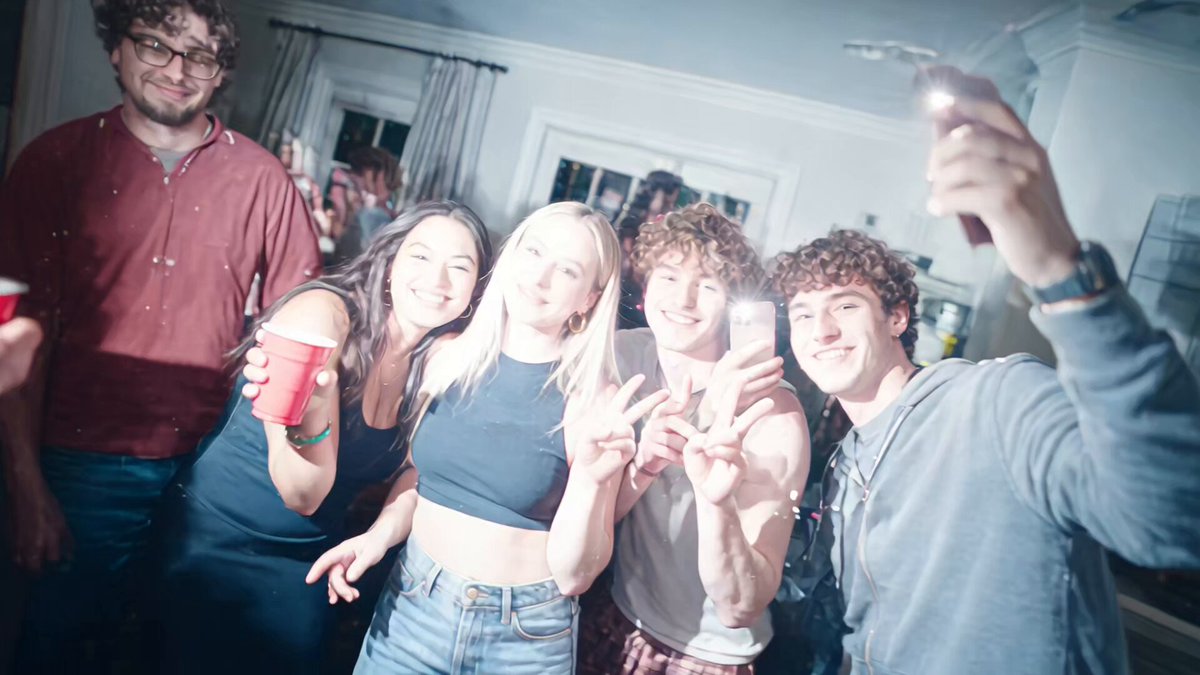

Influencer marketing has stopped being an experiment and become a core part of the e-commerce playbook. In a few short years it has grown into an industry worth billions, and at its heart is a single insight: people trust people more than they trust ads. When a creator they follow recommends a product, shows it in use, and tells a story around it, that recommendation carries a weight that a banner ad never can.
Across the internet, influencer marketing has evolved from a niche tactic into a measurable channel, with brands of every size treating it as a mainstream acquisition path. And the format that made it work is video. This article examines why video became the backbone of influencer-driven commerce, how shopping integrations close the loop, the growing role of smaller influencers, and the technology now making video easier to produce at scale.
Why Video Won as the Core Format
Text reviews and static product photos once carried much of online commerce, but they have limits. A photo cannot demonstrate fit, movement, or use. A text review cannot convey tone of voice, enthusiasm, or real-world context. Video removes those limits: it shows the product in action, the feel of the material, the way it performs, and the personality of the person recommending it.
Trust Through Authentic Storytelling
The deciding factor is authenticity. Influencers succeed when their content feels like a genuine story rather than a commercial interruption. Video is uniquely suited to this, because it lets a creator build a narrative around a product: showing the problem it solves, the moment of using it, and the result. That narrative structure builds trust far more effectively than a description list.
This is why the most effective influencer content no longer looks like advertising at all. It looks like content that happens to feature a product, recommended by someone the viewer already trusts. That alignment between content value and commercial intent is what gives video its advantage.
The Rise of the Micro-Influencer
One of the most important shifts has been the growing role of micro- and nano-influencers — creators with smaller but more engaged audiences. Unlike mega-celebrities, who reach many but deeply, micro-influencers reach fewer people with far higher trust. Their audiences are usually more niche and more loyal, which translates into better engagement and, often, better conversion.
For brands, this creates a portfolio opportunity: instead of one millionaire celebrity, run a campaign across dozens of relevant micro-creators, each reaching a tightly defined community. The combined reach is comparable, the authenticity is higher, and the cost is often lower. Video is where these smaller creators are often strongest, because their content feels personal and organic rather than produced.
Closing the Loop: Shoppable Video
Authenticity alone does not drive sales; it drives interest. To turn interest into revenue, the path from content to checkout has to be short. That is where shoppable video technology enters the picture.
Making Content Purchasable
Shoppable video lets a viewer buy a product without leaving the content where they encountered it. Tags, links, and integrated checkout appear directly in or alongside the video, so the gap between "I want that" and "I bought it" shrinks to a single tap. Reducing that friction is one of the most powerful levers in e-commerce, because every additional step between desire and purchase is lost revenue.
Blending Content and Commerce
The most effective shoppable videos do not feel like catalogs. They marry the discovery value of content with the directness of commerce: a creator demonstrates a product naturally, and the ability to buy it is tucked into the experience. When done well, the commerce part never interrupts the trust-building part. This blending of content and transaction is now a defining feature of modern social commerce.
AI in the Influencer Video Pipeline
Producing video at the scale influencer marketing demands is expensive and time-consuming. That is where artificial intelligence has become transformative, lowering the production bar so even small brands and individual creators can keep up with the format's demands.
Low-Cost High-Quality Production
Generative AI now produces product visuals, lifestyle scenes, and even full video sequences that used to require a shoot. A brand that wants to show a product in use can generate polished scenes from reference images, test several variations, and iterate quickly. The cost per piece of video drops dramatically, which makes video-first influencer content viable for far more businesses.
Consistency and Style at Scale
For campaigns spanning many creators or many products, consistency is a challenge. AI helps by preserving visual identity: character keyframes and style references keep a recognizable look across dozens of clips. A brand can generate a family of videos that all clearly belong to the same campaign, even when produced by different tools or creators.
Handling the Technical Load
Video generation is resource-intensive. Behind the scenes, GPU-heavy tasks need to be queued and managed so that a campaign's production runs smoothly rather than bottlenecking. Production pipelines now increasingly treat this like other infrastructure: batch work, prioritize, and schedule. Handling the technical load well is what lets a team ship volume without overpaying or stalling.
Measuring: From Views to Sales
The old era of influencer marketing was judged on vanity metrics — impressions, likes, views. The modern approach is far more rigorous, connecting influencer activity to actual business outcomes.
The Data Bridge Between Content and Revenue
For a campaign to be measurable end to end, the platforms and systems need to talk to each other. When a viewer clicks a product in a video and completes a purchase, that attribution should be captured. This means integrating influencer content with the e-commerce funnel: the store needs to recognize which creator and which video drove the sale.
Metrics That Matter
Track the metrics that map to revenue: conversion rate, average order value, and return on ad spend for each creator. View-to-sale ratio tells you whether a creator's audience is actually a good commercial fit, not just a big one. Cost per acquisition across creators lets you reallocate budget to what works. When influencer marketing is measured this way, it stops being an art gamble and becomes a manageable, optimizable channel.
Optimizing the Campaign Continuously
The best teams treat every campaign as a learning loop. Launch with a hypothesis about which creators and formats will perform, measure the real conversion data, then shift budget toward the winners. Because AI makes production cheap, you can also test multiple video angles quickly — different hooks, different creators, different placements — and double down on what the data supports.
Building a Video-First Influencer Strategy
If you want to build a video-first influencer program, a clear structure will take you further than improvisation.
Define the Goal First
Be explicit about whether the campaign's job is awareness, traffic, or direct sales. The answer changes everything: who you pick, which format you use, how you price, and what you measure. An awareness campaign optimizes for reach and quality of storytelling; a sales campaign optimizes for conversion and efficiency.
Match Creators to the Funnel
Different creators serve different purposes. Large creators build awareness and reach. Micro- and nano-influencers drive trust and conversion in specific niches. Long-term partnerships beat one-off posts for building genuine recommendation credibility. Design the mix to match your goal.
Make Production a Pipeline
Treat video production as a repeatable pipeline rather than a series of one-offs. Standardize when you can, use AI for efficiency, maintain a consistent brand look, and manage the technical workload deliberately. The teams that ship reliable volume are the ones that have systematized their production.
Measure, Learn, Scale
Connect content to conversion data, review it honestly, and scale what works. The advantage of a measurable channel is that you can compound your gains: cut what underperforms, invest more in what delivers, and let the data guide the strategy as it evolves.
Choosing the Right Influencers
Selection is where many campaigns are won or lost. The instinct to chase the largest following is almost always wrong for commerce. What matters is fit.
Audience Fit Over Raw Reach
A creator with fifty thousand followers who are exactly your customer profile will outperform a million-follower celebrity whose audience barely overlaps with yours. Look at who actually follows a creator — demographics, interests, and buying behavior — before looking at the follower count. The overlap between a creator's audience and your target market is the single best predictor of performance.
Engagement Quality as a Signal
Follower count says nothing about trust. Engagement quality does. Look at comment depth, repeat interactions, and whether the audience actually acts on recommendations. A creator whose audience regularly takes their suggestions is more valuable than one whose fans just watch passively. Authentic engagement is the currency that converts.
Long-Term Versus One-Off
A one-off post can generate a spike, but sustained partnerships build credibility. When a creator recommends a product over time, weaving it into their authentic content, the recommendation carries far more weight than a single sponsored moment. Treat influencer marketing as a relationship program, not a series of transactions, and the compounding trust pays off.
Campaign Formats That Convert
Different goals are served by different content structures. Having a range of reliable formats makes a program both creative and predictable.
The Honest Demo
The most reliable converter is a straightforward, honest demonstration: the creator shows the product working, explains the benefit plainly, and shares their genuine reaction. It is not flashy, but it builds trust, and trust drives purchase. This format works especially well when the creator chooses the tone — a real review beats a scripted ad.
The Before-and-After
For products that improve something — a tool, a service, a routine — the before-and-after format is powerful. The creator shows the problem clearly, applies the product, and reveals the result. This structure gives the viewer a story arc they can imagine themselves in, which is precisely what moves them toward a decision.
The Unboxing and Daily Test
Unboxings and days-in-the-life tests let a creator show authenticity through experience rather than claims. By testing the product in a believable everyday context, a creator produces content that feels less like marketing and more like proof. These formats are especially useful for generating social proof at the moment of purchase consideration.
The Live Shopping Moment
Interactive live formats combine entertainment, demonstration, and instant purchase. A creator presents products, responds to questions in real time, and viewers can buy during the event. The urgency and interaction of a live session create engagement that recorded content rarely matches, making it a strong addition to a video-first strategy.
Avoiding Common Pitfalls
Even a well-designed program can stumble on predictable mistakes.
- Judging creators by reach alone: big audiences are not the same as relevant, converting audiences.
- Skipping the funnel integration: without connecting content to purchase data, you cannot know what actually works.
- Standardizing away authenticity: over-scripted content erodes the trust that makes influencer marketing effective.
- Neglecting disclosure and compliance: transparency is not just a legal requirement; it is essential to the trust the entire model depends on.
- Treating it as an afterthought: influencer marketing performs when it is treated as a real, measured, optimized channel with dedicated attention.
Conclusion
Influencer marketing has become a central pillar of e-commerce, and video is the format that makes it work. Video builds the authentic trust that drives purchase decisions, while shoppable integrations close the distance from interest to sale. Smaller influencers are proving that engagement and trust can matter more than raw reach, and AI is bringing the cost of high-quality video production down to the point where it is accessible to nearly everyone.
The brands that win with influencer marketing are those that treat it as a real channel: defined by clear goals, connected to conversion data, and improved through continuous measurement. Pair that discipline with modern, AI-assisted production and you have a strategy that is both authentic and scalable — the best of both worlds for the next era of online commerce.
