
Learning Cinematography With AI: A Practical Guide to Designing Better Shots
Cinematography used to carry a certain mystique. It felt like a craft reserved for professionals who had spent years on set, learning how light behaves, what a camera movement communicates, and why one framing tells a richer story than another. The door to that knowledge was experience, and experience was slow to come by.
That door has swung open. Modern AI tools do not just generate images; they can teach you the language of shot design. By analyzing what makes a shot work, camera movement, lighting, atmosphere, composition, these tools help you understand the principles actively while you work. The result is that a single creator can develop a director's eye without a decade on a film crew. This guide walks through the fundamentals of AI-assisted cinematography and how to use them to design shots that actually communicate.
The fundamentals of cinematic language
Cinematography is not about the camera. It is about how the camera shapes what the audience feels. Before a single frame is generated, understanding the fundamentals tells you which choices to make.
Composition is where you start. Where the subject sits in the frame, how empty space is handled, and how lines lead the eye all shape the read of a shot. Classic rules like the rule of thirds, leading lines, and headroom exist because they work predictably. A tool that applies these principles automatically lets you focus on what each shot is supposed to mean.
Pacing of the image also matters for visual rhythm. Alternating wide shots, medium shots, and close-ups creates a sense of discovery that a series of identical framings can never produce. Variety is not decoration; it is how attention is guided.
What the camera is really doing
Camera movement is never accidental. Each kind of movement makes a specific promise to the audience.
A push, moving in on the subject, signals importance and intimacy. A pull, moving away, reveals context and creates distance. A tracking shot that follows a moving subject keeps us connected to their journey, while a static frame forces the eye to search, a powerful tool for tension.
Steadiness and speed matter as much as direction. A slow, careful move feels contemplative; a quick whip reads as energy and urgency. In AI-assisted shot design, you can specify the exact movement and the tool renders it consistently, which lets you experiment with how move related to mood without wasting a whole shoot.
One of AI's best gifts here is confidence. Trying out seven different movements to see which creates the strongest feeling is cheap when generation is fast. You learn by comparison, which is exactly how a cinematographer trains on set, but far more quickly.
Light and atmosphere as storytellers
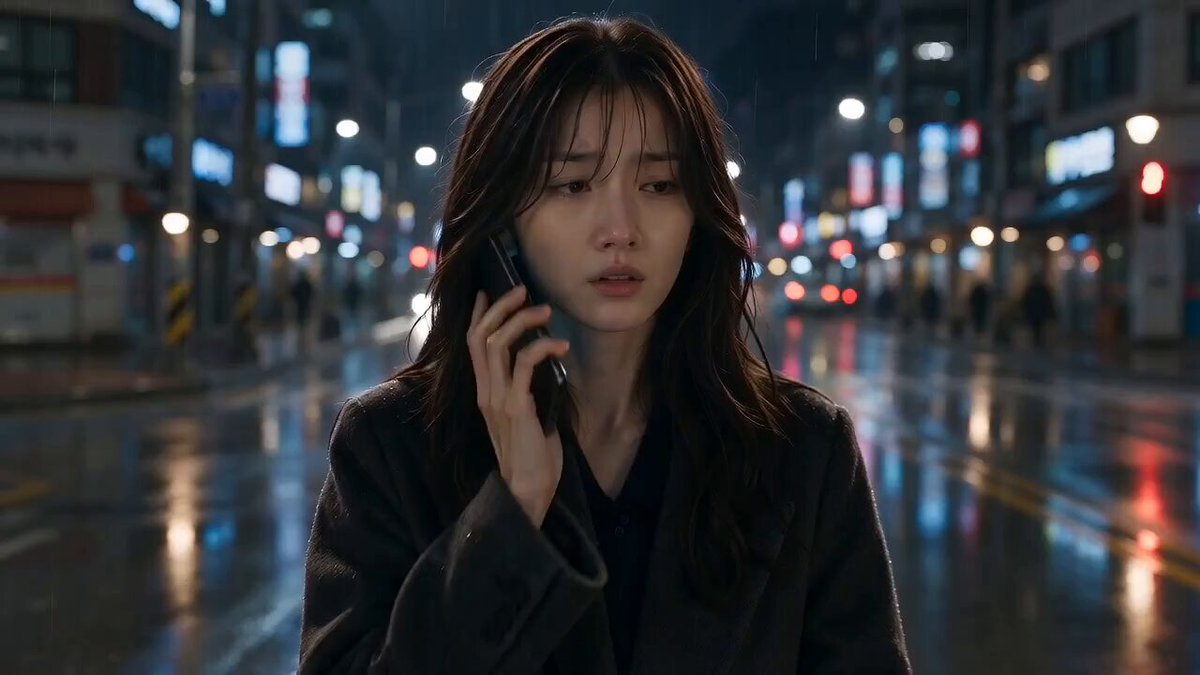
Light is the heart of cinematography. The same subject under different light tells entirely different stories. Hard light creates contrast and drama; soft light flatters and soothes; low-key lighting deepens mystery; a warm palette feels nostalgic while a cool one reads modern and detached.
Atmosphere extends beyond light into the choices that tint a scene: fog, haze, time of day, weather, color grading. These build the emotional temperature of a shot before a word is spoken. In AI-assisted work, atmosphere is specified in the prompt and the reference, and you can iterate quickly to land on the right mood.
The practical lesson is to think in terms of intention rather than luck. Decide what the character and the scene are feeling, then choose light, color, and atmosphere that reinforce that feeling. A tool that applies these rules reliably frees you to focus on the intent, which is where real craft lives.
Choosing the right model for the shot
Not every shot needs the same machinery. Learning to match the model to the job is a crucial cinematography skill in the AI era.
For shots that must achieve realism, portrait work, product footage, anything where credibility is everything, a premium model gives the fidelity and control you need. These tools justify their cost on the shots where the audience will scrutinize them closely.
For broad, mid-range work and quick iteration, efficient models are your practical allies. They produce strong results without long waits, which makes them perfect for exploring options and testing movement ideas before committing a premium render.
For specific styles and technical control, specialized models earn their place. Whether you need a particular texture, a distinctive finish, or precise control over a detail, the right specialist outshines a generalist. A mature practice draws from all of these rather than insisting one tool can do everything.
How the director operates in an AI workflow
The most significant shift is the emergence of an agent that acts as a director rather than a mere generator. Instead of producing a single frame that you hope fits, this agent operates at the level of scenes and sequences.
You describe an intent, a character in a mood, in a setting, under specific light, and the agent breaks it into a coherent scene. It manages the composition intelligently, decides how the camera should move, and keeps the sequence consistent from shot to shot. In effect, it applies years of cinematographic convention in the background while you stay in charge of meaning.
This changes the learning experience. You are not watching a black box; you are working with a tool that encodes and applies the rules. By adjusting your input and observing how the agent's choices change the result, you internalize the principles through practice. It is a apprenticeship with infinitely patient instructor.
A practical exercise to build your eye
You can begin building cinematographic instinct today with a simple exercise.
Pick a single subject, a character, a place, and one clear emotion you want the shot to convey. Decide the framing, the camera movement, the lighting, and the color. Then generate the shot using AI and critically examine whether the emotion came through.
Do this repeatedly with different targets. Then push yourself to tell the same story through three intentionally different approaches: a wide static shot that uses negative space, a slow push on a close-up, and a dramatic low-key profile. Compare how each changes the feeling.
Write down what works. The shots that satisfy you reveal the principles you understand; the ones that miss show what to study next. Building a small portfolio of deliberate experiments develops taste faster than any amount of passive reading.
Building your own visual reference language
As you grow comfortable with tooling, you naturally develop a visual signature. Codifying it into a reusable reference language is what turns a one-off style into something you can deploy across every project.
Start a vocabulary of looks. Collect the shots, moods, color palettes, and camera moves you love, and describe each one in terms that transfer. When you can say "a slow push on warm low-key light," you have a unit of visual language you can reuse anywhere.
Make these references tangible. Keep a small library of images that embody your intended feel, organized by mood, lighting, or subject. Pulling a concrete reference is faster and more reliable than trying to describe a feeling with words every time.
Define your default. What framing, what grading, what movement tends to be your baseline? Establishing a default grounds your work and gives you a point to deviate from deliberately. It also speeds up every new project because you are not deciding style from scratch.
Document the choices that work. When a particular composition or lighting achieves exactly what you wanted, write down how you got there. Over time this becomes a personal playbook that captures your accumulated taste and makes it reproducible.
A reference language is the difference between borrowing a tool and owning a style. It is the infrastructure that lets your cinematic instinct show up consistently instead of depending on luck.
Reading what your audience actually feels
Craft is of little use if it does not land. Learning to read how your audience responds, and adjusting, turns good technique into effective communication.
Distinguish feedback that is about clarity from feedback about taste. If viewers do not understand who the character is or what is happening, that is a clarity problem you should fix. If they only dislike a stylistic choice, that is taste, and you can weigh it against your own intent.
Watch where attention flags. The parts of your work that people skip or rewind tell you what works and what falls flat. Pacing problems show up as a wandering attention span before anyone can name the issue.
Test variations sparingly. Presenting two different treatments of the same scene to a small group can surface which direction carries the emotion better. Keep the comparisons few and the question sharp, so the signal stays clear.
Balance data and instinct. Viewing stats and comments give temperature, but they do not replace your creative judgment about what the piece intends. Let the audience inform the craft without dictating it.
The most mature creators use feedback the way a director uses a first screening: as information about whether the experience landed, then refine toward intent rather than toward the average taste.
Combining multiple shots into a coherent piece
A finished video is more than a single good shot; it is how shots relate to each other that creates meaning. Learning to sequence deliberately is the final layer of shot design.
Think in pairs and progressions. A close-up after a wide reveals detail and draws attention; a wide after a close-up recontextualizes and breathes. Building meaning through these relationships is more powerful than any single frame.
Control the transition. Match action, movement direction, or lighting between adjacent shots to make the cut feel natural. A smooth transition hides the seams and lets the audience stay in the story rather than noticing the edit.
Watch continuity of space. If a character exits left in one shot, they should not re-enter impossibly from the same side. Keeping spatial logic coherent grounds the sequence even in stylized work.
Vary the rhythm of cuts to match the tone of the scene. Fast cuts build urgency; longer holds create calm or tension. Let the pacing serve the emotion you are trying to create at each moment.
A sequence that respects these relationships feels like it was made by someone with a plan. That coherence, more than any individual wow frame, is what marks a skilled creator.
Common mistakes when starting out
The most frequent error is prompting for a pretty picture instead of a meaningful shot. Pictures please; shots communicate. Keep returning to intent: what should this frame do to the audience.
Next is treating every camera move as decoration. A push just to move the camera adds noise. Movement should always be motivated by what is being said.
A third mistake is neglecting light and atmosphere in favor of composition alone. You can frame a shot perfectly and still lose it with the wrong mood.
Finally, do not chase the newest model at the expense of practice. Reliability and repetition teach cinematics; novelty does not.
A steady learning path for new filmmakers
If you are entirely new to this craft, the volume of concepts can feel overwhelming. A steady, gentle path keeps you from stalling.
Begin with composition alone. Spend a session simply framing subjects through different shot sizes and learning what each communicates, before worrying about movement or lighting. Getting framing instinct as second nature reduces cognitive load for everything that follows.
Next, master one kind of camera movement at a time. Push, then pull, then tracking, then static. For each, generate variations and observe the emotional difference it creates. This deliberate comparison is how the feel of motion becomes intuitive.
Then introduce light and atmosphere. Take one subject and render it under hard light, soft light, warm and cool palettes, and study how the mood shifts. You will start seeing light as a storytelling tool rather than a technical detail.
Finally, combine everything into sequences. Every concept you practiced in isolation now works together to tell a scene. Revisit each layer as you go, because each new layer deepens your feel for the earlier ones.
The key is patience and repetition. Cinematographic instinct is built shot by shot. Each deliberate exercise, however small, moves your eye forward more than passive consumption ever will.
Frequently asked questions
Do I need traditional film training to use AI for cinematography?
No. The tools encode the principles, and experimenting actively teaches you the craft. Traditional knowledge helps but is no longer a prerequisite.
Is AI-generated footage good enough to look professional?
With the right model and a deliberate workflow, yes. The key is using premium models for high-stakes shots and maintaining consistency.
How do I learn camera movement without being on a set?
Generate the same subject with different movements and compare the emotional effect. This direct experiment is a fast, practical way to learn.
What role does lighting play in an AI workflow?
Lighting sets the emotional temperature. Specifying hard or soft light, warm or cool palettes controls the mood of the shot, just as it does on set.
Should I use one model or several?
Use several, matched to the job. Premium for realism, efficient models for iteration, and specialists for specific styles and controls.
The director's eye is for everyone
AI has done something remarkable for cinematography: it has turned a craft gated by experience into a skill you can practice and refine on a laptop. The fundamentals, composition, movement, light, atmosphere, have not changed; what has changed is access. Tools now encode the rules and let you test them at the speed of thought.
That means the director's eye is no longer reserved for a lucky few. It is earned by anyone willing to think in terms of intent, to experiment deliberately, and to learn from each generation. Start with one emotion and one shot, and keep going. The eye you build will change everything you make.
