

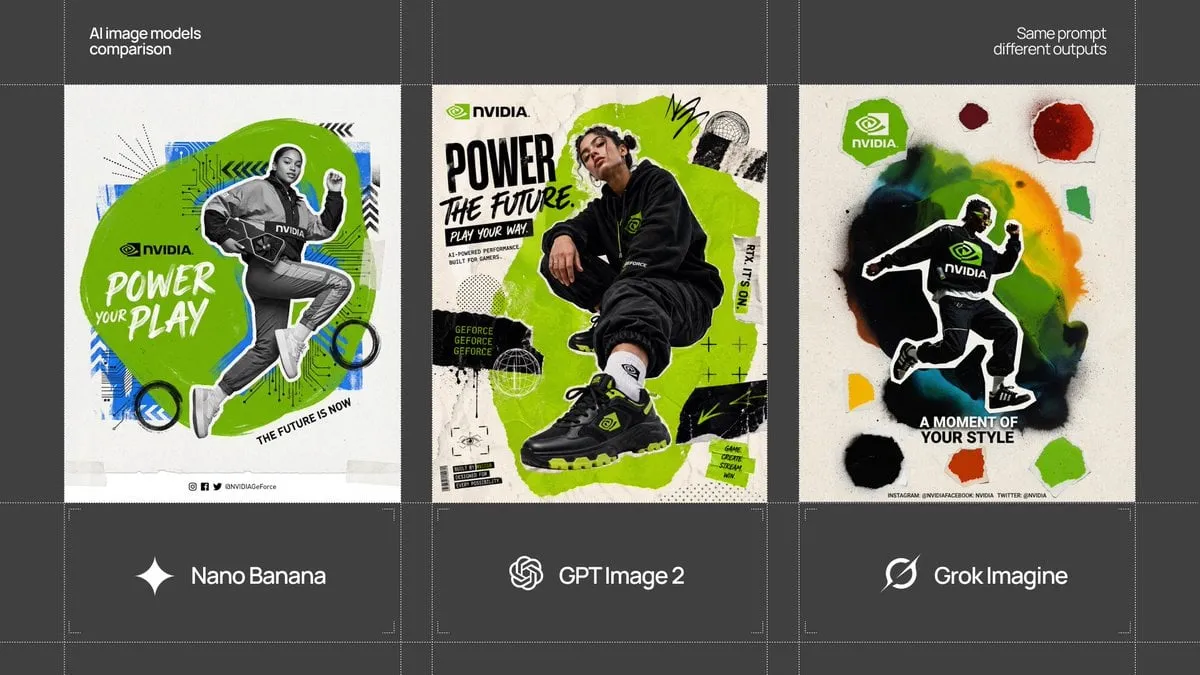
Lego blocks work because a finite set of simple pieces can be assembled into almost anything. A similar idea is spreading through image and video production: instead of treating a picture as one indivisible whole, you break it into atomic elements, restyle each part in a controlled way, and then reassemble everything into a new, consistent result. This modular approach, sometimes called the Lego pixel idea, gives creators an unusually precise level of control over style transfer, texture, and multi-image composition. This article explains how the concept works, why it matters for creative projects, and how to apply it in a practical content pipeline.
Thinking of an image as a set of building blocks
A typical photo is captured as a single frame, but conceptually it is a collection of distinct regions: the subject, the background, the object sitting on a table, the light falling across a wall. When you edit with traditional tools, you often affect everything at once, which is why changing one part can bleed into another. The modular conviction is that an image is more manageable when you treat it as layers or regions, each with its own identity, and restyle those regions independently before bringing them back together.
This is more than a mental model, it is a practical workflow. You separate a portrait from its background, relocate an object, preserve the lighting on a face while changing the surroundings, or keep a character identical across many frames. By working on atomic elements rather than a flat bitmap, you gain the freedom to change style without destroying the parts you want to keep. The building-block metaphor captures exactly that: small, replaceable, and combinable components.
The name comes from the way the concept behaves. Just as you can build a castle and a car from the same box of bricks, you can build endless visual variations from a shared set of stable assets. Once you have locked the identity of a character or a product, that asset becomes a reusable piece you can carry through scenes, campaigns, and formats. This reuse is where the real leverage lives, because it lets you produce a great deal of variety without redoing the hard parts every time.
Structural analysis: finding the pieces before you change them
The first step in any modular approach is identifying what the pieces are. Modern models can segment an image into regions, recognize the main subject, separate foreground from background, and understand relationships such as what a character is holding or where the light comes from. When the image is decomposed this way, each piece can be described and manipulated on its own.
Detecting subject and environment
Your subject is usually what most requires consistency. An environment, by contrast, can change freely to serve the story. Distinguishing the two lets you restyle a room, a road, or a sky without touching the character. That separation is what makes a restyle feel intentional instead of like a global filter was thrown over everything. When you can name the difference between "the thing that must stay" and "the thing that can change", you have already won half the battle in any modular edit.
Understanding relationships between objects
A modular reading also tracks how objects relate: a character standing in front of a door, a coffee cup sitting on a table, the light casting a specific shadow. When these relationships are preserved during a restyle, the result looks physically coherent. When they are ignored, the output can feel like a collage where elements were pasted without thought to scale, shadow, or perspective. Distance and size also matter greatly: a cup too large on a table or a shadow pointing the wrong way immediately breaks the illusion, no matter how nice each element looks in isolation.
Mapping the layout of the frame
Before changing anything, map where the key regions sit and how they overlap. Noting the positions of the subject, the horizon, and any strong anchors in the shot gives you a reference you can preserve through restyling. This map is what keeps a restyle faithful to the original composition. It lets you change a background from a beach to a city while keeping the subject perfectly aligned with the frame it was shot in.
Non-destructive styling: changing look without losing content
One of the biggest frustrations with AI image editing is that changing the style often changes the content. The character's face drifts, the text on a sign garbles, or the subject loses its defining features. A modular approach minimizes that damage by restyling each region according to its role.
Restyling with texture and mood
Instead of applying one uniform filter, you can restyle the environment to a new texture, such as a painterly gradient or a cinematic grade, while keeping the subject's identity locked. The lighting in the original is read and reapplied so the new texture does not fight the scene. The result is a visual refresh that respects the image's original intent. You decide whether the refresh should be subtle, natural, or bold, and the modular structure lets you dial it per region rather than all at once.
Preserving identity under change
For characters, the goal is to preserve identity while adapting the aesthetic. A person should still look like the same person whether the scene is re-rendered as a watercolor or a moody night shot. Holding the subject's defining traits as the stable reference while varying the environment keeps the image recognizable and usable. Consistency of features, proportions, and clothing is what prevents the audience from feeling that the character changed between frames.
Protecting details that matter
Some elements are easy to lose in a restyle: small lettering, logos, reflections, or fine patterns. A modular approach can protect these details by treating them as their own atomic elements and restyling everything else around them. If a design calls for a brand name on a product, you keep that region unchanged while the scene around it transforms. Attention to these small, preserved regions is what separates professional work from an obvious filter job.
Combining multiple images into one coherent scene
The building-block idea becomes most powerful when you bring several sources together. Multi-image composition lets you take a character from one image, an environment from another, and an object from a third, and merge them into a single scene with consistent lighting and perspective. This is where the technique turns from editing into creation.
Keeping characters consistent across frames
For sequences, the real test is whether a character stays the same across many frames and scenes. Modular composition answers this by treating the character as a reusable asset: same features, same proportions, same clothing. Each new scene provides a fresh environment, but the character is drawn from the same reference, so the audience accepts that it is the same person throughout the story. Without this anchoring, every shot risks being a new, slightly different version of the character, and the narrative loses its grounding.
Blending environments with a shared look
When you combine multiple environments, a shared color grade and lighting direction make them feel like one world. Introduce a consistent light source, warm or cool, and match the contrast across all the pieces. Small adjustments to the shared palette do more for believability than perfect detail in any single element. A busy pattern in one region and a flat one in another can make a composed scene feel like a patchwork; harmonizing the tone across regions pulls it together.
Merging scale and perspective coherently
When you bring pieces from different sources together, scale and perspective must agree. A subject extracted from a close-up belongs in a foreground position with matching proportions, and the shadows must point in the same direction as the light you chose for the scene. Getting scale and lighting to agree is the difference between a convincing composite and a transparent collage. The modular mindset helps here because it keeps each piece as a separate, adjustable element that you can align before merging.
Applying the approach to real creative projects
You can use a modular pipeline for social content, product shots, short narratives, or campaign imagery. The common thread is that you define your assets first and restyle later. For a brand, that might mean shooting one set of product images and then generating a dozen stylized variations without reshooting. For a filmmaker, it might mean building a library of character and location assets that stay identical across a longer production. For a designer, it might mean taking one concept and testing it across many treatments in a single session.
New energy for old content
One of the most valuable habits is restyling past work. A library of established images can be refreshed into new formats, new seasons, or new campaigns without reshooting a frame. The modular approach makes this efficient, because the assets are already separated and defined. Instead of starting from scratch, you change the region that should change, and the rest of the image stays a stable, trusted asset.
A practical pipeline to try
- Collect or generate your base images.
- Segment scenes into subjects, environments, and objects.
- Lock the identity of anything that must remain consistent.
- Define the restyle direction: new texture, palette, or mood.
- Reassemble while reapplying original lighting and relationships.
- Review the composite for scale, shadow, and color coherence.
Following this order keeps you from generating blind and leaves you with assets you can reuse again and again. A short review step tuned to scale and lighting catches most failures before they become a final export, and each review sharpens your instructions for the next batch.
Common pitfalls and how to avoid them
- Apply a global style change and lose the subject's identity. Keep the subject as a stable reference and restyle only the rest.
- Combine images with different light sources. Fix one light direction and grade everything toward it.
- Scale elements without considering perspective. Match the object's size to its place in the scene.
- Overdo texture so the result looks like a filter. Aim for a look that supports the content rather than covering it.
- Preserve the wrong things. Decide which details must survive (identity, logos, reflections) and which are free to change.
Naming your pitfalls in advance is the cheapest fix. Each pitfall is really a decision you failed to make early in the process, and the modular workflow naturally surfaces those decisions, provided you take the time to separate and prioritize the regions of the image before you start changing things.
Frequently asked questions
Is the Lego pixel approach about a specific tool? No. It is a way of thinking about images as modular parts that can be restyled and recombined. Many generative tools support parts of this workflow; the approach is the strategy, not the application.
Can I keep a character exactly identical across scenes? Closely, if you anchor the character with strong references and preserve its region during restyle. Perfect identity is still hard, but consistency is very achievable.
Does this work for video or only stills? The principles apply to frames and sequences. Keeping consistent assets is arguably more valuable for video, where continuity problems are more visible.
How much manual work is involved? Less than traditional compositing, but the creative decisions about which parts matter still require your judgment. The computer accelerates the segmentation and blending; you decide what to lock and what to change.
Can modular styling handle detailed product shots? Yes. Identifying and protecting the regions with fine detail, such as labels and logos, keeps a product recognizable while the environment is restyled around it.
Final thoughts
The Lego pixel idea reframes image editing and generation as a craft of assembling parts rather than applying blanket effects. By decomposing a picture into atomic elements, restyling each with precision, and recombining them into a coherent scene, you gain control that one-size-fits-all filters cannot offer. For anyone producing character-driven work, branded content, or sequential narratives, this modular mindset is a dependable route to consistent, intentional, and reusable visuals. The building blocks are simple; the composition is where your creativity lives. Understand your pieces, protect what must survive, and the rest of the image becomes a playground you can rebuild as often as the story demands.
