
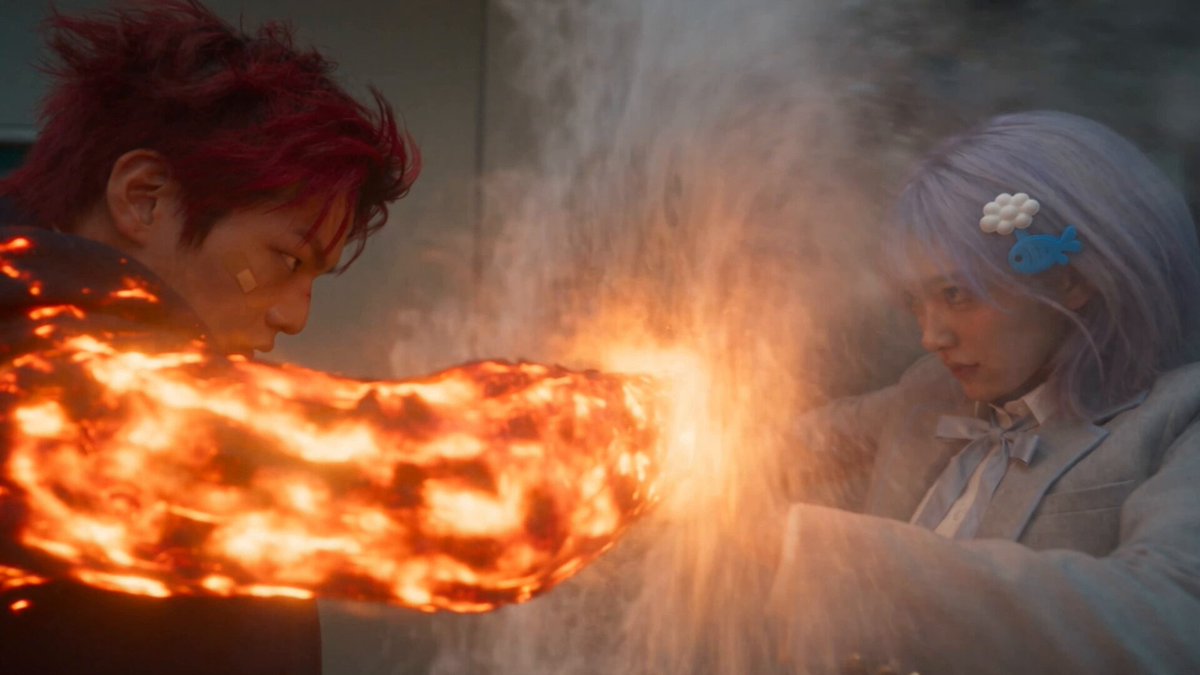
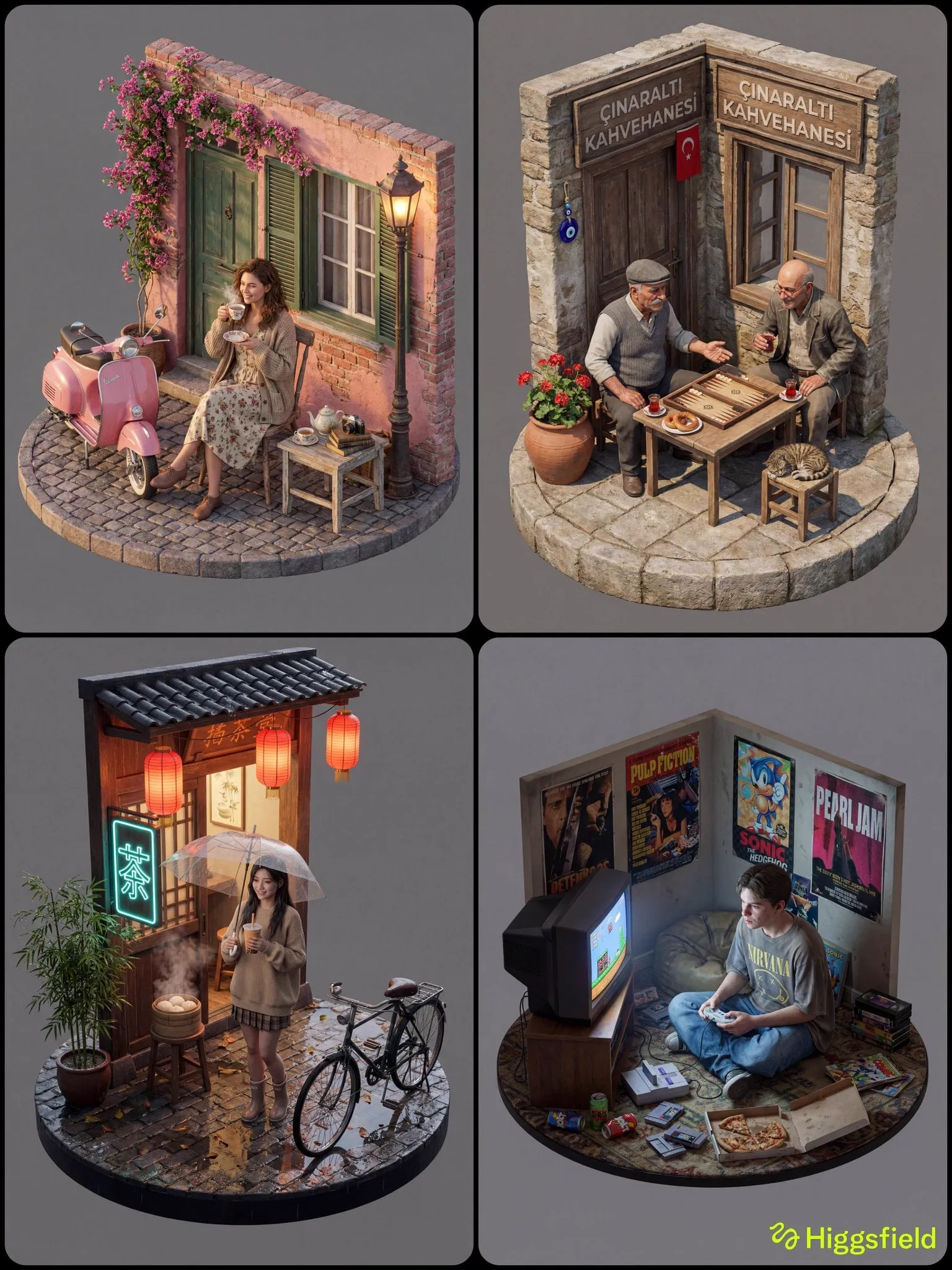
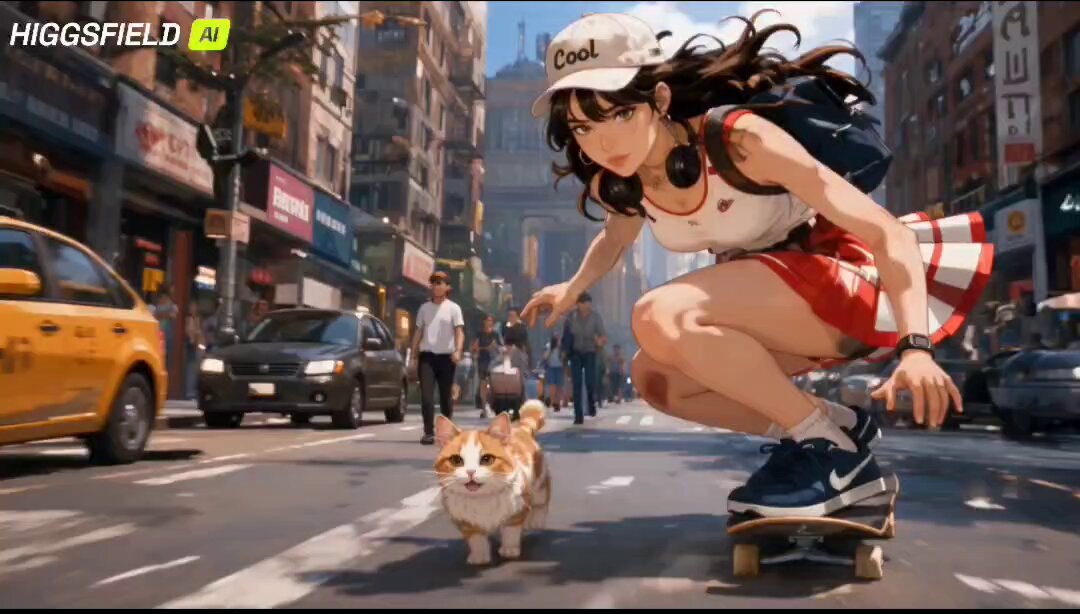
Anyone who has spent real time generating video with AI has met the same ghost: the character who changes face between shots. The first frame shows a woman with sharp cheekbones and a red coat; three shots later she has soft features, a green jacket, and a different angle to her jaw. It is the single most reliable way to shatter an audience's suspension of disbelief, and for years it was treated as an unsolvable quirk of the medium.
Multi-image fusion exists to kill that problem. Instead of trying to hold a character together using only words — which is nearly impossible — fusion lets you hand the model several reference images and say, in effect, "this is the character. All of these belong to the same person. Keep her this way everywhere." The results are a genuine turning point for any multi-scene project, from short films to branded series to episodic social content.
This guide explains what multi-image fusion actually does under the hood, why visual consistency is the hardest single problem in generative video, how to manage reference frames correctly, and how to apply the technique across a real production.
Why visual consistency became the industry's hardest problem
The generative market has fragmented quickly. By the middle of the decade, dozens of specialized models coexist, each tuned for slightly different output. This abundance is a gift, but it comes with a catch: switching models mid-project, or even regenerating within one, tends to break visual continuity. Every render is a fresh roll of the dice unless you actively anchor it.
The deeper difficulty is representational. Diffusion models produce an image by refining visual noise toward whatever their internal statistics consider "likely" given your prompt. Words describe a face only approximately; the model must fill in the gaps with its own priors, and those priors change every run. A few words cannot pin down a nose, a hairline, or a wardrobe, and without them each shot drifts.
Visual consistency matters because the audience notices instantly. Across a sequence, people constantly compare what they are seeing now to what they saw earlier. The human visual system is exquisitely sensitive to faces and to repeated objects. The moment a character or location stops matching, the scene stops feeling real. For serialized content — a character arc, a recurring location, a brand identity — consistency is not a nice-to-have; it is the whole point.
What multi-image fusion actually does
At its simplest, multi-image fusion is the technique of using multiple source images to anchor generation. Where a single reference frame constrains one shot, a fused set constrains a whole identity. The model decomposes each reference image, extracts its defining visual structure, and combines those signals into a representation of "this recurring thing." When you then generate new shots, that representation is held fixed across frames.
Conceptually the process happens in layers. First, each source image is decomposed and turned into a compact, model-readable form — the "what makes this character this character" is vectorized rather than stored as raw pixels. Next, that fused representation is threaded into the generation of every subsequent shot, so both new scenes and new angles stay keyed to the same underlying identity. Finally, an orchestration or automation layer keeps applying that anchor automatically so you do not have to re-specify it each frame.
The breakthrough is that this works across heterogeneous models. Because the reference set is normalized into a shared representation, you can feed the same character bible into radically different engines and still get a consistent-looking character out of each. This is what makes "best model for the job" actually viable on a multi-scene project: you are no longer locked to one engine just to keep continuity.
Building the right reference set
Multi-image fusion is powerful, but the quality of the output is only as good as the reference set you feed it. Garbage in, garbage out applies here with unusual force, because the model treats your references as ground truth for the identity.
Start by deciding which features must remain frozen. Face shape, hair, eye color, and the core wardrobe are usually non-negotiable. Detail choices like exact wrinkles or minor accessories can be allowed to vary. Crucially, the images in your reference set must agree on the features you want frozen. Feeding one picture with blond hair and another with brown guarantees the model will produce a character whose hair shifts unpredictably.
A good reference set is small, consistent, and varied in neutral ways. Include the same character from a couple of angles and in a couple of settings so the model can separate "this is her face" from "this happened to be the background in one photo." Keep lighting conditions reasonable and stable, because extreme variance in lighting can leak into the identity and cause strange relighting across shots.
Treat reference management like casting a real actor. You are not generating a face; you are locking one actor and shooting lots of footage with them. The "casting" step — assembling and validating the reference set — is worth doing once, carefully, before you generate a single scene.
Environment and style consistency
Characters are the obvious target for fusion, but locations and style deserve the same treatment. A café in shot one should be the same café in shot six, down to the recognizable details that let a viewer anchor the space in memory.
Apply the same logic as character bibles: assemble a small set of images that agree on the defining traits of a location — its palette, its architecture, a handful of repeated props. Feed that set alongside your character references so the whole scene stays glued together.
Style consistency is subtler. A "style token" is the emotional and visual fingerprint of your project: lighting quality, lens feel, color grade. Unlike literal objects, style can drift massively between shots without anyone naming it, but it reads immediately as either coherent or amateurish. You can hold style steady by reusing the same stylistic language in every prompt and by referencing a style example image. Consistency of feel is often more powerful than consistency of specific objects, and it is usually easier to preserve across many generations.
Managing workflows for multi-shot productions
Raw fusion power helps, but production reliability comes from workflow discipline. Here is a practical operating loop for any project that needs visual continuity:
- Build bibles before generating. Lock the character set, the location set, and a style reference before any scene is generated.
- Normalize reference images. Ensure the bibles agree internally on the features that must stay frozen.
- Feed bibles to every shot. Repeat the same anchor references for every generation in the project, not just the first few.
- Validate identities early. Generate a quick "continuity contact sheet" of the hero from several angles before committing to full scene work.
- Choose models per shot, within the anchor. Once identity is locked, you can switch engines shot to shot for speed or fidelity without losing the character.
- Iterate on the anchor, not just the prompt. When a shot drifts, refine the reference set or add a clarifying image rather than re-rolling the prompt alone.
The key realization is that continuity is established upstream, in the reference layer, not at the last minute in the prompt. Spending effort there prevents an entire class of downstream failure.
Determinism, keyframes, and iteration loops
Beyond fusion, a second tool in the consistency toolkit is control over keyframes and the generation cycle itself. By specifying which frames matter to the identity — the hero's first appearance, the establishing location shot, the wardrobe reveal — you give the model concrete milestones to stay true to.
Iteration should be structured around these anchors. Instead of regenerating a scene blindly, compare each new render against the anchored keyframes and the reference set. Ask: did the face hold? did the jacket color stay? did the space stay recognizable? The gaps you find become targeted refinements — adjust a reference image, tighten a prompt clause — rather than an unfocused re-roll.
This loop sounds dry, but it is the same loop professional artists use with any tool: set reference, generate, compare against reference, refine. The discipline is what turns a novelty into a reliable production instrument.
Common mistakes with reference-based fusion
- Contradictory references. The biggest source of drift. If the images disagree on a feature, the model will reproduce the disagreement instead of reconciling it.
- Too many references. Crowding the set with dozens of unrelated images dilutes the identity signal. Small and consistent beats large and messy.
- Changing bibles mid-project. Once characters and locations are established, keep feeding the same set. Swapping in a fresh set guarantees drift.
- Only anchoring characters. Ignoring locations and style leaves visible seams in everything around the characters.
- Relying on prompts alone. No amount of carefully written prose will hold a face as well as two agreeing reference photos.
- Not validating early. Discovering a broken identity after generating twenty shots is expensive. Run a continuity contact sheet first.
Run through this list whenever continuity starts to slip. In most cases the cause is upstream of the prompt, in the reference layer.
A worked example: keeping a hero stable across one short film
To make the technique concrete, imagine a three-minute short with a single protagonist, five locations, and roughly twenty shots. Without any anchoring, the probability that the character stays recognizable across all twenty is near zero — every regenerate and every model swap is a new risk. Applied deliberately, multi-image fusion flips those odds.
Step one is casting. Produce three images of the hero that agree on face, hair, and the core jacket color but differ in background and pose. Step two is normalization: confirm the set has no contradictions — no lighting that makes the eye color ambiguous, no background object that looks like part of the costume. Step three is a continuity contact sheet: generate one shot from four angles and confirm the face holds before any scene work. Step four is the production run: feed the same three references, plus the two establishing-location shots, into every one of the twenty generations. Step five is review against anchors rather than in a vacuum: compare each render to the reference set and the keyframes, and correct by adjusting the references, not just the prompt.
This is ordinary pre-production discipline translated into a generative context. The characters, locations, and style are decided once and held fixed; the generation layer then operates inside that container. The result is that continuity stops being a hope and becomes a certainty you have already verified before you render a single full scene. It is not more work — it is the same amount of work a real production would invest in casting and location scouting, applied in the place where it prevents the most downstream waste.
When fusion is not the answer
Multi-image fusion is powerful but not appropriate for every task. If you only need a single, self-contained shot with no recurring identity, the whole apparatus is overkill — a strong prompt and good lighting will do. If your goal is abstract, non-representational motion (waves, clouds, smoke) with no persistent object, reference anchoring adds little value. And if you are deliberately chasing a "surreal morphing" aesthetic, strict consistency is counterproductive by design.
Save the heavy reference discipline for what it is built for: projects with recurring characters, established locations, brand identities, or any content that will be viewed as a coherent whole across multiple scenes. That is where the technique pays for itself many times over.
Frequently asked questions
Does multi-image fusion work across different models? Yes. Because the reference set is normalized into a shared representation, the same bibles can be fed to different engines while keeping the character recognizable.
How many reference images should I use? A small, internally consistent set — often three to eight images that agree on the frozen features — works better than a large, contradictory collection.
Can I change the character's outfit later? Yes, if wardrobe is not part of your frozen feature set. Keep face, hair, and shape frozen; allow clothing to vary by re-specifying it in the prompt.
Is visual consistency only for characters? No. Locations and overall style deserve the same treatment and are often the difference between a believable world and a collage of clips.
How do I fix a drift that is already in my renders? Regenerate rather than trying to patch. Fix the reference set and the anchor keyframes, then re-run the affected shots from the source.
Building consistency into your next project
Visual consistency is the quiet foundation of professional-looking generative video. Audiences will forgive many small imperfections, but they will not forgive a hero whose face changes between cuts. Multi-image fusion gives you a reliable, repeatable mechanism to hold identity steady — across shots, across scenes, and even across different models.
The practical payoff is that continuity is no longer a matter of luck. It is a matter of process. Build clean reference bibles, feed them to every generation, validate identities early, and iterate against anchored keyframes. Do that, and the hardest problem in generative video stops being a blocker and becomes a solved, boring, dependable part of your production workflow — freeing your attention for the parts that actually need it: the story, the pacing, and the voice.
