
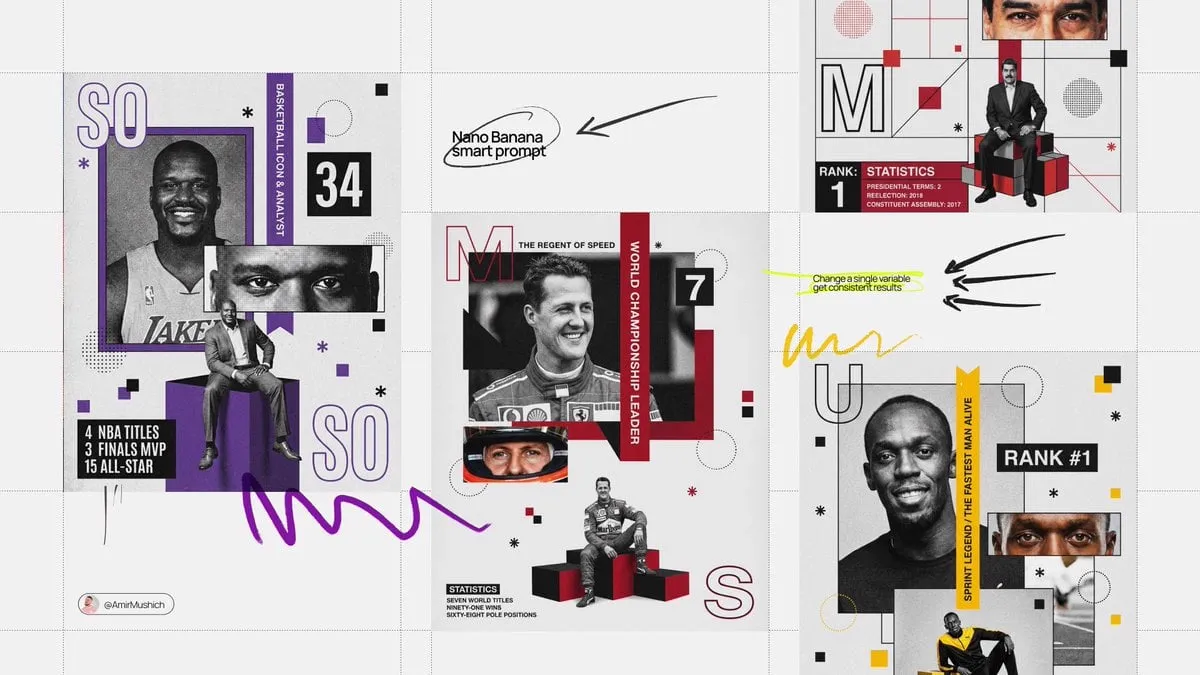
Nothing breaks a viewer's suspension of disbelief faster than a character whose face, outfit, or coloring drifts between scenes. In traditional filmmaking, continuity is the job of script supervisors, wardrobe departments, and careful shot matching. In generative video, where every shot can be re-rolled an infinite number of ways, consistency has become the defining technical challenge. Multi-scene image fusion is the set of techniques that lock a character across shots so a story feels like a single work instead of a collection of loosely related images. This guide explains how the underlying mechanism works, how to put it into practice, and why consistent characters are worth the extra setup.
Why consistency is now the baseline
Audiences have recalibrated what they expect from AI-generated video. A few years ago, the novelty of a moving image was enough. Today viewers arrive with honed instincts for visual coherence, and an inconsistent character reads instantly as a flaw. For any project that wants to be taken seriously, whether it is a brand film, an animated short, or a narrated explainer, consistency is no longer a premium feature. It is the baseline for credibility.
The same shift has changed the economics of production. Because audience expectations have risen to a cinematic level, the projects that succeed are the ones that treat continuity as a first-class concern in the pipeline, rather than as something to be patched after the fact. Getting consistency right early saves the costly cycle of regenerating scenes because a character drifted midway through the story.
How multi-scene fusion keeps a character stable
At its core, multi-scene fusion replaces the naive approach of typing a fresh text prompt for each shot. Instead, the system is given a set of reference images that establish who the character is: face structure, skin tone, hair, outfit, and palette. Rather than describing the character in words for every frame, the model carries those references forward and renders each new scene around them.
The mechanism relies on shared anchors. The model detects stable features across the references, such as facial landmarks, the clothing silhouette, and the dominant colors, and treats those as constants. When it composes a new shot, it generates the setting, pose, and lighting around those locked constants. The result is a series of frames that clearly depict the same person, because each one rebuilt the character from the same source of truth instead of from a vague prompt.
This approach also handles the hardest cases more gracefully than text alone. If a character is meant to appear both indoors and outdoors, in daylight and at night, the reference anchors preserve identity even as the environment and lighting change drastically. The continuity lives in the character, while the scene is free to shift, which is exactly the flexibility a director wants.
The role of an automated director in consistent cinematography
Maintaining consistency is as much a planning problem as a rendering problem. An AI assistant that acts as a director can hold the master plan, keep track of which characters appear in which scenes, and translate creative goals into concrete shot-by-shot instructions. This removes the tedium of manually re-specifying the same character details in every prompt.
The practical effect is visible across the production. The assistant generates the storyboard, assigns each shot its character references, and enforces the style so every scene in one section of the film matches. Because the plan is centralized, changing the look of the whole project is a single edit rather than a hundred regenerations. The director role turns a scattered set of prompts into an organized, manageable pipeline.
Automation also protects against drift on long projects. The more shots a project has, the more opportunities there are for a detail to slip. An automated system that rechecks each frame against the locked references catches inconsistencies that a tired artist might miss, keeping the whole piece aligned from first scene to last.
Using different models for one character
A powerful advantage of fusion is that it decouples the character from any single model. The character is defined by reference images rather than by a specific generator, which means different models can render different scenes of the same character. One model might excel at detail-heavy close-ups while another produces better wide establishing shots, and both can depict the same person as long as they share the reference anchors.
This interoperability gives a team the freedom to match tools to shots. It also provides resilience: if one generator is slow or overloaded, another can step in without breaking continuity. The key is that the shared references, not the individual generator, define the character. This separation of identity from rendering is what makes a diverse model library a strength instead of a consistency risk.
In practice this requires a small amount of discipline in setup. The reference set must be captured once, carefully, and kept stable for the whole project. Every shot then pulls from the same set. Skipping this and letting each model invent its own interpretation of the character is the surest way to end up with several unrelated people wearing the same outfit.
Locking parameters with multi-reference images
Solid character continuity starts before any scene is generated. The strongest results come from establishing the character across several different reference views, frontal, three-quarter, and profile, plus at least one shot that shows the full outfit. A single reference is fragile; multiple references let the model understand the character in three dimensions rather than as one flat view.
When setting the anchors, choose references with consistent framing and lighting as much as possible. Clean, well-lit reference images give the model clear information to lock onto. Blurry or heavily filtered references force the model to guess, which invites drift. The effort spent building a clean reference set pays back across every subsequent shot.
Once the references are set, control the strength of enforcement and the degree of creative freedom. Strong enforcement keeps the character identical but can make scenes feel stiff. Higher freedom allows expressive poses and varied compositions but risks subtle drift. The right balance depends on the style of the piece; a realistic drama wants strict enforcement, while a stylized, energetic project can tolerate more variation.
Synchronizing style across different generators
Character consistency is only one half of continuity. The other half is stylistic consistency: the color grade, the lighting treatment, and the overall aesthetic should feel unified across all the models used in the project. Style synchronization is what stops a film from looking like it was assembled from three different productions.
The approach is to define the style before production and apply it uniformly. Establish the palette, the contrast curve, the mood of the lighting, and any signature visual motifs as part of the brief. Then, whenever a new scene is generated, the style is passed along with the character references so every shot lands in the same visual language.
Consistency of style also helps audiences track the story. When the look is stable, cuts between scenes feel intentional and the narrative gains momentum. When the look jumps around, the viewer is pulled out of the story regardless of how well the characters match. Style sync and character sync work together, and a project rarely succeeds with only one of them in place.
Building a batch pipeline for consistent production
Producing a full storyboard or a multi-scene campaign involves generating many shots in sequence. A batch pipeline turns that from a manual marathon into a structured workflow. The character references and the style brief are defined once, and then the pipeline runs through the shot list, generating each scene and returning it for review.
Batch pipelines shine in resource management. Instead of firing off dozens of heavy generations at once, the pipeline queues them, prioritizes urgent scenes, and distributes workload so results arrive steadily. It also makes retries cheap: when one scene is rejected in review, only that scene is regenerated, against the same references and style, so the correction does not disturb the rest of the project.
Because each batch pulls from the same source of truth, the pipeline enforces consistency by design. The artist reviews the assembled sequence, flags the weak frames, and regenerates only those. This feedback loop converges quickly to a full set of matched scenes, which is exactly what a storyboard or a multi-shot brand film requires.
The creative payoff of stable characters
Consistency unlocks creative ambition. Once a team can trust that a character will survive across scenes, projects that were previously impractical become attainable: serialized animated shorts, character-driven ad campaigns, episodic web series, and trailers with a coherent cast. The audience can invest in a character over time, and that investment is what turns a collection of images into a story.
On the commercial side, consistent characters build brand equity. A recurring mascot or spokesperson who looks the same across every campaign becomes shorthand for the brand itself, the way a logo does. Over time the character becomes an asset with real value, not just a figure in an individual video, and that compounding benefit is a strong argument for investing in continuity from the start.
Common consistency failures and how to avoid them
Even with solid technique, character consistency can go wrong in predictable ways, and recognizing the signs early saves a lot of rework. The most common failure is the drifting identity: the character looks mostly right but the proportions of the face subtly change from shot to shot. This usually traces back to weak references or excessive creative freedom. Strengthen the anchors and reduce the license the model takes with the face.
A second failure is the wardrobe or property flip. The character might keep its face but change clothing, carrying an object in one scene and not in the next, or switch props. The fix is to lock those elements into the reference set too. If an accessory matters, include a clear reference of it and keep it anchored, the same way a continuity supervisor tracks on-set details.
Lighting and color mismatches form a third class of problem. Two scenes that use different color grades feel disjointed even if the character matches. This points back to style synchronization rather than character anchoring. Apply the shared visual brief consistently, and regrade the sequence so the whole piece sits in one palette before judging the final result.
Finally, watch for dead-expression stiffness, the opposite failure where over-enforcing the references makes the character feel frozen. If every shot shows the same rigid pose and blank face, back off the enforcement for posing and expression while keeping the identity anchors strong. The goal is a living character within stable parameters, not a statue repeated many times.
Measuring the payoff of continuity
It is worth quantifying why consistency deserves the extra planning effort. Continuity is not just an aesthetic nicety; it underpins the believability that keeps audiences engaged through a story and the brand recognition that makes commercial work memorable. When continuity holds, viewers follow the narrative without friction, spending more of their attention on the plot and less on noticing glitches.
There is also a direct production economics argument. Regenerating scenes because a character drifted is among the most expensive failure modes in generative video, in both time and compute. Investing in references and pinned parameters on the front end prevents that rework on the back end. A planned production with solid continuity typically completes in far fewer renders than an improvisational one patched after the fact.
For brands, a consistent recurring character compounds value over time. An audience that recognizes the mascot instantly, and a creative team that knows the character will survive any new campaign, turns that figure into a durable asset. The value builds across projects rather than being spent on repairing mistakes within a single one, which is the strongest practical reason to make continuity a habit.
Getting started the right way
If you are ready to lock in consistency, begin smaller than a full film. Choose two or three scenes with the same character, capture a clean multi-view reference set, define a simple style brief, and generate them through a shared pipeline. Check whether the character reads as the same person across all three. Repeat the exercise with a second character, then build toward a longer sequence. Each pass deepens your feel for reference strength, creative freedom, and style sync, and before long the discipline of multi-scene fusion becomes second nature to your whole production process.
