
There is a certain kind of shot that instantly says "science fiction." A lone figure emerging from shadow, half of the face caught in sharp light, the rest swallowed by darkness. A rigid, symmetrical frame that amplifies tension. A performance so restrained that every glance feels loaded with meaning. Some actors have become almost synonymous with this style of serious, atmospheric cinema, often working in films built on dread, moral weight, and high-concept ideas.
As AI video generation matures, creators want to tap into that same visual language. The good news is that many of the techniques these films rely on are well understood and can be translated into prompts and production choices. The even better news is that generative tools can go further than copying a formula — they can help you invent a contemporary sci-fi aesthetic of your own. This article breaks down the core cinematography techniques behind this look and shows how to recreate them with AI.
What Makes a Sci-Fi Look Feel "Cinematic"
Before you can recreate a look, you have to be able to name what you are seeing. Three elements do most of the work.
Lighting: the language of mood
The single most powerful tool in cinema is light. Atmospheric, serious films lean heavily on controlled light and shadow to build mood and dimension. Rather than lighting every corner evenly, they use light selectively, letting darkness suggest the unknown and the dangerous. This approach gives scenes emotional weight that flat, even lighting can never achieve.
Performance: restraint under pressure
The actors who define this style tend to work with a minimum of outward emotion. The tension is internal. A look, a pause, a barely moving jaw does more than an outburst ever could. This restrained performance style gives directors and editors room to build dread, and it reads beautifully in close-up.
Framing: symmetry and silence
Framing in this style is rarely accidental. Symmetrical compositions create a sense of order, control, and hovering threat. Actors are often positioned precisely within the frame, sometimes isolated, sometimes facing their environment head-on. Every element is placed to increase tension, not to fill space.
Decoding the Look, Light by Light
Chiaroscuro: the play of shadow
The most recognizable signature of serious, atmospheric cinema is a technique that uses strong contrast between light and dark. In practice, this means a scene where light cuts across a face or a room, leaving large areas in deep shadow. It adds dimension, creates mystery, and gives the image a painterly, timeless quality.
To recreate this with an AI video tool, describe the lighting directly. Words like "a single hard light source from the side," "deep shadows swallowing part of the frame," "strong contrast between highlight and shadow," and "low-key lighting" all push a model toward this effect.
Controlling focus and depth
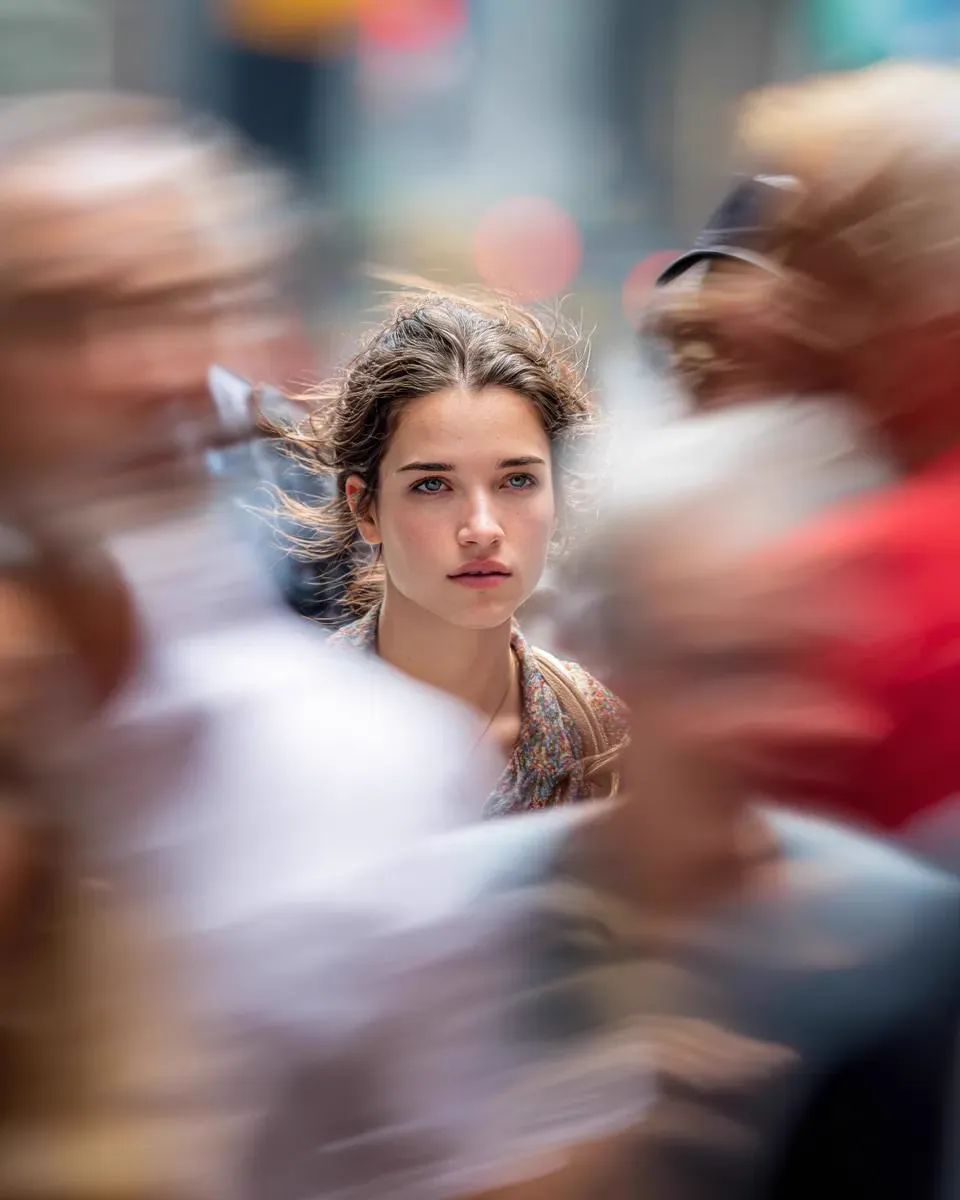
Commercial-grade looks almost always use shallow depth of field: the subject is sharp, while the background falls into a soft blur. This focuses the eye on the face and the performance while reducing visual noise. Describing "a shallow depth of field," "the background softly blurred," or "a long-lens look" helps achieve a filmic quality over a flat, video-like one.
Temperature and color
Color grading shapes emotion. Cool, desaturated tones suggest coldness, technology, or isolation, while warm highlights can soften a scene or accentuate danger. Deciding on a consistent color direction and applying it to every shot keeps the sequence unified and reinforces the mood.
Bringing Expression and Performance into the Frame
Composing for the face
Because this style lives in faces, close-ups are essential. Plan shots that bring the viewer close to the eyes and the small movements that carry the performance. In close-up, subtle gradations of light on the skin matter; describe the quality of light on the face as much as the emotion.
Letting restraint do the work
Describe performances in terms of control and stillness rather than big gestures. Phrases like "a tense, restrained expression," "hardly any movement, emotion carried in the eyes," or "a calm, guarded demeanor" push a model away from theatrical overacting and toward the measured quality that suits serious narratives.
Building tension through pacing
The mood is also forged by pacing. Slow reveals, lingering shots, and careful timing between cuts create suspense. When you storyboard, decide where to let a shot breathe instead of cutting early. Tension is often a matter of what you choose not to show or not to rush.
A Contemporary Sci-Fi Aesthetic with AI
Choosing models for realism and motion
Not every generation tool renders the same surface quality. For a cinematic, filmic look, you want a model known for photorealistic results, pleasing skin tones, and natural light. Equally important is the ability to express coherent motion: the small natural movements of a head turn, cloth shifting, background elements in motion.
Combining style control with a storyline
A look alone is only half of the achievement. Contemporary sci-fi gains power when the visual style supports a strong idea or narrative. Use the aesthetic you build to underline the story's themes — isolation, surveillance, hope, dread. Decide what your images are there to say, then let the cinematography amplify that.
Iterating toward the look
Achieving the exact feel rarely happens on the first attempt. Treat generation as iteration: generate test stills or short clips, evaluate the lighting and framing, then refine your descriptions. Change one variable at a time so you learn what each lever actually does.
A Structured Production Approach
Lock the references and style first
Before producing the whole sequence, generate a few shots that establish the core look. Settle the lighting setup, the color direction, and the framing approach. Once these are locked, reuse the same style descriptors across every shot to keep the sequence unified.
Plan each shot's purpose
For every shot, know what story beat it serves. Is it introducing the world, revealing a character's inner state, or building toward a threat? A shot that knows its job is easier to direct and easier to place in the final edit.
Select strictly, refine deliberately
Generate several variants of each important shot and select ruthlessly. Keep only the takes that match the mood and face the way you intend. Then assemble, adjust pacing, and apply any final grading. The polish happens in editing, but only on top of a strong selection.
Working Directly with the Look
Building a prompt vocabulary for mood
To get consistent cinematic results, it helps to build a small vocabulary of phrases you know push a model in the right direction. For lighting, words like "low-key," "a single hard light," "dramatic shadows," and "backlit" all describe the play of light and dark. For framing, "symmetrical composition," "centered subject," and "tight close-up on the face" steer the camera. For color, "desaturated," "cool, blue tones," and "warm accent light" shape the grade. The more precisely you can name the elements, the more control you have.
Keeping a consistent style set across shots
As with any look, consistency comes from repetition. Decide on the lighting approach, the color direction, and the framing rules for the whole sequence, then apply those same descriptors to every shot. This is what turns individual images into a coherent film rather than a collection of disconnected frames.
Iterating toward the result
The exact mood rarely appears on the first attempt. Generate test frames, evaluate them against the feeling you are after, and adjust one thing at a time. If the image is not dramatic enough, push the shadow contrast. If it lacks tension, adjust the framing or the color. Small, deliberate iterations converge on the look far faster than broad, random changes.
A Walkthrough: Styling a Single Scene
To make this concrete, imagine a scene you want to feel tense and mysterious, set in a dim corridor with a single figure.
Start by naming the lighting: "a single hard light from above, deep shadows filling the corridor, the figure half caught in light, half in darkness." Then the framing: "a symmetrical composition, the figure centered and small in the frame." Then the color: "cool, desaturated tones with a faint cold rim light on the figure." Then the motion: "a slow, subtle tracking movement toward the figure."
Generate a few variants and look at what the model chose. If the result feels too bright, push the shadows harder. If the figure lacks presence, tighten the close-up. Each iteration teaches you how the tool interprets your vocabulary, so the next scene becomes easier to direct. With practice, this naming and refining loop becomes instinctive, letting you move from a rough idea to a finished mood in very few steps.
Common Mistakes and How to Fix Them
Relying on a single cue for the mood
Describing "a dark scene" is rarely enough. Mood comes from the combination of lighting, color, framing, and performance. Use several complementary descriptors together.
Overacting in the generation
If your generated performances feel overwrought, lean on restraint and stillness in your descriptions. Emphasize control, subtlety, and stillness over big expression.
Ignoring consistency across shots
If each shot looks different from the last, the sequence will feel broken. Keep the style descriptors and any reference material consistent across all shots, and establish the look before you produce everything.
Forgetting the purpose of the shot
A moody image is not automatically a good image. Every shot should serve a story beat. Ask what the frame is here to communicate, and let that intent guide your lighting, framing, and pacing choices.
Frequently Asked Questions
Q. Do I need expensive tools to get a cinematic look?
Not necessarily. Understanding the fundamentals of lighting, framing, and color and describing them clearly in prompts can go a long way, even with budget-friendly tools. Quality often comes as much from how you direct as from which model you use.
Q. Can AI really capture subtle facial expressions?
Modern models can convey emotion and small movements quite well, especially in close-up. The key is describing restraint and detail explicitly rather than expecting the model to know your intent.
Q. Should I copy a specific film's style?
It is far better to study the techniques (lighting, color, framing, performance) and combine them into something of your own. Copying a formula rarely produces original work, while understanding the building blocks lets you invent.
Q. How do I keep my shots looking consistent across a whole scene?
Establish the lighting, color, and framing approach in test shots first, then reuse the same style descriptors in every shot. This repetition is what makes the sequence feel unified rather than fragmented.
What should I change first if a scene looks flat?
Start with the lighting. Adding contrast and defined shadows is usually the fastest way to add drama. Then refine the framing and color once the light feels right.
How do I know which descriptors the model responds to?
Observe the results. If a description consistently produces the mood you want, keep it in your working vocabulary. If it is ignored, rephrase it and test again. Over a few projects, you build a reliable set of phrases that map to the look you are after. This trial-and-error is not wasted effort; it is the practical skill that separates average generations from strong ones, and it compounds the more you practice.
Conclusion
The cinematic sci-fi look is not magic, but a disciplined combination of lighting, color, framing, performance, and pacing. Chiaroscuro lighting creates dimension and dread; restrained performance builds tension in close-up; deliberate composition amplifies meaning; and a consistent grade unifies it all.
AI video generation makes this language far more accessible, but only if you can speak it. By naming the light, directing the performance, controlling the frame, and locking style across the sequence, you can recreate the atmosphere of serious sci-fi — or invent a contemporary aesthetic of your own. The techniques decoded here are the grammar. It is up to you to write the sentence.
