
Content production is in the middle of a shift that does not look like the ones before it, because the technology producing it is no longer just tools, it is a collaborator. Animation is the sharpest place to watch this happen. Where character animation once demanded specialist studios, frame-by-frame discipline, and long render pipelines, an individual can now guide a generative system to produce animated scenes with coherent characters, camera motion, and tone. The practical consequence is that the entry barrier to animation is collapsing, and the opportunity is swinging toward people who can direct, not just people who can draw.
This article is a guide to the future of content production through AI-assisted animation. It explains where the technology stands, what it changes for creators, the workflow that leverages it best, and the skills that keep you competitive as the tools improve.
Why animation has become central to modern content
Animation occupies a sweet spot no other format matches. It does not depend on sets, actors, or permissions the way live action does, and it compresses imagination into a shareable story more vividly than most captured footage. That is why animation increasingly drives brand identities, tutorials, product demos, and social entertainment, even when the audience never stops to think about the technique behind it.
The reason is cost and speed. Hand-animated content, even for a short campaign, historically burned enormous time and money, with each frame a small artifact requiring care. When production is expensive, only big budgets animate, and the content landscape narrows accordingly. AI-assisted animation inverts that equation, making a respectable animated scene possible in the time and budget a small creator can actually afford, which is why animation is moving from the premium tier to the everyday toolkit.
This is not a claim that the human disappears. It is the opposite: the person specifying the look, pacing, and story becomes relatively more important, because the mechanical production is cheaper. The era of animation as a specialist luxury is ending, and the era of animation as a standard creative language is beginning.
The state of AI-assisted animation today
Understanding where the tooling stands prevents both exaggerated hope and needless skepticism, so it is worth being concrete about what current systems do well and where they still struggle.
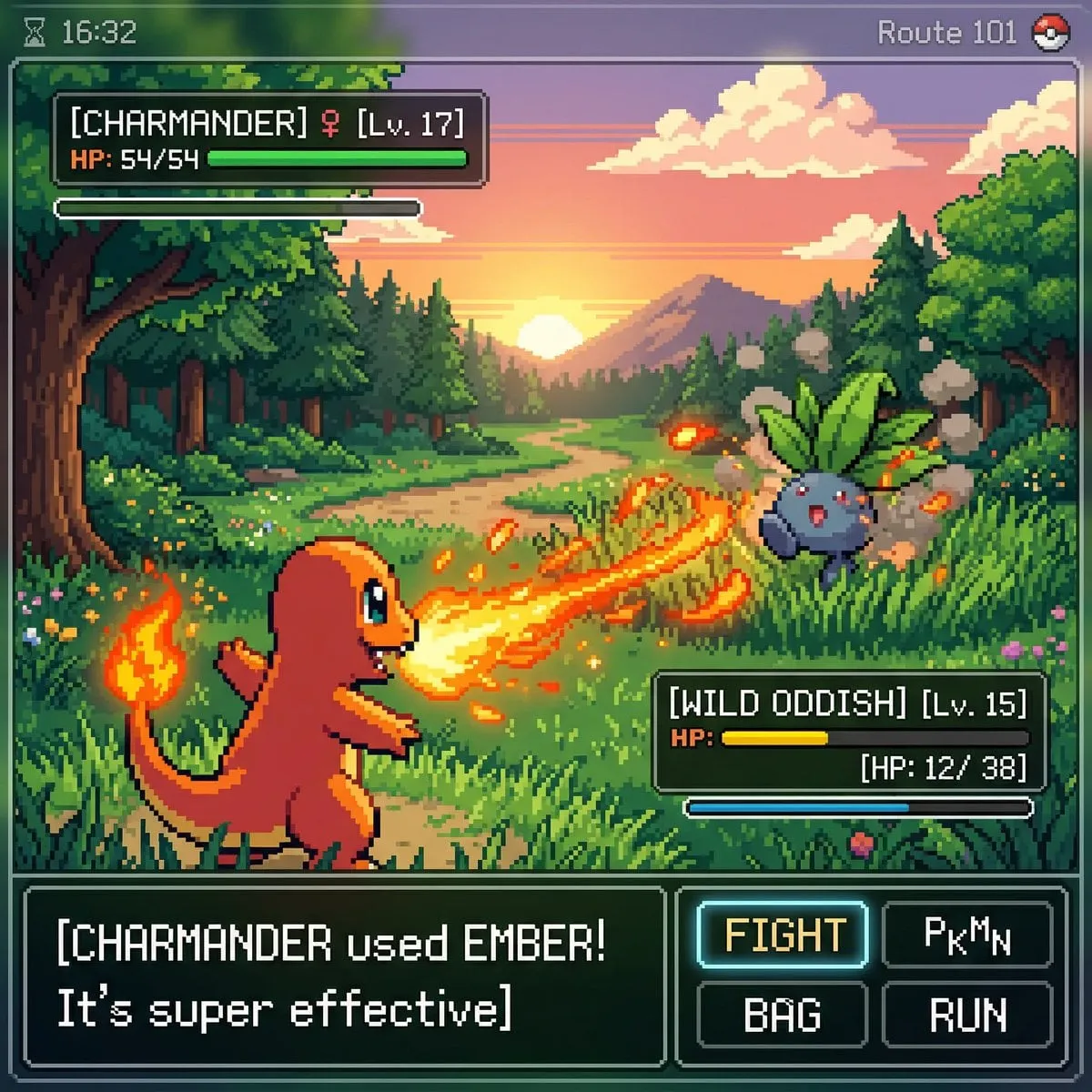
What they do well: generating animated motion from a description or from a reference image, including movement, camera pans, and physics that feel convincing. Modern systems hold characters across several seconds with much better coherence than earlier generations, and they interpret lighting and mood descriptions with real fluency. For look-development, pre-visualization, and background builds, they are already fast and cost-effective enough for serious work.
What they still struggle with: absolute control and long-form discipline. Complex multi-second choreography can still wander, and a fully controlled heroine around a generated scene is a craft, not a default. Precise, repeatable prop and geometry control, reliably rigid body behavior across many frames, and total frame-level predictability all remain manual. The creators who work best around these limits keep scenes short, guide the generator carefully, and finish in the edit instead of expecting one perfect long take.
The practical takeaway is that the tools excel at giving you a strong, cheap starting point and raw material with real character, but the polish that makes an animated piece read as professional still flows through the human finishing pass.
The shift from drawing to directing
The most important creative consequence of these tools is a role change. The classic image of the animator is a person drawing hundreds of frames; the emerging image is a person who sets a vision, directs a generator, and refines the result. Mastery is migrating from manual execution to specification and taste.
This favors a different repertoire of skills. The ability to describe a scene precisely, to set a mood through consistent language, to diagnose why a generated shot drifted, and to decide what to keep, all become more valuable than raw frame count. People who could never draw find they can express clear visual ideas, and people who could draw find their taste now executes faster than their hand.
It also changes how you plan. A strong director's brief, a clear reference for characters and world, and an established style for the project produce far better results than ad-hoc experimentation. The better your upfront craft, the more reliable and productive the tool becomes, and the less of it you waste on failures. Study craft that used to matter mostly to film directors, framing, pacing, and continuity, because it is exactly the part of animation that no longer gets automated away.
Build an AI animation workflow that scales
A repeatable workflow is what turns a promising tool into a dependable production asset. You want a pipeline you can use on project after project without re-solving the same problems.
Start with a strong visual bible. Before generating, define the characters, the world, the color palette, the lighting rules, and the tone of the piece, and hold them as reference assets. A short, consistent briefing document plus a few clean reference images is often enough to anchor an entire project, and it prevents each scene from drifting into its own universe.
Plan in scenes, not in one giant generation. Each animated beat is its own small challenge, so approach them one at a time, generate a few takes per scene, and select the strongest rather than trying to perfect a single long run. This keeps failure cheap and gives the edit plenty of bread to work with.
Keep a consistent finish in mind. Decide the color grade, the sound design, and the pacing early, and apply them across every scene so the final cut reads as one production. A unified look hides a multitude of small generation differences, and covering seams in the edit is a bigger lever than chasing pixel-perfect frames.
Make your assets versioned and reusable. Store the reference images, the winning prompts, and the proven scene templates so you can return to the same world weeks later and produce matching content without re-deriving everything. Reusability is what makes AI animation economic at scale.
Which projects should put AI animation to work
AI-assisted animation is not right for every job, and knowing when it fits saves you both time and quality. It shines in exploration and volume: concept art, style exploration, background art, look development, quick pitch decks, and anything where many rough-but-inspirational frames help a decision get made fast.
It performs well in the social and demo sweet spot. Character tutorials, product explainers, brand mascot content, and narrative short-form with stylized, forgiving aesthetics are ideal because they reward turnaround and reuse more than they demand frame-level precision. When content value comes from character and concept rather than from hyper-real motion, AI animation is a perfect fit.
It is less suited to production animation that demands exact lip-sync, rigid-body mechanics, or strict continuity across very long footage. Deliverables with a hard technical bar still need hands-on work. The strategic habit is to route each project to the method that honors its requirements, and to let AI animation handle the exploration and volume it is genuinely good at.
A concrete comparison: traditional versus AI-assisted animation
To understand the change, it helps to hold the two approaches side by side against the same small job, say, a twenty-second scene of a character walking through a stylized street.
Traditionally, that scene would begin with clean-up and layout, every frame positioned and checked, then key animation establishing the broad rhythm, then in-betweening filling the motion, then coloring and final effects, then a render pass and cleanup. For one person, even with good software, this is measured in days, sometimes more, and every revision multiplies the cost. The budget and the patience required keep that scene out of reach for most solo creators.
With AI assistance, the same job is reframed. You establish the character once with reference stills and a held style, write a clear motion direction, generate a few takes of the walk, select the strongest, and finish the loop in the edit with grading and sound. The heavy mechanical lifting is compressed to minutes, and the remaining work is selection and polish. The scene that used to require a small pipeline and a healthy budget is now something a disciplined individual can complete in an afternoon.
The comparison matters beyond efficiency. It clarifies where the value sits: in the traditional path it sat in the accumulated labor of producing frames, while in the AI-assisted path it sits in the reference craft, the direction, and the editorial decisions you make around a fast generator. The tools do not make the human redundant; they move the human's job to a stage where taste and selectivity, rather than hand speed, determine the outcome.
The payoff for creators who embrace the shift
For freelancers and small teams, the benefits are concrete. The cost of producing animated content falls, which lets an individual take on jobs once reserved for studios. Speed improves, which means more iterations, more pitches, and more experiments with the same budget. Creative range widens, because the person who could never draw can now generate a convincing look, and the person who can draw gains velocity.
For clients and audiences, better and more varied animated content appears where it never could before: small brands get a consistent mascot, educators get clearer demonstrations, and storytellers get a way to make the imagined visible. The tools quietly expand what counts as producible, which is the most valuable thing any technology can do for a creative field.
The skills that keep you relevant as tools improve
Because the tooling is moving fast, the edge is not in memorizing any single interface. It is in the transferable skills that survive every update and every new model.
Master visual literacy. Learn to see composition, light, continuity, and pacing, because you will spend your time choosing between generated options and steering them, and you cannot direct what you cannot judge. Learn to write precise creative briefs, because specification has become the primary production skill. Learn basic editing and sound, because the finishing pass is where your returns are realized and where the difference between a cool artifact and a finished piece is made. And learn to iterate strategically, testing, selecting, and discarding rather than polishing the first thing that appears.
The tools reward people who combine technical fluency with aesthetic responsibility: the more reliable the machine, the more the work is defined by the ideas and taste the human brings to it.
A sustainable future for content makers
The future of content production is not a world where animation disappears, and it is not a world where the machine replaces the maker. It is a world where the maker is free from the filigree of production and is judged instead on vision and selectivity. When producing an animated scene is cheap enough to iterate on, the scarce resource becomes good ideas clearly expressed, and the people who supply those resources are the ones who thrive.
Start small, and start now if you can. Define a character, brief a simple scene, generate a few takes, and finish one short piece end to end. The skills you learn on that first project, reading output, writing crisp briefs, holding a look through the edit, are exactly the skills that scale to whatever the next generation of tools offers. Build the habit of direction now, and you will be positioned to lead the animation future rather than to be swept along by it.
Frequently asked questions
Do I still need to know how to animate the traditional way?
Not to produce quality work, no. The craft that matters most now is visual literacy and direction. Traditional animation skill still helps and speeds up your judgment, but it is no longer the gatekeeper.
Is AI animation good enough for professional clients?
For look development, concept art, and stylized short-form, yes. For demanding technical animation like exact lip-sync and rigid-body mechanics, you still need hand-finishing. Matching the job to the method protects your quality.
What kind of project should I start with?
Start with something short and forgiving: a single character doing one clear action, or a simple branded demonstrator. A short, well-controlled piece builds the skills and the confidence to take on bigger, more complex narratives later.
How do I keep characters consistent across a whole project?
Build a visual bible with reference images and firm style rules, hold those assets consistently, and plan in scenes while keeping one unified grade. Consistency is a systems problem solved by your standards, not by luck in a single generation.
Will AI animation make content production less human?
It points the opposite way. The tools automate execution that used to consume human energy, which leaves more room for the ideas, taste, and story that genuinely require a human. The human ask is shifting, not shrinking.
