
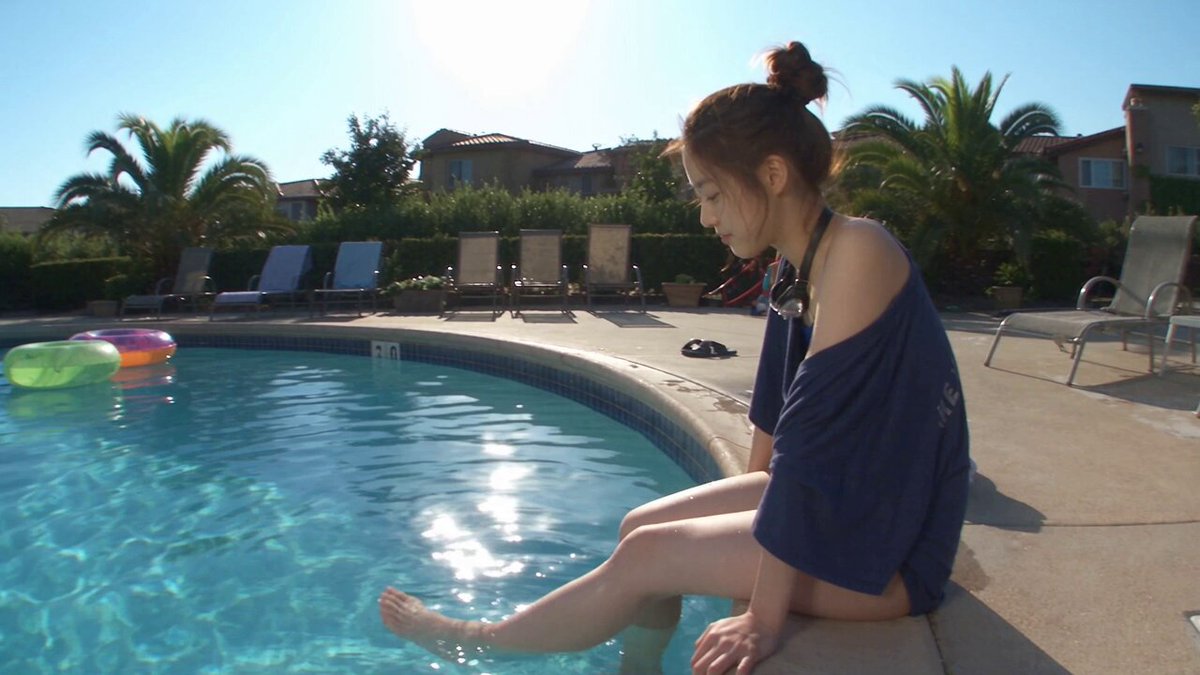

There is a meaningful difference between generating a clip with AI and directing a scene. Anyone can type a description and get something moving. To get a shot that communicates emotion, respects continuity, and feels intentionally framed, you have to think like someone behind a camera. That means translating a director's vocabulary into the language a generative video model understands.
What follows is a field guide to writing cinematic prompts for AI video. We cover the mental model of the AI director, the anatomy of a strong prompt, how to control time and motion, how to use the language of cinematography, and how to refine results. These principles apply across the current generation of AI video tools and will continue to matter as the models improve.
Thinking Like a Director, Not a Typist
The biggest shift in mindset is moving from describing a subject to directing a scene. A novice prompt says something like a forest. A director's prompt says: a dense pine forest, mid-morning, soft volumetric light breaking through the canopy, a slow dolly pushing in on a path, a sense of calm and anticipation.
The difference is not just length. The director's version makes decisions about time of day, light quality, camera movement, and mood. These are exactly the decisions a film director makes before a single frame is captured. The model generates from a description, so the description should carry intention, not merely subject matter.
Think of the prompt as a block of direction rather than a summary. Every clause is an instruction that shapes composition, motion, and feeling. The more precisely you specify the things that matter, the closer the model can land to your intent. At the same time, avoid over-specifying every detail, because a cluttered prompt can dilute the most important signals.
The Anatomy of a Cinematic Prompt
Cinematic prompts tend to follow a recognizable structure, though the ordering can vary. A useful mental template includes the subject, the setting, the light, the camera, the motion, and the mood.
- Subject: who or what is in the frame, and in what state. Be specific about appearance, action, and expression.
- Setting: where the scene takes place and at what time. Place the subject in a world.
- Light: the quality and direction of light. Golden hour, hard noon sun, soft window light, neon glow, candlelight. Light carries a huge share of the emotional weight.
- Camera: the lens character, distance, and framing. A close-up, an establishing wide, a shallow depth of field, a low angle.
- Motion: what moves and how. The subject's action, ambient motion like wind or water, and whether the camera itself moves.
- Mood: the emotional register. Calm, tense, joyful, melancholic, epic. Mood unifies everything else.
Putting all six together, you might write: A weathered sailor standing at the helm in a moody, overcast dawn, soft diffused light from a break in the clouds, slow pushing close-up with shallow depth of field, sea spray drifting past the lens, an atmosphere of quiet resolve.
The Language of Cinematography
Cinematography has a well-developed vocabulary, and using it pays off because the fundamentals transfer directly to AI video prompting.
Shot Size and Framing
Be explicit about how much of the subject fills the frame. Words like extreme wide, establishing, full shot, medium, close-up, and macro give the model a strong compositional instruction. Shot size creates a relationship between the audience and the subject. A close-up intensifies emotion; an establishing wide sets context and scale.
Lens and Depth of Field
Lens language communicates both visual style and emotional stance. Shallow depth of field isolates the subject and feels intimate. Deep focus keeps everything sharp and can feel documentary-like or monumental. Mentioning a wide lens, a telephoto compression, or a fisheye warps perspective in distinct ways that shape the feel of the image.
Camera Angle and Movement
Angle changes how we read a scene. A high angle diminishes, a low angle empowers, and an eye-level angle feels neutral and immersive. Camera movement is even more powerful. A dolly-in increases tension, a pan reveals context, a handheld shot adds immediacy and unease, and a slow zoom has a deliberate, observing quality. Naming the movement tells the model what temporal story the camera tells.
Lighting as Narrative
Directors light for narrative, not just visibility. Hard light creates drama and definition. Soft light flatters and soothes. Backlight separates the subject from the background. High contrast signals noir or tension; gentle diffused light reads as calm or nostalgic. Describing light quality is one of the highest-leverage things you can put in a prompt.
Controlling Time and Motion
Time and motion are the dimensions that make video video. Controlling them well is the difference between a clip and a shot.
Temporal Language
Use temporal cues to set pace and duration. Words like slow, lingering, rapid, and accelerating shape how the sequence unfolds. You can describe the arc itself, such as a scene that begins still and slowly comes to life, or something that resolves in a single decisive movement.
Describing Action
Be specific about the action without turning the prompt into a script. State what the subject does and how it does it. A person closing their eyes slowly suggests something different from a person turning suddenly. Verbs and adverbs carry direction, and physical detail grounds the motion.
Ambient and Secondary Motion
Motion does not only come from the subject. Wind in hair, dust drifting, water moving, foliage rustling, lights flickering: ambient motion makes a scene feel inhabited and alive. Including a layer of secondary motion adds life and realism even when the main subject is still.
Building Original Scenes Rather Than Repeating Styles
A strong director develops a point of view rather than copying a look. The same applies to prompting. Experiment with unusual combinations of light, camera, and mood to find a visual identity. Keep a small library of prompt patterns that have worked for you in the past, and remix them. Reusing one signature look for every project quickly becomes visual fatigue, so treat style as a flexible vocabulary rather than a fixed template.
Different topics also call for different structures. A product reveal benefits from precise, controlled camera work. A music video demands expressive, stylized imagery. A documentary-style scene benefits from natural light and observational framing. Matching the framing to the intent is part of directing.
Preparing Input to Support Your Direction
Many cinematic workflows start from an image. Preparing that image with an eye to direction improves results. If you animate a portrait, a source with clean separation of subject and background gives the model room to move the camera. If a scene needs depth, an image with strong fore, middle, and background layers makes a push-in more convincing. Think about what the camera will discover as it moves and compose the input image accordingly.
When a project needs visual continuity across many shots, keep a consistent set of reference images and reuse them, so the subject does not drift between angles and scenes. Consistency is a directing decision, not an accident.
Generating, Reviewing, and Refining
Generation is an iterative craft. Render a batch of variations, review them with a director's eye, and refine the prompt. Watch for the specific qualities you care about: is the emotion landing, is the camera doing what you asked, is the motion coherent, is the light doing its job? When a detail is wrong, edit the signal that likely caused it instead of re-rolling the same prompt and hoping.
Keep a record of prompts that worked and why. Over time you build a personal directorial toolkit. Pay attention to what different models do well, because a technique that shines in one tool may behave differently in another.
A Practical Checklist Before You Generate
Before you submit a prompt, run through a short mental checklist. It catches most of the common reasons a promising description produces a disappointing clip.
- Does the prompt name the subject and its state clearly? If a reader could not picture who is in the frame, neither can the model.
- Is there a sense of place and time? A scene floats when it has no setting or lighting.
- Are the camera and framing decided? Every clip should be framed by choice rather than by default.
- Is the motion named? Something should move, and the prompt should say what.
- Is the emotional register implicit? If the prompt feels flat, the result will too.
- Would removing any single clause change the result? If not, that clause is noise.
Running this checklist turns prompting into a craft. With practice it becomes automatic, but for a difficult shot it is a reliable way to find the gap between what you imagined and what the words actually say.
Extending Direction Across Multi-Shot Sequences
A director does not direct one shot in isolation; they direct the relationship between shots. The same applies when you use AI video to build a longer scene or a sequence. Coherence across shots matters as much as quality within a shot.
- Decide the camera language for the whole sequence before you start, so cuts feel like intentional decisions rather than random re-framing.
- Vary the shots within a consistent visual logic: a wider establishing shot, then a closer cut, then a detail. This is how an editing pattern develops feeling and rhythm.
- Keep the lighting and color philosophy stable across shots so the sequence reads as one continuous world.
- When a subject must persist from shot to shot, hold reference-based identity so the audience recognizes them as the same person or object.
Thinking in sequences is what turns a set of independent clips into a scene with intention. Practicing this elevates every project from a collection of attractive renders to a piece of coherent film craft.
Learning From Each Generation
Every render is data. When a clip works, keep the prompt and record why it worked, the model it was run on, and the seed or settings if you use them. When a clip fails, diagnose the likely cause before you retry: a confusing subject, a muddled mood, an over-specified frame, or a model that simply does not handle the requested motion well.
Building this running record is what turns occasional luck into repeatable skill. After a dozen projects you will have a personal library of phrases that reliably produce the feelings you want, and a clear sense of which tools handle which directions.
Common Directing Mistakes
- Describing a subject with no sense of setting, light, or camera, producing a floating, contextless image.
- Over-specifying so many details that the key emotional signal gets lost.
- Ignoring camera language, so the model defaults to a generic movement.
- Failing to include ambient motion, leaving visually flat, lifeless results.
- Treating every project the same instead of adapting framing to the intent.
- Judging a single frame instead of the clip in motion, where pacing and coherence live.
Frequently Asked Questions
Do I need to write very long prompts for good results?
No. Clear signals beat long prose. A focused prompt that specifies subject, light, camera, motion, and mood is usually more effective than a wordy one that buries the important instructions.
Is cinematography knowledge necessary to use AI video tools well?
It is not required, but it is a massive advantage. Understanding shot size, lens, angle, movement, and light turns a random generator into a predictable directing instrument.
How much control do I actually have over the camera?
It varies by tool, but naming camera movements and angles in the prompt reliably shapes the result. Explicit camera controls, where available, give even more precision.
Should I always generate from an image?
No. Many strong scenes are built text-first. Using an image as input is valuable for animating existing assets or enforcing consistency, while text-first generation gives you more freedom to invent a world from nothing.
Final Thoughts
Becoming a capable AI director is less about memorizing tricks and more about adopting a director's way of seeing. Every decision about framing, light, camera movement, and pacing is a decision about how the audience should feel. The models are becoming capable enough to honor those decisions when you express them clearly.
The craft is learnable. Start with the fundamentals, practice translating intention into cinematic language, build a personal vocabulary of prompts that work for you, and refine through iteration. As the technology grows more capable, the thing that will continue to separate ordinary clips from memorable shots is direction: a clear eye, a deliberate choice, and the ability to communicate both in a prompt.
