


The idea of an AI director orchestrating a feature-length scene list used to read like science fiction. Today it is a working practice for storytellers who want to move from isolated text-to-video clips toward coherent, multi-scene narratives. This does not mean a machine is replacing the vision of a director. It means directors, cinematographers, and concept artists are gaining a new collaborative partner: a system that can hold a visual brief, break it into shots, and keep a consistent look across an entire production. The craft of prompting, which began as an awkward way to coax a model into obeying instructions, has matured into something closer to screenplay language. Understanding that shift is the difference between generating a few impressive seconds and directing a sequence that actually tells a story.
Why the Directing Role Is Changing
For most of the history of moving images, directing has meant translating an emotional idea into physical reality: blocking actors, choosing lenses, setting up lights, and reviewing footage. The creative DNA lives in the human brain and is expressed through cameras and sets. Generative video flips part of that equation. The camera no longer has to exist. The light pass can be a paragraph. The set is described, not built. That change is not a loss of craft but a redistribution of it, because the decisions a director makes, the framing, the pacing, the emotional temperature, still shape the result. What changes is the vocabulary used to communicate them, and the speed at which ideas can be iterated.
An AI director, in the practical sense used here, is a piece of software that takes a high-level creative statement and produces a structured shot list, deciding composition, angle, movement, and mood, before a single frame is rendered. It is a reasoning layer sitting on top of the generative models. The director does not invent pixels; it invents intent, and that intent is then carried through to the generation step by the artist's prompt. This division of labor is what allows an individual artist to behave like an entire production team. Instead of one person writing, one shooting, and one editing, a single creator can write the vision, instruct the director agent, and review generated frames, refining both the plan and the prompt in the same sitting.
The Skills a Modern Visual Artist Needs
Prompt Syntax Is the New Camera Language
Think of prompt syntax as a cross between a shooting script and a spec sheet. Where a cinematographer once wrote shot numbers and lens choices into a slate, a modern artist now writes descriptor blocks that the model must honor. Strength adverbs, quality markers, lighting references, lens simulation, camera-movement verbs all carry meaning that the model converts into pixels. The art is in knowing what can be controlled and what should be left to the model. Over-specifying every detail tends to produce stiff, overworked frames; under-specifying produces generic output that does not match the intended look.
Model Understanding Beats Model Collecting
A growing library of generative engines means each model has its own temperament. Some are outstanding at photorealism and subtle skin texture. Others excel at stylized animation or consistent character rendering. Others still are best at dramatic camera motion. The modern artist treats these as a toolbox rather than a single creative god. Knowing which model suits a given beat saves hours. A night exterior with heavy diffusion and practical neon lights asks for a different engine than a clean, studio-lit beauty shot. Building a mental catalog of which engine favors which outcome is one of the fastest ways to raise average output quality across a project.
Iteration Discipline
Great generative work is rarely a single prompt. It is a loop: write, render, critique, adjust. The critique is where the artist's eye earns its keep. Looking at a frame the way you would look at a rushes screening, asking whether the focal length flatters the subject, whether the light reads as motivated by the scene, and whether the action stays readable, and then turning that note into a revised prompt. This is the discipline that separates people who get lucky frames from people who get repeatable results.
Prompt Engineering for Cinematic Fidelity
Crafting prompts that yield cinematic output is largely about giving the model strong, consistent anchors. Start with the world, then the subject, then the lens and light, then the motion. If you establish the atmosphere first, every element that follows has something to latch onto.
Establish the World and Tone First
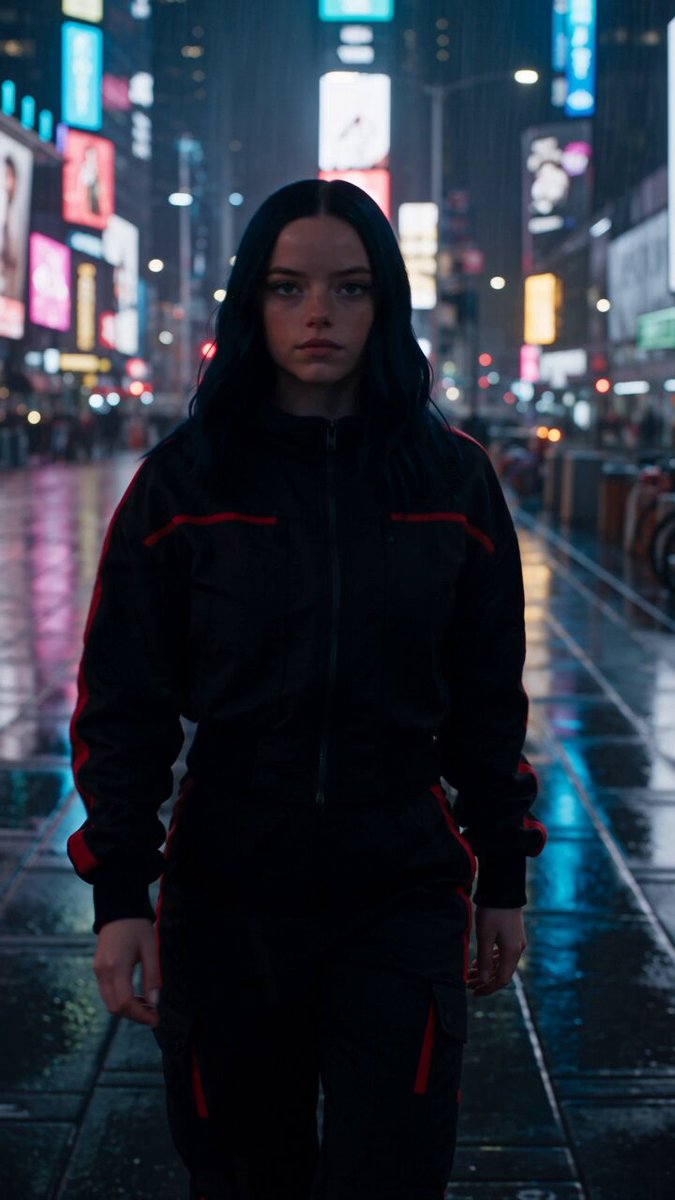
The opening of a prompt should set place and time of day and emotional register. “A rain-soaked neon alleyway at midnight, tense and lonely” gives the model a spatial and emotional frame before the hero even appears. Anchor sentences that carry hard visual facts, locations, materials, weather, lighting direction, are worth more than vague mood words because they give the diffusion process stable geometry to render.
Use Reference Control Sparingly and Intentionally
Reference images are the closest thing generative video has to a location scout. A single well-chosen reference for the environment, a character, or a color grade can pin down consistency far better than a paragraph describing the same thing. The mistake is overloading the model with conflicting references expecting it to average them into something coherent. Choose one primary reference per variable you need to control: one for the hero's face, one for the environment, one for the palette. Keep them aligned in lighting and mood so the model is not forced to reconcile contradictions.
Direct with Movement Verbs
Cinematic motion descriptors, tracking, push-in, dolly past, handheld, whip-pan, offer strong control over how the camera behaves. These map to motion patterns in the generation step and give scenes a kinetic identity. Pair the movement with its intention: a slow push-in toward a subject's eyes reads as building tension, while a fast whip-pan communicates disorientation or energy. When you write movement, also specify the object of attention so the model knows what the camera is behaving in relation to.
Managing a Long-Form Project Instead of a Single Clip
The biggest leap in generative filmmaking is moving from one-shot asks to continuity. A single dramatic clip is achievable by almost anyone. A coherent five-scene sequence where the hero looks the same, the lighting stays consistent, and the geography makes sense is a different beast entirely. Long-form work lives or dies on continuity, and continuity is a planning problem as much as a prompting problem.
Lock the Hero Early
Before generation begins, establish the hero as a stable asset. Generate several angles of the lead character until the model returns consistently recognizable features: same face, same costume, same proportions. Save these as your reference set and use them for every shot featuring that character. If the character changes appearance between planning and production, every subsequent shot inherits the drift, and continuity falls apart scene by scene.
Keep a Style Sheet for the Whole Film
Treat your prompts like a production bible. Before shooting begins, write a style sheet that records the palette, the lens language, the lighting motif, and the world rules that apply to every scene. Then each scene prompt pulls from that sheet instead of inventing a look from scratch. Reusing defined style blocks is what keeps shots that were generated days apart feeling like they belong to the same film.
Review in Sequence, Not in Isolation
When footage is ready for review, watch it as a cut, not as a set of thumbnails. A frame that looks strong on its own can feel thin next to the scene preceding it. Sequence review surfaces continuity errors, pacing problems, and palette clashes that single-frame review misses. Build a word-of-day rhythm where you review linked beats together and only fix what actually breaks the narrative.
A Practical Seven-Step Creative Workflow
- Write the one-line concept. Distill the emotional core into a single sentence that everything else must serve.
- Build the hero and world references. Generate and freeze stable assets before any scene work.
- Draft the style sheet. Fix palette, lens, light, and motion vocabulary for the whole project.
- Break the story into beats. List each beat and the shot language it needs.
- Write scene prompts from the style sheet. Every prompt inherits the locked world rules.
- Generate in small validated batches. Render one beat, review it as part of the sequence, then move forward.
- Refine the sheet as you learn. Let hard-won discoveries roll back into the style sheet for future scenes.
This workflow keeps planning and generation tight while staying flexible enough to absorb model-specific surprises. It also makes the project reproducible: once the style sheet and references exist, an entire second pass, a different edit, a variant scene, can be generated from the same foundation in a fraction of the original time.
Common Pitfalls and How to Avoid Them
Chasing the First Good Frame
It is tempting to accept the first frame that looks impressive and move on. The danger is that a lucky frame often does not match the next scene's light or camera language, and the whole film quietly loses cohesion. Force yourself to generate the same beat a few times and pick the take that matches the style sheet, not the take that is merely pretty.
Overloading Every Prompt
When a prompt tries to control everything, the model often produces a muddy average of conflicting instructions. Prioritize. Decide the two or three variables that really matter for a beat and give them crisp, strong descriptors, while letting everything else breathe. Detail is strength only when it is structured; unstructured detail is noise.
Ignoring Model Strengths
Using a single model for every task, regardless of its personality, is the fastest route to flat, samey output. Match the engine to the beat: photoreal engines for branded close-ups, stylized engines for dream sequences, fast engines for exploration and mood boards. The artist who diversifies the toolbox gets variety without lowering overall quality.
Frequently Asked Questions
Do AI directors replace human directors?
No. They replace tedious coordination, not creative judgment. The human still sets the vision, validates outcomes, and makes the calls that give the film its voice. The AI director is best understood as a tireless assistant that holds the brief and prototyped shots faster than a crew ever could.
What level of detail belongs in a prompt?
Enough to control what matters for the shot, and not more. Start with world, subject, lens, light, and movement. Add detail only where the model keeps missing something you need. Excessive specification usually degrades quality more than it refines intent.
Do I need references for every scene?
No. Reuse a small frozen set of references for the hero and environment across the whole project rather than generating new references per scene. Stable reused references are the backbone of continuity, and they reduce both effort and drift.
How do I keep characters consistent across scenes?
Lock the character as a reference asset first, apply the same costume and feature set, then use that asset in every scene prompt. Spot-check consistency at sequence reviews and regenerate any beat where the hero visibly drifts before it propagates through the edit.
Can a prompted project be edited later?
Yes, and this is where the style sheet earns its keep. Because every scene prompt inherits the same locked style, you can regenerate a single scene, cut a variant, or extend a sequence later without the new material looking foreign to the rest of the film.
Looking Ahead: From Clips to Continuous Storytelling
The direction of travel is clear. Generative filmmaking is shifting from novelty clips to dependable, long-form narrative production, and the people who will lead that shift are not necessarily the ones who write the cleverest one-off prompts. They are the ones who build systems: stable reference sets, reusable style sheets, disciplined review loops, and a deliberate match between the model and the beat. Those systems are what turn a scattered collection of beautiful frames into a film with a point of view. The craft of filmmaking has not disappeared; it has simply moved into the plan. The modern visual artist is part designer, part system builder, and part director, and the playbook for that role is still being written by the people willing to iterate on it daily.
Whether you are animating a mascot, directing a branded short, or imagining a full animated series, the principles hold up. Fix your intent, freeze your assets, keep your style sheet honest, and review in sequence. Do that, and you will find that prompting stops feeling like gambling and starts feeling like directing.
