

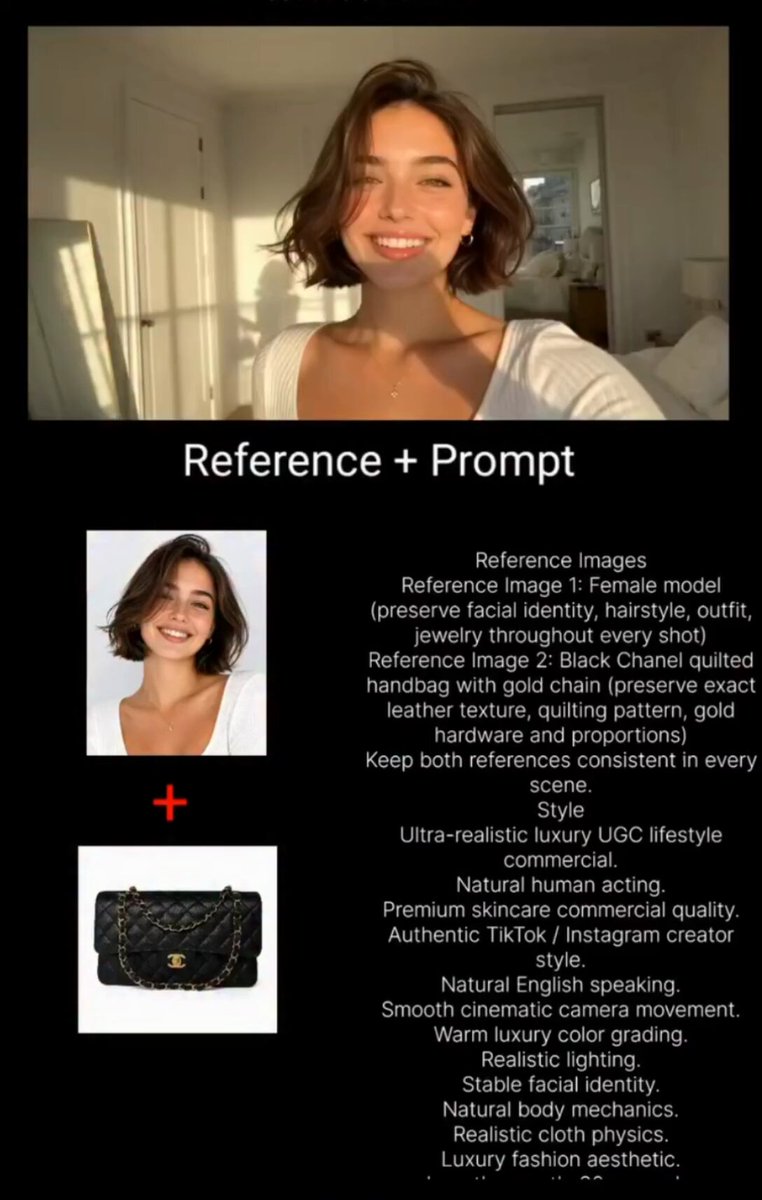

The loudest shift in digital marketing right now is not a new social platform or a novel advertising format. It is the emergence of a talking face that is not really there. A brand can now produce a video in which a realistic spokesperson looks into the camera, speaks in perfect alignment with the script, and does so in any language or regional accent, without ever stepping on a stage. These are AI talking avatars, and they are quietly rewriting how companies communicate with their audiences.
The opportunity is more than cost savings. At its core, it is a response to a consumer expectation that has grown impossible to ignore. Audiences no longer accept cold, generic broadcasts. They want experiences that feel addressed to them personally, that acknowledge their language, their context, and their moment. Talking avatars sit exactly at the intersection of human authenticity and machine scale, allowing a brand to be personal at a volume that would otherwise be impossible.
This guide looks at the technology behind these avatars, the real-world applications that are driving adoption, and the practical steps to create and deploy them responsibly. Whether you run a training program, a busy customer-service operation, or a media brand, the same principles apply: build a consistent spokesperson, speak to each audience personally, and scale without losing trust. Throughout, we will separate what actually works from the hype, because the difference between a gimmick and an asset is entirely in how you use it.
Why Personal, Talking Content Is Winning
For most of the history of advertising, personalization meant choosing the right audience segment and showing them the right static ad. The message was fixed; only the placement varied. That approach has worn thin. Consumers have become expert at sensing generic, templated communication, and they tune it out almost instantly, no matter how polished the production values.
What resonates instead is a message that feels tailored. The rise of interactive and short-format video has trained audiences to expect a human presence in the content they engage with. A talking avatar supplies that presence at scale. It can greet each customer by name in video, adapt its message to the customer's last interaction, and appear in the customer's preferred language, all without requiring a team of presenters or a recording studio.
This matters even more as digital experiences become automated. When a customer interacts with a brand online, they increasingly encounter self-service journeys. A talking avatar inserted at the right moment brings back a measure of human warmth to what would otherwise be a cold, form-driven exchange. That warmth is the difference between a transaction and a relationship, and relationships, not transactions, are what build durable brands.
The Technology Behind a Talking Avatar
A convincing talking avatar is the result of several technologies working together seamlessly. It is not simply text-to-speech layered over a still image. Building a spokesperson that stays recognizable, lip-syncs correctly, and conveys the right emotion requires a genuinely integrated pipeline, and each stage has its own role and its own pitfalls.
Voice generation as the backbone
The foundation is high-quality voice synthesis. Modern engines produce speech with natural cadence, inflection, and emotional coloring, and many support multiple languages and regional dialects. For an avatar that represents a brand, voice consistency matters as much as visual consistency. The same voice profile should follow the spokesperson across every video the brand produces, because a voice that wavers between deep and bright, between accents, destroys the illusion as surely as a changing face would.
Visual generation and facial animation
The visual half of the avatar is generated from a consistent identity model. The avatar's face, features, and styling are locked so that it looks like the same person in every clip. Facial animation then drives expression and lip movement, syncing them precisely to the audio track. It is this synchronization that separates a believable avatar from a moving cardboard cutout, and it is why small delays or mismatches between audio and lips are so jarring to watch.
Continuous identity across platforms
Your avatar will almost certainly appear not just in a website video but in social clips, training modules, and product demos. Keeping the character recognizable across all of these surfaces requires the identity to be consistent. Modern approaches anchor the avatar's structure and let the style flex, so the same spokesperson survives across different formats without resembling a different person each time. This cross-platform consistency is exactly what makes an avatar feel like a real, bankable figure rather than a one-off effect.
Building a Consistent Spokesperson
Consistency is the invisible requirement of every good avatar program. Viewers forgive a slightly imperfect avatar; they do not forgive one whose face changes from video to video. A few habits keep the spokesperson believable, and they are worth treating as a non-negotiable checklist.
Define the identity once
Before generating anything, specify the avatar's appearance, voice, and personality in detail. This becomes the reference standard every future video is checked against. Just as a real spokesperson has a consistent look, so should the digital one. Write the brief down, share it with the people who review the videos, and make it the criterion for approval on every single clip.
Lock the voice to the face
Pair the avatar's visual identity with a single voice profile and keep that pairing fixed. An audience that hears one voice and sees another will lose trust immediately. The two must be treated as one unit, planned together and versioned together. When you change one, plan how the other will change, because they ride together in the viewer's perception.
Test across surfaces
Produce a test set spanning a close-up social clip, a wide corporate video, and a language-switched version, and review them side by side. Contradictions between them signal where the identity is weak and needs reinforcing before you scale production. Catching a drift in identity at the pilot stage is cheap; catching it after you have produced a hundred videos is expensive and embarrassing.
Real Applications That Are Driving Adoption
Where are talking avatars actually being used today? Beyond the hype, several categories are delivering measurable value, and each illustrates a different reason the technology earns its keep.
Personalized learning and training
Training is one of the strongest use cases. A learning platform or corporate academy can use an avatar to deliver lessons in the learner's own language, at a consistent pace, with patience no human trainer can sustain. Learners get a personal instructor, and the organization scales that experience to thousands of people without multiplying instructors. The same course can be re-voiced into any language with a single generation pass, which is a transformative advantage for global workforces.
Customer service and retail experience
In retail and hospitality, an avatar can greet customers, walk them through a product, answer common questions, and hand off to a human agent for complex issues. It reduces the friction of browsing and gives the service layer a friendly face. Crucially, the avatar can be localized for each market, speaking to a customer in their preferred language rather than forcing them to adapt. For a multinational, this capability removes a whole category of friction from the experience.
Always-on digital brand ambassadors
Some brands build a permanent digital ambassador, a virtual figure who represents the company across campaigns, launches, and events. Because the ambassador is always available and always consistent, it becomes an anchor for brand recognition. A figure that appears in every video, every language, and every market gives the brand a memorable, unified presence that no single human personality could match simultaneously. The ambassador becomes a property the brand owns and can evolve, much like a mascot with a voice of its own.
Weighing Cost, Speed, and Trust
The economic case for talking avatars is strong, but it comes with responsibilities. Let us be clear-eyed about all three sides of the equation.
The cost advantage
Producing real talking-head video is expensive per minute: studio time, a presenter, editing, retakes, localization into multiple languages. Avatars compress that cost dramatically. A single avatar can be re-voiced and re-shot endlessly without additional presenter bookings. For languages and markets that previously justified no video at all because of cost, avatars make a video presence possible at all. This is not merely an optimization; it opens markets that were previously closed.
Speed of iteration
Avatars also iterate fast. Changing one line of a script does not require rescheduling a shoot; it requires a regeneration. This turns messaging into something that can be tested and optimized continuously rather than frozen at production time. Marketing teams can A/B test a dozen script variations in an afternoon, measure which resonates, and push the winner the same day. In a landscape where timing is everything, this speed is a genuine competitive lever.
The trust dimension
The counterweight is trust. Audiences are increasingly attuned to synthetic media and want to know when they are seeing an AI presenter. The responsible approach is transparency, using avatars where their consistency and scale genuinely help, and being clear that a digital spokesperson represents the brand. Brands that mislead their audience risk a backlash that erases the efficiency gains. Trust missteps are not recoverable at the pace that efficiency buys you, so guard the trust as carefully as you guard the budget.
Launching Responsibly: A Step-by-Step Plan
If you are convinced of the value, here is how to start without overcommitting, in a sequence that lets you prove the concept before scaling.
- Define the spokesperson. Write out the avatar's appearance, voice, and personality, and fix the reference standard against which every future video is judged.
- Start with one high-value use case, such as a multilingual training module or a product intro, where personalization clearly pays off.
- Generate a small pilot set across two or three languages and two surfaces, and review consistency side by side.
- Validate with real internal testers, not just the team that built it, to catch trust and realism issues early.
- Establish a transparency policy for how the avatar will be labeled and where synthetic media is disclosed.
- Scale from the winning use case by extending the same identity and voice into more languages and channels.
This sequence respects the risk. You spend little at first, learn what genuinely works in your specific context, and only invest in breadth once the numbers justify it. Scaling a proven asset is far easier than trying to salvage an over-invested program that was launched before anyone verified its reception.
Common Pitfalls and How to Avoid Them
The failures in avatar programs follow predictable patterns. Knowing them in advance keeps you out of trouble.
Chasing realism over consistency
A hyper-realistic avatar that changes appearance between clips is worse than a clearly stylized avatar that stays the same. Consistency builds trust faster than raw realism. Prioritize a stable identity, and resist the parade of increasingly photorealistic avatars if you cannot keep them consistent across your whole footprint.
Ignoring localization nuance
Re-voicing into another language is not just translation; it is adapting tone, pacing, and cultural references. An avatar that reads as natural in one market can feel robotic or offensive in another. Localize the delivery, not just the words. Hire or consult native speakers to review the tone, because nothing undercuts a personalization play faster than an awkwardly translated script.
Deploying without a disclosure policy
Synthetic media without disclosure erodes trust and can invite regulatory and platform scrutiny. Decide in advance how your avatar will be labeled and be consistent about it across channels. A clear, honest label does not weaken the format; on the contrary, it positions your avatar as an ethical, modern choice and protects you from the reputational damage of being discovered to have hidden it.
Treating voice as an afterthought
A great face with a mismatched or inconsistent voice breaks the illusion. Voice is half the avatar, and it must be treated with the same care as the visuals. Spend the same review effort on the audio track as on the imagery, because the audience will notice a jarring voice long before they notice a slightly imperfect pixel.
Frequently Asked Questions
Will viewers be able to tell it is an AI avatar?
Careful audiences often can, especially on close inspection, but modern avatars are convincingly natural at typical viewing distances and durations. The goal is not to deceive but to deliver a consistent, presentable spokesperson. Transparency about the avatar from the start is the safest path and, in the long run, the most sustainable one.
Do I need any technical skill to start?
No. Modern avatar tools abstract away the underlying models. Your job is creative direction: defining the spokesperson, writing the scripts, and reviewing the output. The same skills that guide any video production apply, so a capable content team can adopt the medium quickly.
Can the avatar speak my customers’ languages?
Most platforms support a wide range of languages and regional accents. Choose a platform that covers the languages your audience actually uses, and plan to localize delivery for each one rather than relying on translation alone. The capacity is there; the craft of doing it well is still on your shoulders.
Is an avatar right for every brand?
It is a powerful tool but not a universal one. It shines where personalization at scale adds value, such as training, service, and multilingual marketing. For brands whose equity rests on a specific human personality or where audiences value human contact, use avatars selectively rather than exclusively. The medium is a means, not an end.
How do I measure whether it is working?
Track the metrics that matter to the use case: completion rates for training, deflection rates and satisfaction for service, engagement and recall for marketing. Compare these against your prior baseline and against the cost of the alternative production method. If the avatar improves the metric more than it costs, it is earning its place.
Final Thoughts
AI talking avatars are more than a technical novelty. They are a response to a genuine shift in how audiences want to be reached: personally, in their own language, at a moment that feels relevant. The brands that benefit are not the ones chasing the most photorealistic face but the ones building a consistent, trusted spokesperson and using it where real engagement lives.
Start with the audience rather than the technology. Identify the one place where a personal talking message would change the experience, define a spokesperson that can be consistent across every surface, and roll out transparently. Done well, a talking avatar does not replace the human voice of a brand; it multiplies it, allowing a single coherent personality to be present everywhere your customers are. The medium is young, the expectations are already high, and the opportunity to lead simply by doing it thoughtfully is wide open.
