
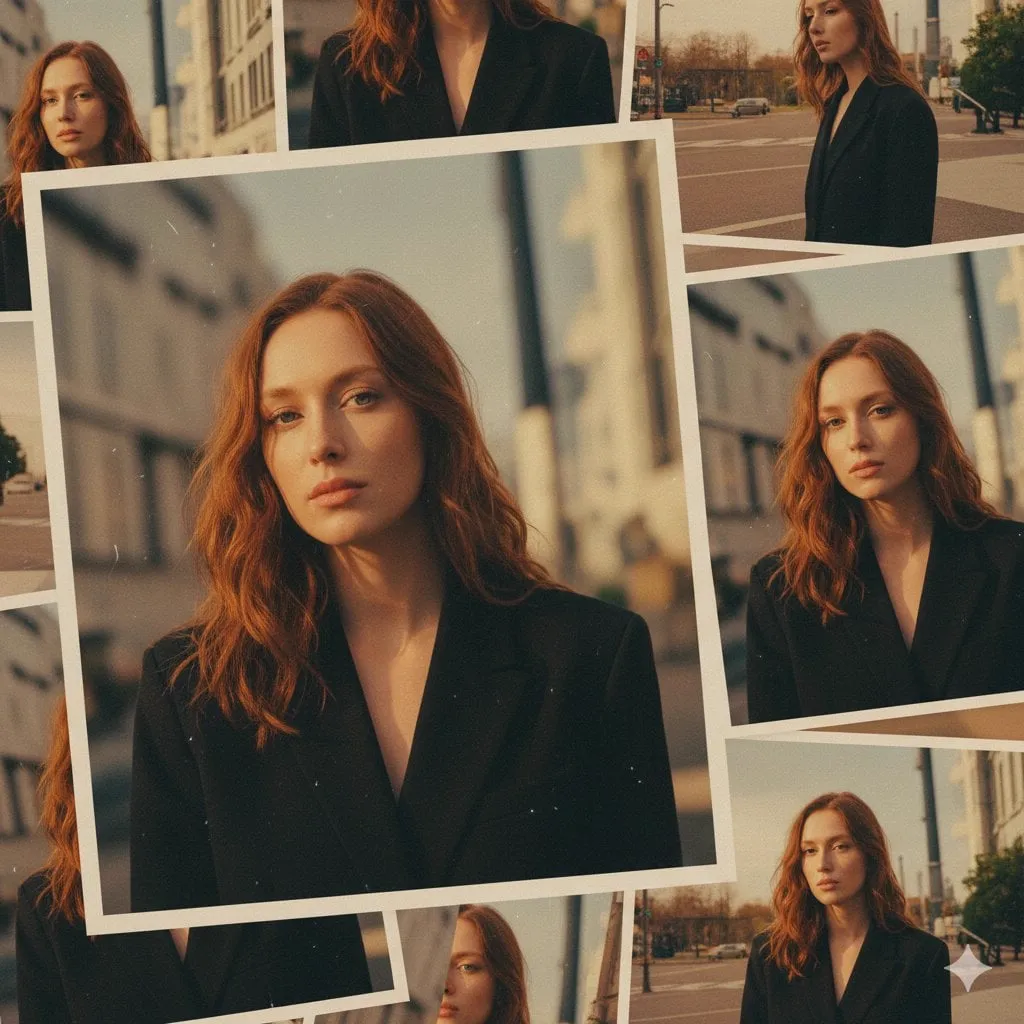

The Real Secret to Consistent Characters in AI Video
Anyone who has spent an afternoon generating AI video knows the frustration. You nail the first frame, your hero looks exactly right, and then two scenes later the face has subtly changed, the jacket has a different collar, and the lighting has shifted from golden hour to neon. This is the single biggest obstacle standing between casual experimenters and people who want to actually finish a short film. Multi-image fusion, or MIF, is the technique that finally lets you lock a character's identity across every shot. This article walks through what it is, why the usual tricks fail, and how to build a practical workflow around it.
Why Character Consistency Has Been So Hard
Generative video models are, at their core, restlessly inventive. Give them a prompt and they will happily reinterpret it. That creative enthusiasm is wonderful for a single shot and catastrophic for continuity. A model that has no memory of the character from shot two to shot four cannot know that your lead wears a specific ring or that her hair is tucked behind her left ear.
The industry has tried several workarounds. Reference images attached to prompts help, but a single reference is a vague suggestion. Text descriptions drift the moment a scene becomes complex. Keyframing locks in motion but not identity. What all of these miss is the difference between describing a character and anchoring one. Multi-image fusion attacks the problem directly by feeding the model several reference images at once and demanding it reconcile them into a single, stable identity.
This matters more than ever because audiences have grown sophisticated. They will forgive a slightly stiff motion, but they will not forgive a protagonist who changes skin tone between scenes. Narrative coherence is now the thing that separates a compelling short that feels handcrafted from a tech demo that feels like a slideshow with added physics.
How Multi-Image Fusion Actually Works
Identity Extraction and Embedding
The first step under the hood is identity extraction. Given three, five, or eight reference shots of the same person, the model analyzes what is consistent across them and what is noise. Facial geometry, skin texture, hair shape, distinguishing marks, and clothing silhouettes get encoded into a compact identity embedding. Think of it as a character sheet written in numbers rather than words. The model then refers back to this embedding whenever it generates a new frame.
The real power is that the embedding is generated from multiple angles and expressions rather than a single portrait. A single glamour shot, for example, will teach the model one version of a face. Multiple shots teach it the range of that face. The result is a character who reads as the same person while still moving, emoting, and turning in three dimensions.
Beyond Simple Averaging
A naive system would simply average the reference images, and an average face is a blurry, uncanny face. Good fusion systems ignore the washed-out middle ground and instead build a canonical identity that sits somewhere conceptually between the references without inheriting any single one wholesale. This subtlety is what lets the character look crisp in a low-light scene, a harsh midday scene, and an overcast scene without cosmetic whiplash.
It also handles the clothing problem. Most characters have multiple outfits across a film. Fusion separates the persistent identity traits (the face, the build, the voice of the performance) from the cosmetic ones (the costume for this particular scene). That separation is the difference between a character and a cosplayer wearing someone else's face.
The Director's Role
All of this technology is only as good as the decisions made above it. An automated director agent can analyze a script, break it into shots, and pre-assign which reference images apply to which sequence. It can also flag moments where the identity embedding is under pressure, like a dramatic close-up in different lighting, and route those shots to models that handle consistency well. Human directors still call the shots; the agent just makes sure the cast does not spontaneously change appearance between setups.
Choosing the Right Tools for the Job
Matching Models to Your Aesthetic
There is no single perfect model for character consistency because there is no single definition of a good look. Photorealistic sequences benefit from models known for strong identity preservation and natural light. Stylized and animated work behaves differently, with exaggerated features that can drift more aggressively and therefore need stronger references. A smart approach is to prototype a single test shot across several models and compare which one holds identity best in your specific style, then standardize the whole project on that choice.
Practical Benchmark Testing
Set up a mini test before committing a full project. Take three reference frames of your character, write one consistent prompt, and generate the same shot in each model you are considering. Grade the results not on which looks prettiest but on three criteria. First, does the facial structure stay stable? Second, does the wardrobe remain recognizable? Third, does the motion stay physically plausible? A model that wins on sparkle but drifts on identity will cost you time in post every single scene.
Keeping Production Manageable
Long-form consistency work is resourced differently from one-off gimmick clips. Rehearse your identity-embedding setup on a scene you intend to cut anyway. If the character locks cleanly there, you have validated your pipeline. If it drifts, fix the reference selection before filming the rest of the project on top of a broken foundation. It is far cheaper to correct the cast at the start than to reshoot twelve scenes in post.
Directorial Control Through Stable Identity
A locked character is not merely a technical win; it is a narrative win. Consistent protagonists let you map emotional arcs across scenes the way a traditional film does. You can cut from a quiet interior to a frantic exterior to a somber epilogue and trust that the same person is carrying the story the whole way. That trust is what allows pacing, flashbacks, and multi-location stories to work at all.
It also unlocks the economics of AI filmmaking. Once a character is locked, that character becomes reusable intellectual property. You can spin off a teaser, a series, and promotional materials from the same identity without regenning the lead from scratch every time. For independent creators with limited budgets, that reuse is the difference between a one-off experiment and a genuine practiceable craft.
A Practical Workflow for Your First Consistent Character
Step One: Build a Reference Pack
Gather between three and eight images of your intended character. Aim for variety, front and profile, differing expressions, natural and studio light. Keep the background simple so the model focuses on the person. Consistency in the references is what the model will learn, so your close-ups should all depict the same makeup, same hair, and same core wardrobe.
Step Two: Write a Character Lock Prompt
Describe the character in exact, repeatable terms. Name the hair color, the skin undertone, the eye shape, the signature clothing piece, and the essential personality. Keep the descriptor short enough that scenes can add their own context without contradicting it. Use the same lock text in every scene prompt for the character.
Step Three: Validate With a Test Shot
Generate one scene that shows the character clearly and confirms the identity. Look at the face, not just the composition. If the identity drifts, add a reference or tighten your description. Never start production on a character that has not passed this gate.
Step Four: Production and Assembly
Generate your scenes, keep the same lock prompt, and let the identity embedding do its work across lighting and locations. When you assemble, do a continuity pass rather than a beauty pass. Flag scenes where the face changes and regenerate only those rather than accepting a drift you will regret later.
Balance Performance, Motion, and Identity
Character consistency is a foundation, not the whole building. A locked face on a stiff body still produces a dead film, so the workflow has to balance identity with performance. Decide early which axis your scenes center on. A dialogue scene lives on micro-expression and eye contact, so the identity lock and the facial reference set matter most. An action scene lives on momentum and physical plausibility, so the motion instructions and keyframing matter most. A quiet atmospheric scene lives on lighting and staging, so the environment design takes priority. When you know which axis dominates, you can spend your regeneration budget where it buys the most.
It also helps to write motion language with the same rigor as identity language. Instead of "the character runs," describe the quality of the run, the terrain, the camera's relationship to the figure, and the mood the motion should carry. Precise, sensory verbs translate into footage that feels choreographed rather than assembled. Pair those verbs with your character lock and you get a protagonist who not only looks consistent but also moves with a consistent personality.
The Wider Toolset for a Consistent Project
Multi-image fusion handles the cast, but a full short film asks for more than faces that hold. Backgrounds need to stay coherent as the camera moves. Props have to return in the same form when they reappear. Lighting needs a consistent key light direction so the world does not reskin itself between scenes. Treat these as a parallel set of continuity problems and give them the same reference-driven treatment you give characters. A locked world, with a defined palette, key light, and a few signature props, makes the fused characters feel at home instead of dropped into a blank void.
Audio is the often-forgotten partner in consistency. If your film has a score, a voiceover, or a recurring sound motif, produce it once and reuse it, so the sound world matches the visual world. A character's voice should be locked the way the face is locked, with a single chosen performer and a consistent delivery style. Audiences notice a voice that changes texture across scenes even more reliably than they notice cosmetic drift at the edge of a frame.
When to Push Against Consistency
There are legitimate reasons to break the rules. A dream sequence, a memory, or a stylistic montage can intentionally shift light, color, or even identity to signal a shift in reality. The director who understands consistency is the same director who knows when to abandon it. The key is intentionality. If the drift serves the story, keep it. If it happens by accident, it will read as a mistake. Plan your deliberate deviations the way you plan everything else, and the occasional rule-break will land as a creative choice rather than a defect.
Common Pitfalls and How to Avoid Them
Too few references produce a generic face that drifts. Too many contradictory references produce an identity that looks like a committee decision. Inconsistent lighting across your reference pack teaches the model bad lessons about the character's skin. A lock description that changes between scenes quietly undoes your embedding. And the most common mistake of all is expecting perfect consistency from a single uncurated image set. Error budget is real. Plan for an occasional bad frame and build a quick regeneration pass into your schedule instead of pretending it will not happen.
Frequently Asked Questions
How many reference images should I use?
Between three and eight is the practical sweet spot. Fewer than three gives the model too little to work with, and more than eight often introduces contradictory details.
Can I change a character's outfit mid-film?
Yes, as long as the persistent identity traits carry over. The outfit change should come as a deliberate prompt, not as a side effect of sloppy generation.
Does multi-image fusion work for animal or non-human characters?
It works for any visual subject with a stable design, whether that is a creature, a robot, or a stylized mascot. The rules are the same: give the model consistent references and a repeatable lock.
Is character consistency still necessary if I want a dreamlike, loose style?
The requirement changes with style, but coherence is rarely optional. Even abstract work benefits from a recognizable protagonist you can cut back to.
How much extra time does a consistency workflow cost?
The setup is a one-time investment of an hour or two. The payoff is measured in the many hours you will not spend fixing continuity drift in post or regenerating scenes from scratch.
A Final Thought on Locking the Cast
Character consistency is the quiet craft layer of modern AI filmmaking. Anyone can generate an impressive isolated shot; the people who can make a character endure across twenty shots are the ones who can actually finish a film. Start small, lock your version of a hero, and reuse that identity across every scene. The technique itself matters far less than the discipline of treating your generated characters as real, continuous people. Do that, and the gap between concept and finished short film narrows dramatically.
