
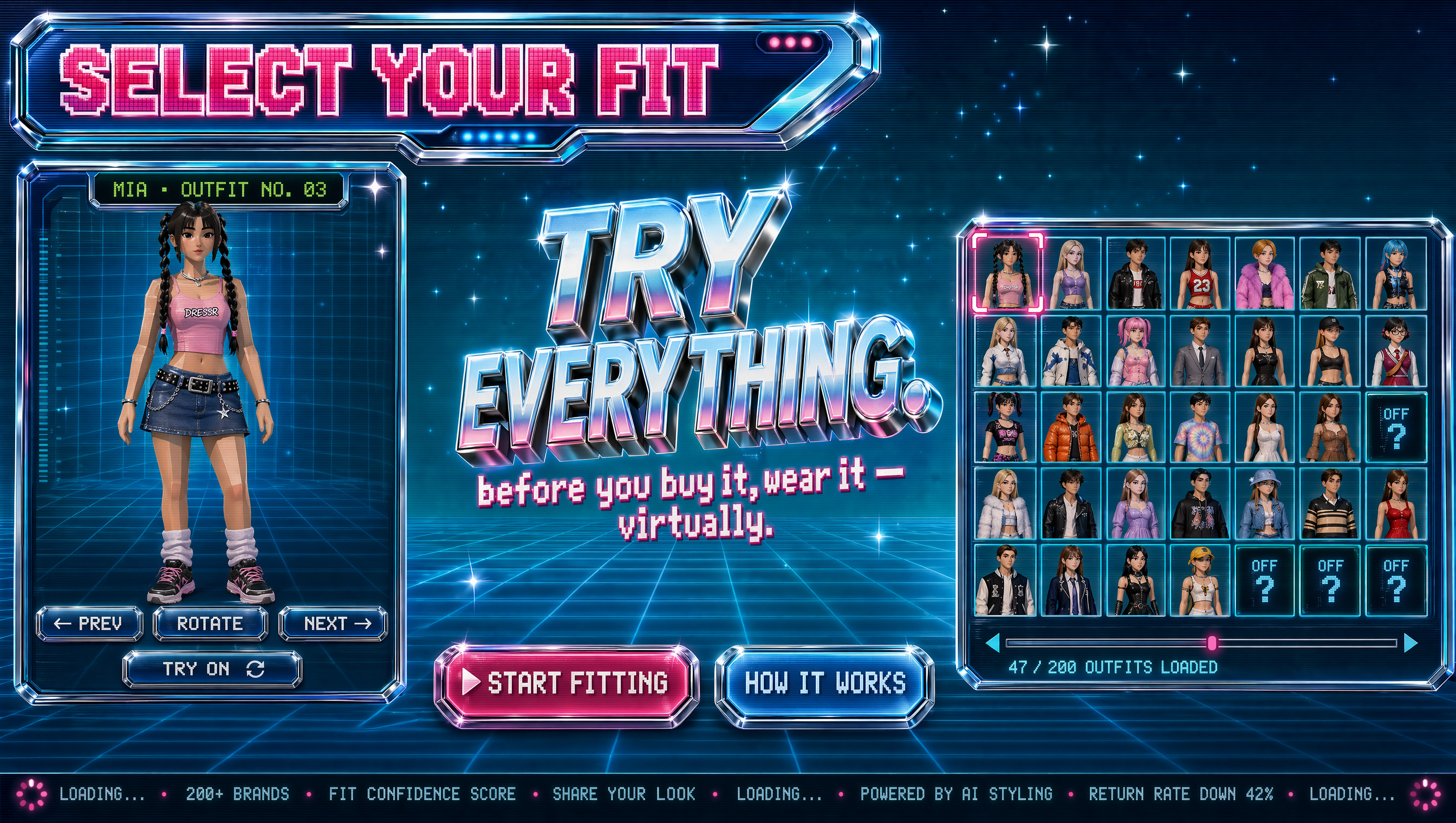

E-commerce has moved far beyond the static product grid with a thumbnail and a description. The brands that command attention today are the ones treating every listing, every social post, and every ad as a chance to tell a moving story. Digital video marketing has become the connective tissue between the storefront and the customer, and generative AI has made it possible to produce that video at a pace and volume that simply did not exist a few years ago. This article examines how online retail shifted, what the modern video marketing scope actually covers, and what it takes to execute it well in a landscape defined by attention scarcity.
From Product Pages to Living Storefronts
For more than a decade, the e-commerce experience was built around photography. High-quality stills, zoomable images, and eventually video embeds on a product page seemed like the ceiling of what a retailer needed. Yet the behaviour of buyers changed faster than the format. People no longer browse a single channel; they form an opinion about a product from a short video in a feed, a creator-led demo, a review clip, or an immersive 360 view, often before they ever visit the online store itself.
That is the true scope of digital video marketing now. It is no longer one asset type, a commercial or a product demo, but a distributed system of moving content placed across the entire purchase journey. A potential customer might see a twenty-second highlight in a social feed, then a longer demonstration on the same brand page, then a user-generated review, and finally a shoppable video that links directly to checkout. Each format serves a different stage of intent, and the brands that win have all of them firing consistently.
The evolution from static to living storefronts also changed expectations around authenticity. Consumers have grown sceptical of heavily retouched advertising and tend to trust raw, genuine product showcases and testimonials more than polished spots. That craving for believable proof is creating a huge appetite for volume, because authentic content degrades quickly and needs constant refresh. This is exactly where generative AI becomes strategically important rather than merely fashionable.
Why Social Selling Needs Constant Video Supply
Social commerce runs on a simple arithmetic: more honest, engaging video equals more reach, and more reach equals more sales. But maintaining a publish-every-day cadence of social video is expensive and slow when every asset requires a shoot, a designer, or an agency. Generative video tools collapse that timeline dramatically.
A fashion brand can generate lifestyle clips of a garment in various settings without hiring a set. A home-goods retailer can produce dozens of short vignettes showing the same product in different rooms and moods. A food brand can spin up appetising b-roll to support a recipe campaign. None of this replaces the work of human creators, but it multiplies their output.
The twist is consistency. Traditional generators often struggle to keep a product or a person looking identical between shots, which is fatal for a brand that wants to recognise itself across a campaign. This is where image-to-video and fusion features shine. By feeding a reference image of the product or character into the generator, marketers can keep the subject stable while changing the scene, the lighting, and the action around it. That combination of volume and consistency is the real unlock for social selling, and it is transforming what the marketing calendar can look like.
Building a Workflow for Generative Product Video
A disciplined workflow matters more than any single tool. The most effective teams treat generative video as part of a repeatable production pipeline that starts before anyone opens a generator.
Begin with a style guide for the brand. Collect reference stills, describe the desired lighting, colour palette, and camera language, and store these as reusable seeds. When every new clip starts from the same reference image, the odds of the brand staying coherent across a month of posts climb sharply. Next, pre-write the motion. Instead of improvising prompts channel by channel, keep a bank of approved prompt templates for the recurring scenes a retailer needs, such as the unboxing, the detail shot, the in-use demo, and the lifestyle loop. Reusing and lightly varying these templates is far more efficient than writing fresh from scratch.
Then integrate a review gate. Generators are powerful but not judgement-free, so a human should approve every asset before it ships, checking for anatomical errors, misspelled text, and brand-specific mistakes that models are prone to produce. Finally, map each asset to a destination and a stage of intent. A short highlight belongs in social discovery, a longer demonstration belongs in search and persuasion, and a shoppable clip belongs where the buyer is ready to transact. Keeping those mappings explicit turns a pile of generated clips into a structured campaign.
Selecting the Right Models for Different Jobs
Not every video generation model is the right fit for every product. Matching the model to the job is a practical skill that saves time, money, and quality.
For high-fidelity product realism, where the item must look physically plausible and true to scale, reach for the strongest generation models available. These consume more compute and take longer, but they deliver the near-photoreal fidelity that premium goods demand. For social feed volume, a faster tier is usually the better buy, trading a little fidelity for the ability to produce many short clips quickly. The throughput matters more than the individual polish because engagement depends on posting frequency.
There is also a case for turning up higher-end models selectively. A flagship campaign asset is worth the wait and the compute; a routine daily post is not. Building a tiered model strategy, cheap for volume, expensive for hero content, keeps the budget in proportion to the value of each asset.
Keen focus should also go to the model that matches the strongest source angle of a product, such as a product that looks best in motion, a slow-motion view, or a 360 rotation. Some tools excel at dynamic camera movement, while others handle texture and fabric rendering better. A small matrix of which model does what, maintained alongside the style guide, becomes an asset in itself.
Using AI Direction for Narrative Consistency
Generating isolated clips is one thing; telling a coherent story across a series is another. Scenes that look as though they belong to the same film, sharing the same environment, character, lighting, and tone, are far more persuasive than a collage of unrelated clips. An AI director layer can help enforce that narrative cohesion.
Modern tools can take a high-level description of a sequence and map it onto consistent parameters rather than leaving every shot to chance. Instead of typing a disconnected prompt for each scene, you describe the overall arc, and the system keeps the character or product recognisable while varying the action. This turns campaign production from a set of one-offs into something closer to a directed shoot.
The practical benefit for retail is that educational and trust-building content can be produced at scale. Tutorials, how-it-works clips, assemble-your-hero-shot demonstrations, and comparison content, all of which build shopper confidence, can be generated in longer sequences while maintaining the identity of the product. The same underlying content can then be redistributed as shorter clips to each platform, extending the life of every scene.
Measuring What Video Actually Moves the Funnel
Producing more video is only half the win; the other half is knowing which kinds move the revenue. Attribution becomes more complicated when a shopper has seen five videos across three platforms before buying. Modern teams handle this with a mix of channel-level metrics and purchase-path analysis.
Start with engagement and completion signals. A high completion rate on a longer demo tells you the content is genuinely persuasive, not merely thumb-stopping. Watch how often shoppers who view a shoppable clip continue to checkout, and compare the conversion of generated content against shot content over time. Many retails now attach tracking to each video variant so that the performance of a fast generated clip can be measured directly against a hero-produced one.
Be honest about the cost model as well. Rate the success of generative marketing not only on raw reach but on a blended cost per engaged view and cost per acquisition. Generative content wins when it delivers the same funnel result as produced content at a fraction of the marginal cost, freeing budget for hero assets. This framing keeps the what-it-costs conversation grounded in leadership language, not creative novelty.
Pitfalls to Avoid in Generative Video Marketing
The common failures are predictable, and most of them stem from treating the generator as a magic box rather than a tool inside a system. The first is brand break. Without consistent reference images and prompt templates, every clip looks different and the brand becomes hard to recognise. The fix is the style guide and seed discipline described above.
The second is a let-down on product accuracy. Generative models can hallucinate logos, invent wrong labels, or morph a product into something it is not. Every hero asset needs a human review for fidelity to the actual item. The third is legal and licensing carelessness. Before using generated content commercially, confirm the terms allow it, and never use the voice or likeness of a real person without consent.
Finally, resist the temptation to let volume completely replace human judgement. A flood of generated clips with no human taste behind it erodes trust and turns the feed into noise. The winning teams use AI to supply velocity and consistency, then apply human curation to decide what actually deserves a shopper's attention.
Building a Video-First Content Team Around Generative Tools
Adopting generative video successfully is rarely just a software change; it almost always requires rethinking how a team is structured. The crucial shift is separating creative direction from content operations. One person, or a small senior group, owns the brand vision, the approved style guide, and the reference images. The rest of the team focuses on production throughput: generating variants, running approvals, and moving approved assets to the right channels. This division prevents the two common failure modes of promoting autonomy everywhere and of bottlenecking everything on one approval decision.
A lightweight pipeline beats a heavy process for this kind of content. The team's rhythm is a standing production board where each campaign has a list of needed scenes, each with an approved prompt template, a reference image, and a target destination. As scenes are generated and approved, they are pushed straight to the publishing queue. Because the core assets are reusable, a single campaign can seed an entire month of posts across social, email, and on-site galleries with modest incremental effort.
Cross-training also pays off. Because the tools are approachable, a whole team can learn the basics quickly, and rotating who does the routine passes keeps the workload spread fairly while the senior creatives focus on the hard problems, the hero campaigns and the direction that genuinely moves the brand forward. The result is a team that produces more video per person with far lower unit cost, exactly the capability that attention-scarce e-commerce demands.
A Note on Getting Started Today
If this feels like a lot, the practical first step is deliberately small. Pick one product that is not your absolute hero, collect a few clean reference stills of it, and generate a handful of short lifestyle clips in one approved style. Share those clips internally, review them with the store owner and a designer together, and learn what the tool gets right and wrong before scaling to the full catalogue. What you are really testing is the workflow as much as the technology, whether the style guide holds, whether review gates catch the important errors, and whether the calendar can absorb the new cadence. Once that pilot produces a stable, usable loop, expanding to more products, more channels, and more ambitious formats is a natural next step rather than a risky leap.
FAQ
What is the minimum setup to start generating product video consistently?
A small style guide with reference images, a bank of reusable prompt templates, and a human approval step. That is enough to produce coherent, on-brand clips at a much faster cadence than manual production.
How do I keep a product looking the same across many generated clips?
Feed the same reference still of the product into the generator every time, and reuse a fixed style and prompt template. Image-to-video and fusion workflows are specifically designed to preserve the subject while changing the scene around it.
Is it safe to use AI video commercially for my store?
Yes, when the tool's licence allows commercial use and you are not using real people's voices or likenesses without consent. Always read the terms and check whether they cover redistribution on marketplaces and paid advertising.
Can generated product videos really match the quality of a professional shoot?
For routine, lower-funnel content they can, thanks to consistency and frequency. Hero and hero-adjacent assets still benefit from professional production. Track your own funnel metrics before deciding where the line sits for your brand.
Do generated product videos convert as well as professionally shot ones?
Evidence and reporting suggest they can, especially for lower-funnel and routine content where consistency and frequency matter more than cinematic polish. Hero assets still benefit from professional production. Measure your own funnel rather than assuming either way.
