
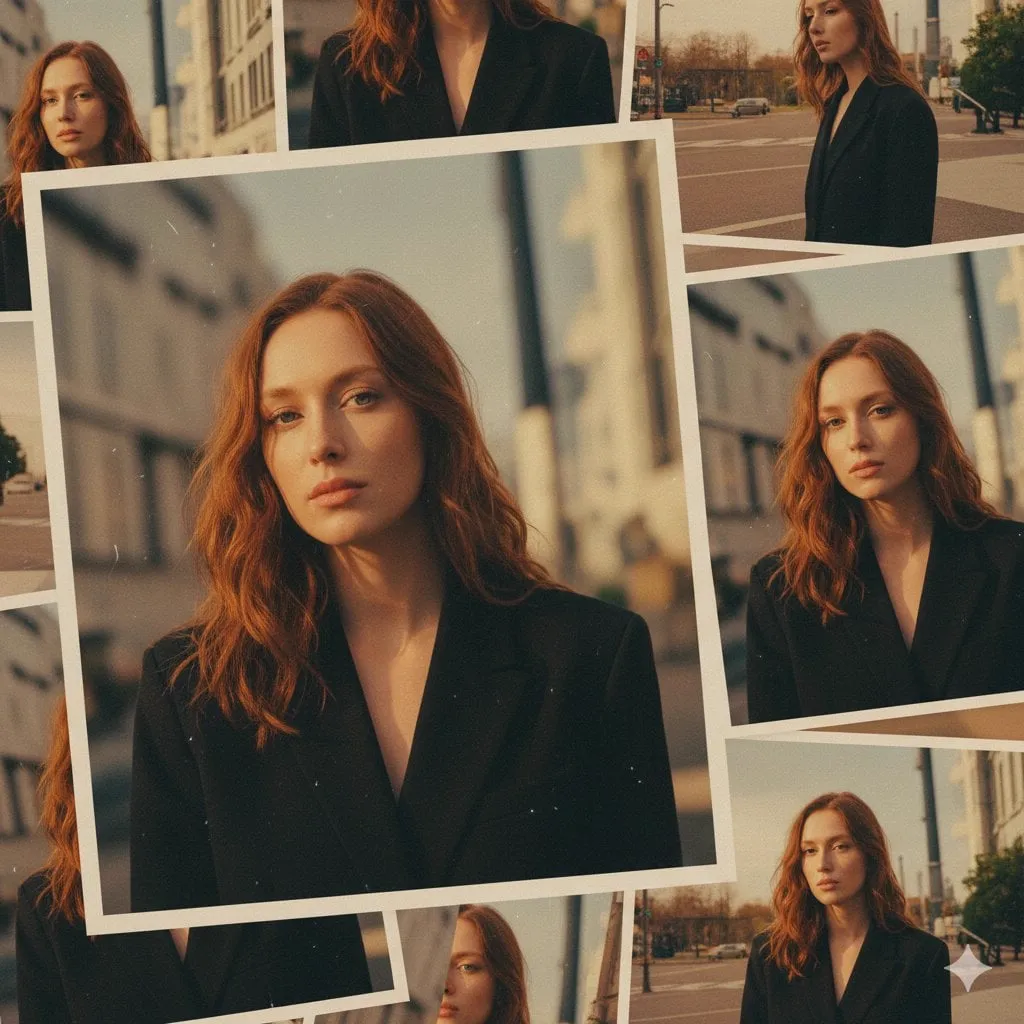

One of the biggest frustrations in AI video is a character that changes face from one shot to the next. You land a gorgeous hero frame, then the very next scene gives you a different person with a different nose and a different hairline. Multi-image fusion solves exactly that problem. Instead of describing your character with words every time and crossing your fingers, you feed the model reference images so every subsequent shot stays faithful to the same face, the same outfit, and the same style.
This guide walks through why character consistency matters, how multi-image fusion works under the hood, which models and settings help most, and how to turn a few good reference stills into a coherent narrative or a consistent marketing series. We finish with a practical checklist and answers to the questions people ask most.
Why Consistent Characters Are the Real Bottleneck
For a long time the industry chased raw generation quality, single-image realism, and spectacle. Now that static quality has largely plateaued, the conversation has shifted to narrative coherence. Audiences can forgive an imperfect render far more quickly than they can forgive a protagonist who visibly changes identity between scenes. Consistency is what separates a one-off demo from something a viewer can emotionally follow.
The consequences of inconsistency are expensive. In a thirty-second product ad, if the spokesperson changes appearance between the intro and the close, the ad feels broken. In a series of educational videos, a tutor who looks different every lesson destroys the sense of a stable instructor. In fiction, character drift breaks immersion instantly. Multi-image fusion addresses this at the root by giving the model a visual anchor it must respect on every pass.
There is also a brand angle. Companies invest heavily in a recognizable spokesperson, mascot, or presenter. When that asset is generated by AI, the whole point is that it appears consistently enough to build recognition. The technology exists to make that possible, and it is already changing what marketing teams, educators, and indie filmmakers expect from an AI pipeline.
How Multi-Image Fusion Works
At a high level, multi-image fusion combines several reference images so the model understands which attributes belong to a single subject. It is not simple pixel averaging. If you averaged two faces, you would get a muddy blur. Instead, modern systems encode each reference into a representation that carries identity, style, and structure, then weight those signals so the generation preserves them.
One analogy that helps: imagine describing a person to a sketch artist using three photographs instead of a paragraph. The photos communicate the face shape, the coloring, the clothing, and the vibe more reliably than any list of adjectives. Fusion does the same thing at feature level, letting the model latch onto stable identity traits while still leaving room for poses, expressions, and lighting.
Several technical ideas sit underneath this. Models can use image prompts alongside a text prompt, so the reference constrains the output. Others rely on identity encoders that map a face to a compact embedding that stays stable even as the camera angle changes. Some systems let you pass multiple reference frames that describe the same character from different angles, which dramatically improves downstream consistency because the model has a more complete picture than a single frontal shot could ever provide.
The Role of Reference Images
Your reference images are the single most influential input in the whole workflow. The quality of those stills determines the ceiling of everything that follows. Garbage in, garbage out still applies, but with fusion the phrase becomes: inconsistent references in, inconsistent characters out.
The ideal set of references shares a clear subject but covers diverse context. That means you want one clean frontal view, one three-quarter or profile view, and, if the character has a costume or uniform, at least one full-body shot that shows the outfit clearly. Lighting can differ, but skin tone, hair color, eye color, and the overall face shape should be consistent across every reference you supply.
There are also subtle decisions about what to include or exclude from the frame. A tightly cropped face reference is great for identity but useless for costume. A full-body shot is great for wardrobe but competes with identity if the model cannot tell which region of the image is the face. This is why multi-image fusion shines: you get to give each source a job, and the system uses the strength of each.
Building a Consistent Character Pipeline
Getting a character that stays consistent is less about a single magic button and more about a repeatable process. Start with your character brief. Write down the defining traits, then translate them into strong reference stills before you ever type a scene prompt.
Step 1: Establish the Character Bible
Define the character once and reuse that definition everywhere. Record the name, age, hair color and style, eye color, skin tone, signature clothing, accessories, and any quirks that must not change. A written character bible prevents accidental drift before the images come into play, because every scene prompt can reference the same canonical description.
Step 2: Generate and Curate Reference Stills
Generate or gather several stills of the character from different angles. Do not settle for the first good-looking face. Produce a batch, then curate. Keep images where the identity is unmistakable and the framing complements a specific purpose. Remove anything where the face is partially obscured, the lighting flattens the features, or the model clearly changed the character mid-batch.
Step 3: Fuse at the Right Stage
Some pipelines fuse references at the start to define the character, then carry a keyframe through the scene. Others fuse your references continuously so every generated frame honors the source. The choice depends on your tool and your scene length. For short shots, a strong initial keyframe fused with your reference set is usually enough. For long takes, you may need to refresh the keyframe periodically to stop drift from creeping back in.
Step 4: Verify Every Output
After generation, inspect frames at multiple points in the clip, not just the first frame. Consistency problems often surface mid-scene. Look at the eyes, the hairline, and the outfit details, because those are the regions where drift shows up first. If you catch drift, feed the pipeline a tighter reference set or regenerate with the offending frame added as an additional reference.
Creating Consistent Keyframes for Storytelling
When you move from a single shot to a sequence, keyframes become the backbone of your story. A keyframe is a defining still that a scene must honor, often the opening or hero frame of a shot. If every new scene starts from a keyframe that features the same character, the whole sequence holds together.
For narrative work, think of your keyframes as storyboards. Before generating each scene, decide which frame will anchor it. That anchor becomes part of the input so the model knows not only who the character is but roughly what is happening in the shot. This is how you keep a protagonist recognizable across a three-act arc without gluing the camera down.
Consistent keyframing pays off in the edit. When you review all your exported clips on a timeline, matching keyframes means matching color, matching framing, and matching identity. Editors spend less time fighting mismatched shots and more time shaping rhythm and pacing. For anyone producing episodic content, this discipline is what turns a collection of clips into a watchable series.
Matching Fusion to the Right Models
Not every model handles multi-image fusion equally well. Your choice of underlying model should follow the job you are doing.
For highest fidelity work, marketing assets, cinematic sequences, and anything where realism is non-negotiable, reach for top-tier generation models. They tend to have stronger conditioning, meaning they respect your references more faithfully and render fine detail like skin texture and fabric better.
For high volume work, social clips, drafts, and internal iterations, cost-efficient models win. You iterate faster, burn less budget, and then reserve your premium model for the final hero shots. The trick is to test which budget models hold identity well enough for your specific character; some preserve faces far better than others even at lower cost.
Some models are tuned for specific styles, like anime or stylized illustration. If your character lives in a stylized world, a model built for that aesthetic will keep the character consistent far more easily than a photorealistic model fighting the style. Match the model to the visual language, not just to the identity.
The Voice and Audio Piece of the Puzzle
A consistent character is not only a visual promise. If your character speaks, their voice becomes part of their identity, and a visual clone with a completely different voice every clip is just as jarring as a changing face. Modern workflows pair image fusion with voice synthesis and audio tools so that the character's voice, tone, and rhythm stay stable across scenes.
The practical advice is to lock your voice profile early, the same way you lock your reference images. Choose a voice once, keep its settings documented, and reuse them. Sync the onboarding of your voice model with your character bible so both the look and the sound of your subject are defined in one place.
Common Pitfalls and How to Avoid Them
Consistency tools remove a lot of friction, but they are not frictionless. Here are the recurring mistakes and the fixes that solve them.
- Conflicting references: a frontal face and a profile that show different hair color will confuse the model. Curate your references so every source agrees on the defining traits before you start.
- Expecting perfection on take one: generation is iterative. Plan multiple passes and budget time for refinement rather than assuming the first render ships.
- Ignoring mid-scene drift: a gorgeous opening frame means nothing if the character changes at second three. Always check several points in the clip.
- Overusing a single tight crop: one face-only reference cannot define a character's wardrobe or silhouette. Give the model variety in framing.
- Mixing photorealism and stylization: asking a photorealistic model to reproduce a cartoon character inconsistently is asking for trouble. Keep your model aligned with the character's world.
- Forgetting the voice: consistency is audiovisual. Neglecting sound undoes all your visual work.
A Practical Checklist Before You Record
Before you commit to a full production run, work through this checklist.
- Does your character bible describe every trait that must stay constant?
- Do your reference stills agree on face, hair, and wardrobe?
- Do you have at least one frontal, one angled, and one full-body reference?
- Have you matched your model to the required level of fidelity and style?
- Is your opening keyframe set for every scene in the sequence?
- Have you verified faces at the start, middle, and end of each clip?
- Is your voice profile locked and reused consistently?
- Have you set aside budget for iterative refinement passes?
If every answer is yes, you are ready to generate with confidence.
Frequently Asked Questions
Why does my AI character keep changing between scenes?
The most common cause is a weak or inconsistent reference set. The model has nothing stable to hold onto, so it improvises identity differently each time. Curate a strong, mutually consistent set of reference images and anchor each scene to a keyframe that features the same character.
Do I need to provide a separate reference for every scene?
Usually not. A strong base set can be reused, and you fuse it into each new scene. You only add more references when a new element appears, like a new costume or a significant environment change that affects the character.
Is multi-image fusion the same as style transfer?
No. Style transfer changes the look of the whole image, while fusion preserves a specific subject's identity across different contexts. You can combine both, but they solve different problems.
What should my reference images look like?
Clear, well lit, and featuring the subject without cropping out the parts you need to preserve. Include diversity in angle and framing so the model learns the character rather than a single pose.
How many references should I provide?
As a rule of thumb, three to five well-chosen references beat ten sloppy ones. More references are only helpful if each one adds information about the character that the others do not already supply.
Can I use fusion for non-human characters?
Yes. Characters, mascots, animals, and animated personas all benefit from the same approach. The principles of defining stable identity traits and anchoring scenes to keyframes apply regardless of whether your subject is human.
Final Thoughts
Multi-image fusion is the bridge between generating isolated images and producing coherent, character-driven video. It turns character consistency from a happy accident into a repeatable discipline. By curating strong references, anchoring scenes with keyframes, choosing the right model, and checking outputs at multiple points, you can keep the same face, the same wardrobe, and the same voice across an entire series.
The workflow is learnable, and the payoff shows up immediately in the quality of your edits. Start small, lock your character bible, and build the habit of verifying every frame. Before long, consistent AI characters will feel less like a technical trick and more like the natural way you work.
