
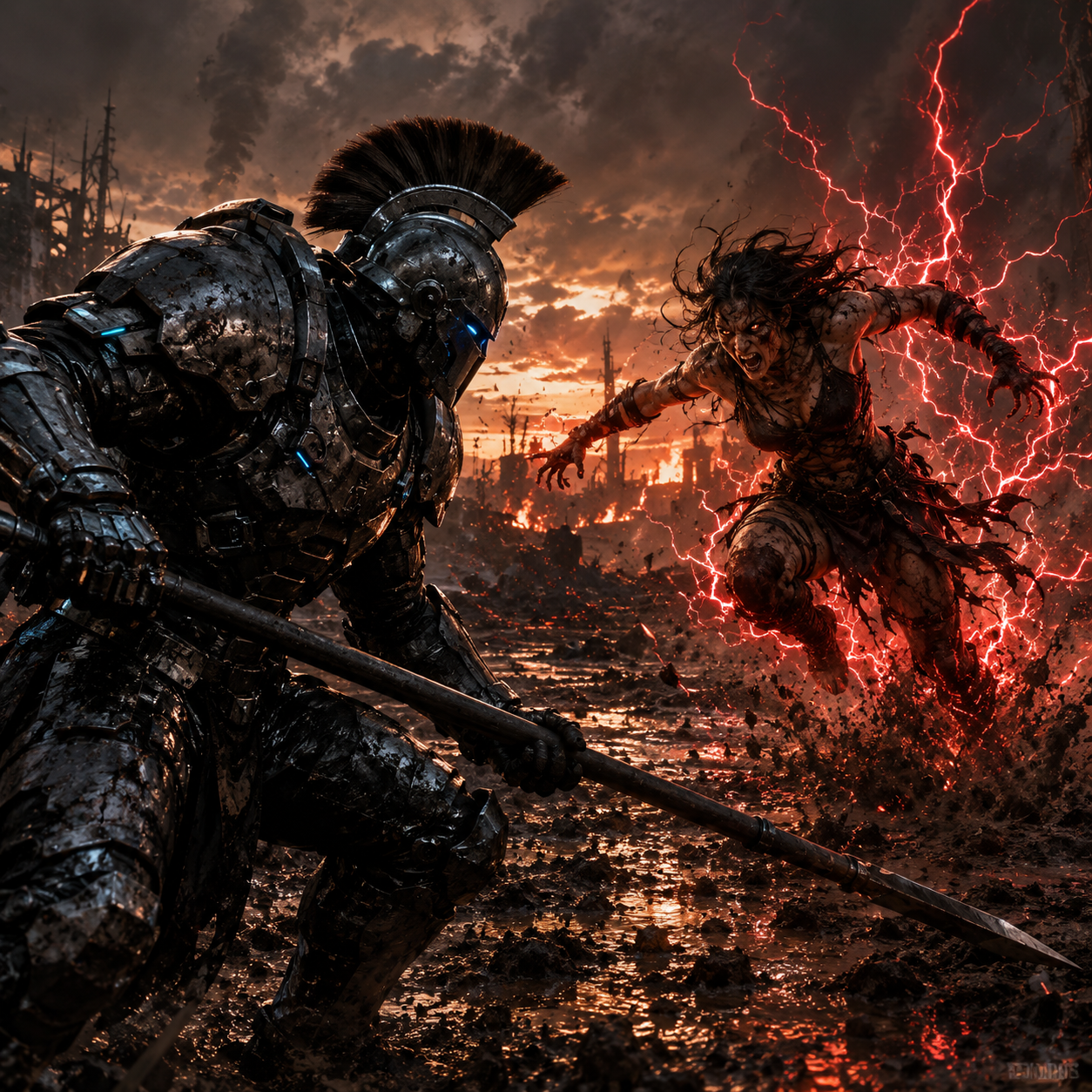

Photorealistic AI video generation has moved from a research curiosity to a working tool for everyday creators. In the space of a few years, text-to-video and image-to-video systems have gone from abstract, dreamlike clips to footage that is often hard to distinguish from a camera recording. At the center of this shift sits NVIDIA, whose hardware and research have powered many of the biggest leaps. But the newest models are not a single product. They are a stack of technologies, each solving a different part of the realism problem.
This guide looks at what actually changed in the latest photorealistic generation systems, how NVIDIA's models fit into the wider landscape, and how you can realistically use them without a Hollywood budget.
Why Photorealism Finally Became the Battleground
For years, the main complaint about AI video was that it looked like AI video. Hands warped, faces melted, physics felt wrong, and lighting ignored the scene around it. Those problems were not cosmetic. They were the direct result of models that predicted pixels rather than understanding the world they were depicting.
The newest generation attacks that weakness directly. Instead of treating each frame as an isolated image, photorealistic models reason about depth, lighting, motion, and occlusion. When the camera moves, the scene responds correctly. When a character turns, the light moves across their face in a believable way. That is a fundamentally different engineering problem, and it is the reason the current models feel so different from their predecessors.
What the Newest NVIDIA Models Actually Do Differently
NVIDIA's contributions to this space are best understood in layers, from the chips that train the models to the inference systems that generate frames in real time.
Dedicated Hardware That Makes Generation Feasible
The most underrated part of photorealistic video is compute. A single high-quality clip can involve millions of denoising steps, and doing that with acceptable latency requires specialized hardware. NVIDIA's lineup of accelerator chips, including the generations used for both training and real-time inference, is what allows models like the newest video diffusion systems to run fast enough for practical production. Without that raw throughput, the realism would still exist in research but never reach a usable product.
Accelerated Frame Denoising
Photorealistic video is built on latent diffusion, and the bottleneck in diffusion is denoising. NVIDIA's software stack accelerates this with tensor operations designed for exactly the kind of matrix math generative models require. That acceleration is the difference between generating a clip in a few seconds versus a few minutes, which is what makes interactive creation, where you generate, tweak, and regenerate, actually feel natural.
Physical Plausibility in Every Frame
The real leap in photorealism is physical consistency. NVIDIA's research direction has emphasized models that understand that water flows, that cloth drapes, and that a light source has a fixed position. The current generation encodes a lightweight notion of physics into the generation process, so objects interact with light and each other in ways that hold up across frames, rather than flickering frame to frame.
How the Current Models Compare With Each Other
NVIDIA is the big name in hardware, but photorealistic generation is a crowded field. Understanding the strengths of each option helps you pick the right tool rather than chasing one brand.
Flux and the Optical Realism Series
The Flux family of models set a new standard for image fidelity and were an early proof that diffusion could reach photographic quality. Their video descendants inherit that attention to detail, particularly in texture and surface reproduction. If your priority is close-up realistic detail, optical-quality models like these are hard to beat.
Sora and Narrative Understanding
The Sora series shifted the conversation toward coherence. Where earlier models generated isolated shots, Sora's later versions maintain characters and scene structure across longer sequences. That makes it the strongest candidate when you need an actual story rather than a single impressive shot.
Runway and Generative Editing
Runway's Gen series treats video generation as an extension of a creative suite. It is less about a single shot and more about controlling motion, and it integrates with a broader editing workflow. If you want to direct and iterate rather than just prompt, it fits a production-style pipeline that NVIDIA's raw models do not.
Kling and Fast, Cheap Realism
Kling showed that good realism no longer requires a flagship budget. It delivers strong output at much lower compute, which makes it a practical daily driver for teams producing high volume. It also introduced strong character persistence at a fraction of the cost of the heaviest models.
Multimodal Systems and the New Creative Leverage
The most interesting development is the shift toward multimodal generation. Newer systems accept not just a text prompt but also a reference image, a set of poses, a camera path, and even a sketch. The model fuses these inputs into a single coherent clip.
This changes how you work. Instead of describing a scene purely in words, you can show the model what you mean. You can lock in a character's face with a reference image and then generate that character in several different camera angles. You can combine two photographs into a single moving scene. That is the technique behind the most convincing results people share online, and it is now available to anyone willing to learn it.
Using Multi-Image Fusion for Consistency
The goal of multi-image fusion is simple: keep important elements consistent across many outputs. If you are making a series of clips featuring the same product or the same spokesperson, you do not want their appearance to drift between shots. You feed the model a set of reference images, tell it which elements must stay fixed, and the generator holds those elements constant while varying everything around them. This is the single most effective trick for producing a body of work that feels professionally directed rather than randomly generated.
Controlling Camera and Motion
Newer models accept camera directives as first-class inputs. You can request a slow dolly-in, a sweeping orbit, or a handheld feel, and the model respects that direction instead of making an arbitrary choice. Combined with depth maps, this gives creators a surprising degree of directorial control without learning traditional 3D tooling.
Building a Production Workflow on a Realistic Budget
Photorealism is expensive, but it is no longer Hollywood-only. A sensible workflow balances model choice, queue management, and iteration.
Match the Model to the Task
Reserve your most expensive, most realistic model for hero shots where quality matters most. Use cheaper, faster models for drafts, test renders, and lower-stakes coverage. A common mistake is running every generation through the highest-tier model and burning budget on rough explorations that will never be used.
Manage Queues and Prioritize
Providers expose queues where your jobs wait for compute. Learn to prioritize: iterate on the cheap model until the composition is right, then submit a small number of high-quality renders for the final. This produces better output and far lower cost than blindly regenerating on the premium tier.
Lock Down Consistency Before Details
Do not tune lighting or texture while your character is still drifting between renders. Solve identity first using reference images, then solve framing, then solve surface detail. Fixing problems in the right order is the difference between an efficient pipeline and one that burns through budget chasing a moving target.
Troubleshooting Common Photorealism Problems
Even the best models fail in predictable ways. Here is how to handle the usual offenders.
- Distorted hands and limbs: bring the shot to close-up, give the model more explicit reference, or regenerate with a stricter composition.
- Flickering across frames: increase frame consistency settings, shorten the sequence, or anchor the shot with a stronger reference image.
- Wrong lighting behavior: the model is treating the scene generically. Describe the light source explicitly and use a depth map if the tool supports it.
- Characters changing appearance: feed multiple reference images and mark the identity as a locked element rather than relying on the prompt alone.
Is Photorealism the Goal, or the Starting Point
It is worth asking whether raw realism is what you actually want. Photorealistic output is powerful for product shots, advertising, and storytelling where believability is essential. But stylized, painterly, and exaggerated looks can be far more memorable for social content and branding. The newest models are increasingly good at both. NVIDIA's photorealistic breakthroughs are best treated as one more tool in the stack, not the only destination.
The practical takeaway is that photorealism is now a solved enough problem to build on. The winners in this space will be the creators who combine NVIDIA-class model depth with smart workflows, consistent characters, and intentional structure. The technology gives you the canvas; it is still up to you to compose the picture.
So, Where Do You Actually Start
If you are new to photorealistic generation, the fastest way to learn is to stop reading and start producing with intent. Begin with a realistic goal: one short clip that shows a single object moving realistically in good light. Pick a simple subject you know well, a coffee mug, a plant, a pair of sneakers, and generate a few variations of that one object in different settings.
Set a small budget for this exploration and iterate on a fast model. Notice how naming the light and describing the camera changes the output. Compare a version where you mention depth of field against one that does not. After a few evenings of structured experimentation, you will have internalized how the models respond, and the whole stack will feel far less mysterious.
A Starter Tool Stack
You do not need a suite of expensive tools to begin. A clear plan is usually: one flagship model you use for the rare hero shot, one fast model for daily iteration, and a simple editing program for assembling your selected renders into a vertical clip. Add a reference library for characters or products you reuse. That small toolkit is enough to make real, publishable content and to learn what you actually need before spending on more.
Track What Works
Treat your first month as an experiment with a log. Keep notes on which prompt structures produced reliable results, which subjects always fight you, and how long renders actually took. That notebook becomes the foundation of your personal best practices, and it saves you from re-learning the same lessons twice.
Frequently Asked Questions
Do I need a high-end computer to try this?
Not necessarily. Cloud generation means the heavy computation happens on the provider's hardware. A modest laptop can submit a prompt and receive a finished clip. You mainly need a reliable internet connection and enough patience to wait for renders.
Are photorealistic videos actually usable for commercial work?
Yes, in a growing number of cases. The key is using the right tool for the task, keeping output consistent, and reviewing carefully before publishing. For product shots and advertising especially, generation is already a mainstream production method.
How much does it cost to get started?
Cost varies with model choice and render volume. The realistic approach is to start small, iterate on fast models, and scale up as you learn which shots are worth the premium render. Budget discipline matters more than the specific price of any one tool.
How do I keep the same character consistent across many videos?
Use multi-image fusion with a small, strong set of reference images and mark the character as a locked element. Hold that reference library and let it anchor every generation in a series.
Will AI replace video editors and creators?
It will change the job, not delete it. The bottleneck shifts toward intent, direction, and judgment. Those who learn to brief ideas clearly and review output critically gain the most leverage from the technology.
Turning Knowledge Into a Usable Skill
The gap between understanding photorealistic AI video and being good at it is filled by deliberate practice. The models improve on a schedule you cannot control, but your workflow is something you can refine every single week. Choose a small recurring project, like a weekly product clip or a consistent character short, and commit to improving one thing about your process each time.
Photorealism is now stable and capable enough to build on. The creators who win are not the ones with the best model, because everyone eventually has access to similar models. They are the ones with the clearest vision, the most repeatable workflow, and the discipline to spend their best tools on their best ideas. Start there, and the technology becomes an amplifier for everything you already do well.
