
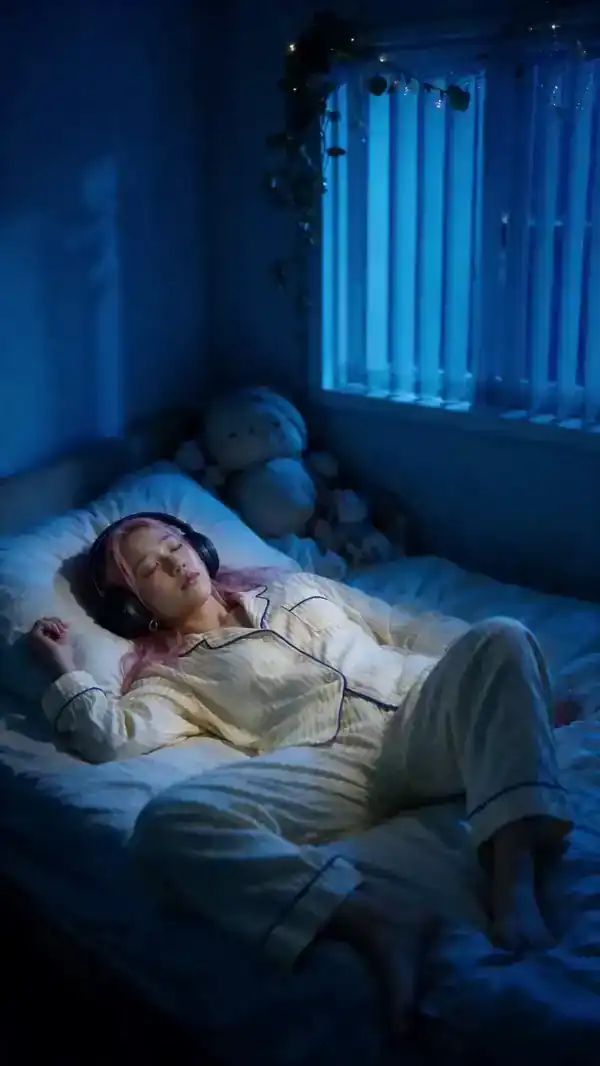
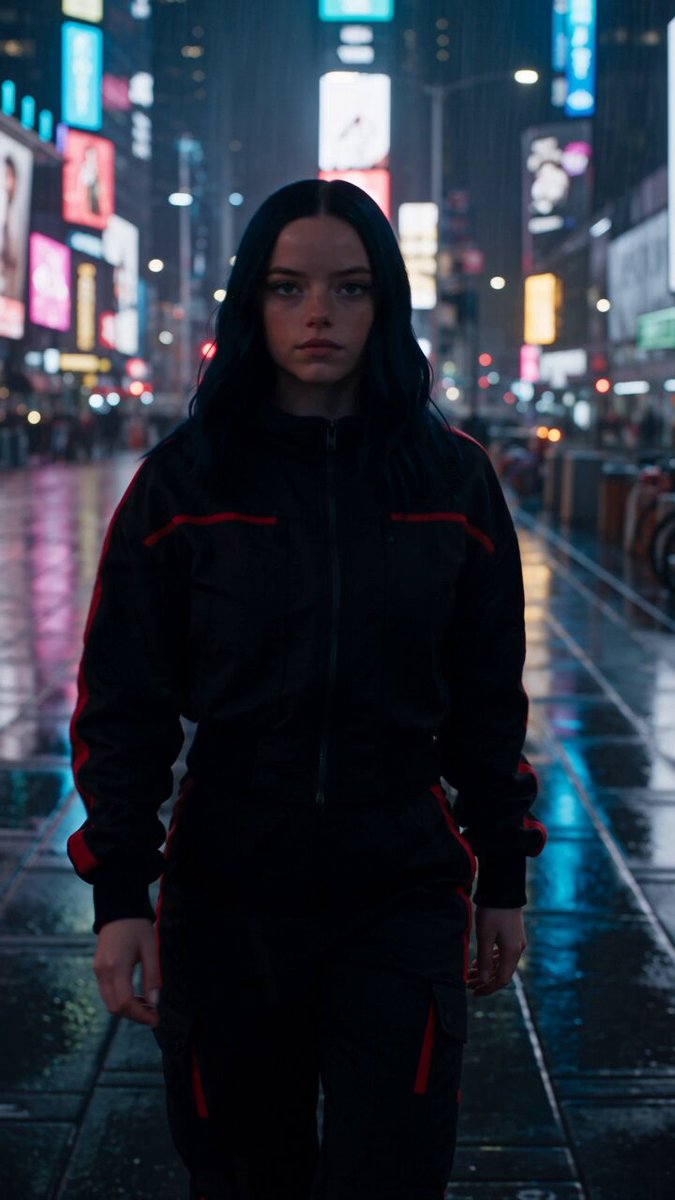
The pixel is no longer a flat square you fill with a color. Over the past two years, text-to-image models crossed a threshold where a simple sentence could produce a frame that looks like it was lit in a real studio. And the jump that matters most right now is not another bump in resolution. It is the move from a single convincing still image to a sequence of frames that stays convincing over time. That transition, from the stable diffusion era of stills to coherent motion, is the story this article tells, and it is a practical one.
If you have ever typed a prompt into an image generator and then wished you could turn that single perfect shot into a moving scene, you already understand the core challenge. The technology that makes a still photorealistic is related to, but not the same as, the technology that keeps a subject recognizable across a second, a third, and a tenth frame. Learning how these two worlds connect, and where they diverge, will save you hours of reworking and give you a realistic sense of what an AI video pipeline can actually deliver today.
What Actually Changed When Video Arrived
For years, the benchmark for an AI image was simple: does the output look like a photograph? Models built on the SDXL lineage got very good at that single question. They learned textures, lighting, lens behavior, and the subtle imperfections that make an image feel photographed rather than rendered. The breakthrough was real, and it made synthetic stills nearly indistinguishable from captures at a glance.
Then the industry asked the harder question: can a model produce a shot that looks real and keeps moving without falling apart? A still only needs to be plausible at one instant. A video needs to be plausible at thirty instants per second, and it needs those instants to agree with one another. The eyes, the hands, the lighting, and the background all have to behave consistently. That is a fundamentally harder problem, and it explains why the first generation of video models looked so much worse than the still models that came before them.
The consequence for creators is that you cannot simply take a great image workflow and run it motion-first. The mental model changes. Instead of optimising for a single beautiful frame, you are optimising for continuity, and every decision you make about style, framing, and character design has to hold up across many frames at once.
Why Consistent Characters Matter More Than Raw Fidelity
It is tempting to judge an AI video tool by the polish of a single showcase clip. Showcases are cherry-picked, and they reward the flashiest result. In real production, the metric that actually determines whether a tool is usable is character and object consistency. Can the same person appear in scene one, scene five, and the final wide shot and look like the same person? Can the product you are selling remain recognisable in every angle and every lighting condition?
This is where many workflows break. A model that produces a stunning hero shot of a character will often quietly change the character's face, costume, or hair in the next scene. The fix is not a better prompt; it is a workflow that locks down the identity of key elements before you ever ask for motion.
The reliable approach is to establish reference material first. Create a small set of images that define the subject from several angles, with consistent clothing and lighting. Use those as anchors. Many modern pipelines accept one or more input images as a starting frame or as a style reference, and feeding them a consistent subject is far more effective than describing the subject in text ten times across ten prompts. The model is much better at preserving an identity it can see than one it has to reconstruct from words.
The Role of the First and Last Frame
One of the most useful techniques to come out of the video era is explicit control over the beginning and ending of a shot. Instead of asking a model to invent an entire clip from nothing, you give it a first frame and optionally a last frame, and it has to produce a plausible path between them.
This is powerful for a simple reason: you can define the destination. If you want a scene that starts with a character sitting and ends with them standing and walking away, you can generate those two stills, make sure both look right, and then let the motion model interpolate. The result is far more predictable than text-to-video alone, because you have removed the two moments where the model is most likely to drift.
In practice this means your still image workflow is not obsolete. It becomes the front end of your video pipeline. Generate the keyframes, approve them, lock the identity, and only then hand the job to a motion model. Creators who treat stills and video as one continuous toolchain consistently get better results than those who treat video generation as a completely separate black box.
High-Performance Video Models and What They Do Differently
The current crop of strong video models is differentiated less by raw resolution and more by how they handle motion physics, camera behaviour, and temporal stability. A handful of approaches stand out.
Some models are built around temporal attention, meaning the network explicitly reasons about how one frame relates to the one after it. This makes them strong at natural motion, but they can be slower and heavier to run. Others lean on cascaded or progressive generation, producing a rough motion at low resolution and then refining it, which trades a little control for speed.
The practical distinction for you matters less than the consequence: some models are better at movement, others are better at keeping things consistent, and no single model is best at everything. The winning strategy is usually not to commit to one model but to understand which one suits a given shot. A landscape pan, a facial close-up, and a fast action sequence challenge different parts of the model, and routing each shot to its strength will improve the whole edit.
Open Models Versus Closed Models, and How It Affects You
There is an ongoing divide between open-weight models you can run or fine-tune yourself and closed models you access through an API or service. Each side has real trade-offs, and your choice should depend on your project, not on fashion.
Open models give you control. You can fine-tune them on your own characters and styles, host them privately, and avoid sending sensitive brand material to a third party. The cost is that you are responsible for the infrastructure, the GPU time, the prompt-tuning, and keeping up as the community improves things. For a studio that needs a distinctive house style across hundreds of shots, this investment can pay off dramatically.
Closed models, by contrast, are the fastest way to a polished result the day you start. You paste a prompt, get a high-quality clip, and pay per use. The trade-off is that you surrender a degree of control over consistency and style, and you depend on an external service for uptime and pricing. For one-off projects, client demos, and teams that do not want to run infrastructure, the convenience usually wins.
The pragmatic answer for most creators is hybrid: use closed, polished models for the shots where their strengths shine, and use open tools for consistency-critical work where you need to lock an identity or amortise the setup cost across many deliverables.
Multi-Image Fusion: Bringing Stills Into the Moving Edit
One technique deserves special attention because it quietly solves the consistency problem at scale. Multi-image fusion means letting a video model consume several still images at once, not just a single start frame. You feed it references of the subject, the setting, and perhaps a mood board of lighting and tone, and the model uses all of them to shape the output.
This is the difference between telling a model what a scene should look like and showing it. When a brand has a library of approved product shots, character turnsheets, and environment art, feeding those into a fusion pipeline produces motion that actually matches the approved visual identity. It is the closest thing to a director handing a reference folder to a cinematographer.
To use it well, curate the reference set ruthlessly. Inconsistent references produce muddled output, so every image you feed should agree on the subject's look, the palette, and the era. Then describe only the motion and camera intent in the text, since the appearance is already handled by the images. This division of labour, images own the look, text owns the action, is the mental model that makes the technique work.
A Practical Workflow You Can Follow Today
Pulling together everything above, here is a repeatable pipeline that produces consistent, photorealistic AI video without fighting the tools.
Start with a written treatment: a short paragraph describing the action, the mood, and the key visual elements. This is the compass for everything that follows. Next, move to stills. Generate the key moments of your scene as individual images, and do not proceed until the subject looks right, because every later step inherits its quality. Lock the character or product identity across these stills, correcting any drift with new references rather than trying to patch it in text.
Then assemble the references and describe the motion. Keep the text prompt to what changes: camera moves, subject actions, duration, atmosphere. Feed the locked stills as anchors and generate the motion. Review the result for drift, especially on faces, hands, and logos, and regenerate rather than trying to fix a broken clip in editing. Finally, do a continuity pass across every shot in the same sequence, confirming that lighting, wardrobe, and set are consistent before you lock the edit.
This loop, treatment, stills, anchors, motion, continuity review, is not glamorous, but it is the difference between a workflow that occasionally impresses and one that reliably delivers.
Where Photorealistic Generation Is Headed Next
The direction of travel is clear. The field is consolidating around unification, folding still generation, video, and even sound into single models that share one understanding of a scene. That will remove the awkward seams between "make an image" and "make it move."
Two capabilities will define the next round of tools. The first is deeper control, letting creators steer not just what appears but exactly how the camera moves, how light changes over time, and how a character behaves across an entire narrative arc rather than a single clip. The second is genuine long-form coherence, where a model can sustain the same world, characters, and style across shots separated by minutes of story, not just seconds.
For creators, the practical takeaway is to build habits that are model-agnostic. Lock identities early, use reference material aggressively, and treat keyframes as the contract between you and the machine. Those habits will survive every model upgrade, and they are what turn a flashy toy into a dependable production tool.
Frequently Asked Questions
Do I need a separate tool for stills and for video?
Not necessarily, and increasingly not. Many current platforms handle both. But even inside one tool, treating image creation as the first step and motion as the second will give you better consistency than going text-to-video directly.
Why do AI videos look great for one second and then get weird?
Short clips hide drift. The longer a clip runs, the more chances the model has to forget a detail like a face or a hand. Keeping shots short and locking identity with reference images is the standard workaround until long-form coherence matures.
Is open source or closed software better for photorealistic work?
It depends. If you need a distinctive, consistent house style and control over your data, open tools are worth the setup cost. If you want fast, polished output with no infrastructure, closed services are the stronger choice. Most studios use a mix.
How do I keep the same character across many scenes?
Generate reference stills from multiple angles and feed them into the model as anchors. Do not rely on describing the character in every prompt. Consistency comes from what the model can see, not from what you tell it.
Can I use my own photos as references?
You can, and it is often the best approach. A real photo of a product, a location, or even a person (with the right permissions) gives a video model the most reliable identity signal and cuts down dramatically on the guesswork.
The transition from static realism to moving realism is not a small upgrade; it is a new way of thinking about production. The good news is that the skills that made you good at still images are not wasted. They become the foundation of a video workflow that can actually be trusted in a professional setting, as long as you are willing to treat motion as a discipline with its own rules.
