
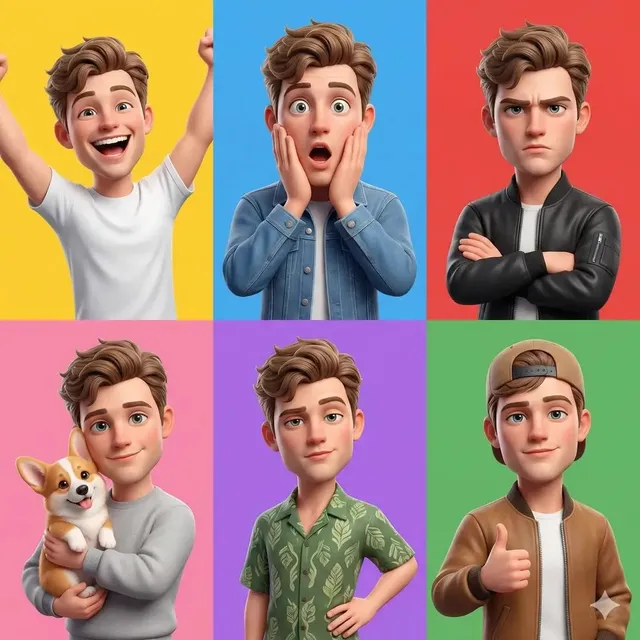
AI Avatar Video Workflows: Advanced Tips for Teams
Oct 13, 2026

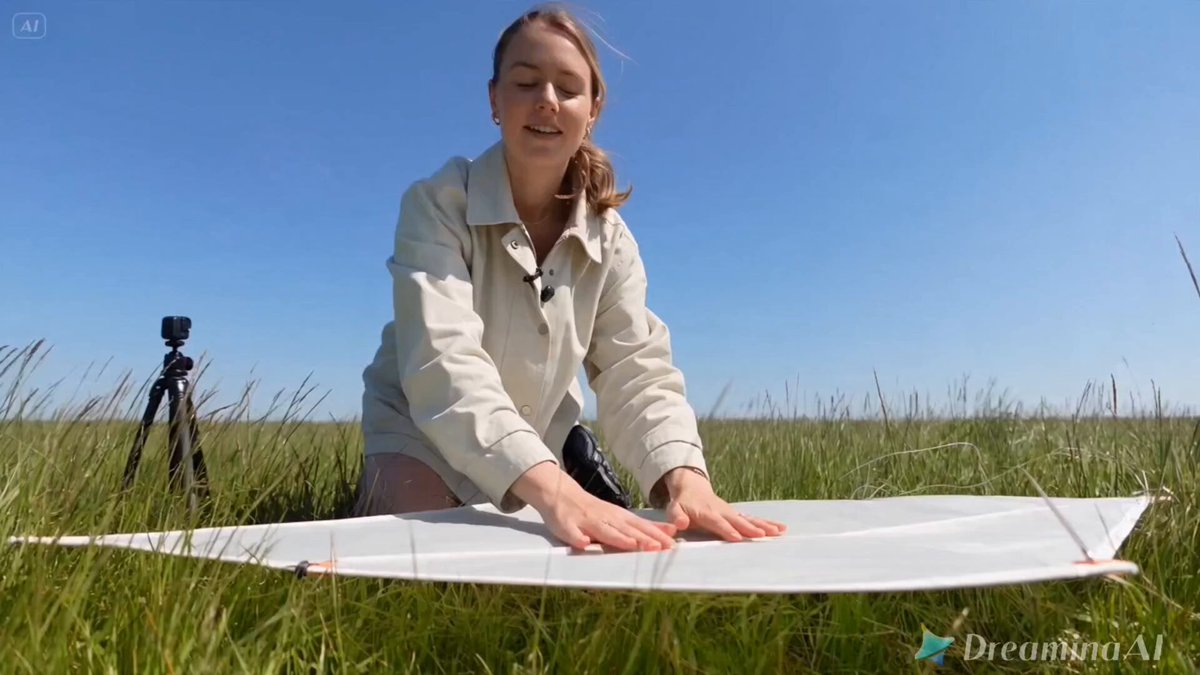

Avatar-led video has quietly become the default format for onboarding, product explainers, internal announcements, and localized campaigns. The promise is simple: no studio, no travel, no scheduling conflicts. The trap is equally simple. Teams treat a text box as a finished production pipeline, publish the first render, and then discover that nothing can be updated without rebuilding the entire project from scratch.
This guide covers the operational layer of avatar video production — the decisions that determine whether a synthetic presenter looks like a branded production or an obvious demo. It assumes you already know how to generate a talking-head clip and want a workflow that survives deadlines, legal review, and eight language variants without falling apart.
Why Avatar Video Is a Production System, Not a Button
Most disappointing avatar videos fail for the same reason: the team optimized for generation speed and ignored everything around it. Generation is one step in a chain of about a dozen. If the script is bloated, if the voice mismatches the brand, if the captions are auto-generated and never corrected, the polish of the render will not save the video.
A reliable avatar video pipeline has three layers that need separate owners and separate quality gates:
| Layer | What it covers | Typical deliverables |
|---|---|---|
| Content layer | Message architecture, script, structure, CTA | Approved script, shot list, pronunciation list |
| Performance layer | Presenter, voice, pacing, gestures, eye contact | Voice track, avatar takes, retakes |
| Production layer | Branding, captions, music, aspect ratios, versioning | Master render, cutdowns, localized variants |
When a video underperforms, diagnose by layer rather than by tool. A boring script with a flawless avatar is still a boring video. A great script with a mismatched voice reads as untrustworthy. The performance layer amplifies whatever the content layer says, which is why the cheapest upgrade to any avatar video is usually a rewrite, not a re-render.
Also accept early that avatar video is not fully hands-off. It is dramatically faster than filming, but it still rewards the same disciplines: pre-production planning, review cycles, and version control. The teams that get the best results treat synthetic presenters as a production asset, not a magic trick.
Mapping the Pipeline Before You Open a Tool
Pre-production for avatar video takes about twenty minutes and saves hours. Start with an intake brief that forces the requester to answer five questions before any generation begins:
- Who is the audience, and what do they already know?
- What single action should they take after watching?
- Where will this be watched — LMS, landing page, sales deck, social feed?
- What is the target runtime, and what is the hard maximum?
- Who approves the script, and who approves the final render?
The answers determine almost everything downstream. A video watched inside a learning platform can assume context and run longer. A video that appears in a paid social feed has roughly three seconds to justify itself and needs a vertical cut.
Next, build a shot list even though you are not filming. A shot list for avatar video is a list of what happens on screen second by second: presenter full frame, presenter with lower third, screen recording inset, b-roll of a product interface, animated chart, end card. This document prevents the most common structural failure in avatar video, which is sixty uninterrupted seconds of a talking head with nothing changing.
Finally, define the review cadence before you generate. Two rounds is usually enough: a script review and a render review. Adding rounds after the render is expensive because every script change means regenerating the voice track and the avatar footage. Move all substantive changes upstream.
Scriptwriting for Synthetic Presenters
Synthetic voices have improved enormously, but they still handle complexity differently from human speakers. Long subordinate clauses, rapid lists, and sentences that depend on sarcasm or timing will expose the seams. Write for clarity first and personality second.
Practical rules that consistently produce better output:
- Keep most sentences under twenty words. If a sentence needs three commas, split it.
- Write numbers the way you want them spoken: "forty-two percent" rather than "42%" when the reading matters.
- Spell out acronyms the first time, then use them. Provide a pronunciation list for product names, people, and industry jargon.
- Avoid consonant pileups and accidental tongue twisters. Read every line out loud, or run it through a speech tool, and rewrite anything you stumble on.
- Place pauses deliberately. A line break, an em dash, or an ellipsis can create the beat that keeps a monologue from feeling robotic.
- Front-load the value. The first sentence should tell the viewer why they are watching.
The read-aloud test
Read the script at the pace you want the avatar to speak, with a timer running. Most writers discover their draft is 20 to 30 percent too long. Cut aggressively. A tight ninety seconds beats a rambling three minutes every time, and shorter scripts are also cheaper and faster to regenerate when something changes.
Punctuation as direction
Treat punctuation as performance direction, not grammar. Commas create micro-pauses. Line breaks create full stops. Ellipses create anticipation. Once you learn how your chosen voice engine interprets each mark, you can shape delivery without touching prosody settings, which are often harder to control precisely.
Building a Reusable Avatar, Voice, and Brand Kit
The single highest-leverage investment in avatar video is a reusable kit. Rebuilding the presenter, voice, and visual identity for every project is how teams end up with twelve videos that look like they came from twelve different companies.
Choosing the presenter
Stock avatars are fast, affordable, and appropriate for internal content, quick updates, and low-stakes explainers. Custom avatars cost more upfront but pay off when trust and recognition matter: external marketing, executive communications, training hosted by a named instructor. Whatever you choose, settle three things in writing: who owns the likeness, what usage is permitted, and what happens when the person leaves the organization.
Voice: stock versus cloned
A cloned voice creates continuity across a series, but only with documented consent and a clear retention policy. If you clone, capture a clean session with consistent tone, then build a pronunciation dictionary for brand terms. If you use a stock voice, audition at least five options reading your actual script, not a sample. Voices that sound great in a demo often sound wrong when saying your product name six times.
The asset kit
Assemble a folder that any team member can pull from:
- Lower-third templates and name plates
- Caption styling: font, size, background opacity, position
- Intro and outro stings, ideally under three seconds each
- Three to five background plates that match your brand palette
- Licensed music beds at a consistent loudness
- A one-page style note covering colors, spacing, and logo placement
With this kit in place, a new video becomes an assembly job rather than a design project.
Multi-Tool Strategy: Matching Generators to Shot Types
No single tool is best at everything. The strongest workflows route each shot to the tool that handles it best and then assemble in an editor. Think in terms of shot types rather than brands:
- Presenter monologue. An avatar platform with strong lip sync and a good voice library. This is the backbone of the video.
- Product demonstration. Real screen recordings. Synthetic UI footage still reads as fake, and reviewers will notice.
- Conceptual b-roll. Generative video clips, stock footage, or simple motion graphics, depending on how literal the metaphor is.
- Data visualization. Build charts in a design tool and animate them. Do not ask a generative model to render legible numbers.
- Transitions and end cards. Template-driven, consistent, boring in the best way.
When you evaluate tools, score them on four criteria: how much control you have over the specific shot, how fast you can iterate, what output specs you get, and how easy it is to hand a project to a colleague. A tool that produces beautiful output but cannot export a clean file for editing will slow your team down more than it helps.
Some newer generation tools accept a start frame and an end frame, letting you define where a shot begins and where it lands. That control is excellent for transitions and for bridging a presenter shot into b-roll, but it demands that you plan keyframes during pre-production rather than discovering them mid-edit. If your toolset supports it, build a small library of reusable keyframe pairs for transitions you use often.
Consistency Rules for Characters, Wardrobe, and Sets
Consistency is where amateur avatar video becomes obvious. Viewers may not articulate why a series feels disjointed, but they notice when a presenter's jacket changes color between videos, when the camera height shifts, or when the lighting on the face does not match the background plate.
Adopt a continuity sheet and enforce it:
- Locked presenter settings. One avatar, one wardrobe, one background plate per series. Create a second look only for a genuinely different series.
- Fixed camera framing. Decide on eye level, distance, and headroom once. Reuse those values exactly.
- Consistent light direction. If the key light comes from the left in video one, it comes from the left in video ten.
- Palette discipline. Background, clothing, and graphics should come from the same three-color family.
- One change at a time. When you introduce a new element, hold everything else constant so you can judge whether the change worked.
For multi-character explainers, keep a reference image for each character and use the same reference throughout. If a model supports identity locking or reference conditioning, use it consistently rather than intermittently — mixed approaches produce the worst results.
Audio, Lip Sync, and Pacing QA
Audio problems destroy trust faster than visual ones. A perfectly rendered avatar with a boomy voice track or mismatched mouth shapes reads as low quality immediately.
The quality check list:
- Listen once without looking at the screen. Note every moment your attention drifts. Those are the cuts, pauses, or phrases to fix.
- Watch at quarter speed through every cut. Check mouth shapes at the exact frame where clips join. Lip-sync errors concentrate at transitions.
- Check plosives and sibilance. Words starting with p, b, and t can pop. Harsh s sounds fatigue listeners.
- Normalize loudness. Aim for a consistent target across your whole library so viewers never adjust volume between videos.
- Duck the music. Background music should drop noticeably under narration, roughly six to ten decibels.
- Verify caption timing. Auto-captions are a first draft. Correct them manually, especially for product names and numbers.
- Confirm captions are on by default. Most social platforms autoplay muted, and many viewers never turn sound on.
If the mouth shapes look wrong on specific words, the fix is usually in the script, not the settings. Rephrase the line, shorten it, or swap a difficult word for a simpler synonym, then regenerate. Chasing a perfect render with the same problematic sentence wastes time.
Localization and Multi-Market Variants
Avatar video shines in localization, but only if you plan for it. Writing a localization-friendly source script is a skill worth developing.
- Avoid idioms, puns, and cultural references that will not survive translation.
- Keep sentences short. Long sentences expand and become unmanageable in languages like German.
- Avoid on-screen text baked into the scene. Keep text in overlays so it can be replaced.
- Leave 30 percent headroom on graphic elements. Translations often run longer than the English original.
- Standardize a naming convention: project, language code, version, date. It sounds tedious until you have forty files.
The workflow that works best is three-stage: machine translation, human adaptation by a native speaker who understands the product, then a native review pass against the final render. Skipping the adaptation stage is the most common reason localized videos feel translated rather than written.
Also plan aspect ratios as a set, not an afterthought. A sixteen-by-nine master, a one-by-one square, and a nine-by-sixteen vertical cut should all be exported in the same session, from the same timeline, with the framing adjusted for each. Retrofitting vertical crops later means re-rendering presenter shots that were framed for landscape.
Review Loops, Versioning, and Team Handoff
Uncontrolled review is the biggest hidden cost in avatar video. Every comment round that reaches the render stage multiplies work: script edit, voice regeneration, avatar regeneration, caption re-timing, re-export.
Keep the loop tight:
- Cap it at two rounds. Script approval, then render approval. Anything else goes into the next version.
- Collect comments in one place. A single document or review tool with timestamps, never a mix of chat threads and email replies.
- Mark comments as blocking or optional. Teams that cannot distinguish must-fix from nice-to-have will argue about fonts for a week.
- Keep one source of truth for the script. Name it clearly and archive old drafts so nobody edits the wrong file.
- Log every published version. A short changelog — date, change, reason — saves enormous time when someone asks why the video says something different from the slide deck.
Before publishing, run a final sign-off checklist: script matches the approved version, presenter and wardrobe match the series, captions are corrected, audio loudness is consistent with other videos in the library, end card is current, and legal or compliance requirements are met. Print it, use it, and stop relying on memory.
FAQ
How long should an avatar video be?
Match length to intent. Explainers and product tours work best between sixty and one hundred twenty seconds. Training modules can run longer because the audience is committed, but they should still be broken into short chapters rather than one long monologue. If you cannot state the value of the video in one sentence, the script is too long.
Can I update an avatar video after publishing?
Yes, and this is one of the format's biggest advantages — provided you archived the project. Keep the script file, voice settings, avatar configuration, and overlay assets together. Without that archive, an update means rebuilding from scratch, which erases the efficiency gain that made avatar video attractive in the first place.
Why does the avatar's mouth look wrong on certain words?
Usually because of plosives, clusters of consonants, or unnatural pacing. Rewrite the sentence into shorter, smoother phrasing and regenerate. Adjusting prosody settings can help, but script changes are faster and more reliable.
Do I need a custom avatar?
Only if recognition or trust is central to the content. Internal updates, quick how-tos, and cost-sensitive projects are usually fine with a stock presenter. Custom avatars make sense for named instructors, executive messaging, and external campaigns where a consistent human face is part of the brand.
How do I keep a series visually consistent?
Create a one-page style document and a shared asset folder. Lock the presenter, wardrobe, background, framing, and caption styling. Change one variable at a time when you experiment, and document anything that becomes part of the standard.
What is the most common mistake teams make?
Starting production before the script is approved. Avatar video makes generation feel cheap and instantaneous, which encourages skipping pre-production. The result is regenerating voice tracks and presenter takes multiple times for changes that should have been caught in a document review in ten minutes.
Get the pipeline right — planning, script discipline, a reusable kit, layered QA, controlled review — and avatar video becomes one of the most efficient formats your team has. Skip those steps, and you will spend your time re-rendering instead of publishing.

Alexander
More Blogs
Read MoreMontaggio video rapido: transizioni e software per l'AI
Guida pratica al montaggio video rapido con AI: transizioni fluide, software, workflow, coerenza visiva, errori da evitare e FAQ operative.
Building an AI Video Production Workflow From Concept to Cut
A practical guide to planning, generating, editing, and finishing AI-assisted videos with consistent characters, clear shot lists, and reliable review loops.
A Repeatable Post-Production Workflow for Polished AI Video
Build a repeatable AI video post-production pipeline: organize assets, cut story-first, design transitions, refine audio, and review versions calmly.