
Choosing an AI video generator used to be simple because there were barely any choices. That era is over. The market now spans a dozen serious engines, each with a different philosophy: some chase photorealism, some prioritize speed, some are built for creative control, and some are generalists that do everything decently. Picking the "best" one without a framework is how teams waste money and time on the wrong tool.
This guide gives you a practical framework for comparing AI video generators — what to measure, how the leading models stack up, and how to choose based on your actual use case rather than marketing claims.
How to Compare Video Generators Fairly
Before comparing models, define what you are optimizing for. Five dimensions cover almost every decision:
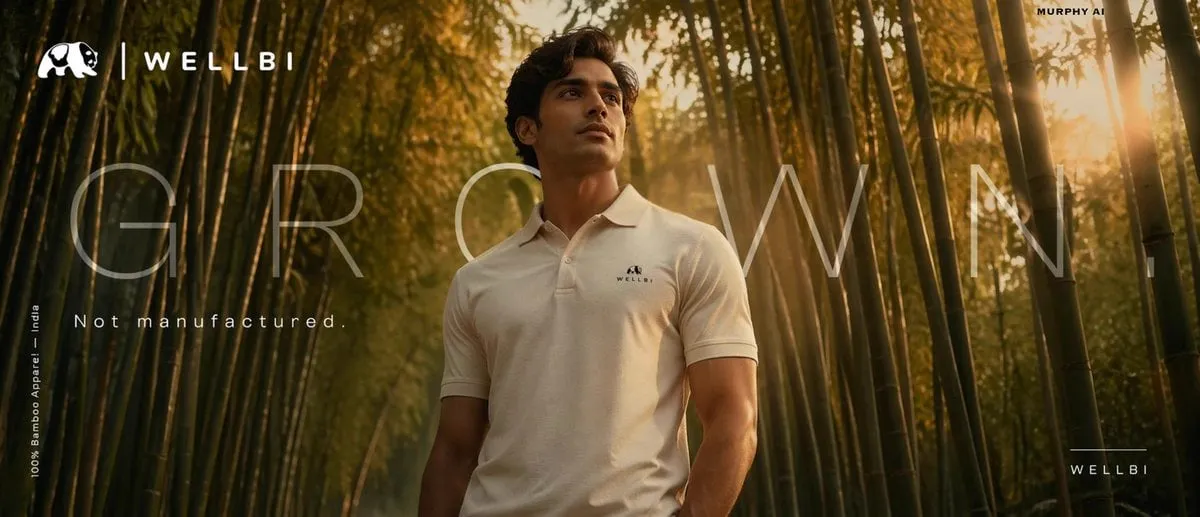
Photorealism: how convincing are faces, skin, fabric, and physics? This matters for commercial, documentary-style, and product work.
Prompt adherence: does the output match what you actually asked for? A beautiful video that ignores your brief is a failed render.
Coherence: do subjects stay consistent across frames and scenes? This is the difference between a clip and a story.
Speed and cost: how long does a render take, and what does it consume from your plan? For high-volume work this dominates everything else.
Creative control: can you steer camera movement, style, and composition, or are you at the mercy of the model's defaults?
No model wins all five. The right question is never "which is best" but "which is best for this project." A social media calendar has different requirements than a client commercial, and the comparison should be redone whenever the use case changes.
Photorealism: Flux vs Sora
The photorealism conversation is dominated by two families with very different approaches.
The Flux series focuses on visual quality and style consistency. Its non-destructive training approach means that when you change parts of a prompt, the overall style stays stable — a property that matters enormously when you iterate on a scene. Flux models are known for strong prompt fidelity and for producing images and video that hold up under close inspection, which is why they became a default for high-end visual work.
The OpenAI Sora series approaches generation from a different angle: narrative understanding. Sora models are built to understand scenes and causal relationships — objects that should stay objects, actions that should follow logically, extended sequences that maintain coherence over longer durations. Where Flux feels like a painter, Sora feels like a storyteller.
In practice, teams that need maximum visual polish for still-heavy or product-driven work often reach for Flux-class models, while teams that need longer, more narrative sequences lean on Sora-class models. The good news is you do not have to choose: both are available through the same workflows, and the strongest projects use each for what it does best.
Cinematic Control: Runway and Kling
When the brief is "make it feel like a film," cinematic control becomes the deciding factor.
Runway models have built their reputation on cinematographic intelligence: camera movement, shot composition, and temporal coherence. They understand concepts like tracking shots, pans, and depth, and they give creators tools to control motion rather than hoping the model guesses right. For motion design and filmic sequences, Runway-class models are a common professional default.
The Kling AI series approaches cinematic quality from the Asian market's rapid innovation cycle. Kling models are known for strong prompt adherence and for understanding complex, multi-part instructions — including professional mode features that let creators specify camera behavior and scene dynamics with unusual precision. For teams producing content aimed at Asian audiences, or anyone who wants meticulous instruction-following, Kling is consistently among the top options.
Both families prove the same point: modern generators are no longer just "prompt in, clip out." The differentiators are in the controls — how precisely you can direct the camera and the scene.
Speed and Budget: Pika, Luma, and Hailuo
For high-volume creators, the best model is the one that never blocks the content calendar. This tier prioritizes speed, ease, and cost efficiency.
Pika built its name on accessibility and iteration speed. It is designed for creators who want to explore ideas quickly, with a low-friction interface and fast turnaround. When you need ten variations of a concept before lunch, this class of tool wins.
Luma's Ray models are known for strong motion quality — realistic physics and movement — while keeping generation times practical for everyday work. The balance between motion fidelity and speed makes them a solid daily driver for short-form content.
MiniMax Hailuo has become a favorite for its physical realism at a friendly price point. Clips that need believable physics — splashes, cloth, weight — come out surprisingly convincing for the cost. For social-first teams that produce a lot and care about realism, Hailuo-class models are a workhorse choice.
The strategic move is not to pick one but to keep one or two of these in the rotation for exploration, then promote the winners to the premium model for final renders.
Creative Control: PixVerse and Wan
Some projects need more than quality — they need to look unlike anything the model's defaults produce. That is the domain of creative control.
PixVerse stands out for its cinematic effects and lens controls. A large set of camera lens options — aperture effects, focus behavior, depth manipulation — lets creators tune footage the way a director of photography tunes a real camera. For anyone who wants filmic looks without a film crew, this is a defining feature.
The Alibaba Wan series brings Chinese innovation into the mix with strong multimodal capabilities. Wan models handle image-to-video and text-to-video with notable style flexibility, and they are increasingly competitive in both quality and price. For teams that want a dependable generalist with good creative range, Wan is a serious candidate.
Creative control tier models are where the "signature look" comes from. If every video on your channel looks the same because the model has a default aesthetic, you are losing the battle for attention — tools that expand your range are worth their cost.
Multimodal and Anime: Vidu and Hunyuan
Specialized needs deserve specialized models.
Vidu is notable for multimodal input and strong anime and stylized generation. If your project involves animated characters, stylized worlds, or Japanese-influenced aesthetics, Vidu-class models produce results that generalist engines cannot match. The ability to feed multiple image references and keep a stylized character consistent is a differentiator for animation-heavy work.
Hunyuan Video represents the open-source stronghold in this space. As an open model, it offers the flexibility that closed services cannot: self-hosting, fine-tuning, and full control over the pipeline. For teams with infrastructure and a need for ownership, open models like Hunyuan change the equation entirely — the model is not a service you rent but a component you control.
The lesson: the long tail of specialized models is where niche projects find their edge. A generalist will always be "good enough"; a specialist is often the only tool that does the job right.
The Case for an AI Director Agent
The biggest shift in video generation is not any single model — it is the layer that sits above the models: the AI director agent. Instead of generating each clip by hand, you describe the story and the agent plans the scenes, selects the right model for each shot, and keeps the visual language consistent across the whole sequence.
The value is not automation for its own sake. It is that creative decisions — scene composition, pacing, shot selection — become repeatable and testable. You can iterate on a story the way you iterate on a prompt, and the agent handles the mechanics of model selection and orchestration.
For solo creators this is a force multiplier: one person can hold the role of writer, director, and technical operator. For teams it removes the bottleneck where creative intent has to be translated into technical parameters by hand. The director agent is where the next generation of efficiency in video production will come from.
Building a Multi-Model Workflow
Because no single model wins everything, the practical answer is a multi-model workflow: a pipeline where each stage uses the right tool.
The pattern is consistent. Start with a fast, cheap model to explore ideas and lock the story. Move to a creative-control model to shape the look and camera language. Finish with a premium model for the final renders that go in front of an audience. Keep a specialist model on standby for any scene that needs its niche — anime, physics-heavy effects, stylized transitions.
Two disciplines make this work. First, maintain reference images for characters and styles so every stage produces consistent subjects. Second, keep a log of what each model was used for and how it performed, so the next project starts from experience instead of from scratch. Teams that run this workflow treat model selection as part of the creative process, not a one-time setup.
Finally, standardize your prompt format across models. The same structure — subject, action, camera, style — works everywhere, and it makes swapping a model mid-project painless. When your prompts are portable, your workflow is portable, and you are never locked into a single engine. That portability is also what lets you adopt a promising new model without rebuilding your entire process around it.
A Decision Framework by Use Case
Use this as a starting point, then adjust for your own experience.
If you produce client commercials or product content: prioritize photorealism and prompt adherence. Start with a premium quality model, and use a fast model for internal exploration to keep costs sane.
If you run a high-volume social media operation: prioritize speed and cost. Build your rotation around fast models, use creative-control models for the posts that need a signature look, and reserve premium models for hero content.
If you make animation or stylized content: prioritize the specialized tier. Match the model to the aesthetic — anime pipelines have different leaders than cinematic pipelines — and use reference images aggressively.
If you are building a product or service on top of video generation: prioritize control and consistency. You need predictable outputs, versioned models, and the ability to orchestrate many renders, which points toward open models and a robust internal pipeline.
Whichever tier fits, run a small controlled test before committing: five prompts that represent your real workload, rendered through each candidate, compared side by side. The winner of that test is your answer — not the model with the best demo video.
One more rule of thumb: revisit the decision quarterly. Models in this space change fast, and a tool that was mid-tier three months ago may now lead its category. Set a calendar reminder, re-run your five-prompt test against any new candidates, and keep the workflow honest with fresh evidence rather than loyalty to an old choice. The cost of the test is trivial compared to the cost of living with the wrong tool for another quarter.
FAQ
Can I use multiple AI video generators in one project?
Yes, and it is often the best approach. Use fast models to explore, premium models for final renders, and specialists for niche scenes. Keep character references consistent across models so the final edit does not betray the mix.
What is the most important quality in a video generator?
It depends on the project, but prompt adherence is the most underrated. A model that follows instructions precisely is more useful than a model that occasionally produces stunning but uncontrollable results.
Are open source models competitive with commercial ones?
For many workloads, yes. Open models give you ownership, fine-tuning, and cost control, and the quality gap narrows constantly. The trade-off is that you own the infrastructure and operations.
How long does a typical render take?
From seconds for short clips on fast models to several minutes for long or high-quality renders. Speed is usually inversely correlated with quality and directly correlated with cost, which is why multi-model workflows exist.
How do I keep characters consistent across clips?
Use reference images of the character — face, outfit, full body — and feed them to the models at generation time. Multi-image fusion and keyframe control are the tools that keep a character recognizable from scene to scene.
