

AI Video Marketing: Build Ads That Convert at Scale
Oct 15, 2026


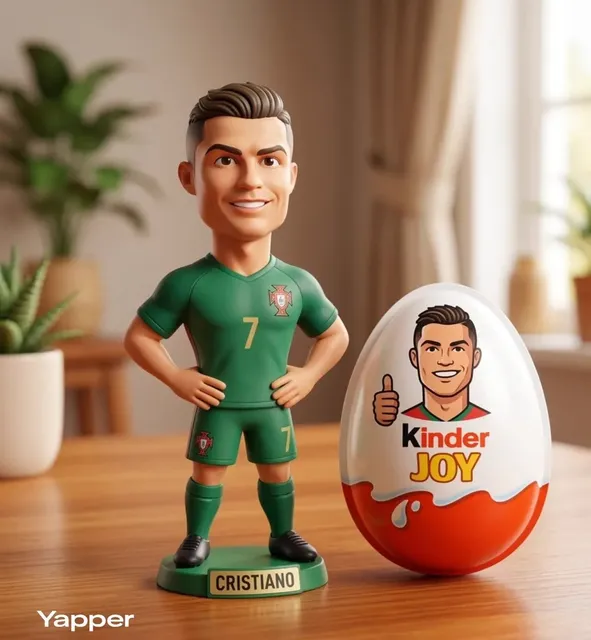
Video is no longer one channel among many — it is the format most buyers expect first. Yet the gap between a great idea and a finished, converting ad has always been expensive: casting, locations, reshoots, versioning, and the slow loop of agency feedback. Generative video tools have not removed the craft from advertising, but they have collapsed the cost of iteration. A small team can now produce dozens of distinct hooks, test them in days instead of weeks, and keep a consistent visual identity while doing it.
That shift creates a new problem. When production is cheap, the bottleneck moves to strategy, structure, and measurement. Teams that treat AI video as a magic button end up with a folder of pretty clips that never sell anything. Teams that treat it as a production line — with a brief, a shot list, a continuity system, and a testing plan — end up with ads that outperform work produced the traditional way.
This guide walks through the full pipeline: how to scope an AI-assisted video ad, how to generate shots that cut together, how to personalize at the segment level without fragmenting your brand, how to pick a tool, what to measure, and which mistakes quietly kill performance.
Why AI Changes the Economics of Video Advertising
The traditional video ad pipeline is linear and expensive. Script approval, casting, shoot days, editing rounds, color, sound, and finally media buying. Every change request is a cost event, which means creative decisions get locked early and defended emotionally. That is a bad environment for the one thing video advertising actually rewards: volume of honest experiments.
AI-assisted production changes the shape of that pipeline. Instead of one finished asset, you produce a library of components — hooks, product shots, testimonial fragments, lifestyle B-roll, end cards — and recombine them into variants. Cost per variant drops sharply, and the marginal cost of a second hook or a third call-to-action is close to zero.
Three practical consequences follow:
- Testing becomes the default, not an event. You can run five hooks against one body and let the data decide, instead of arguing in a meeting.
- Localization gets realistic. Subtitles, voiceover, and on-screen text can be regenerated per market without a new shoot.
- Creative fatigue is manageable. When a winning ad starts to decay, you swap one component rather than rebuilding from scratch.
The trap is assuming cheaper production equals better advertising. It does not. Cheap production plus weak strategy produces noise faster. The rest of this guide is about keeping the strategy tight while the production gets faster.
The End-to-End Workflow for an AI-Assisted Video Ad
Treat the workflow as five stages. Skipping any of them is where most disappointing results come from.
Start with a brief, not a prompt
A prompt like "make a cool ad for my product" produces generic output because it contains no decisions. A usable brief contains:
- Audience: who sees this, and what they already believe.
- Single message: one claim, not three.
- Proof: the reason to believe it — a demo, a number, a before/after.
- Format: aspect ratios, duration, platform placement.
- Tone reference: two or three existing ads you would be happy to be compared to.
- Success metric: hook rate, hold rate, click-through, or conversion, chosen in advance.
Write the brief in plain language and keep it to one page. This document is what you paste into generation tools as context, and it is what you use to judge whether an output is on-strategy or merely attractive.
Build a reusable asset library
The fastest teams maintain a small, curated library: approved product renders, logo lockups, brand color references, three or four established characters or presenters, a set of locations, and a music bed or two. Generation tools work better when you feed them consistent references — the same face, the same packaging, the same room — rather than inventing everything per shot.
Label assets by function, not by campaign: hook-closeup, demo-hand, lifestyle-kitchen, endcard-logo. When a new campaign starts, you are assembling from a known set instead of starting from zero.
Generate shots, not finished ads
The single biggest structural improvement is to stop asking a model for a finished 30-second ad. Ask for shots: a 3-second product reveal, a 2-second reaction, a 4-second demo of the mechanism, a 2-second texture insert. Short clips give you control, cut together more cleanly, and let you reorder without regenerating anything.
Generate more than you need. Twelve five-second clips can become three structurally different ads. That is the volume advantage in practice.
Assemble, caption, and mix
Edit in a normal editor. AI generation is a source of footage, not a replacement for editing discipline. Sequence for the platform: a hook in the first second, message by second five, proof in the middle, and a single clear action at the end. Burn in captions — most social video is watched muted — and keep on-screen text inside safe zones for the placement you are buying.
Sound design is where AI-assisted ads most often look amateur. Do not let generated audio fight a licensed music bed. Pick one: either a clean voiceover with light music, or music-led with text on screen.
Test, measure, and iterate
Publish variants with a single changed variable where possible: hook, opening frame, or call-to-action. Changing everything at once teaches you nothing. Give each variant enough delivery to reach a stable result before judging, then promote the winner and retire the rest.
Storytelling That Holds Together Across Scenes
Early generated video was famous for drift: a character's jacket changes color between shots, a product label mutates, a room rearranges itself. Modern tools have reduced this, but continuity is still something you have to manage deliberately, especially when a story spans multiple scenes.
Keyframe consistency in practice
The most reliable technique is to lock a reference frame for anything that must not change. Generate or upload a single strong image of your presenter, product, or hero location, then generate subsequent shots from that reference. When a shot comes back looking like a different person, do not try to fix it in post — regenerate from the reference.
Another workable pattern is a storyboard-first approach: generate still frames for every beat of the ad, approve the sequence as images, then animate each frame. Animating an approved board is far cheaper than discovering a narrative problem after you have generated twenty clips.
Continuity checklist for products and people
Before you assemble, scan for these:
- Packaging text readable and spelled correctly
- Logo proportions and color accurate
- Wardrobe, hair, and accessories consistent between shots
- Lighting direction and color temperature consistent within a scene
- Hands and props behaving plausibly in close-ups
- Background continuity when a scene is cut into multiple angles
Any item you cannot verify at thumbnail size is worth a full-screen check. Small errors are exactly what audiences read as "fake."
Pacing rules for 6, 15, and 30-second cuts
- 6 seconds: one idea, one visual, one line of text. Hook and payoff are the same beat.
- 15 seconds: hook, proof, action. No more than three shots in the first two seconds.
- 30 seconds: hook, problem, mechanism, proof, action. Still only one message.
The most common AI-video mistake is filling a 30-second slot with 30 seconds of material. Advertisers do not buy duration; they buy attention. If the idea works in eight seconds, cut it to eight.
Personalization Without Breaking Brand Consistency
Personalization has matured from swapping a name in a headline to substituting whole creative modules based on what you know about a viewer or segment. Done well, it lifts relevance without fragmenting your brand. Done badly, it produces a hundred near-identical ads with no recognizable identity.
Segment-level variants
The practical middle ground is segment-level personalization: three to six audiences, each with a variant that changes one meaningful element — the opening scene, the demonstrated use case, or the proof point. A running-shoe brand might lead with trail conditions for one segment and city pavement for another, while everything else stays fixed.
Modular creative blocks
Structure the ad so blocks are swappable:
- Hook block — 1–3 seconds, segment-specific
- Body block — problem and mechanism, shared
- Proof block — testimonial or demonstration, semi-shared
- Action block — offer and call-to-action, can vary by channel
This keeps the brand core stable while the entry point rotates. It also makes reporting legible: you can attribute differences to a specific block.
Guardrails worth writing down
- Never personalize a claim into something you cannot substantiate for that segment.
- Keep the logo, end card, and legal text identical across all variants.
- Cap the number of live variants so each gets enough delivery to be judged.
- Store every approved block in the library so future campaigns inherit the system.
Choosing an AI Video Tool: Decision Criteria
Tool selection matters less than workflow, but the wrong tool still costs weeks. Evaluate against these criteria rather than feature lists.
Reference and continuity control. Can you lock a character, product, or style reference and reuse it across shots? This is the single most predictive capability for whether output is usable in advertising.
Shot-level generation. Does it produce short clips you can assemble, or only longer sequences you must accept whole?
Image-to-video and video-to-video. Being able to animate a still you already approved, or restyle existing footage, extends the life of assets you already own.
Editing and composition support. In-tool scene assembly, aspect-ratio export, and caption handling save a handoff.
Aspect ratios and resolution. Vertical, square, and widescreen exports at advertising-grade resolution, without awkward reframing.
Commercial usage terms. Read them yourself. Usage rights, training-data policies, and indemnification language differ sharply between vendors, and your legal team will ask.
Speed and reliability. A tool that produces a usable clip in ninety seconds changes how you work. Queue times of twenty minutes change it back.
Cost model fit. Subscription tiers, per-generation pricing, and seat limits all shape how freely your team experiments. What matters is predictability: you should be able to forecast monthly spend before you scale usage.
Export and integration. Clean files, standard codecs, and no watermark on paid tiers.
A sensible approach is two tools: one for hero shots where quality matters most, one for cheap volume where speed matters most. Do not try to make a single tool excel at both.
Metrics That Tell You Whether the Ad Works
Video advertising generates a lot of vanity data. Focus on a short list tied to the funnel stage.
- Hook rate (3-second views divided by impressions): measures whether the opening frame and first line earn attention.
- Hold rate (through-rate or average watch time): measures whether the middle earns the rest.
- Click-through rate: measures whether the action block converts interest into intent.
- Cost per result: the only metric that ultimately matters for paid spend.
- Incrementality: whether the ad caused the action or simply appeared next to it.
Read them in order. A strong hook with a weak hold means your opening overpromised. A strong hold with a weak click-through means your call-to-action is unclear or your proof is unconvincing. Strong clicks with weak conversion usually means the landing experience, not the video.
Build a simple creative log: variant ID, hook description, block changes, spend, and results. After a few cycles you will see patterns — which opening frames, which durations, which proof types — and those patterns transfer to the next campaign.
Common Mistakes and How to Fix Them
Generating the whole ad in one prompt. Fix: generate shots, assemble in an editor.
No continuity references. Fix: lock one reference image per recurring subject and regenerate rather than patch.
Beautiful footage with no claim. Fix: write the single message first and cut every shot that does not serve it.
Unreadable on-screen text. Fix: design captions for muted, mobile viewing, and check safe zones per placement.
Changing five variables per test. Fix: one variable per variant, enough delivery to reach a stable verdict.
Ignoring the first second. Fix: decide the hook before generating anything else; it is the highest-leverage second of the entire ad.
Over-personalizing into fragmentation. Fix: segment-level variants with fixed brand blocks.
Skipping rights review. Fix: confirm model releases, music licensing, and vendor usage terms before launch, not after.
Worked Example: A 20-Second Product Ad
Suppose a small skincare brand wants a vertical ad for a paid social campaign. The single message: "visible hydration in one week." Proof: a texture close-up and a before/after sequence.
The shot list has six entries: a one-second water-texture hook, a product reveal on a bathroom shelf, a hand applying the product, a close-up of the texture, a before/after split, and a two-second end card. Reference images are locked for the product bottle and the presenter's hands.
Generation produces eighteen clips across the six slots — three options each. The editor cuts three structurally different ads: one leads with texture, one leads with the before/after, one leads with a short testimonial voiceover. Everything after the hook is identical, so a difference in hook rate is attributable to the hook.
After a week of delivery, the before/after opening wins on hook rate but loses on hold rate, while the texture opening has the best cost per result. The team keeps the texture hook, swaps the body block to a shorter mechanism shot, and reruns. That single cycle — three variants, one winning structure, one clear next test — is what the faster pipeline is for.
Rights, Disclosure, and Brand Safety
AI-assisted advertising raises questions that traditional production answered with paperwork. Address them before launch.
- Likeness and voice: if a generated or cloned human appears, confirm you have the right to use that appearance or voice.
- Music and sound: generative audio still needs a cleared license for commercial use in most markets.
- Claims and substantiation: a model will happily visualize an exaggeration. Marketing claims remain your responsibility.
- Disclosure: some platforms and jurisdictions require labeling of synthetic or altered media, particularly for political or endorsements content. Check current requirements for your market.
- Training and usage terms: understand how your uploaded assets and generated outputs may be used by the vendor, and whether the paid tier grants commercial rights.
- Internal approval: keep the brief, source assets, and approvals in one place so a claim can be traced back to its evidence.
These steps are boring and non-negotiable. A campaign pulled after launch costs far more than an hour of review before it.
FAQ
Do I still need a human editor?
Yes, for anything customer-facing. Generation supplies footage; editing supplies rhythm, clarity, and the discipline to cut what does not serve the message.
How many variants should I test at once?
Three to six per round. Enough to produce a signal, few enough that each receives meaningful delivery.
Can AI video replace product photography?
For motion inserts and lifestyle context, often yes. For accurate packaging, variants, and regulatory-compliant labeling, real photography is usually still safer.
How long should an AI-generated ad be?
As short as the idea allows. Fifteen seconds covers most direct-response needs; six-second cuts work as retargeting and bumpers.
What is the fastest way to improve results?
Rewrite the first second. The hook is almost always the largest controllable variable.
How do I keep characters consistent across scenes?
Lock a reference image, generate every shot from it, and regenerate rather than patch when drift appears.
Is AI-generated video allowed on major ad platforms?
Generally yes, subject to each platform's policies on synthetic media, disclosure, and prohibited content. Review the current policy for the placements you use.
How do I avoid creative fatigue?
Rotate one block at a time — hook first, then proof — and retire variants once performance decays rather than waiting for spend to fall.
AI video marketing rewards teams that combine faster production with stricter discipline. The technology removes the cost of trying things; it does not remove the need to know what you are trying to say, to whom, and how you will know it worked. Build the brief, generate shots instead of finished ads, lock your continuity references, test one variable at a time, and keep the rights paperwork current. Do that consistently and the volume advantage compounds into a real performance edge.

Alexander
More Blogs
Read MoreVidu Q4 Alternatives: 4K AI Video Models Compared (2026)
Vidu Q4 alternatives compared: Kling 4.0, Seedance 2.5, Wan 3.0, and Runway Gen-4 — 4K support, input modes, durations, audio, and what each costs in credits on Domer.
Top 4K AI Image Generators in 2026: 5 Models Compared on Real Costs
The top 4K AI image generators on Domer compared: Flux 3 Klein, Nano Banana 2.1, GPT Image 2.5, GPT Image 2, and Nano Banana Pro — 4K credit costs, reference limits, and speed.
Nano Banana 2.1 vs GPT Image 2.5: Which Image Model Should You Use? (2026)
Nano Banana 2.1 vs GPT Image 2.5 Flare compared: credit costs per resolution, aspect ratios, reference images, text rendering, and which tasks fit each model.