
Create
AI Video Marketing Campaigns: A Practical Workflow Guide
Oct 15, 2026

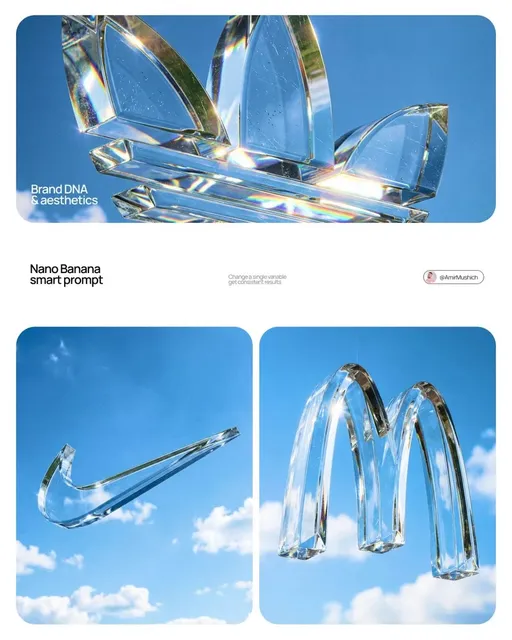
Marketing teams rarely run out of ideas. They run out of production capacity. A strong concept dies in the gap between the creative brief and the final cut, because every version needs a rewritten script, a shoot day, an edit pass, and a round of legal review. AI video tools matter because they compress that gap — not because they replace the judgment behind it.
This guide is a practical workflow for using AI across an entire marketing video campaign: brief, script, storyboard, generation, edit, versioning, quality control, and measurement. It assumes you already understand your audience and your offer. What follows is how to turn those inputs into video that actually performs.
Why Video Still Wins and Where AI Actually Helps
Video compresses more meaning into a single second than any other format. It carries tone of voice, facial expression, movement, environment, proof of use, and music at the same time. That is why it remains the strongest format for both awareness and direct response, and why short-form vertical video now sets the baseline expectation across social platforms.
The practical consequence is that campaigns rarely fail because someone chose the wrong format. They fail because of volume and speed: too few variants to test, too slow a turnaround to react to performance, and too high a cost per iteration to take creative risks. A team that can produce twenty coherent variations in a week learns more than a team that produces two perfect ones in a month.
AI helps most in the middle of the funnel of production, not at the edges. It is excellent at:
- Generating script and hook variations from a fixed message architecture
- Producing storyboard frames, mood references, and shot lists quickly
- Creating B-roll, background plates, and animated inserts that would otherwise require a shoot
- Drafting voiceover reads, subtitles, and localized versions
- Resizing and reformatting a master edit for multiple placements
- Surfacing patterns in performance data across dozens of assets
It is weak at deciding what the campaign should say. Positioning, offer construction, audience insight, and brand truth still come from humans who understand the business. Use AI to accelerate execution, and keep strategy in human hands.
The Four Jobs AI Does in a Marketing Campaign
It is useful to separate what people mean by "AI video" into four distinct jobs. Teams that blur them end up buying tools they do not need and skipping the ones that would save the most time.
Concept exploration
Before anyone writes a final script, there is a phase of narrowing. AI is genuinely good here: feed it your proposition, tone guidelines, and three competitor examples, then ask for fifteen hook angles. You are not looking for the final creative. You are looking for the two or three directions worth developing, which saves days of blank-page time.
Asset production
This is where most value sits. Generating backgrounds, product inserts, textures, lower thirds, animated icons, or entire stylized sequences removes the need for a second unit shoot or a stock licensing budget. It also makes the impossible affordable: a campaign set in three different climates, or a product morphing through five states, becomes a rendering problem rather than a logistics problem.
Variant generation and versioning
A single master edit can become dozens of deliverables: 16:9, 9:16, 1:1, six-second cutdowns, silent versions with burned-in captions, and language variants. This work is repetitive, error-prone, and expensive when done manually. It is exactly the kind of task automation handles well.
Analysis and feedback loops
AI-assisted analytics can cluster performance by creative attribute — opening frame, presenter type, music tempo, claim style — and tell you which attributes correlate with retention or conversion. That turns campaign reporting from a scoreboard into a set of instructions for the next iteration.
Start With the Brief, Not the Model
Most disappointing AI video output traces back to a vague input. If you cannot state the campaign in one page, no model will rescue it. A working brief for video should fit on a single screen and answer these questions:
- Audience: Who specifically, and what do they currently believe?
- Insight: What tension or desire does the campaign speak to?
- Single-minded proposition: The one thing they should remember.
- Proof: Why should they believe it?
- Tone: Three adjectives, plus one thing the video must never feel like.
- Mandatories: Logo placement, legal lines, product claims, disclaimers.
- Channels and specs: Aspect ratios, durations, caption requirements, sound-off behavior.
- Success metric: One primary metric and one guardrail metric.
Two additions matter specifically for AI production. First, a visual style reference set: six to ten images that define palette, lighting, texture, and framing. Models respond far better to a visual anchor than to adjectives. Second, an exclusions list: what must not appear, from competitor-adjacent imagery to unrealistic body standards to specific stock-footage clichés.
Write the brief before you open any tool. The temptation to start prompting immediately is strong, and it is the single biggest source of wasted hours.
Production Workflow: From Script to Finished Cut
A repeatable workflow matters more than any individual tool. Here is a sequence that works for teams of two to twenty.
Step 1: Message architecture and script
Write the core message in three sentences: setup, turn, resolution. Then adapt it for each duration. A ninety-second brand film and a six-second bumper should share the same emotional arc, compressed differently. Draft two or three script variants by hand, then use AI to expand each into alternate hooks and CTAs while keeping the middle intact.
Step 2: Storyboard and shot list
Generate rough frames for every beat. They do not need to be beautiful, only structurally clear: who is on screen, what is happening, where the camera is. Review the sequence as a story before generating anything in high fidelity. Fixing structure at this stage costs minutes; fixing it after generation costs days.
Step 3: Generation
Generate the shots that are hardest to capture practically first. If a key sequence looks wrong after three attempts with different prompts, the concept is usually the problem, not the prompt. Keep a log of prompts and settings that worked, because you will need to regenerate shots after client feedback and consistency is everything.
Step 4: Assembly and edit
The edit is where AI-generated footage becomes a campaign. Cut to rhythm, not to clip length. Place the strongest frame in the first half-second. Assume sound-off viewing and design for it: on-screen text should carry the message even with the audio muted.
Step 5: Sound design and voice
Sound is the most commonly underrated part of AI video production. Music sets emotional temperature, ambience creates realism, and voice direction determines credibility. Test synthetic voice against a human read for your category. Financial services and healthcare usually tolerate synthetic voice less than entertainment and e-commerce.
Step 6: Delivery and versioning
Export a master, then derive cutdowns and ratio variants from it rather than rebuilding each one. Lock captions as a separate layer so you can localize without touching the edit. Name files with a consistent convention that encodes campaign, concept, duration, ratio, and version.
Personalization Without Creepiness
Personalization in video usually means segment-level variation, not individual targeting. The difference matters both ethically and practically. Create a base edit with swappable modules:
- Opening shot: the environment or scenario the viewer recognizes
- Social proof: a testimonial or statistic relevant to that segment
- Product hero: the specific feature or use case that motivates the segment
- On-screen copy: language, units, currency, and local idioms
- CTA: the action that matches where the viewer is in their decision
A base edit plus five swappable modules can produce dozens of relevant versions from one shoot-free production. The guardrail is simple: only use data the viewer would expect you to have. Region, device, and previously viewed product category are usually fine. Anything that feels like surveillance — precise location, inferred personal circumstances — damages trust faster than relevance builds it.
Storytelling Structures That Survive AI Production
AI generation rewards clear structure. Ambiguous creative direction produces generic output, while a defined arc produces footage you can actually edit.
Hook patterns that hold attention
Use a small set of reusable openings: a problem shown in the first second, a surprising visual, a direct question, a contrast between before and after, or a piece of motion that resolves into the product. Test two or three hook types per campaign rather than many variations of the same one.
The emotional arc
Emotion in short video comes from change, not from adjectives. Something must shift between the first and last frame: a person's expression, a state of the product, a light level, a pace. If nothing changes, viewers describe the video as "nice" and scroll.
CTA design
Match the call to action to the temperature of the audience. Cold audiences respond to low-commitment next steps; warm audiences respond to specific, concrete actions. Keep the CTA on screen long enough to read aloud twice, and do not bury it under music or motion.
Quality Control: The Pre-Publish Checklist
AI output requires a discipline that traditional production gets for free from human crews. Run every asset through five checks before it leaves the building.
Visual QC. Scan frame by frame for artifacts: warped hands, drifting logos, flickering textures, impossible geometry, inconsistent lighting between shots. View on a phone, not just a monitor.
Copy QC. Read every on-screen line for grammar, claim accuracy, and brand voice. Check that captions match the audio and that no placeholder text survived.
Technical QC. Confirm aspect ratio, safe areas, loudness normalization, caption burn-in where required, and file naming. A brilliant video delivered at the wrong ratio wastes the production budget.
Brand QC. Verify logo clear space, color accuracy, typography, and tone. AI models drift toward generic aesthetics; brand consistency is what makes a generated asset feel owned.
Legal and claims QC. Check substantiation for every performance claim, disclosure requirements, talent and likeness permissions, and music licensing. Synthetic presenters and synthetic voices need documented consent and clear internal policy.
Measurement and Iteration
Video measurement should answer one question: what should we change next? Track a small set of metrics with clear roles rather than a dashboard full of numbers.
- Three-second view rate: does the opening frame earn attention?
- Hold rate at the midpoint: does the story sustain interest?
- Completion rate: does the payoff justify the length?
- Click-through and conversion rate: does the CTA work?
- Cost per acquisition or cost per qualified action: does it pay?
- Brand lift or recall: did anything stick?
Testing discipline matters as much as the metrics. Change one variable per test, run long enough to escape the noise of the first twenty-four hours, and resist rewriting creative based on a single weak day. A useful pattern is to test hooks first, body structure second, and CTAs last, because that order reflects how much each element influences performance.
Tooling, Team, and Common Pitfalls
Tool choice should follow workflow, not the reverse. Identify your bottleneck — script volume, visual production, versioning, or analysis — and pick a tool that removes that specific constraint first.
Build versus buy. Teams with consistent weekly output usually benefit from a dedicated pipeline and templates. Teams running two campaigns a year are better served by general-purpose tools and an editor who knows them well.
Roles that make it work. You need a strategist who owns the message, a producer who owns the pipeline, an editor who owns rhythm and assembly, and a reviewer who owns brand and legal standards. One person can hold two of these roles, but not all four at once on a live campaign.
Common pitfalls. Generating footage before the script is locked. Prompting for style instead of referencing images. Skipping sound design. Personalizing beyond what audiences expect. Measuring everything and deciding nothing. And the most common of all: treating AI output as finished work rather than as raw material that still needs a human edit.
FAQ
How much of a campaign can realistically be AI-generated?
For many categories, the majority of supporting footage, B-roll, and versioned deliverables can be generated, while hero moments still benefit from real capture. The mix depends on how much authenticity your audience demands.
Does AI video hurt brand trust?
It can, when viewers sense inconsistency or deception. Used openly for craft — environments, animations, localization, versioning — audiences rarely object. Used to fabricate testimonials or misrepresent products, it damages trust quickly.
How do we keep visual consistency across many videos?
Lock a style reference set, a defined color palette, a shot grammar, and typography rules. Save successful prompts and settings as reusable templates so every new asset starts from a known baseline.
What is a sensible first project?
Start with versioning: take an existing high-performing video and produce ratio, duration, and language variants. It is low-risk, immediately measurable, and teaches your team the pipeline before you attempt original generation.
How do we handle synthetic presenters and voices?
Require documented consent for any likeness, keep a written internal policy on disclosure, and test audience response before making synthetic talent a campaign centerpiece.
How often should creative be refreshed?
Watch frequency and hold-rate decay rather than a calendar. When hold rate drops while spend is steady, the creative is fatiguing. Refresh the hook first, then the body, then the CTA.
The through-line is simple: AI removes production constraints, which means your campaign's performance increasingly depends on the quality of your thinking. Sharpen the brief, define the structure, control quality ruthlessly, and let measurement tell you what to make next.

Alexander
More Blogs
Read MoreVidu Q4 Alternatives: 4K AI Video Models Compared (2026)
Vidu Q4 alternatives compared: Kling 4.0, Seedance 2.5, Wan 3.0, and Runway Gen-4 — 4K support, input modes, durations, audio, and what each costs in credits on Domer.
Top 4K AI Image Generators in 2026: 5 Models Compared on Real Costs
The top 4K AI image generators on Domer compared: Flux 3 Klein, Nano Banana 2.1, GPT Image 2.5, GPT Image 2, and Nano Banana Pro — 4K credit costs, reference limits, and speed.
Nano Banana 2.1 vs GPT Image 2.5: Which Image Model Should You Use? (2026)
Nano Banana 2.1 vs GPT Image 2.5 Flare compared: credit costs per resolution, aspect ratios, reference images, text rendering, and which tasks fit each model.