

AI Video Marketing Workflow: How to Make High-Converting Ads
Oct 15, 2026
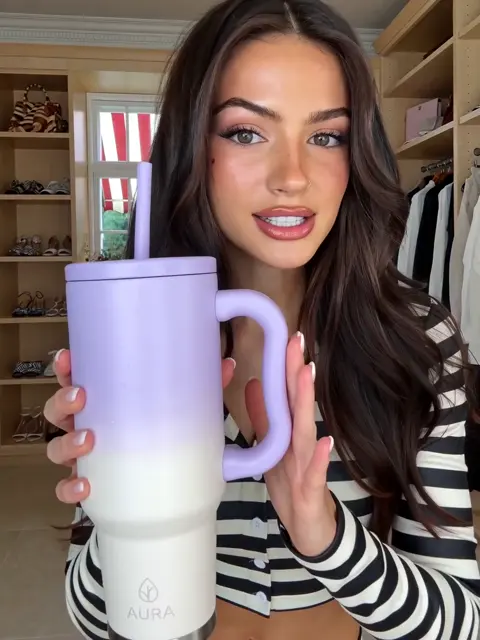


Video ads used to be a line item reserved for brands with a production crew, a location budget, and a two-week edit cycle. Generative video collapsed that timeline. A two-person team can now move from a rough brief to ten publishable ad variants in an afternoon, then let the platform's delivery system decide which one deserves the spend.
The catch is that "a model can make a video" and "the video converts" are two very different statements. The gap between them is where most AI-assisted campaigns quietly fail: beautiful footage, no hook; eleven variants, none of them meaningfully different; a spot that looks like every other synthetic clip in the feed. This guide is a practitioner's workflow for closing that gap — brief, script, generate, assemble, test, and measure.
What AI Video Does Well, and Where It Still Struggles
Before you rebuild your creative pipeline, be honest about which parts of the job the tools have actually solved.
Strengths worth building around
Volume. If you need forty 9:16 cutdowns of the same concept for different audiences, models and template editors will get you there in hours, not weeks. Volume is the single biggest lever in paid social, because the algorithm needs options to find an efficient audience.
Concept visualization. A script that reads flat on a page becomes legible the moment it exists as moving images. Fast, cheap generation turns creative review into a conversation about something concrete instead of a paragraph.
Localization. Translating an ad is easy; re-shooting it with a different on-screen presenter is not. Voice cloning and lip-sync tools have made multi-market versions genuinely feasible for mid-sized brands.
Iteration on non-hero elements. Changing a packshot, an end card, a caption style, or a background is now a rendering task rather than a shoot.
Where the tools still let you down
Hands, physics, and continuous motion. Long unbroken action sequences remain the weak point. The fix is editorial, not technical: shorter shots, more cuts, camera movement that hides the seams.
Consistent characters across shots. A recurring human face across twelve clips requires deliberate character locking, reference images, or a real actor shot on a phone and stylized later.
Story logic. Models produce adjacent moments; they do not produce causation. If shot three needs to explain why shot four matters, you have to write that relationship yourself.
Sound. Generated audio is improving but still thin for dialogue-driven spots. Record or license the voice, then treat the visuals as the flexible layer.
The End-to-End Workflow, Step by Step
Here is a sequence that works whether you are a solo operator or part of a five-person growth team.
Step 1: Write the brief as a hypothesis, not a mood board
Skip adjectives. A usable brief reads like this: "For cold traffic on short-form, we believe a problem-first hook outperforms a product-first hook because our audience does not yet know the category exists." That sentence tells you what to generate, what to compare, and what result would prove you right.
Include four things: the audience segment, the single promise, the proof (demo, testimonial, before/after, data), and the action you want. Anything else is decoration.
Step 2: Script for the scroll, not for cinema
Short-form ads are won or lost in the first 1.5 seconds and confirmed in the first three. Write the opening line before you write anything else, and write five versions of it.
Reliable hook archetypes:
- Problem callout: name the exact frustration in the viewer's own words.
- Contrarian claim: politely challenge the default solution in your category.
- Visual surprise: an unexpected image in frame one, with the explanation arriving at second three.
- Result first: show the finished outcome, then rewind to how it happened.
- Direct address: "If you have ever [specific situation], watch this."
Keep the script to 60–90 spoken words for a 30-second spot. Every line should either raise a question or answer one. Cut anything that only sounds good.
Step 3: Generate the visual layer in shots, not scenes
Treat generation as a shot factory. A 30-second ad needs roughly 14–20 shots at 1.5–2.5 seconds each, and each shot should be describable in one sentence: subject, action, camera, lighting, and environment.
Three practical habits:
- Lock the look first. Generate ten still frames, pick two, and reuse their visual language across every shot. Inconsistency is the tell that screams "AI ad."
- Generate short and cut often. Four-second clips that you trim to two seconds look far better than eight-second clips you keep whole.
- Keep a reject bin. Overlapping footage is free insurance when a shot does not cut together.
When you need product accuracy, shoot the product on a phone against a clean background, then use image-to-video to place it in a generated environment. That hybrid approach beats pure text-to-video for anything with a logo, a label, or a claim.
Step 4: Assemble like an editor, not a prompter
Assembly is where most AI ads get rescued or ruined.
- Cut on motion. Trim inside movement so the eye does not register the transition.
- Caption everything. Burned-in captions with a high contrast outline still beat platform auto-captions for retention.
- Design the first frame as a thumbnail. It must work as a still image.
- Use sound to hide cuts. A whoosh, a bass hit, or a music phrase change makes a hard cut feel intentional.
- Place the CTA after proof, not before. Two-thirds in is usually the sweet spot for a 30-second spot; add a persistent end card.
- Check the last two seconds. Most wasted spend happens after the viewer has already decided.
Export 9:16 as the primary master, then derive 1:1 and 16:9 from it. Never downscale a landscape edit into vertical; reframe it.
Step 5: Publish variants and read the data weekly
Ship three to five genuinely distinct concepts, not five color variations of one concept. Let each run long enough to leave the learning phase, then judge with the metrics in the section further down.
Personalization Without Losing Your Brand
Personalization has a bad reputation because it is often implemented as swapping a city name into a template. Real personalization changes the argument, not the adjective.
A workable structure is a matrix: three audience segments by three proof types. Segments might be price-sensitive shoppers, quality-focused buyers, and first-time category entrants. Proof types might be a demo, a customer result, and a comparison. That is nine scripts from one creative idea, each one saying something different to someone different — which is what makes the data informative rather than noise.
Guardrails matter more as volume grows. Lock a small visual system: two typefaces, three colors, one caption treatment, one logo position, one transition style. Then let everything else vary. Audiences remember consistency, but they reward novelty in the hook and the argument.
If your brand relies on a recognizable spokesperson, protect that asset. Generate the environments, products, and b-roll; keep the human consistent through real footage or a rigorously locked character reference.
A Practical Video A/B Testing Framework
Most teams test too many things at once and learn nothing. Structure it instead.
Lane 1 — Hook tests. Same body, same CTA, five different first 1.5 seconds. This is where the biggest wins usually live.
Lane 2 — Proof tests. Same hook and CTA, different evidence: demo versus testimonial versus data point.
Lane 3 — Structure tests. Long-form narrative versus fast montage; talking head versus voiceover; captions versus no captions.
Lane 4 — Offer and CTA tests. Free trial versus demo request; urgency versus reassurance.
Run one lane at a time within a campaign so you can attribute the difference. Give each variant enough impressions to escape the learning phase; a few thousand impressions and a handful of conversions will not tell you anything reliable. Weekly reviews beat daily ones, because daily fluctuations are mostly noise.
Keep a written log: what you changed, what you expected, what happened. After six weeks you will have a proprietary playbook that no competitor can copy, because it is built on your audience's actual behavior.
Choosing Your AI Video Stack
You do not need one tool that does everything. You need a chain with no broken links.
| Layer | What to look for |
|---|---|
| Ideation and scripting | Fast iteration, tone control, ability to rewrite for a specific hook archetype |
| Image generation | Style consistency, reference image support, product fidelity |
| Image-to-video | Motion realism, camera control, clip length of 4–8 seconds |
| Text-to-video | Shot variety, prompt adherence, render speed at your resolution |
| Voice and audio | Natural pacing, accent range, clean stems you can edit |
| Assembly | Timeline editing, caption tooling, multi-ratio export |
| Analytics | Creative-level reporting, not just campaign-level |
Practical selection criteria, in order of importance:
- Does it fit the edit? A tool that exports a watermarked, low-bitrate file is useless no matter how pretty the output.
- Can you reproduce results? Deterministic seeds, saved presets, and version history beat one-off magic.
- What is the real turnaround? A 90-second wait per clip is fine; a 15-minute queue is not, because iteration speed drives creative quality.
- Who owns the output? Read the terms for commercial use before you build a campaign around a tool.
- Does it integrate with how you already publish? Manual handoffs are where volume dies.
Start with two generators (one image, one video), one voice tool, and one editor. Add complexity only when a specific bottleneck justifies it.
Cost, Speed, and Quality: Setting Realistic Expectations
AI does not eliminate production cost; it moves it. You spend less on crews and locations and more on volume, testing, and editing time. A realistic split for a lean team is roughly 20% generation, 50% editing and iteration, 30% strategy and analysis. Teams that expect generation to be the whole job are always disappointed.
Quality expectations should scale with complexity. A product-in-environment shot with motion? Very achievable. A single continuous 20-second take of a person walking through a crowd while talking? Still risky. Design around your tools instead of fighting them.
Speed has a compounding effect that is easy to underestimate. If your competitor can test ten hooks per week and you can test two, they will find the winning angle first — and once a winning angle is found, the volume advantage becomes a cost advantage, because efficient creative lowers your cost per acquisition across the whole account.
Mistakes That Quietly Kill Performance
Generic visual language. Floating particles, slow zooms on nothing, and a voice that sounds like a narrator reading a manual. Fix: shoot reference stills and match them.
One hook, many unimportant edits. If the first two seconds are identical across variants, you are testing the wrong thing.
Over-editing. Twelve effects in ten seconds reads as chaos. Let one idea per two seconds breathe.
Ignoring the offer. Creative cannot rescue an offer nobody wants. If every variant underperforms, revisit the promise before the pixels.
No captions or unreadable captions. Thin fonts over busy footage are the most common unforced error in short-form.
Neglecting the audio mix. Mobile viewers often watch with sound off, but they still feel loud, flat, or clipped audio when they turn it on.
Skipping disclosure and rights checks. Synthetic presenters, cloned voices, and generated music all carry legal and platform obligations. Sort that out before launch, not after.
Publishing without a landing page match. The ad's promise and the first line of the landing page must agree. Mismatch is where most "the creative worked but sales did not" stories come from.
Metrics That Actually Predict Profit
Views are a vanity metric. Track these instead:
- Hook rate: three-second views divided by impressions. Below benchmark means the opening frame or first line is weak.
- Hold rate: average watch time divided by length, or the percentage reaching the halfway point. This diagnoses pacing.
- Click-through rate: strong hook and weak CTR usually means the offer or CTA placement is the problem.
- Conversion rate on the landing page: isolates the creative promise from the page experience.
- Cost per acquisition and return on ad spend: the only metrics that justify more budget.
- Creative fatigue curve: how performance decays over days. This tells you how much new creative you need per week, which in turn defines your production pace.
Review these at the creative level, not just the campaign level. A campaign average hides the fact that one variant is carrying everything while the rest burn budget.
Ethics, Disclosure, and Brand Safety
Audiences are becoming skilled at spotting synthetic media, and the reaction is rarely neutral. Three rules keep you out of trouble:
Disclose when it matters. If a reasonable viewer would assume a real person said or did something, label it. This is increasingly a platform requirement, not just good manners.
Never fake testimonials. A generated face delivering a fake customer quote is a legal risk and a reputational bomb. Use real customers or clearly animated spokespersons that no one would mistake for real footage.
Respect consent and likeness. Cloned voices, celebrity likenesses, and scraped user photos need explicit permission.
Keep a human in the loop for claims. Performance numbers, health claims, and financial promises should be reviewed by whoever owns compliance.
Beyond legality, there is a brand consideration: the more synthetic your feed becomes, the more a single piece of real footage stands out. Many strong-performing brands now deliberately mix generated b-roll with raw, handheld, phone-shot moments precisely because it signals authenticity.
Building the Habit, Not Just the Campaign
The teams winning with AI video are not the ones with the most elaborate toolchains. They are the ones who ship a small number of well-crafted concepts every week, log what they learn, and let those learnings compound.
Start with one campaign, one matrix of nine scripts, three generated concepts, and a weekly review. Keep the visual system tight, cut fast, caption everything, and change the hook before you change anything else. Within a quarter you will have a creative library that outperforms whatever a bigger budget alone could buy — and a process you can hand to anyone on the team.
FAQ
How many AI-generated videos should I test per week?
For a lean team, three to five genuinely distinct concepts per week is a strong rhythm. Distinct means different hooks and different arguments, not different music tracks.
Do AI-generated ads perform worse than filmed ads?
Not inherently. Performance tracks hook, clarity, and proof quality. Sloppy output — inconsistent characters, unnatural motion, generic aesthetics — performs worse, and that is a craft problem, not a technology one.
What is the biggest rookie mistake?
Generating before scripting. If you cannot state the hook and the promise in one sentence each, the tool will give you something pretty and pointless.
Can I use generated voices for ads?
Yes, with care. Check the tool's commercial terms, avoid mimicking a real person's voice without consent, and disclose when a listener would reasonably assume a real human recorded it.
How long should my AI video ad be?
Test 15 and 30 seconds as your defaults. Short versions win on cost efficiency, longer ones on complex products. Anything under 10 seconds rarely carries enough proof to convert cold traffic.
Do I still need an editor?
You need editorial judgment. Whether that lives in a person or in you, the cutting, pacing, captioning, and sound decisions determine whether the output looks professional.
What should I fix first if performance is flat?
The hook. Rewrite the first 1.5 seconds five ways and keep everything else identical. It is the highest-leverage change available and the easiest to isolate in your reporting.
How do I keep a consistent look across many clips?
Lock a small style system: fixed color palette, fixed lighting direction, fixed aspect ratio, and two reference stills you paste into every generation. Consistency is a checklist, not a talent.

Alexander
More Blogs
Read MoreVidu Q4 Alternatives: 4K AI Video Models Compared (2026)
Vidu Q4 alternatives compared: Kling 4.0, Seedance 2.5, Wan 3.0, and Runway Gen-4 — 4K support, input modes, durations, audio, and what each costs in credits on Domer.
Top 4K AI Image Generators in 2026: 5 Models Compared on Real Costs
The top 4K AI image generators on Domer compared: Flux 3 Klein, Nano Banana 2.1, GPT Image 2.5, GPT Image 2, and Nano Banana Pro — 4K credit costs, reference limits, and speed.
Nano Banana 2.1 vs GPT Image 2.5: Which Image Model Should You Use? (2026)
Nano Banana 2.1 vs GPT Image 2.5 Flare compared: credit costs per resolution, aspect ratios, reference images, text rendering, and which tasks fit each model.