
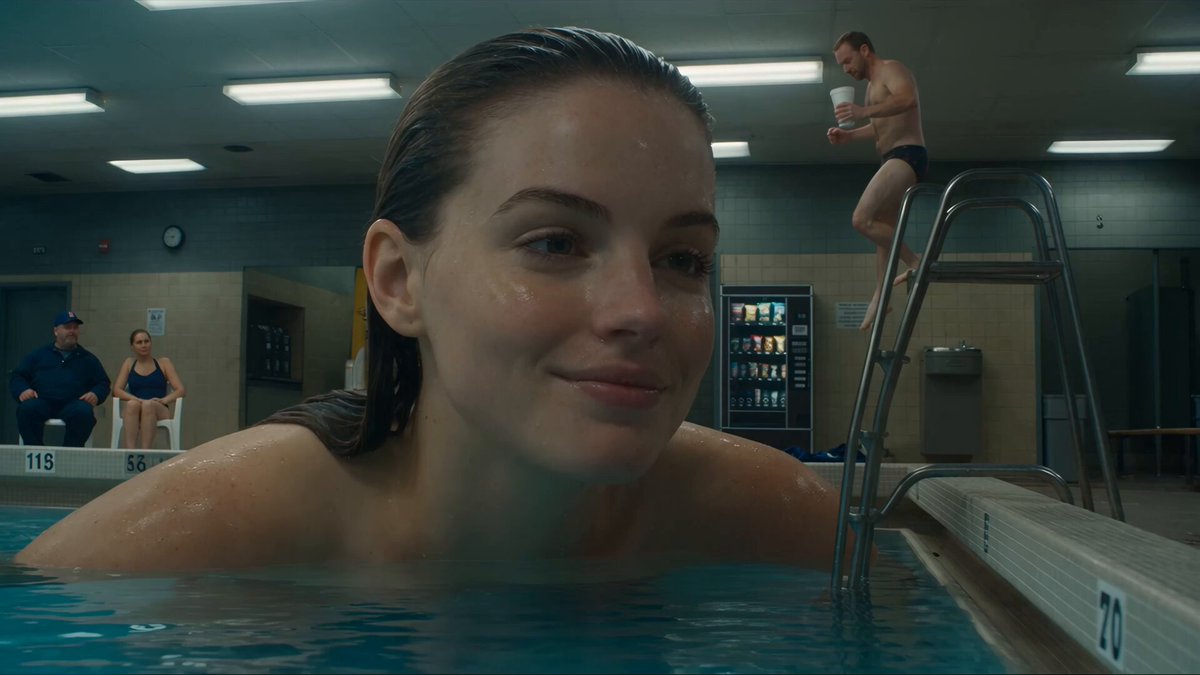
Why AI Video Became a Marketing Baseline
Video used to sit at the end of the marketing budget. It was expensive to shoot, slow to edit, and awkward to iterate, so teams planned one hero asset per quarter and squeezed everything they could out of it. That ordering has flipped. A location scout, a crew, a talent round, and a week of post-production are no longer prerequisites for publishing something that looks deliberate. Generative video tools have compressed the distance between an idea and a platform-ready clip from weeks to an afternoon.
The practical consequence is not that every brand should generate everything. It is that the cost of testing a visual concept has fallen far enough that testing becomes the default behavior. Ten hook variations, three thumbnail directions, a vertical cut, a square cut, and a localized version for a second market can now fit inside a normal working week. Teams that treat this as a novelty and keep producing one polished video per month are competing against teams that ship twenty focused clips and let the audience decide which ones matter.
What has not gotten easier is judgment. A model can render a convincing shot, but it cannot tell you whether the shot supports the offer, whether the tone matches the brand, or whether the first 1.5 seconds will survive a scroll. The teams winning with AI video are not the ones with the largest model menu. They are the ones with a repeatable production workflow and a clear quality bar.
This guide lays out that workflow: how to choose a model for a specific job, how to keep a visual identity intact across dozens of generated clips, how to run a weekly production cycle, and how to measure whether any of it is working.
Choosing the Right Video Model for the Job
There is no single best video model, only models that fit a specific shot type, budget, and deadline. Treat model selection the way a director treats lens selection: as a technical decision that follows the creative brief, not the other way around.
The Three-Way Tradeoff: Quality, Consistency, Speed
Every generative video tool sits somewhere on a triangle. Push toward cinematic realism and you usually accept longer render times and more retries. Push toward speed and you accept softer detail, shorter clip lengths, and more manual cleanup. Push toward character consistency and you accept narrower camera movement and stricter reference requirements.
Before generating anything, decide which two corners matter for this specific asset:
- Hook-first social clips: speed and consistency. Slightly softer detail is invisible on a phone screen, but a character whose face shifts between shots is not.
- Product hero shots: quality and consistency. The product must look identical across every frame, and surface materials must behave plausibly under motion.
- Trend-reactive content: speed above all. If the clip arrives after the moment passes, the quality is irrelevant.
Write that decision down in the brief. It prevents the most common failure mode, which is endlessly regenerating a clip that was already good enough for its purpose.
Text-to-Video, Image-to-Video, and Video-to-Video
The entry point matters as much as the model. Three common pipelines cover most marketing needs:
- Text-to-video. Fast for establishing shots, abstract backgrounds, and b-roll where nothing specific must be preserved. Weak at brand-critical detail.
- Image-to-video. The workhorse for product and character work. Generate or photograph a strong keyframe first, approve it, then animate it. If the still is wrong, no amount of motion will save it.
- Video-to-video and restyling. Useful for turning existing footage into a different visual treatment, refreshing an old asset library, or creating stylized transitions without reshooting.
A useful rule: the more the shot depends on a specific object, face, or logo, the earlier you should lock a still image and the less you should rely on pure text prompts.
| Job to be done | Pipeline to start with | Primary risk |
|---|---|---|
| Explainer b-roll | Text-to-video | Generic, interchangeable look |
| Product close-up | Image-to-video | Material and logo distortion |
| Presenter or avatar | Avatar-first tool | Unnatural mouth and eye motion |
| Reformatting old footage | Video-to-video | Inconsistent treatment across clips |
| Localized variants | Template plus text swap | Cultural mismatch in imagery |
Why Regional Model Diversity Matters
A few seasons ago, most teams drew from the same short list of Western tools. That is no longer true. Models built by Chinese labs such as Kling, MiniMax Hailuo, Wan, and Hunyuan have become serious options, particularly for stylized motion, longer continuous shots, and cost-efficient volume generation. Meanwhile, Runway, Luma, Pika, and Google's Veo family continue to lead in specific niches like camera control, physics, and prompt adherence.
The strategic value is not brand loyalty. It is optionality. When one model hits a rate limit, changes its terms, or simply renders a shot badly, a team with two or three validated pipelines keeps shipping. Test each candidate on the same five reference shots and score them on detail retention, motion coherence, and retry rate. That small benchmark becomes your internal standard and saves hours of arguing later.
Building a Brand-Consistent Look Across Generated Clips
Consistency is where AI video stops being a novelty and starts behaving like a brand system. Audiences recognize a brand less by a single beautiful clip and more by the fact that twenty clips feel like they came from the same place.
Lock the Ingredients Before You Lock the Shots
Define a small set of reusable visual constants and document them in a one-page brand sheet:
- Color logic: a primary palette plus one accent, with a rule for when the accent appears.
- Lighting signature: for example, soft directional daylight for lifestyle content and controlled rim light for product.
- Camera language: a defined set of moves, such as slow push-in, handheld drift, and locked-off top-down.
- Wardrobe and casting rules: what a recurring character wears, and what they never wear.
- Texture: film grain, clean digital, or stylized illustration, applied consistently.
Those constants are the raw material for prompt templates. A generic prompt produces a generic clip, and generic is the one thing that never compounds into recognition.
Character and Style Management in Practice
For any recurring human or mascot, build a reference set of four to six approved images: front, three-quarter, profile, and a mid-action frame. Use image-to-video rather than text-to-video whenever the character appears. Add an explicit descriptor block to every prompt covering age range, hair, wardrobe, and expression baseline so the model has fewer opportunities to improvise.
Style consistency follows the same logic. Pick a look reference, describe it in plain language, and reuse the wording verbatim. Changing phrasing between prompts is the fastest way to make a series look like it was assembled from unrelated projects.
Handling Drift and Imperfect Frames
Some drift is unavoidable across long clips or multi-shot sequences. Budget for it:
- Keep generated shots to the shortest length that tells the beat.
- Cut on motion or on an object passing the lens to hide small continuity breaks.
- Use color grading to unify clips that were generated with slightly different palettes.
- Recompose with a crop rather than regenerating when the framing is the only problem.
The Weekly Production Workflow, Step by Step
The goal is a cadence that produces a batch of publishable clips every week without a crisis. A five-stage loop works for teams of one to fifteen people.
1. Brief, Angle, and Script Skeleton
Start from the audience question, not the visual idea. Write the hook as one sentence, then the payoff, then the call to action. Keep three to five angles per batch, each tied to a distinct claim or objection. A batch answering different questions outperforms five remixes of the same point.
2. Storyboard Frames Before Motion
Generate or photograph keyframes for every beat. Approve them as stills first. This step is where cheap, fast iteration actually happens, and it costs a fraction of the effort of regenerating motion. If a frame does not communicate the beat on its own, the animated version will not either.
3. Shot Generation and Curation
Run two to four variations per shot through your shortlisted models, then keep one. Set a hard retry limit, typically three attempts, and move on. Log the winning prompt alongside the clip so the batch becomes a reusable library instead of a one-time effort. Name files with the brand, campaign, angle, and shot number so editors are not guessing later.
4. Assembly, Sound, and Captions
Edit to the audio skeleton, not to the visuals. Lock a music bed and a voice track first, then cut the picture to the beat. Replace any generated audio that sounds synthetic in a way that hurts credibility, and write captions as part of the edit rather than as an afterthought.
5. Review Gates and Publishing
Use a single review pass with three questions: is the claim accurate, is the brand presentation correct, and does the first second earn attention. Anything that fails goes back to a specific stage, never to the beginning. Then publish on a fixed schedule so the cadence survives busy weeks.
Efficiency Tactics That Hold Up Under Deadline
Speed in AI video comes from batching, not from rushing individual clips.
- Generate in parallel. Queue several shots across multiple tools at once so render time overlaps with your writing and editing.
- Reuse prompt scaffolds. Keep a template with slots for subject, action, camera, lighting, and style, and fill it rather than writing fresh prose each time.
- Standardize aspect ratios. Produce in vertical first, then re-crop for square and landscape using the same edit timeline.
- Maintain an approved asset library. Approved characters, products, backgrounds, and motion presets should be one click away, not buried in old chat threads.
- Pre-write caption blocks. Captions and hooks are reusable assets in their own right and can be tested independently of the footage.
- Batch localization. Translate and re-record once per batch, not per clip.
Sound, Subtitles, and Accessibility
Sound is the difference between a clip that feels produced and one that feels assembled. Three rules cover most cases.
First, treat music as structure. Choose a track with a clear beat map and cut transitions to it. Second, foreground the voice. If the message is spoken, the voice leads and the music sits underneath it; if the message is visual, music leads and text carries the words. Third, never let licensed audio become a liability. Confirm usage rights for every track, especially for paid placements and localized versions.
Captions are equally practical. Most social viewing happens without sound, so burned-in or platform captions should be treated as a core asset. Keep them short, high contrast, and positioned away from interface elements that cover the lower third. Accessibility improvements, including accurate transcripts, adequate contrast, and described visuals for critical product detail, also improve comprehension for every viewer.
Distribution: One Production Run, Many Assets
A production batch should never produce only one output per shot. Plan the derivatives before you finish editing:
- Vertical, square, and landscape cuts of the same narrative.
- A long-form version that combines several angles for a landing page or a video platform.
- Silent versions with captions for autoplay environments.
- Thumbnail and cover frames pulled from approved keyframes rather than random frames.
- Localized versions with translated captions and re-recorded voice tracks.
- Static image sets derived from the same keyframes for email, ads, and product pages.
Publishing the same asset everywhere without adaptation usually underperforms. Adjust the opening seconds per platform, match the caption tone to the audience, and use platform-native formats where possible.
Measuring What Matters
Volume without measurement is just noise. Track a small set of metrics tied to the funnel stage each clip serves.
| Stage | Metric | What good looks like |
|---|---|---|
| Attention | 3-second hook rate | Consistent across variations, not a single outlier |
| Retention | Average watch-through | Improves as hooks get specific |
| Action | Click-through and saves | Tracks with clearer payoffs |
| Conversion | Assisted conversions | Measured over a cohort, not a single day |
| Efficiency | Cost per finished clip | Falls as templates mature |
Review results at the batch level, not the clip level. A single underperforming clip tells you very little; a pattern across ten clips tells you whether your hooks, your pacing, or your offer needs work.
Mistakes That Quietly Kill Performance
- Chasing realism instead of clarity. A stylized clip that communicates beats a photoreal clip that does not.
- No retry limit. Endless regeneration burns the week and rarely beats the third attempt.
- Ignoring the first second. Slow openings lose viewers before the value appears.
- Inconsistent branding. Rotating palettes and fonts make a series feel like unrelated ads.
- Untested claims. Generative tools will happily render a statement your legal team has not approved.
- One-platform thinking. Assets designed for a single feed rarely transfer well.
- No asset hygiene. Unnamed files and lost prompts mean every campaign starts from zero.
- Measuring too early. Short-form performance needs a few days of signal before conclusions are useful.
FAQ
Do I still need human editors if I generate video with AI?
Yes. Generation replaces shooting and some animation work, not editorial judgment. Deciding rhythm, which frames to keep, and where to cut is still the part that determines whether an audience stays.
How many shots should a typical promotional clip contain?
For short-form, four to eight short beats is usually enough for a 20 to 40 second clip. More beats mean faster cutting, which increases both production effort and the risk of visual drift.
Is image-to-video always better than text-to-video?
For anything brand-specific, usually yes, because you approve the composition before spending effort on motion. Text-to-video remains efficient for abstract backgrounds, textures, and b-roll where precision does not matter.
How do I keep a character recognizable across multiple clips?
Build a reference image set, always start from image-to-video, and reuse an identical descriptor block in every prompt. Then verify continuity in the edit rather than regenerating everything from scratch.
Should every clip be localized?
No. Localize the angles that already perform well in your primary market. Translating weak creative into five languages produces five weak campaigns.
Can AI-generated video hurt search visibility?
Not inherently, but thin, duplicated, and low-value content can. Add genuine explanation, accurate captions, transcripts, and clear page context so a video page offers something a viewer cannot get from a silent repost.
Where to Start Next Week
Pick one product or offer, one audience question, and one batch of five angles. Build a brand sheet with your color, lighting, and camera constants. Benchmark two or three video models on the same reference shots and keep the two that fit your tradeoff. Run the five-stage loop once, measure at the batch level, and adjust a single variable before the next round.
A cadence that ships every week will beat a perfect campaign that ships once a quarter. The tools will keep changing, and the specific models you choose today will matter less than the workflow you build around them: a clear brief, approved frames, a documented visual system, disciplined curation, and measurement that tells you what to do next.
