

Create Effective Ad Video: Marketing Strategies That Convert
Oct 15, 2026
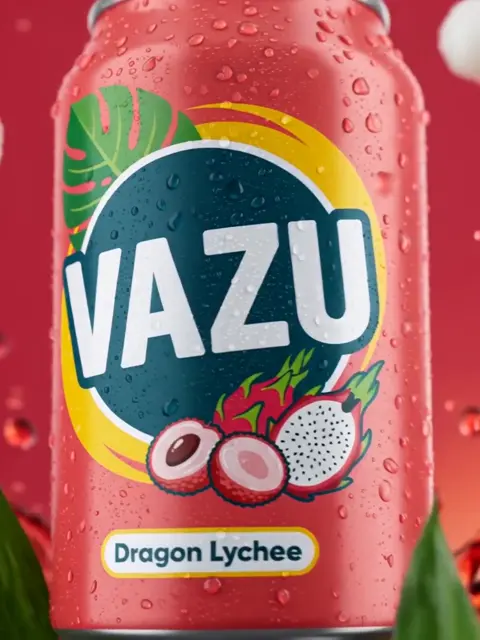
Why ad video still outperforms almost every other format
Video absorbs attention in a way static creative rarely does. Motion, sound, faces, and pacing combine to hold a viewer long enough to deliver a message, and that extra second or two is usually the difference between being remembered and being scrolled past. For most advertisers, this shows up directly in the numbers: stronger thumb-stop rates, lower cost per landing page view, and better recall in brand lift studies.
The practical advantages go beyond attention. A single filmed or generated concept can be cut into a six-second bumper, a fifteen-second feed ad, a thirty-second in-stream spot, and a two-minute explainer for a landing page. One production day, or one well-planned AI generation session, can supply a quarter of creative. No other format repurposes that efficiently.
Video also carries emotion more convincingly. Tone of voice, hesitation, laughter, and urgency are all easier to convey with sound and expression than with copy alone. When you are selling something that depends on trust, a human face on screen does work that bullet points cannot.
The catch is that video is unforgiving. A weak hook loses the viewer before your value proposition ever appears, and a technically polished ad with a muddled message wastes budget faster than a plain image ad. Effectiveness is not a function of production budget. It is a function of clarity, relevance, and structure. Everything in this guide is aimed at those three things.
Start with the brief: audience, objective, and the single job your ad must do
Most underperforming ad videos fail before anyone turns on a camera. The brief was vague, the objective was compound, and nobody agreed on what success looked like. Fix the brief and the creative decisions become much easier.
Go past demographics
Knowing that your buyer is 28 to 45 and lives in a metro area tells you almost nothing about what will make them stop scrolling. Go one layer deeper and describe the situation they are in when your ad appears: what they were just doing, what frustrates them, what they have already tried, and what they are afraid of wasting. Write this as a paragraph in plain language, not a persona chart.
For example: "They have tried two cheaper tools, both of which produced output they were embarrassed to publish. They do not fear the price; they fear looking amateur in front of their own clients." That sentence changes the script far more than an age range ever will.
One objective per campaign
Compound objectives produce diluted creative. "Drive awareness and signups and app installs" gives the editor nothing to optimize for. Pick one primary action per campaign and let everything else become secondary.
- Awareness: optimize for completed views and recall. Prioritize clarity of the core idea over detailed proof.
- Consideration: optimize for click-through and landing page engagement. Prioritize demonstration and differentiation.
- Conversion: optimize for purchase or signup. Prioritize objection handling, offer clarity, and urgency.
- Retention: optimize for repeat usage or upgrade. Prioritize feature depth and habit reinforcement.
Each objective implies a different first three seconds. A conversion ad should lead with the offer or the problem. An awareness ad should lead with the idea.
Write a brief that survives production
A usable brief fits on one page and contains: the audience paragraph, the single objective, the one sentence you want viewers to remember, three proof points, the mandatory legal or brand elements, and the delivery specs. Anything that does not help a director, editor, or prompt writer make a decision should be cut. If your brief runs four pages, the crew will pick whichever page is easiest and ignore the rest.
Structure that survives the scroll: hooks, pacing, and payoff
A strong ad video has a recognizable shape: hook, tension, proof, payoff, action. The proportions change by platform, but the sequence rarely does.
The first three seconds
Assume the viewer decides in under two seconds. Your hook can be a visual pattern break, a blunt claim, a question the viewer cannot answer without watching, or an unexpected image. What it cannot be is a logo animation followed by a slow camera move. Save the brand reveal for after you have earned attention.
Strong hook patterns that keep working:
- The problem stated sharply. "Your reports take six hours. They should take ten minutes."
- The visual contradiction. A result that looks impossible until explained.
- The direct address. Speaking to one specific viewer type so precisely that others self-select out.
- The demonstration. Showing the product doing the thing, with no preamble.
Weak hooks are usually just polite. Politeness costs money in paid social.
Retention through the middle
The middle is where most ads die. Viewers stay when the video keeps making small promises and keeping them. Change something every two to four seconds: framing, location, speaker, graphic, or pace. Introduce a new piece of information rather than restating the same benefit.
Avoid the list-of-features trap. Instead of "and it also does X, and Y, and Z," show one feature solving one moment of friction, then move on. If you must cover several features, give each one a distinct visual treatment so they feel like separate beats rather than a monotone recital.
The close and the call to action
End with one action, expressed once, in the same words across every cut. "Start your free trial" and "Get started today" are close enough to blur; pick one. Place the action on screen as text as well as in audio, because a large share of feed viewers watch with sound off.
If your objective is awareness, the close can be a memory hook rather than a button: a memorable phrase, a visual signature, or the answer to the question you opened with.
Platform-native creative: one idea, several cuts
One creative idea, executed natively for each placement, consistently outperforms a single export resized across every channel. The idea stays constant; the packaging changes.
Vertical short-form feeds
Vertical formats reward energy. The hook must land immediately, captions are effectively mandatory, and safe zones at the top and bottom must be respected so text is not hidden behind interface elements. Aim for a tight fifteen to twenty seconds. Since sound is often off, build meaning into the visuals and on-screen text rather than relying on voiceover alone.
In-stream and pre-roll
Viewers here arrive with an intent to watch something else, so you are interrupting. Earn the interruption quickly: acknowledge it, deliver value in the first five seconds, or make the ad entertaining enough that the viewer does not resent it. Slightly longer formats work here, and a clear brand presence early is less costly than in short-form feeds.
Connected TV and long formats
On a television screen, production values matter more, and viewers are more tolerant of a story. This is where a thirty- to sixty-second narrative earns its keep. Keep the brand present throughout rather than only at the end, because attention drifts and the last five seconds are not guaranteed.
A useful rule: write the short version first. If the fifteen-second cut cannot stand alone, the sixty-second version is probably hiding a weak idea rather than adding depth to a strong one.
Building an AI-assisted ad video workflow
AI is most useful in ad video when it is treated as a fast drafting partner and a versioning engine, not as a replacement for strategy. The workflow below is the one that consistently produces usable output.
Concept and script assistance
Feed a model your audience paragraph, the single objective, and three proof points, then ask for ten distinct concepts rather than one script. Ten concepts expose which angles are clichéd within seconds. Take the two strongest and ask for a script with a hook, three beats, and a close. Edit the result yourself; generated scripts tend to be grammatically clean and emotionally flat, so add specificity, numbers, and one honest detail a machine would not invent.
Storyboards and shot planning
Ask for a shot list keyed to the script: one line per shot with framing, subject, and duration. This is where AI saves real money, because a shot list written in advance prevents the classic production mistake of filming coverage you never use. Refine the list down to the shots that carry the argument.
Generation, voiceover, and music
Text-to-video and image-to-video tools have become genuinely useful for certain shot types: abstract backgrounds, product-in-context inserts, atmospheric establishing shots, and stylized sequences that would be expensive to film. They remain weakest on hands, complex interaction, and anything requiring consistent character identity across multiple shots. Plan your edit so generated shots sit alongside filmed or stock material rather than carrying the entire ad.
For voiceover, synthetic voices are now good enough for many direct-response ads, particularly when the script is conversational. Use them for versioning and testing; use a human voice when warmth or authority is the core of the sell. Music should be licensed for commercial use and matched to the pacing of the edit rather than chosen for taste alone.
Assembly, captions, and versioning
Auto-captioning has become reliable enough to save hours, but always review for brand names, product terminology, and numbers. Keep captions inside safe zones, size them for mobile, and avoid placing them over faces or key product details.
This is where AI delivers the biggest practical return: generating dozens of variants from a locked structure. Swap the hook, swap the proof point, swap the close. Same edit, different first three seconds. That mechanical variation is exactly what paid testing needs.
Where humans still win
Judgment about what the audience will find credible, taste in pacing, and the decision about which variant deserves budget are still human work. AI widens the funnel of options; it does not tell you which option is honest, on-brand, or strategically correct.
Production quality on a realistic budget
Viewers forgive modest production values far more readily than they forgive confusing content. A cleanly lit talking head with good sound outperforms a cinematic sequence with muddy audio every time. If you can only spend money in one place, spend it on audio: clear voice, no echo, no background hum.
A few decisions have outsized impact:
- Light the face properly. One large soft source plus a fill will carry almost any indoor shoot.
- Shoot vertical natively. Cropping horizontal footage to vertical loses resolution and composition. Where possible, shoot both.
- Stabilize. Shaky footage reads as amateur regardless of the content.
- Limit locations. Two well-dressed setups beat six rushed ones.
- Design a simple graphic system. Consistent lower thirds, captions, and end cards make a modest budget look intentional.
If your budget is nearly zero, the highest-return format is a screen recording with a clear voiceover. It demonstrates the product, needs no crew, and converts well for software and services. Add a face only if personality is part of the offer.
Testing, measurement, and iteration
Ad video is not a deliverable; it is a hypothesis. Treat each upload as a test and let the data decide what the next round looks like.
What to test first
Test in this order, because earlier items produce larger swings:
- Concept or angle. Completely different approaches to the same problem.
- Hook. Same body, different first three seconds.
- Offer and call to action. Same video, different promise.
- Length. Fifteen versus thirty seconds.
- Visual treatment. Talent, animation, or screen recording.
Testing button colors before testing the angle is the most common way teams burn a month of budget learning nothing.
Reading the numbers
Look at the shape of the retention curve rather than a single average. A steep drop in the first three seconds means the hook failed. A steady decline through the middle means pacing or relevance is off. A drop right before the close means the ad ran too long or the payoff came too late. Pair retention with downstream metrics: a high completion rate plus a low click-through rate usually means the video entertained but did not sell.
Creative fatigue
Every ad decays. Watch for rising frequency, falling click-through rate, and rising cost per result. When those move together, refresh the hook first, then the whole concept. Good creative operations keep a small backlog of new angles ready so a refresh takes days rather than weeks.
Common mistakes that quietly kill performance
- Leading with the brand. The logo is not the hook. Earn attention first.
- Burying the offer. If the value is not clear by second five, many viewers will never reach it.
- One master file for every placement. Aspect ratio, pacing, and hook strength should differ by channel.
- No captions. A large share of feed viewing happens with sound off.
- Testing too many variables at once. You will learn nothing about any of them.
- Judging creative by internal taste. The only reliable judge is the audience, measured.
- Refreshing too late. By the time performance visibly collapses, you have already paid for the decline.
- Ignoring the landing experience. A great ad followed by a mismatched page converts poorly and teaches you the wrong lesson.
FAQ
How long should an ad video be? As short as the idea allows. Fifteen to twenty seconds works for feed placements, thirty seconds for in-stream, and up to sixty for connected TV or landing pages. If the message needs ninety seconds, it may need two ads instead of one.
Can AI-generated video perform as well as filmed footage? For inserts, backgrounds, and stylized sequences, yes. For trust-dependent offers where a real person, real premises, or real results matter, filmed footage usually converts better. Mixing both is often the strongest approach.
How many variants do I need? Three to five distinct concepts is a reasonable starting point. Different angles matter more than minor edits of the same angle.
Do I need professional voiceover? Only if authority or warmth drives the sale. For direct-response testing, a clean synthetic read is often indistinguishable in performance and much faster to iterate.
What is the single biggest lever? The first three seconds. It is where most of the loss occurs and where changes produce the largest measurable shifts.
A monthly workflow you can repeat
Sustainable ad video performance comes from rhythm rather than heroics. Here is a cycle that fits inside a normal month.
Week one: research and brief. Review performance data, customer conversations, and support tickets for recurring language. Write one brief per angle with a single objective each.
Week two: script and shot plan. Generate ten concepts, keep two, write tight scripts, and produce shot lists. Lock the structure before production starts so versioning stays cheap.
Week three: produce. Shoot or generate the primary assets, record voiceover, and assemble the hero cut. Then produce the hook variants and platform-native crops from the same locked structure.
Week four: launch and read. Ship at least three concepts with matched budgets, wait for statistically meaningful volume, then read retention curves and downstream metrics. Write down what you learned and fold it into next month's brief.
The point of the loop is compounding knowledge. Teams that run it consistently end up with a library of proven hooks, a clear sense of which angles their audience responds to, and a much lower cost per result than teams that start from a blank page every time. The tools, whether traditional cameras or generative models, will keep changing. The discipline of brief, structure, native execution, and measured iteration does not.

Alexander
More Blogs
Read MoreVidu Q4 Alternatives: 4K AI Video Models Compared (2026)
Vidu Q4 alternatives compared: Kling 4.0, Seedance 2.5, Wan 3.0, and Runway Gen-4 — 4K support, input modes, durations, audio, and what each costs in credits on Domer.
Top 4K AI Image Generators in 2026: 5 Models Compared on Real Costs
The top 4K AI image generators on Domer compared: Flux 3 Klein, Nano Banana 2.1, GPT Image 2.5, GPT Image 2, and Nano Banana Pro — 4K credit costs, reference limits, and speed.
Nano Banana 2.1 vs GPT Image 2.5: Which Image Model Should You Use? (2026)
Nano Banana 2.1 vs GPT Image 2.5 Flare compared: credit costs per resolution, aspect ratios, reference images, text rendering, and which tasks fit each model.