

Pixel-Level Style Control for AI Video: A Practical Workflow
Oct 1, 2026
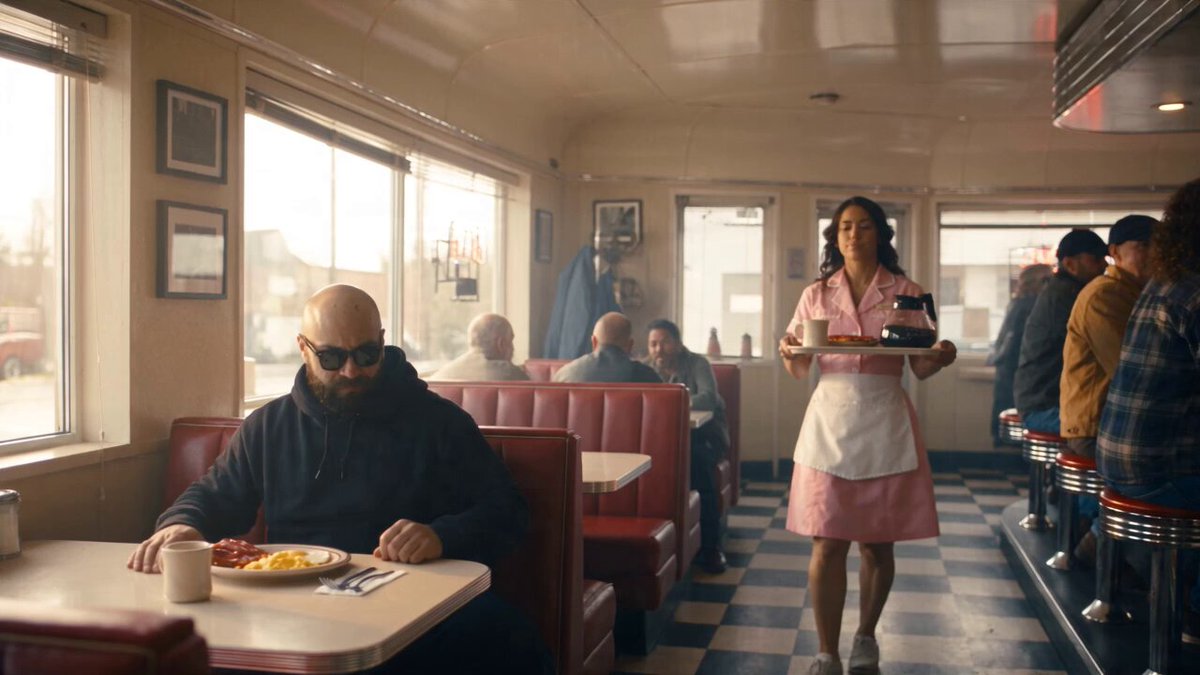

AI video production has crossed a quiet threshold. Generating one striking shot is no longer the hard part — making fifty shots look like they belong to the same film is. That shift is exactly why pixel-level style control, often described as "pixel Lego," has become one of the most useful mental models for anyone building a repeatable AI video pipeline. Instead of asking a model for a single global look and hoping it holds across cuts, you treat the frame as a set of stackable, individually addressable pieces: subject, background, atmosphere, texture, and motion each get their own layer of control.
Why Pixel-Level Style Control Matters for AI Video
Diffusion and video generation models are probabilistic by design. Every render re-rolls the dice on colour temperature, grain, lens character, and skin tone. Two shots produced from near-identical prompts can look like they were shot by two different crews on two different days. In a still image that inconsistency is a curiosity; in a three-minute sequence it reads as amateurism, and audiences notice within seconds.
The traditional answer has been global style transfer: push the whole frame toward a reference look and accept whatever collateral damage appears. That approach flattens detail, bleeds colour into faces, destroys small text on signage, and turns subtle gradients into mush. It also forces you into a destructive loop — each pass permanently alters the pixels, so a third revision degrades what the first two preserved.
Component-level control solves a different problem. When style is applied per segment rather than per frame, you can restyle a background wall without touching the actor's skin, shift a sky's palette without recolouring a costume, or add film grain to atmosphere while keeping product surfaces clean. The practical payoff is iteration speed: motion stays fixed while style is re-composited, so a client note about "warmer light" costs seconds rather than a full re-render.
This matters most in four situations: episodic series where a recurring character must remain recognisable, brand video where exact hex values are contractual, animated or stylised sequences with heavy texture work, and music videos where the edit demands rapid scene changes with a unified visual signature.
What Pixel Lego Means in Practice
The metaphor is precise. A pixel Lego approach treats the frame as an assembly of bricks, where each brick carries attributes — colour palette, texture profile, edge behaviour, motion vector, depth range. Building a look means writing a recipe: which bricks exist, what each one inherits from a reference, and how they combine at the seams.
The crucial distinction is between style transfer and style composition. Style transfer says "make this look like that." Style composition says "make this region look like that, this region inherit from the plate, and this region stay untouched." The second is dramatically more controllable, and it is what separates a look that survives a long edit from one that collapses the moment a new angle appears.
A concrete example: a rain-soaked neon street. You might define a subject brick (the actor, locked to a reference sheet), a ground brick (wet asphalt with reflective specular highlights), a signage brick (emissive panels that can be recoloured independently), and an atmosphere brick (volumetric haze plus grain). A revision that asks for "more magenta, less green" touches only the signage and atmosphere bricks. The actor's face, the costume texture, and the frame's structural geometry remain bit-identical to the approved version.
Granularity is a dial, not a constant. Very fine tile grids — think 8×8 or 16×16 blocks — produce retro, mosaic, or brick-built aesthetics where the grid itself is the style. Semantic masks produce photorealism with clean subject separation. Hybrid grids, where large regions are semantic but key areas are subdivided into tiles, give you both: believable faces and a stylised, deliberately quantised background.
The Technical Stack: Segmentation, Layers, and Latents
Every pixel-level workflow rests on three capabilities working in sequence: understanding where things are, deciding what each thing should look like, and keeping identity stable while that happens.
Pixel segmentation mechanics
Segmentation is the mapping step. Semantic segmentation assigns class labels — person, sky, road, vegetation, text — while instance segmentation separates individual objects of the same class, so two actors never share a single style assignment. Depth estimation adds ordering information so that foreground styling does not bleed into the background. Modern mask generators can produce these regions from a single frame or from a short clip, and temporally coherent variants propagate masks across frames so the region boundaries do not shimmer.
The practical rule: generate masks at the highest resolution you can afford, then downsample for styling. Boundaries are where artefacts live, and a crisp mask with a soft composite edge hides more sins than any post-processing filter.
Style as a layer, not a rewrite
Once regions exist, style is applied as a compositing operation rather than a full regeneration. Reference-image conditioning lets you say "this region inherits the palette and texture of this photo." Lightweight adapter models let you attach a trained look to a specific region only. Structure-preserving controls — depth, edge, and pose maps — keep geometry fixed while appearance changes. And colour grading transforms operate as the final, cheapest layer, applied to individual regions or to the composited result.
The reason this is non-destructive is architectural: the base render is never overwritten. You keep the original render, the mask set, the style recipe, and the grade as separate artefacts, then composite them. Revisions change one input, not the whole stack.
Multi-image fusion for identity
Character consistency is the hardest part of long-form AI video, because identity lives in high-frequency detail that style passes love to destroy. Multi-image fusion addresses this by conditioning the generation on several references of the same subject — a front view, a three-quarter view, a profile, plus an expression sheet. The model averages across those references, producing an identity embedding that is stable enough to survive lighting and camera changes.
A useful trick is to lock identity before stylisation and never let the style pass write into the face region. Instead, style the face only through lighting and grade, which preserves bone structure and recognisability.
A Step-by-Step Non-Destructive Styling Workflow
The workflow below is the one that scales best when you are producing more than a handful of shots. It is deliberately front-loaded: the expensive decisions happen once, and everything after is cheap iteration.
Step 1: Lock structure before style
Render or generate your base footage with structure controls — pose, depth, edges — and no style direction beyond neutral lighting. Review motion, framing, and timing here, because these are the parameters that force a full re-render if they change later. Approve the plate before you invest in a look.
Step 2: Build the segmentation pass
Run segmentation across the approved plates, then hand-correct the masks that matter. Automatic masks fail in predictable places: hair against textured backgrounds, transparent objects, thin props, reflections. Spend your time on those frames. Save masks as a versioned set tied to the plate, not as loose files.
Step 3: Assign style layers per segment
Write the style recipe explicitly: segment, reference, strength, and blend mode. Keep strength values conservative — most blown-out, plasticky AI looks come from style strength set too high on skin and fabric while the background sits under-styled. Match the intensity of your most subtle segment, then raise the others to meet it.
Step 4: Composite and grade
Composite layers in a linear colour space, then apply a global grade that unifies the frame: matched black levels, consistent highlight roll-off, a single grain plate, and one shared lens character. Global grading is what makes layered styling read as a single camera rather than a collage.
Step 5: Version and diff
Save every iteration as a named version with the recipe attached. When a reviewer says "the third version was better," you need to reproduce it exactly. A diff view — comparing two versions side by side with masks visible — turns vague feedback into a specific instruction about one segment.
Keeping Characters Consistent Across Shots
Identity drift usually comes from three sources: inconsistent reference sets, changing seed or model between shots, and style passes that overwrite facial detail. Fix the first by standardising a reference sheet per character and reusing it for every shot. Fix the second by holding the model, seed family, and sampling parameters constant within a scene. Fix the third by excluding faces from stylisation masks.
It also helps to define an identity tolerance band. Some variation is desirable — a face that is identical in every frame looks uncanny. Aim for recognisability across angles and lighting rather than pixel-identical repetition, and test it by asking a colleague to identify the character from three random frames.
Motion Control That Preserves Your Style
Style and motion interact badly when they are generated together, because the model spends its capacity on appearance and produces mushy movement. Separating them is more reliable: generate motion first, then apply style to the resulting frames with temporal consistency.
Temporal consistency means your masks and style parameters must be coherent frame to frame. Shimmering masks create crawling edges, and per-frame style strength changes create flicker. Use temporally propagated masks, hold style parameters constant across a shot, and apply any per-frame variation only through the final grade. When a shot does need a style transition — say, a colour shift during a reveal — animate the grade parameter, not the style model.
Choosing Tools and Models: Decision Criteria
Tool selection should follow the workflow, not the reverse. Six criteria matter most. First, mask quality and temporal coherence: does the tool propagate regions cleanly across a clip? Second, regional conditioning: can it apply references to specific regions rather than whole frames? Third, structural controls: depth, pose, and edge inputs available and accurate? Fourth, identity handling: multi-image reference support with stable embeddings. Fifth, export fidelity: can you get out clean plates, masks, and layer passes for external grading? Sixth, reproducibility: are seeds, parameters, and recipes saved with the output?
For a general-purpose pipeline, a node-based environment such as ComfyUI with segmentation and control extensions gives maximum control. For fast iteration on short shots, hosted tools with reference-image conditioning and camera control are more efficient. For grading and compositing, a conventional editor or compositor remains the right final stage — AI generates the material, but the finishing pass is still best done by tools built for it. Whichever combination you choose, keep the mask and grade layers external so you are never locked into a single renderer.
Common Mistakes and Fixes
Over-styling skin. The most common failure. Fix: exclude faces from style masks and express character style only through lighting and grade.
Single global style strength. Uniform strength across all segments makes backgrounds look under-styled and subjects look synthetic. Fix: set strength per segment and calibrate against the subtlest element.
Ignoring seam artefacts. Hard mask edges create visible halos. Fix: feather mask edges by two to four pixels and composite in linear space.
Re-rendering motion to change style. This destroys timing you already approved and burns hours. Fix: keep motion and style as separate stages from the very first shot.
No version discipline. Without versioned masks and recipes, reproducing an approved look becomes guesswork. Fix: name every version, store masks with the plate, and log parameter changes.
Mixing identity references. Different reference sheets between shots cause slow drift that is invisible until the edit is assembled. Fix: one canonical reference sheet per character, locked for the whole production.
FAQ
What exactly is pixel-level style control?
It is the practice of applying style to defined regions of a frame rather than to the entire image, using segmentation masks and layered compositing. You get independent control over subject, background, atmosphere, and texture instead of a single global look.
Do I need a specific model to do this?
No single model is required. The technique is a pipeline pattern: segmentation, regional conditioning, structure controls, identity references, and a final grade. Most modern image and video models can participate in that pipeline as long as they accept control inputs and allow reproducible parameters.
How do I stop characters from changing between shots?
Standardise a reference sheet per character, keep model and sampling parameters constant within a scene, and exclude faces from style masks. Then verify by sampling random frames from the edit and asking someone to identify the character.
Is layered styling slower than a single pass?
The first shot is slower because you are building masks and a recipe. Every subsequent shot is faster, because style changes no longer require regenerating motion. On productions longer than a few shots, layered styling is reliably the faster path.
How much variation in a character is acceptable?
Enough to look natural, not enough to break recognition. A practical test: three frames from different angles and lighting conditions should all be identifiable as the same person without context. If two of them fail, tighten the identity references.
Can I apply this to stylised or animated looks?
Yes, and it is often where the technique shines. Grid-based or tile-quantised aesthetics are essentially segmentation with a visible brick structure, and keeping characters locked while the surrounding world is heavily stylised produces the strongest results.
Pixel-level style control is less a feature than a production discipline. Once structure, identity, style, and grade live in separate layers, AI video stops being a slot machine and starts behaving like a craft — one where a note about colour becomes a five-minute fix instead of a full rebuild.

Alexander
More Blogs
Read MoreThumbnail Design That Earns Clicks on YouTube and Instagram
A practical workflow for designing high-CTR thumbnails for YouTube and Instagram Reels, covering composition, color, text, testing, and AI assistance.
How to Keep AI Video Characters Consistent Across Shots
A practical workflow for locking a character's face, wardrobe, and lighting across AI video shots using multi-image references and tight prompt hygiene.
From Text to Trending Reel: An AI Video Workflow That Works
A practical guide to turning scripts into scroll-stopping vertical videos with AI: prompt structure, shot planning, thumbnail design, and QA checks.