
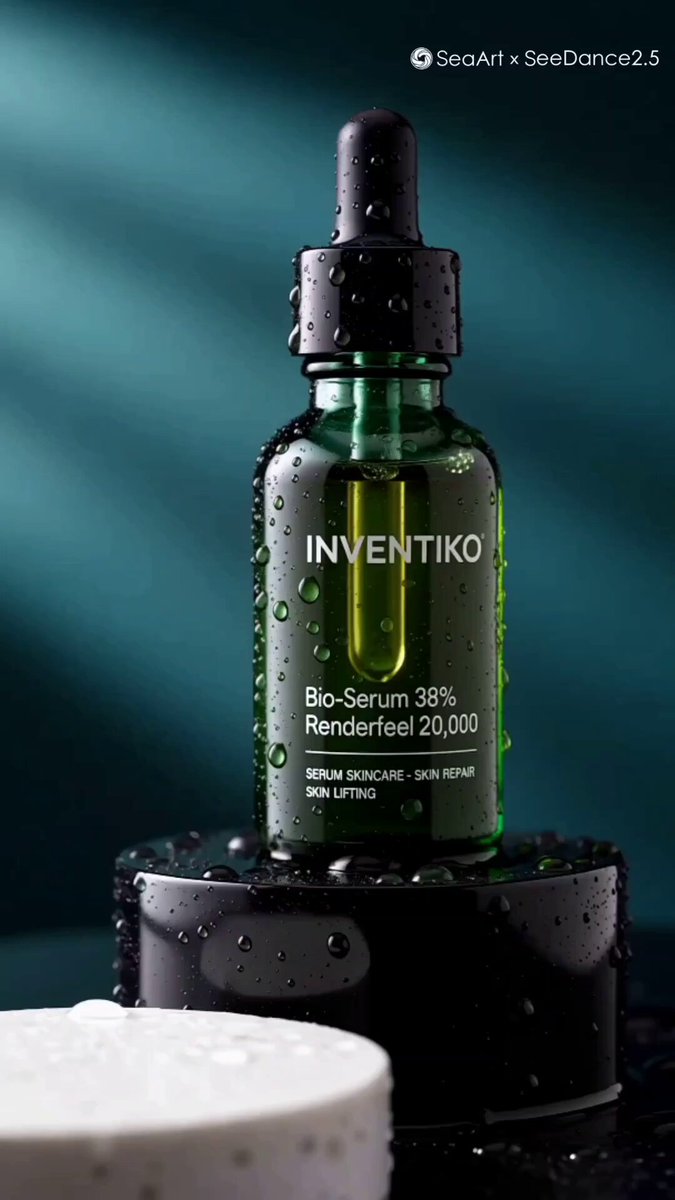
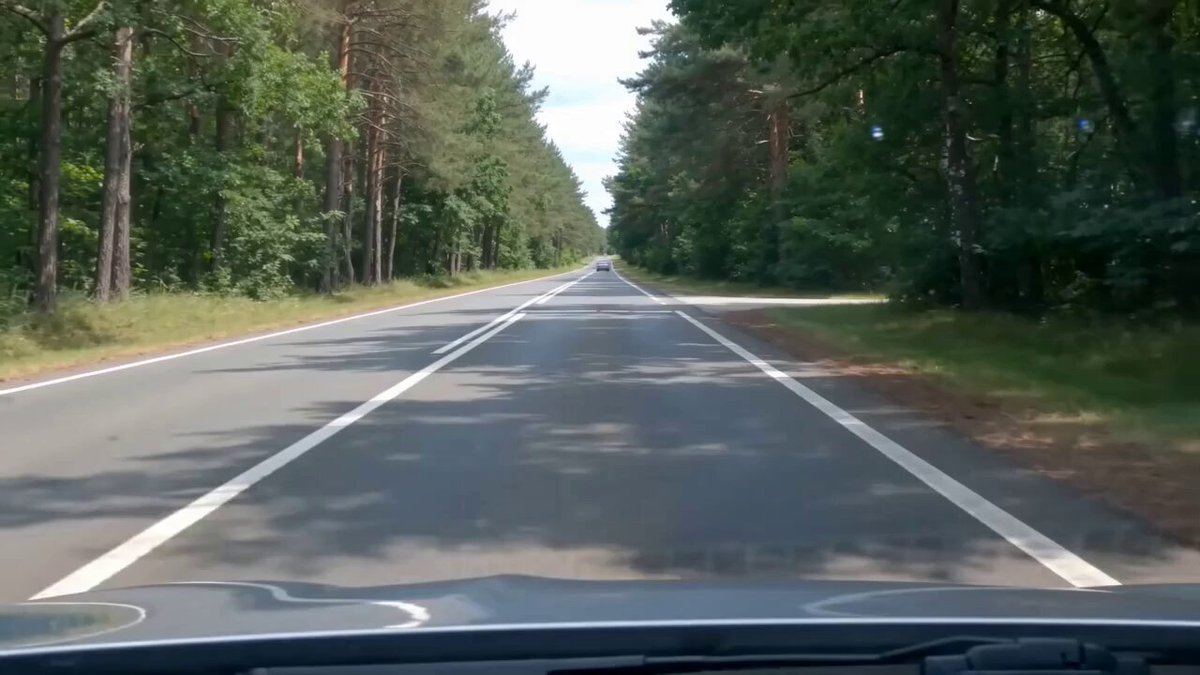


Text-to-video prompting is a fantastic demo and an unreliable production tool. One prompt can deliver a stunning four-second shot, then refuse to show the same character twice in a row. The gap between impressive and shippable is exactly where model fusion lives: instead of asking a single generator to handle everything, you assemble a small ensemble of specialized models and wire them into a repeatable pipeline where each stage owns one job.
This guide is a practical workflow reference. It covers how to architect a fused pipeline, where consistency actually breaks, which control signals justify their setup cost, and how to triage failures instead of endlessly re-rolling.
Why single-model text-to-video hits a ceiling
Early generators were judged on a single prompt-to-clip demo: does the motion look plausible, does the render look clean, does it feel expensive. Those questions are largely answered. The problems that remain are structural rather than aesthetic. Long-range coherence degrades the further a shot travels from its opening frame. Subject identity drifts, so faces soften, hair changes length, jackets change colour. Camera intent is approximate, because text is a lossy way to describe a dolly, a rack focus, or a 35mm lens. And timing is a lottery: you cannot ask for a cut on the third beat and reliably get one.
For one-off social clips, rerolling until something good appears is an acceptable strategy. It stops being acceptable the moment you need a sequence: three product shots that must match, an episodic series with a recurring host, or a campaign where the same location appears in six cuts. At that point the real bottleneck is not generation quality, it is repeatability. Fusion solves repeatability by splitting responsibilities. Stills handle composition, image-to-video handles motion, control maps handle geometry, a dedicated pass handles faces, another handles upscaling, and an editor handles the parts that should never have been generated at all.
The anatomy of a fused video pipeline
A fused pipeline is a chain of stages with explicit inputs and outputs. A typical arrangement looks like this:
- Previsualization: script, shot list, storyboard frames, 3D blockout
- Look development: style references, character sheets, colour palette
- Keyframe generation: a still image model produces the hero frame for each shot
- Motion generation: an image-to-video model animates the approved keyframe
- Controlled refinement: depth, pose, or mask-guided passes fix geometry
- Temporal finishing: frame interpolation, deflicker, stabilisation, upscale
- Audio: voice, music, and lip sync generated or recorded separately
- Assembly: edit, grade, sound mix, captions
Each stage can use a different model, and most healthy pipelines do. The craft is in the interfaces. If every stage agrees on resolution, frame rate, colour space, aspect ratio, and naming, the chain becomes composable. If it does not, you spend the week converting files.
Define the data contract between stages
Write down the contract before you generate anything: delivery resolution and aspect ratio, frame rate, colour space, file naming with shot ID and version, plus a sidecar file recording prompt, seed, model version, and reference assets. This metadata is the difference between a pipeline and a pile of clips. When a shot needs to be rebuilt later, the sidecar tells you exactly how it was made and which engine produced it.
Decide what is deterministic and what is generative
Not every element should come from a model. Logos, end cards, lower thirds, on-screen packaging text, and interface screens are faster, sharper, and safer when composited in an editor. Reserve generative stages for what models are genuinely good at: organic motion, lighting, texture, performance, and atmosphere. A pipeline that generates a logo frame by frame is a pipeline that will eventually produce a wobbling logo.
Orchestration: managing dependencies across models
Once you have more than three stages, orchestration matters more than any individual model. You need a job graph rather than a script that runs top to bottom. Shot four's refinement depends on shot four's motion pass, which depends on an approved keyframe. Rejected keyframes should halt their downstream jobs instead of quietly consuming compute.
Practical requirements for that layer:
- Idempotent jobs. A stage re-run with identical inputs should reproduce identical outputs or be skipped entirely.
- Content-hash caching. Hash the inputs (prompt, seed, reference image, model version) and reuse cached results instead of paying to regenerate them.
- Version pinning. Hosted endpoints change quietly. Record which version produced which clip, and pin versions for anything you intend to match later.
- Retry policy. Transient failures deserve automated retries; semantic failures need human review, not another attempt.
- Budget caps per shot. Limit attempts per shot and route exhausted shots to a review queue.
You do not need enterprise infrastructure to start. A structured folder tree, a metadata sheet, and a queue with retry logic will carry a small team surprisingly far. Graph-based node tools are excellent for image and video chains, while general-purpose workflow engines handle cross-tool dependencies, approvals, and notifications better. The point is not the software. The point is that no stage should depend on a human remembering what happened last time.
Temporal consistency and subject retention
Consistency failures are predictable, and each has a different fix:
- Identity drift across shots. Lock a character reference pack of three to five clean stills and condition every keyframe on it. Reuse the same reference and the same seed family for the whole sequence.
- Flicker within a shot. Shorten the clip, generate in overlapping segments, or add a temporal smoothing pass. Long single generations are where flicker breeds.
- Geometry wobble. Add depth or pose guidance. Models invent structure when they have no structural hint.
- Wardrobe and prop changes. Treat costume as part of the character pack and describe it identically in every prompt.
- Background morphing. Generate the environment as a plate first, then composite it or reference it for every shot set in that location.
The most reliable structural habit is to split long sequences into short beats of three to six seconds and generate each beat as a deliberate, conditioned clip. Autoregressive extension sounds elegant, but error accumulates frame by frame until the final seconds of a take are unusable. Short generated segments joined in the edit are boring, controllable, and they ship on schedule.
Control signals that go beyond prompting
Text is a low-bandwidth control channel. Everything you want precisely, including where a hand is, how the camera moves, and when the cut lands, is better expressed as a signal than as a sentence.
Signals worth adopting, roughly in order of payoff:
- First and last frame conditioning. The single highest-value upgrade. If you can specify the shot's ending image, motion becomes directed rather than improvised.
- Image references for style and identity. Character and style references constrain a model far more tightly than a stack of adjectives.
- Depth maps. Extracted from a 3D blockout or a plate, depth guidance eliminates a large share of geometry errors.
- Pose and skeleton data. Essential for performance-driven shots and any scene with specific body language.
- Segmentation masks. Ideal for replacing an object, altering a background, or protecting a region from change.
- Camera paths. Defining the move in 3D and exporting a trajectory beats describing a slow push-in and hoping.
Two cautions. First, control signals can conflict: a depth map that disagrees with a pose skeleton will produce mush, and the model will not tell you which one it obeyed. Establish a priority order per shot. Second, stronger control reduces generative freedom. If a shot looks stiff and lifeless, try removing the weakest signal rather than adding another one.
Pairing models by shot type and budget
Model choice should follow shot intent, not reputation. A workable mapping:
- Hero close-ups. Image-first models with strong reference conditioning, plus a dedicated face restoration pass. This is the worst place to save time.
- Wide establishing shots. Faster, lighter generators excel here because detail is small and motion is simple. Finish with an upscale pass.
- Action and physics-heavy shots. Pick the model that handles large motion most plausibly, then correct frame cadence with interpolation.
- Stylised and animated looks. A model that stylises consistently will beat a photoreal model filtered afterwards.
- On-screen text and interface elements. Composite them. Do not generate them.
- Dialogue. Generate or record audio first, then animate lip sync to match. Never force audio onto a finished performance.
A two-tier strategy helps more than any single model swap. Run low-resolution draft passes for timing and framing, then full-quality finals only for approved shots. Running two candidate models on the same shot and choosing per shot, or even per frame, is practical when the pipeline caches results and the shot budget allows it.
Previsualization and shot planning
Previsualization is where fused pipelines earn their keep. Before generating a single frame, define shot number, duration, subject and action, environment, lens and framing, camera movement, lighting mood, and the story beat the shot serves. A shot list with those fields turns prompt writing into a fill-in-the-blanks exercise and makes an entire sequence feel like one film instead of twelve unrelated clips.
Storyboards and 3D blockouts are not bureaucratic extras. A rough blockout yields depth maps, camera trajectories, and framings that cost seconds to produce and save entire generations. Animatics expose timing problems before the expensive passes begin, which is the cheapest possible moment to discover that a shot is two seconds too long.
Keep prompt grammar consistent across a sequence. If shot one reads as subject, action, environment, camera, lighting, lens, style, then shot twelve should follow the same order. Inconsistency in phrasing produces inconsistency in look, which you then chase with re-rolls that never quite converge.
Quality control, triage, and iteration loops
Define acceptance criteria per shot before review, and keep them mechanical: identity matches the reference pack, no warping or melting, plausible hands, correct text, stable motion, lighting consistent with neighbouring shots, and a cut point that lands on the beat. Review at full speed first, then at quarter speed, then frame by frame on the frames that look suspicious.
Triage with a decision path rather than instinct:
- Identity wrong? Fix the reference set and seed family, not the prompt.
- Structure wrong? Add or strengthen depth and pose guidance.
- Flicker? Shorten the clip or add temporal smoothing.
- Style inconsistent? Introduce a style reference or a trained style asset.
- Timing wrong? Change the edit, not the generation.
Track keeper rate per stage, meaning the percentage of generations you actually use. When a stage's keeper rate drops, that is your signal to invest in conditioning or swap models, not to increase the number of attempts. Review load is usually the hidden constraint, so measure it honestly and staff for it.
Common mistakes in model fusion workflows
- Optimising clips instead of sequences. A locally beautiful shot that breaks continuity costs more than it adds.
- Skipping the draft tier. Committing to full quality on the first pass inflates compute and slows feedback loops.
- No metadata discipline. Without prompts, seeds, and versions stored per clip, nothing is reproducible.
- Stacking conflicting controls. Three guidance signals with unclear priority produce average mush.
- Generating what should be composited. Text, logos, and interface elements belong in the editor.
- Leaving audio for last. Performance and pacing depend on audio timing, so decide it early.
- Underestimating human review. Every fused pipeline has a review station, and it is usually the real bottleneck.
- Treating the pipeline as finished. Model behaviour shifts over time, so schedule periodic recalibration of prompts, references, and thresholds.
FAQ: practical questions about fused video pipelines
Do I need several models to make good AI video?
No. For a single short clip, one strong model with careful prompting and a few attempts is fine. Multi-model pipelines start paying off when you need consistency across shots, precise camera or object control, or repeatable output for a series.
How many models is too many?
Every added stage costs setup time, compute, and a new failure mode. Most production pipelines settle around four to seven meaningful stages. If a stage does not measurably improve keeper rate or remove a manual step, cut it.
Can I mix hosted and open-source models in one project?
Yes, and it is common. Keep the interface standard, covering resolution, frame rate, colour space, and naming, and record which engine produced each artifact. The main risks are version drift in hosted endpoints and inconsistent colour handling between tools.
What is the single best first upgrade?
First and last frame conditioning on an image-to-video model. It converts motion from improvisation into direction, and it works even if the rest of your pipeline is still a folder of manually run jobs.
How do I keep a character consistent across many shots?
Build a reference pack of three to five clean stills showing face and costume under consistent lighting with no heavy stylisation. Condition every keyframe on that pack, reuse a seed family, describe wardrobe identically each time, and generate each shot as a short deliberate clip rather than extending one long take.
How much manual editing is normal?
More than beginners expect. Editing, compositing, grading, and sound typically consume a substantial share of total production time, and the generative stages are often the fastest segments. Plan for the edit as a first-class stage, not a cleanup step at the end.
Is custom orchestration worth building?
Only after you have run the manual version enough times to know the pain points. Start with a folder convention and a metadata sheet. Add job graphs, caching, and retries when repeated manual work becomes the bottleneck, not before.
