
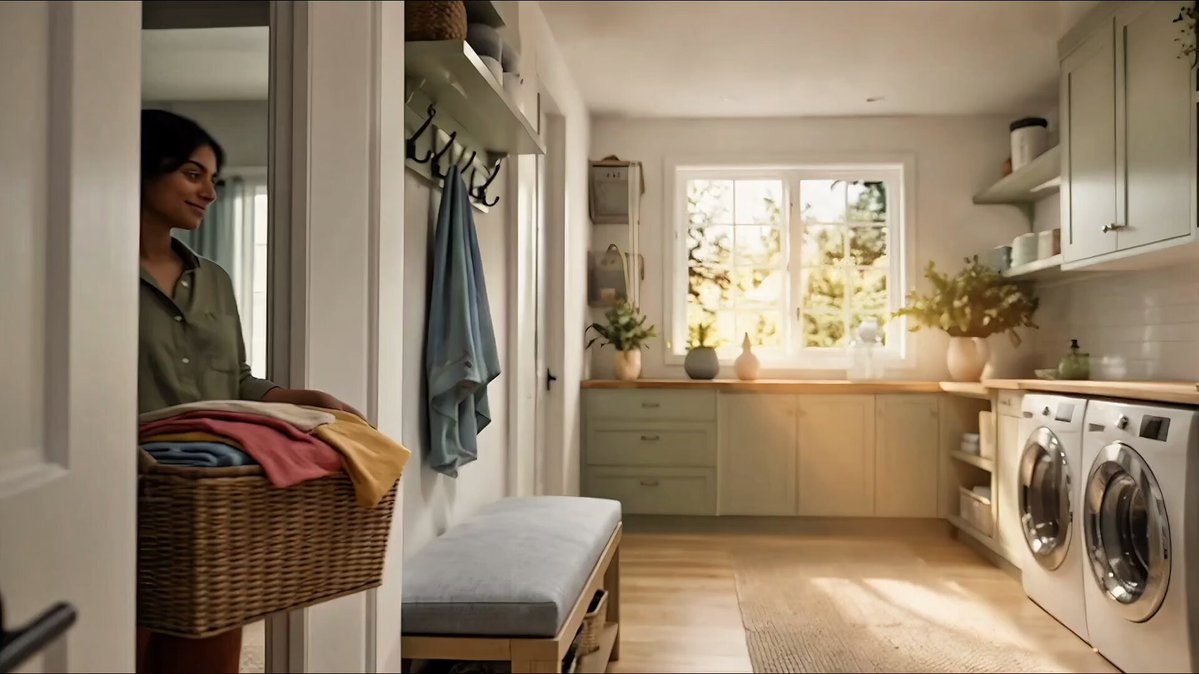
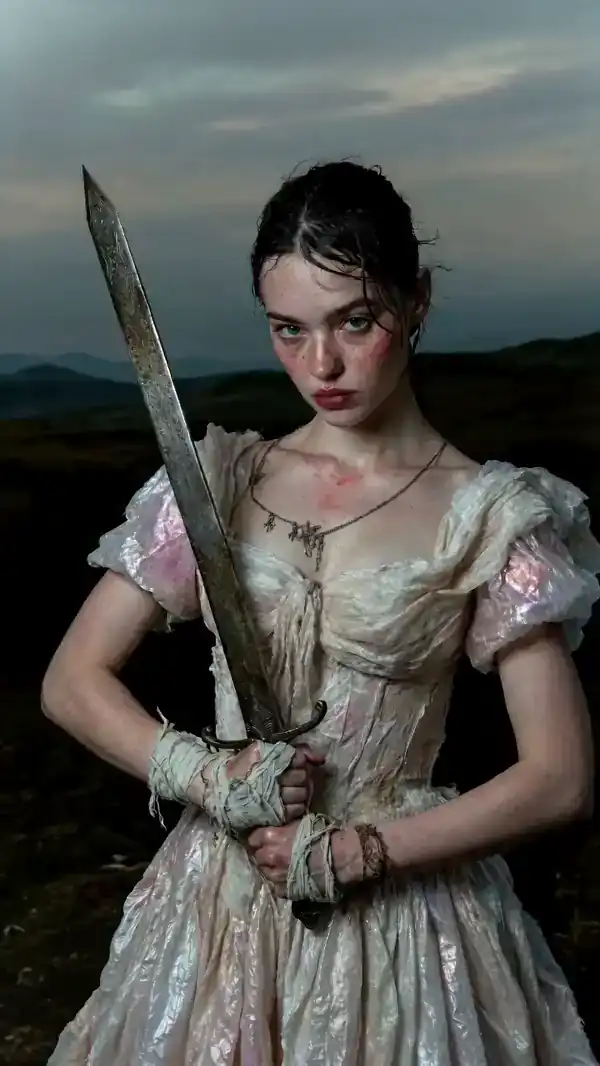
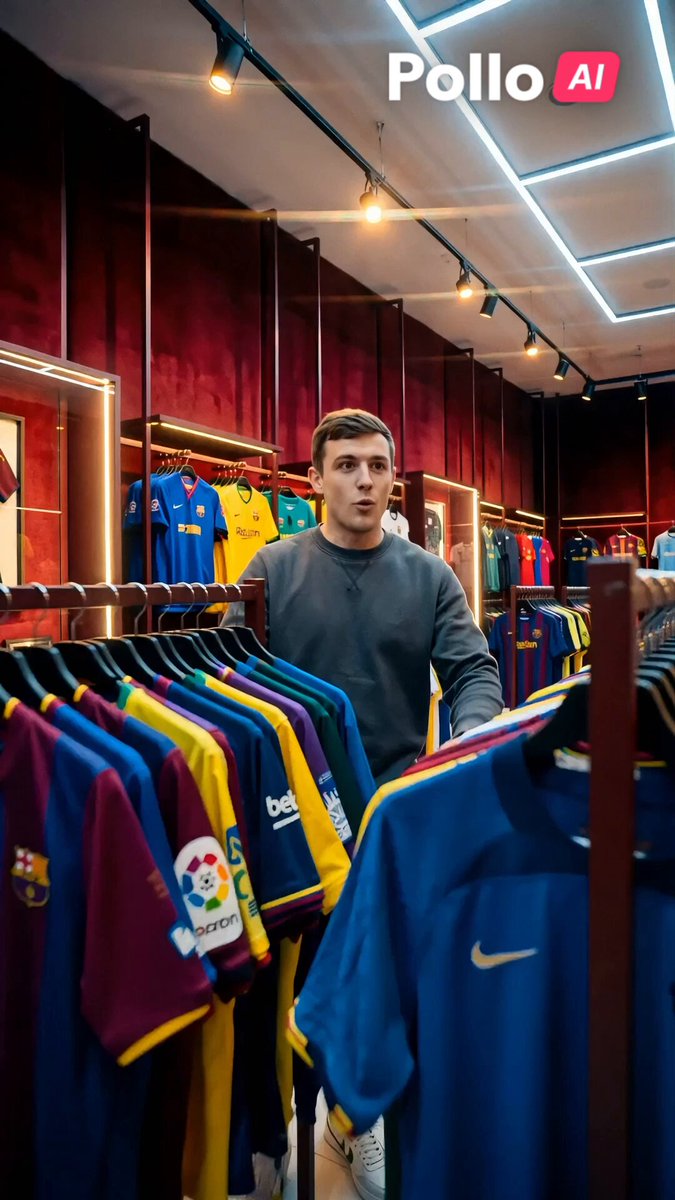
Why AI Video Generation Changed the Production Math
For years, "AI video" meant a few seconds of smeared faces, melting hands, and cameras that drifted through walls. That era is over. Current models routinely hold a character's jacket color across a camera move, respect a lighting direction written in plain language, and produce frames that survive a color grade without disintegrating into mush.
The important change is not spectacle. It is the collapse of iteration cost. When exploring a creative direction costs an afternoon instead of a shoot day, everything upstream shifts: teams storyboard faster, test riskier ideas, and walk onto set knowing exactly which frames are worth paying for. Generation stops being a novelty and becomes a previsualization engine, a B-roll factory, and a pitching instrument.
There is a quieter shift too. The work moves earlier in the timeline. Prompting is not a replacement for directing, but it is a form of directing with a narrower vocabulary and a much shorter feedback loop. If you can describe a shot in the language a camera department uses — lens, movement, light source, blocking, wardrobe, time of day — you already have most of the skill required. What you need to add is patience with iteration and a system for evaluating takes.
The teams getting the most value treat generation as one more stage in the pipeline rather than a replacement for the pipeline. They generate selectively, finish deliberately, and keep a human decision at every branch point. The rest of this guide lays out how that system works in practice.
How Modern Video Models Actually Work
Most contemporary video generators are latent diffusion systems with a transformer backbone, trained on enormous collections of short clips paired with text descriptions. Instead of predicting pixels directly, they operate in a compressed latent space, denoising step by step until a coherent sequence emerges. That compression is what makes minutes-long generation computationally plausible at all.
Diffusion, Transformers, and Temporal Coherence
Early models treated each frame as an independent image and hoped motion would follow. It rarely did. Modern architectures add temporal layers that attend across time, so the model learns that a hand must travel along a believable arc and that shadows should lengthen as a light source moves. This is what produces the illusion of continuity.
Temporal coherence is fragile in a specific way: it degrades with length. A model that holds a face perfectly for four seconds may drift by twelve. Practical workflows deal with this by generating short, controllable beats and stitching them, rather than asking one prompt to deliver a whole scene.
Conditioning: Text, Image, Depth, Pose, and Audio
Text is only one input. The stronger tools accept reference images for character and style, depth maps or pose skeletons for blocking, camera trajectories for movement, and audio for lip synchronization. Each additional conditioning channel removes a degree of freedom the model would otherwise guess at — and every guess is a place where output drifts.
Think of conditioning as the difference between describing a shot over the phone and standing behind the monitor pointing at a storyboard. The more precise the reference, the fewer retries you burn.
What "Control" Means in Practice
Control is not a slider labeled cinematic. It is the ability to reproduce the same character in a new location, keep a camera move consistent across takes, and change one variable at a time. When evaluating any generator, test that specific property: generate the same prompt three times with a fixed seed and a fixed reference image. If the character identity survives, the tool is usable for narrative work. If it does not, it belongs in a mood-board tool, not a production pipeline.
Choosing the Right Tool for Each Shot
No single generator wins every category. Serious workflows use two or three tools and assign them by shot type, the way a production might use different cameras for different scenes.
Text-to-Video vs Image-to-Video
Text-to-video is unmatched for exploration. It is fast, cheap in time, and ideal for finding a look before anyone commits. Its weakness is repeatability: the same prompt rarely returns the same character twice.
Image-to-video flips the tradeoff. You supply a still — a generated keyframe, a photograph, a designed frame — and the model animates it. Because the composition, wardrobe, and identity are already locked, the output is far more controllable. For anything resembling a series or a narrative, image-to-video is usually the correct default, with text-to-video reserved for discovery.
Talking Heads, Avatars, and Lip Sync
Presenters, explainers, and localized marketing all lean on avatar tools that map audio to a face or a synthetic performer. Quality varies wildly. Judge these tools on three things: mouth shapes at the ends of sentences, eye movement during pauses, and how the face handles consonants. A perfectly rendered face that blinks on a metronome reads as uncanny within seconds.
If the goal is localization, generate the base performance once and re-drive it with each language track rather than regenerating the scene. It is faster and it preserves the edit.
Motion Transfer, Camera Moves, and Upscaling
Motion transfer lets you drive a generated character with a real performance, which is often the fastest route to believable body language. Camera control tools let you specify a dolly, crane, or orbit, though results improve dramatically when movement is simple and motivated.
Upscaling deserves its own line item. Generation often happens at modest resolution; a dedicated upscaler with temporal awareness will preserve detail without introducing shimmer between frames. Skip it and your otherwise excellent shot will fall apart on a large screen.
A Repeatable End-to-End Workflow
The difference between hobbyist output and professional output is almost never the model. It is the process wrapped around it.
Write the script and beat sheet before you touch a prompt
Prompts generate shots, not stories. Lock the structure first: what the viewer knows at the start, what changes, and what the final image should be. A one-page beat sheet prevents the classic failure mode of beautiful footage that says nothing.
Build a shot list and storyboard
Break each beat into shots with a stated purpose. For every shot, note the subject, the action, the camera, the light, and the duration you need in the edit. This document becomes your generation queue and your quality checklist. If a shot has no clear purpose, cut it before you spend time on it.
Construct prompts like a camera department would
A reliable prompt has five layers: subject and wardrobe, action, environment, camera and lens, and lighting or mood. Keep each layer to one clause. Vague adjectives dilute control; concrete nouns and verbs sharpen it. Write the prompt in the order a shot would be described on a call sheet.
Generate wide, then select ruthlessly
Produce more variations than you need, then judge them at speed. Reject anything with unstable hands, sliding feet, morphing backgrounds, or eyes that change direction mid-shot. It is far cheaper to discard a take than to fix it in post. Keep a numbered folder of selects with the prompt that produced each one, so a winning look can be reproduced later.
Assemble, edit, and finish in a real NLE
Generation tools are not editors. Bring selects into a proper editing application, cut to rhythm, and add sound design early — audio sells motion more than any render setting. Color grade in a way that unifies shots generated at different times, and add grain or texture if the generated image looks too clean.
Prompt Patterns That Survive Real Productions
Certain prompt structures consistently outperform others. A locked character reference plus a short action description plus a stated camera move is the workhorse pattern for narrative work. A single, unusual camera angle paired with a simple subject works well for inserts and transitions.
Continuity prompts are their own skill. When you need a shot to match a previous one, repeat the environment and wardrobe clauses verbatim and change only the action. Models are sensitive to ordering; altering the first clause can change the whole frame.
Negative instructions help more than most people expect. Naming artifacts you do not want — extra limbs, text overlays, lens flares, rapid cuts — meaningfully improves output when the tool supports it. Keep the list short and specific; a long list of prohibitions muddies the intent.
Finally, keep a personal prompt library. Anything that produced a usable shot is an asset. Over a few projects, that library becomes the most valuable document on your drive.
Common Failure Modes and How to Fix Them
Character drift. Faces and clothing change across shots. Fix it with image-to-video from a consistent keyframe, or with reference-based conditioning and a fixed seed.
Warping hands and feet. Motion is guessed at the extremities. Reduce movement speed, frame tighter, or hide the hands behind props and pockets. If the shot requires complex hand action, consider shooting it practically.
Flicker and shimmer. Frames disagree with each other. Apply a temporally aware upscaler and avoid over-sharpening. Sometimes a subtle grain layer hides residual instability better than another generation pass.
Nonsense text in frame. On-screen words are usually illegible. Generate clean plates and add typography in post, where you control the font and the timing.
Unmotivated camera movement. Movement without a reason reads as amateur. Specify a motivation — following a subject, revealing a detail — or make the shot static. A locked-off frame is always safer than a wandering one.
Real-World Use Cases That Pay Off
Advertising teams use generation for concept boards and animatics, then shoot only the approved idea. Social teams use it for high-volume vertical content where variety matters more than continuity. Product teams use it for feature explainers that would otherwise need a studio and a motion designer.
Documentary and newsroom workflows use it cautiously for reconstruction and B-roll, always labeled and always reviewed. Game and app studios use it for mood pieces, loading screens, and store-page assets. Architects and interior designers use it to walk clients through spaces that do not exist yet.
The throughline is this: generation performs best where speed and volume matter and where a slightly imperfect frame is acceptable. It performs worst where factual accuracy, legal defensibility, or precise product representation is non-negotiable.
Quality Control and Delivery Checklist
Before anything leaves your machine, run the same checks every time. Watch each shot at full size, then at the actual size it will be viewed. Check for identity consistency across the sequence, not just within a shot. Verify that motion blurs in the right direction and that shadows stay on the correct side.
Confirm frame rate, resolution, aspect ratio, and color space match the delivery spec. Check audio sync and loudness levels if you generated or replaced dialogue. Export a low-resolution proof and watch it on a phone — artifacts that are invisible on a monitor often scream on a small screen.
Finally, keep a written record of which tools and settings produced each delivered shot. When a client asks for a revision six weeks later, that log is the difference between a quick fix and starting over.
Legal, Ethical, and Practical Guardrails
Decide your rules before production, not after. Never generate a recognizable real person's likeness without documented permission. Be careful with trademarked characters, logos, and brand-specific visual signatures. If a shot implies a factual claim about a real product or event, verify it or label it clearly.
Keep provenance records: prompts, reference images, model versions, and generation dates. Many clients now require disclosure that content is synthetic, and some platforms flag it automatically. Disclosing early is almost always easier than explaining later.
Treat consent as a production requirement, not a legal afterthought. That includes voice cloning, face replacement, and any use of someone's performance as motion reference. The reputational cost of getting this wrong is far higher than the time saved by skipping it.
FAQ
Do I still need a camera and a crew?
For many projects, yes. Generation excels at concepts, inserts, B-roll, and high-volume social content. Human faces in emotional close-ups, complex physical action, and anything requiring precise product accuracy still benefit enormously from practical shooting. The best results usually come from combining both.
How long should a generated shot be?
Shorter than you think. Two to five seconds per generated beat keeps coherence high and gives your editor more control. Long unbroken generations tend to drift, and drift is expensive to hide.
Why does my output look generic?
Generic input produces generic output. Specify lens, light source, time of day, wardrobe, and environment. Reference a visual style through an image rather than an adjective. Replace words like beautiful with concrete details the model can render.
Can I match a specific visual style?
You can approximate it, especially using reference images and consistent color grading across your selects. Exact imitation of a living artist's signature style raises ethical and legal questions, and platforms increasingly restrict it. Aim for influence, not forgery.
What resolution should I generate at?
Generate at the resolution the model handles most reliably, then upscale with a temporally aware tool. Chasing maximum resolution at generation time often introduces instability that costs more time to fix than a clean upscale would have taken.
How do I keep characters consistent across a series?
Lock a reference image, keep environment and wardrobe clauses identical, vary only the action, and note the seed and model version for every approved take. Consistency is a record-keeping discipline as much as a technical one.
Should I let the tool write my prompts?
Use automated prompt expansion for exploration, then rewrite the winning result by hand. Assisting tools are good at breadth and bad at intent; your job is to keep the intent intact.
How do I budget time for a project?
Assume roughly a third of your schedule for planning and prompts, a third for generation and selection, and a third for editing and finishing. Teams that skip the first third usually spend double on the second.
