
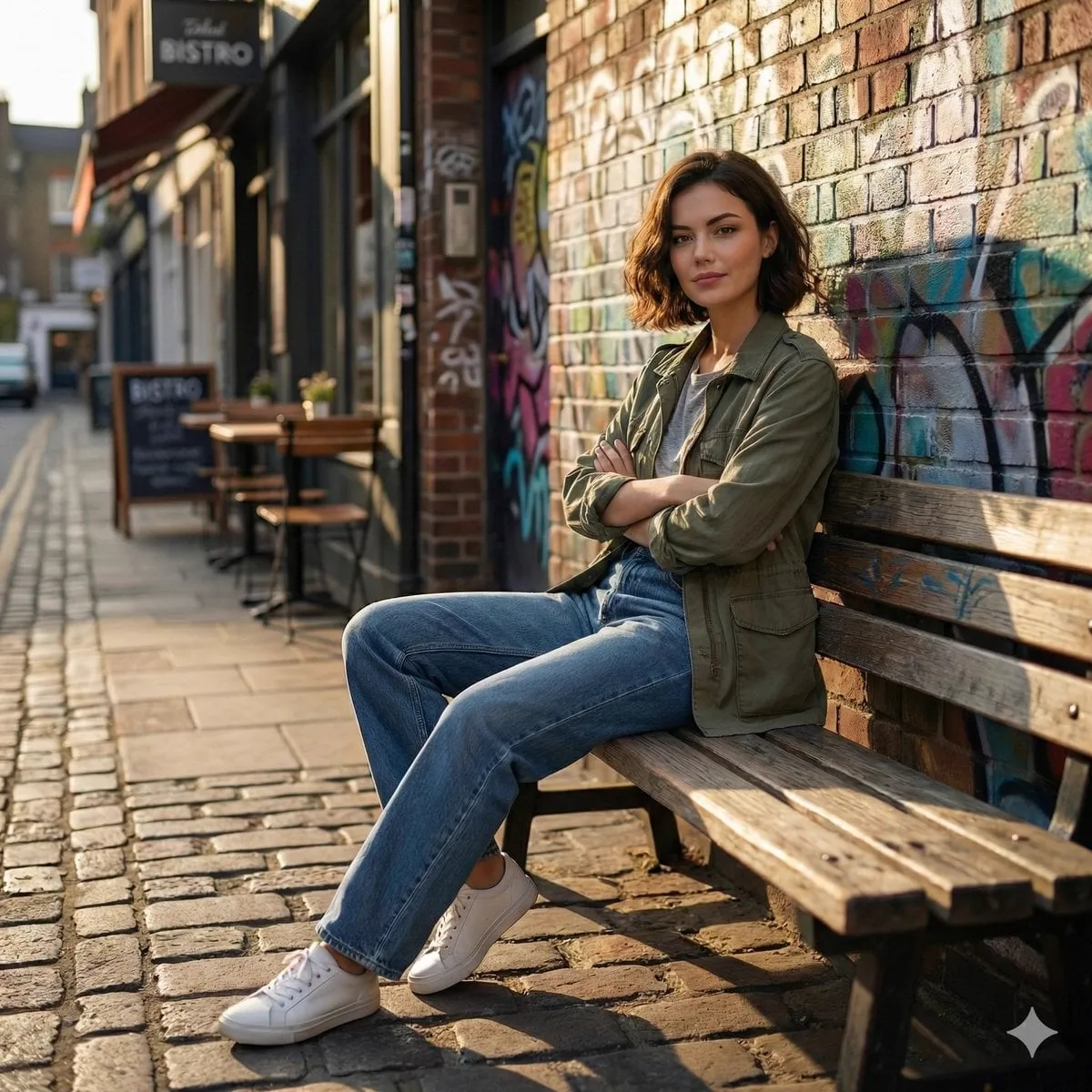
Why AI-Assisted Ad Production Changes the Economics
Short-form video advertising used to be gated by three expensive dependencies: a crew, a location, and time. A single product spot could consume weeks of pre-production before anyone touched a camera. Generative video collapsed that timeline. A two-person team can now move from a rough idea to a testable ad in a day, then produce a dozen variations before lunch the next morning.
The shift is not only about speed. It is about iteration. Direct-response advertising has always rewarded volume and testing — the team that ships eight hooks and measures them beats the team that argues about one hook for a week. When each variation costs a full shoot day, testing is a luxury. When each variation costs twenty minutes of prompting and editing, testing becomes the default.
That said, most teams adopting AI video tools get worse ads, not better ones. The failure is almost always the same: they skip the disciplines that made advertising work in the first place. They generate beautiful footage with no hook, no script spine, and no shot logic. The tools are not the bottleneck. The missing pre-production layer is.
This guide lays out a complete workflow for AI-assisted ad production, covering brief development, scriptwriting, shot design, character consistency, frame control, assembly, and quality control. Treat it as a production pipeline you can adapt rather than a list of prompts to copy.
Start With a Creative Brief a Model Can Actually Use
A brief written for humans is often written for a model poorly. "Make it feel premium and aspirational" means nothing to a generation model. It does mean something to a cinematographer who has shot luxury spots for a decade. If you are handing the work to AI, you have to translate intent into observable detail.
A usable AI-era brief has six fields:
- Product truth. What the product literally is, what it does, and the one physical detail that proves it.
- Audience moment. Where the viewer is when the ad interrupts them, and what they were doing five seconds earlier.
- Single promise. One sentence. If you cannot write it in one sentence, you have two ads.
- Emotional register. Choose from a short list: relief, curiosity, status, defiance, comfort, momentum. Vague moods generate vague footage.
- Visual reference set. Five to ten stills or clips that define palette, lighting, lens feel, and wardrobe.
- Non-negotiables. Product label legibility, logo placement, claim wording, legal supers.
Two examples make the difference clear. A weak brief says: "AI-powered fitness app, energetic, modern." A strong brief says: "Audience: someone who has skipped the gym for eleven days and feels guilty at 6:40 a.m. Promise: you can restart in nine minutes. Register: relief, not shame. Palette: cold blue dawn light, warm kitchen lamp behind subject, shallow depth of field, handheld. Non-negotiable: the app timer reading 9:00 must be visible on screen in the final shot."
The second brief gives a director — human or synthetic — something to solve. It also gives you a checklist to judge output against, which matters enormously when you are reviewing twelve generated takes and need a reason to reject eleven of them.
Writing the Script: Hooks, Beats, and the Fifteen-Second Spine
Most AI-generated ads fail in the first two seconds, not the last twenty. That is a script problem, not a rendering problem.
A reliable structure for short-form video advertising looks like this:
- 0:00–0:02 — Disruption. A visual or verbal pattern break. Something moves, breaks, or contradicts expectation.
- 0:02–0:05 — Tension. Name the problem or the desire without naming the product yet.
- 0:05–0:12 — Product as mechanism. Show the product doing the specific thing that resolves the tension.
- 0:12–0:18 — Proof or demonstration. One concrete, visible piece of evidence.
- 0:18–0:25 — Payoff and call to action. The emotional after-state, then the instruction.
Writing hooks that survive a thumb
Hooks fall into a handful of repeatable families: the contradiction ("This is not a gym"), the confession ("I wasted four years doing this wrong"), the demonstration start (hands already mid-action, no setup), the question that stings ("Still waking up tired?"), and the visual impossibility (an object behaving in a way physics does not allow). Pick two for every ad and write five versions of each. Ten hook lines cost you fifteen minutes and give you a genuine testing set.
Dialogue versus voiceover
The register you choose determines what the model needs to generate. Voiceover is cheap, controllable, and easy to revise — you can rewrite a line without regenerating a single frame. On-camera dialogue demands lip-sync accuracy, stable facial identity, and consistent lighting across the take. For most performance-marketing work, voiceover plus a human on screen in silent action is the highest-leverage combination: you get flexibility in post and realism in frame.
When you do want spoken dialogue, keep lines under six words per shot and break them across cuts. Long uninterrupted speech is where synthetic mouths go wrong.
Designing Shots Before You Generate Anything
The single biggest upgrade to AI ad quality is a shot list written before the first generation. Prompting without a shot list produces disconnected pretty clips that never cut together.
The six-shot skeleton
A thirty-second spot rarely needs more than eight shots. A working skeleton:
- Establishing or disruption shot — wide, motion present, sets palette.
- Reaction insert — a face or hands, tight, conveys the emotional register.
- Product macro — texture, material, moving part, label legible.
- In-use medium shot — product in context, human behavior visible.
- Proof insert — the number, result, comparison, or before/after.
- Payoff wide — the after-state, matched to the opening frame for visual rhyme.
Cover the edit
For each scripted beat, generate at least three framing options: wide, medium, and insert. This is the AI equivalent of shooting coverage, and it saves you when a take renders beautifully but the framing fights the cut. Editing is where an ad is actually made; give your editor options.
Write each shot as a single sentence containing subject, action, lens or framing, lighting, and duration. Example: "Macro shot, hands twisting a matte black lid until it clicks, 85mm compression, single soft key from upper left, two seconds." That sentence is directly translatable into prompt language, and it forces you to decide the details that make the shot feel intentional.
Prompting for Consistent Characters, Products, and Locations
Continuity is where AI video production gets hard. The same person must look like the same person across five shots, and the product must not mutate between frames. Three techniques solve most of it.
Lock identity with reference sets
Build a small reference library for each recurring element: three to six images of the actor from different angles, and three to six of the product under different lighting. Multi-image reference capabilities let you supply several images at once so the model blends identity features rather than copying one photo. Consistency comes from consistency of input, not from repeating adjectives in a prompt.
Separate what varies from what is fixed
Write two prompt blocks. The fixed block never changes: wardrobe, hair, age, skin tone, product finish, location architecture, lens family, color grade. The variable block changes per shot: framing, action, camera movement, duration. Keeping the fixed block byte-identical across shots is the cheapest continuity insurance available.
Handle locations like a location scout
Generating a new environment for every shot produces visual noise. Instead, define two or three locations and reuse them with different angles and light. A kitchen, a doorway, and a stairwell can carry an entire thirty-second spot. Reuse makes the world feel real; variety for its own sake makes it feel like a stock montage.
Frame Control, Motion, and Camera Language
Modern video models increasingly accept first-frame and last-frame control, which turns generation into something closer to directing than gambling. You supply the start state and the end state, and the model fills the motion between them.
This changes how you plan. Instead of describing motion in prose and hoping, you plan two stills: where the camera begins and where it lands. A push-in becomes a wide first frame and a tighter last frame with matching lighting. A reveal becomes a closed first frame and an open last frame. Camera moves stop being adjectives and become geometry.
Practical rules that hold up across tools:
- One camera move per shot. Push, pan, or orbit — never two in the same clip.
- Match the cut direction. If the previous shot pushes in, the next should not push out unless you want deliberate disorientation.
- Keep motion slow. Fast synthetic motion introduces artifacts. Slow motion reads as intentional and renders cleanly.
- Anchor with a foreground element. A hand, a doorframe, or a plant edge passing frame gives the eye something to track and hides background instability.
When frame control is unavailable, use the same planning discipline but express endpoints in the prompt: state where the camera is and where it ends up, plus a timing cue. The result is less precise but the intent still shapes the output.
Voiceover, Sound, and the Rhythm of the Cut
Silent AI footage feels like a demo reel. Sound is what makes it feel like an ad.
Generate voiceover in short segments, one line at a time. Long single takes drift in tone and pacing, and you cannot fix one bad sentence without regenerating the whole read. Keep the delivery directionally specific: warm and low, fast and clipped, or measured with clear pauses. If your tool supports emotional direction or pacing controls, use them per line rather than globally.
Then build the audio spine in this order:
- Voiceover first. Cut picture to the voice, not the other way around. Speech sets the rhythm.
- Music bed second. Choose a track that leaves a gap where the hook lands. Drop the bed under the proof moment so the demonstration reads clearly.
- Sound design third. Clicks, whooshes, fabric, and footsteps sell physical reality more than any render setting.
- Room tone last. A thin continuous bed prevents the cut from sounding like separate clips stitched together.
One practical note: keep captions burned in or uploaded as a separate track. A large share of social video is watched muted, and the hook has to work with the sound off.
The Assembly Workflow: From Clips to a Finished Cut
A repeatable six-stage pipeline keeps AI ad production manageable:
- Brief and hook set. Approve the promise, register, and ten hook lines.
- Script and shot list. Lock the beat structure and the shot skeleton before generating.
- Reference build. Assemble character, product, and location reference images.
- Generation batches. Generate three options per shot, labelled by shot number and take letter.
- Selects and rough cut. Cut for the beat structure, not for your favourite clip. If a shot does not advance a beat, it goes.
- Finish and version. Add voiceover, music, sound design, captions, and export aspect-ratio variants.
Naming discipline matters more than people expect. A folder of files called final_v2_real is unusable three days later. Use shot03_takeB_wide_push. When you are running multiple ad variations, this is the difference between a testable campaign and chaos.
Quality Control and the Mistakes That Cost the Most
Before anything ships, run a fixed checklist: label legibility, hand and finger integrity, consistent wardrobe, no warped background architecture, no flicker between frames, no duplicated background people, correct caption timing, and audio levels consistent across the full runtime. Watch the ad at 1x, muted, and on a phone. Most defects survive desktop review and die on a small screen with no sound.
The recurring mistakes are predictable:
- Generating before scripting. Pretty clips with no argument.
- Chasing realism instead of clarity. A slightly stylised shot that communicates beats a photoreal shot that confuses.
- Too many locations. Visual inconsistency reads as amateur.
- One long voiceover take. Unfixable pacing.
- Testing one creative. You cannot learn anything from a sample of one.
- Ignoring the first two seconds. Everything downstream is wasted if the hook fails.
FAQ
How many ad variations should I produce per concept? Aim for three hooks against one body, then scale the winner. Three is the minimum to learn anything; eight is where meaningful patterns appear.
Can AI video handle a product with a visible logo? Yes, but treat the label as a non-negotiable reference element and check every frame. Where the logo deforms, composite the real asset over the generated shot in post rather than regenerating endlessly.
Do I still need a human editor? For anything performance-driven, yes. Editing is where pacing, proof, and payoff are actually built. AI accelerates footage; it does not replace the cut.
What is the biggest quality lever? Shot design. A clear shot list with fixed continuity blocks improves output more than any model upgrade.
How long should a short-form ad be? Fifteen to thirty seconds for cold audiences, six to ten seconds for retargeting. Match length to how much explaining the offer requires.
Should I show a real person or a generated one? Real footage of a founder or customer outperforms generated humans in trust-driven categories. Use generated people where demonstration, scale, or costume variety matters more than trust.
How do I keep costs predictable? Fix your shot count before generating, generate three takes per shot, and stop there. Unlimited iteration is the primary cause of runaway production time.
