
Why AI Video Still Stumbles Without a Shot Plan
Generating a single striking clip is a solved problem. Generating thirty of them so they feel like one continuous film is not. The gap between those two tasks is not model quality — it is planning. Text-to-video systems respond to whatever prompt you hand them, and a screenplay is not a prompt. A screenplay is written for people: it implies tone, subtext, and rhythm that a model has no way to infer on its own.
When creators skip the translation step, the failures are predictable. A character's hair changes length between shots. A scene that should feel claustrophobic is rendered as a sunlit meadow. A chase sequence is assembled from clips that all move at the same speed in the same direction. The edit becomes an apology.
A shot plan fixes this. Directors have used one for a century — the shot list, the floor plan, the storyboard — and AI production needs it more, not less, because the model holds no memory of your intent. Every shot has to carry its own instructions, and those instructions have to agree with the shots on either side of it.
That is what an AI-assisted scripting and shot design workflow delivers: a repeatable path from screenplay to numbered, prompt-ready shots, with review gates that catch continuity errors while they are still cheap to fix. It is not about handing creative control to software. It is about converting intent into instructions a generator can actually follow.
The Four-Layer Pipeline From Screenplay to Final Cut
The workflow has four layers, and each one produces a document you can review before the next begins. Skipping a layer is the most common reason a project stalls halfway through.
| Layer | Input | Output | Review gate |
|---|---|---|---|
| Script normalization | Draft screenplay | Clean, numbered script | Table read |
| Scene segmentation | Normalized script | Scene map with beats and IDs | Beat approval |
| Shot design | Scene map | Numbered shot list with visual parameters | Board review |
| Prompt generation | Shot list | Prompt set, takes, selects | Selects review |
The critical property of this pipeline is that each layer is cheap to change and the next one is expensive. Rewriting a beat costs a few minutes. Re-rendering eight shots because the beat was wrong costs hours of generation time and a lot of patience. Push decisions upstream.
A second property matters just as much: every artifact is text or a still image. You can diff it, annotate it, email it, and hand it to a collaborator. Video is hard to collaborate on; a shot list is easy. That is why professional pipelines are document-driven long before anyone presses generate.
Layer One: Writing a Screenplay an AI Assistant Can Read
Your script does not need to be written differently in spirit — it needs to be written unambiguously. An AI assistant reading your draft is a very literal collaborator. It will not guess that "the room feels wrong" means you want a wide lens and a slow dolly. It will not know that two characters named "the man" and "the stranger" are the same person unless you say so.
Formatting habits that prevent downstream chaos
- One location per slugline, named consistently. INT. WAREHOUSE — NIGHT should never become INT. OLD FACTORY — NIGHT in the next scene unless it is genuinely a different place.
- Number scenes from the first draft. S01, S02, S03. Every later artifact — beats, shots, prompts, takes — inherits these numbers, and inherited numbers make continuity traceable.
- Introduce characters once in capitals, then keep the name identical. No nicknames, no pronoun-only paragraphs where two people are in the scene.
- Keep action paragraphs to one idea and under four lines. Dense paragraphs get summarized unevenly by language models, and the summary becomes your shot list.
- Write only what is visible or audible. Interior states are useful to a human actor and useless to a generator.
What to leave out of the script body
Camera directions belong in a separate director's notes document rather than in the action lines. So do style references, music cues, and casting thoughts. Keeping the script clean means the segmentation layer reads a story, not a story tangled with production instructions. You then hand the notes document to the assistant as a global style guide, which is exactly what it is.
A practical test: hand your script to someone who has never heard your pitch. If they can name every location, every character, and the time of day for each scene without asking questions, the draft is ready.
Layer Two: Scene Segmentation and the Beat Map
Segmentation is where a story becomes a spine. The goal is a scene map: for every scene, the location, time of day, characters present, dramatic function, and the beats inside it. A beat is the smallest unit of change — someone learns something, decides something, or loses something.
Give every beat an ID. A scheme like S04_SC02_B03 is unglamorous and enormously useful. When a shot later looks wrong, the ID traces it back to the exact narrative moment it was meant to serve.
Label each scene with a dramatic function: setup, escalation, reversal, reveal, or resolution. This single label changes how much coverage the scene needs. A setup scene can play in two shots. A reversal usually needs four to seven because the audience has to see the turn happen on a face.
Estimate duration while you are here. A rough conversion of one page of script to roughly a minute of screen time still holds for dialogue-heavy material, less so for action. Once you know a scene runs about ninety seconds and averages three seconds per shot, you know you need around thirty shots — or you know you need to cut the scene.
Finish this layer with a plain CSV or spreadsheet: scene ID, beat ID, location, time, characters, function, estimated shots. Everything downstream is generated from it.
Layer Three: Shot Design, Framing, and Camera Language
Shot design is the part most people rush, and it is the part that decides whether the final edit feels intentional. Coverage is not about capturing everything; it is about capturing the right few angles that let you cut.
The classic grammar still applies. Do not cross the line between two characters in conversation unless you deliberately break it. Match eyelines so a look off-screen lands on the right side of the frame. Match on action so cuts between angles of the same movement feel continuous.
Shot sizes and what they do
| Shot | Typical use | Suggested duration |
|---|---|---|
| Wide / establishing | Geography, isolation, scale | 3–6 s |
| Full | Body language, blocking | 2–5 s |
| Medium | Default for dialogue | 2–4 s |
| Close-up | Emotion, decision, reaction | 1.5–3 s |
| Extreme close-up | Detail, tension, texture | 0.8–2 s |
| Insert | Object, information, evidence | 1–2 s |
| Over-the-shoulder | Conversational power balance | 2–4 s |
| Point of view | Subjectivity, identification | 1–3 s |
Movement and lens choices
Movement should have a reason. A slow push-in tightens attention as a character commits to something. A pull-out isolates. A lateral truck reveals context. Handheld signals instability; a locked-off frame signals control. Write the reason next to the movement in your shot list, and you will stop adding movement out of habit.
Lens choice is the cheapest way to change emotional register. A wide lens exaggerates space and distance between people. A normal lens feels observational. A longer lens compresses space, flatters faces, and separates a subject from the background. Note lens intent in plain language — "wide, oppressive" or "long, intimate" — rather than only focal length numbers, because plain language survives better into a prompt.
Layer Four: Turning Shot Notes Into Generation Prompts
A shot list entry is a description. A generation prompt is an instruction set. The conversion is mechanical if your shot list is specific, and painful if it is vague.
The prompt formula
The most reliable structure is: shot size and angle, then subject and action, then environment, then lighting, then camera and lens behavior, then style and mood, then technical constraints. Order matters more than people expect, because early tokens carry more weight.
Compare two versions of the same shot. Weak: "Woman looks worried in a warehouse." Strong: "Medium close-up, a woman in a wet canvas jacket turns toward a distant sound, abandoned warehouse interior, cold moonlight through broken skylights, slow handheld drift with a 50mm lens, cinematic, desaturated blue palette with a single warm practical light, 2.39:1, shallow depth of field." The second version gives the model a subject, a beat, a space, a light source, a camera behavior, and a style. It will not be perfect, but it will be in the right neighborhood — and neighborhoods are what you need for a coherent sequence.
Reusable style blocks
Write one style block per project and paste it into every prompt: film stock, grain, palette, contrast, atmosphere, aspect ratio. Then change only the shot-specific portion. This single habit does more for visual consistency than any amount of re-rolling, because it removes the largest source of variation between prompts.
Generate stills before clips
Stills are fast and cheap compared with video. Board the entire project as images first, review the sequence, fix the framing, then animate only the approved frames. You will spend a fraction of your generation budget and get a better film.
Consistency: Keeping Characters, Wardrobe, and Locations Locked
Continuity is the number one complaint about AI-generated narrative video, and it is almost always a documentation problem rather than a model problem.
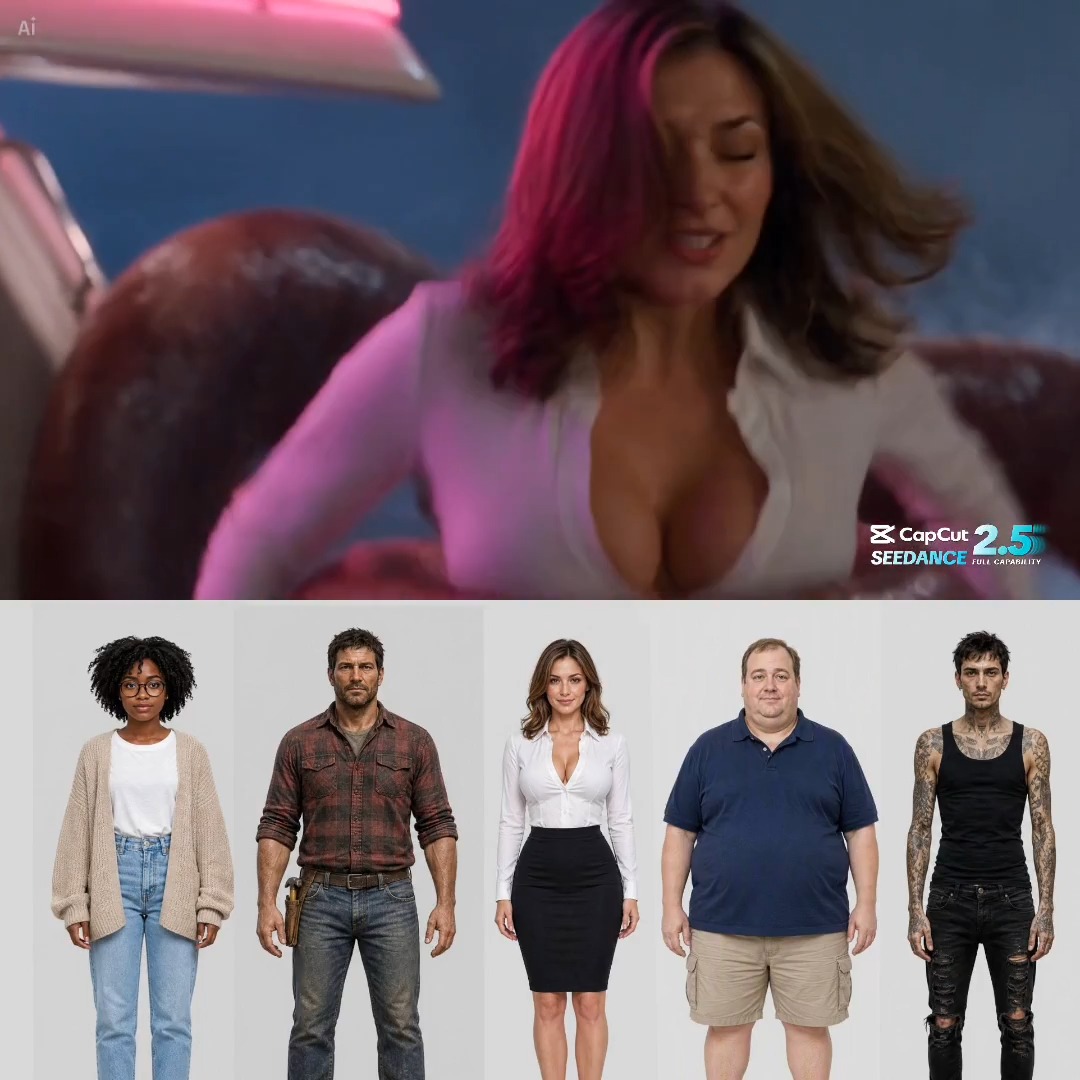
Build a character sheet for every recurring person: age range, build, hair, skin tone, distinguishing features, wardrobe per scene, and two or three reference images that everyone on the project uses. If your tool supports reference images or consistent-character features, feed the same references every time. If it supports seeds, save the seed per character and per location.
Lock locations the same way. A location plate — one approved wide shot of the space — becomes the visual anchor. Every later shot in that location references it, including time of day. Keep a simple ledger with columns for scene, location, time of day, weather, and lighting state. When a scene is supposed to be pre-dawn and your prompt says "night," the ledger catches it before an editor notices the mismatch in the cut.
Wardrobe is the quiet killer. A jacket that is closed in one shot and open in the next reads as a continuity error even to viewers who cannot say why. List wardrobe per character per scene, and include it verbatim in the prompt.
Finally, limit how much a single shot has to hold. Two characters in a frame is manageable. Five is chaos. Break crowds into separate shots and let the edit imply the group.
Storyboards, Animatics, and Review Loops
Storyboards do not need to be beautiful. They need to be ordered, timed, and discussable. Generate a still for every shot in your list, drop them into a board or a document, and add the estimated duration under each one. What you have just built is an animatic in waiting.
Three review gates keep a project honest. The beat review checks that the story turns where you think it turns. The board review checks that the sequence reads visually — that sizes vary, that eyelines match, that the geography makes sense. The selects review checks the generated takes against the board.
Run the board review as a timed pass. Play the stills at their intended durations and watch without stopping. Problems that are invisible when you stare at individual frames become obvious when a sequence plays at rhythm. A scene that cuts from four consecutive medium shots will feel flat regardless of how good each frame is.
Collect notes as timestamps, not opinions. "Board 12 feels slow" is a discussion. "Board 12: cut the second half, three seconds maximum" is a decision. Boards that never get decisions are the reason pre-production drags.
Batch Generation, Prompt Logs, and Common Mistakes
Naming and logging
Adopt one naming convention and never deviate: project_scene_shot_take. Sort folders by scene. Keep a prompt log — a spreadsheet with the shot ID, the exact prompt used, the seed, the model or version, and whether the take was approved. Six weeks later, when a client asks for a variation of shot 14, the log is the difference between a fifteen-minute job and a re-shoot.
Generate three to four takes per shot and stop. Reviewing twenty mediocre takes is slower than refining one prompt. Upscale or enhance only approved shots, and only after the sequence is locked.
Mistakes that sink AI-assisted productions
- Writing unfilmable action and expecting the generator to interpret it.
- Skipping scene and shot numbering, then losing track of which take belongs where.
- Changing the style block mid-scene and creating a visible seam.
- Mixing aspect ratios between shots that will be cut together.
- Packing too many characters or actions into a single shot.
- Ignoring eyelines and the 180-degree rule, then discovering the scene cannot be cut.
- Relying on one take per shot with no alternatives for the edit.
- Planning visuals but not audio, then discovering the dialogue timing does not fit.
- Editing before the board is locked, which hides structural problems behind polish.
Each of these is a documentation failure dressed up as a technical one.
FAQ: Scripting, Shot Design, and AI Video Workflows
Do I still need a human screenwriter if AI can structure my story?
Yes, and more than ever. AI is excellent at organizing structure, generating coverage options, and spotting missing beats. It is weak at knowing which emotional truth matters. Use it as a structural collaborator and keep authorship of the story. The practical division of labor: you write the moments that matter, the assistant expands them into scenes, beats, and shots.
How long should each AI-generated shot be?
Plan for two to four seconds on average, with dialogue close-ups at the long end and inserts at the short end. Generators often produce five to ten second clips, so trim in the edit rather than asking for exact durations. Design your shots so the first and last second are expendable, and you will have room to cut.
Can I use AI-generated dialogue and voice, or should I record real voices?
Both work. Synthesized voices are fast for animatics and scratch tracks, and they are good enough to lock timing before you commit to visuals. For a finished piece, recorded or professionally performed voices still carry more nuance. Decide early, because dialogue timing determines shot lengths far more than visuals do.
What aspect ratio should I choose?
Pick one for the whole project and lock it in your style block. Widescreen suits landscape, scale, and ensemble staging. Vertical suits faces, single subjects, and short-form feeds. A workflow that tries to serve both usually produces two half-finished films.
How many shots do I need for a two-minute sequence?
At an average of three seconds per shot, roughly forty shots, and you should generate more than you keep. Budget for fifty to sixty candidates so you can drop the weakest twenty percent in the edit. If that sounds like a lot, remember that an animatic of forty stills takes a fraction of the time of forty finished clips.
When is this workflow overkill?
If your video is a single talking-head piece, a product loop, or a short abstract mood piece, you do not need a shot list and a beat map. Reach for this pipeline when you have multiple locations, recurring characters, or a story that has to land emotionally across more than one scene. The heavier the continuity demands, the more the documentation pays for itself.
A One-Day Quick-Start Checklist
If you want to test the whole method on a small project, run it in order and do not skip ahead.
- Normalize a two-page script: numbered scenes, consistent character names, visible action only.
- Build the scene map: location, time, characters, dramatic function, estimated shot count.
- Assign beat IDs and mark the single most important beat in each scene.
- Write a shot list with size, angle, movement, lens intent, and duration.
- Write one style block and paste it into every prompt.
- Generate stills first, assemble a board with timings, and review it as a timed sequence.
- Approve the board, then generate three takes per shot for the shots that matter most.
- Log every prompt, seed, and decision as you go.
The method is not glamorous. It is the difference between a folder of impressive clips and a film that holds together from first frame to last.
