

What AI Storytelling Assistance Actually Changes in Shot Design
Most video generation tools answer one question well: what does this frame look like? Directorial assistance tools answer a harder one: what does this scene need? The difference sounds academic until you are forty shots into a project and notice that every frame is beautiful and none of them carry the story. That failure mode is the reason directorial AI features exist.
Three shifts matter in practice.
From prompt crafting to intent setting. Instead of hunting for magic keywords, you describe dramatic purpose: who wants what, what blocks them, how the audience should feel. The tool then proposes coverage that serves that purpose rather than coverage that merely looks impressive.
From single-shot thinking to sequence thinking. A scene is not a shot. Directorial assistance maps beats across a sequence and proposes angles that cut together: an establishing wide, a reactive close-up, an insert that buys time, a push-in for the turn.
From retry-until-lucky to planned coverage. Generation is still probabilistic, but a shot plan lets you spend iterations on the two frames that matter instead of gambling evenly across all of them.
A concrete example: two characters argue in a kitchen. A prompt-only approach gives you a moody kitchen and two people. A directorial approach gives you a wide that establishes the power imbalance, an over-the-shoulder that puts the viewer in one character's corner, an insert of hands on the counter, and a slow push-in when the argument turns. Same software, better story.
The Directorial Workflow: From Script Beat to Shot List
The workflow below is tool-agnostic. It works whether you are generating in a browser, through an API, or inside an editing suite that now ships generation features.
Scene breakdown and narrative mapping
Start by splitting the script into beats, not pages. A beat is a change: new information, a reversal, a decision, an emotional turn. A three-page scene might contain four beats. Write them as one line each.
- Beat 1: She admits the money is gone.
- Beat 2: He laughs, wrongly assuming it is a joke.
- Beat 3: She does not correct him, which is worse.
- Beat 4: He understands, and the room changes.
Now assign one primary shot per beat and note the emotional temperature. This mapping is the single highest-leverage step in AI shot design, because it gives you an objective test later: does each generated shot perform its beat? If not, the shot fails regardless of how good it looks.
Defining shot intent before you generate
For every shot, write a three-part intent statement: subject, dramatic function, and camera attitude.
Subject: what the audience must look at. Function: what the shot must accomplish. Camera attitude: where the viewer stands emotionally. A low, close angle makes the viewer complicit. A high wide makes them a judge. A locked-off symmetrical frame makes them a witness.
This is where generative tools can genuinely help. Describe the function and the emotional position, and let the system suggest framing, lens length, and movement. You keep veto power.
Building a shot list that survives generation
A shot list that ignores generation constraints collapses on contact. Two rules keep it usable.
First, limit each generated clip to one idea. Multi-action prompts produce mush. If a beat requires an action and a reaction, that is two shots.
Second, plan for duration. Most clips work best in short, controllable increments, so write shot lengths in counts of a few seconds and stitch rather than asking for one long take. Long takes are possible, but they demand a locked camera, a simple subject, and a stable background.
A practical scene plan might read: 4 seconds wide, 3 seconds over-the-shoulder, 2 seconds insert, 5 seconds push-in. Twenty seconds of coverage for a twenty-second scene, with one alternate angle per beat kept in reserve.
Writing Prompts That Read Like Directorial Notes
The shift from keyword soup to director's notes is mostly structural. Use a four-part prompt and keep the order consistent, because most models weight early tokens more heavily.
The four-part shot description
- Format and framing: vertical or widescreen, wide, medium, close, macro, low angle, dutch.
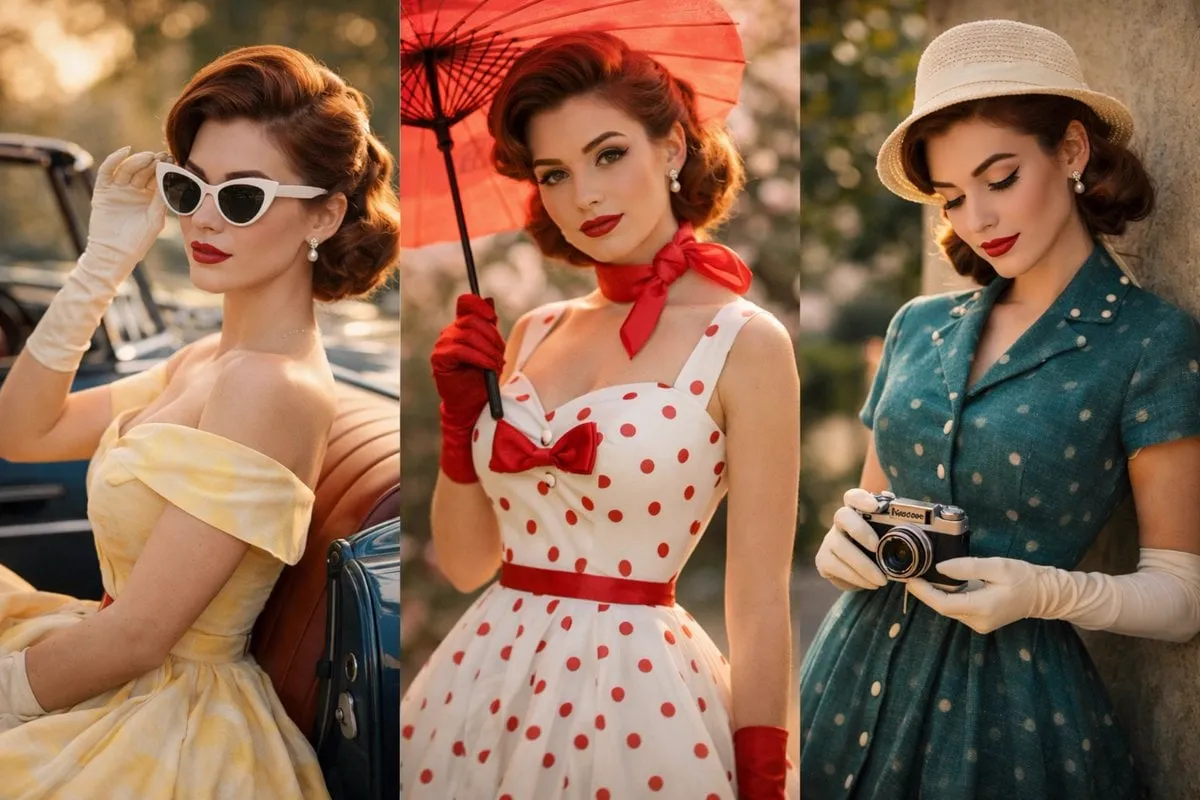
- Subject and wardrobe detail: who, what they look like, what they are wearing, what they are holding.
- Action in one clause: a single physical verb phrase with a clear start and end.
- Light, lens, and mood: time of day, source of light, color temperature, film stock feel, depth of field.
An example: "Widescreen cinematic medium close-up. Woman in her forties, dark wool coat, holding a phone she is not looking at. She exhales and lowers the phone to her side. Overcast morning light from a window camera-left, 50mm equivalent, shallow depth of field, cool palette, subtle 35mm grain."
Notice what is absent: adjectives about beauty, references to being "cinematic" as a stand-alone word, and contradictory camera instructions.
Negative direction and what to exclude
Negative prompts are weak medicine, but they help in specific, recurring cases: text overlays, watermarks, extra limbs, duplicated faces, lens flare when you want none, and unwanted camera drift. Keep the list short and project-specific. A ten-item negative list is manageable; a forty-item list becomes noise that the model averages into confusion.
Also decide what not to show. If a character's identity is unclear, do not generate a face in close-up. Use over-the-shoulder, hands, reflections, or silhouette. Directorial restraint is one of the most useful things AI shot work teaches, because generation punishes attempts to show everything at once.
Maintaining Visual Consistency Across Shots
Consistency is where most AI-driven sequences fall apart. The fix is not a better prompt. It is a reference system.
Character anchoring
Build a small character bible: one clean neutral reference image per principal, plus written notes on hair, skin tone, build, and wardrobe. Lock wardrobe per scene. If a coat changes color between shots, audiences notice within half a second and the illusion dies.
When a shot requires a new angle, generate from the reference rather than from text alone. Image-conditioned generation holds identity far better than pure description, especially for hands, jawlines, and eyes.
Light, palette, and environment continuity
Write a one-line lighting rule for each scene: "window light camera-left, cool shadows, no practicals" or "single warm lamp frame-right, deep falloff." Repeat that line verbatim in every prompt for that scene. Repetition is not laziness; it is continuity.
Keep a scene palette of three to five hex colors and check generated frames against it. Slight drift is acceptable. A scene that flips from teal to orange between shots reads as a mistake, not a style.
Multi-image reference fusion in practice
Many current systems accept several reference images at once, which lets you combine a character, a location, and a texture or style plate in a single generation. Two rules keep fusion clean.
First, assign each reference a job and say so in the prompt. Second, do not stack two references that disagree about the same variable. Two characters plus one location is fine. Two lighting references is a conflict the model will resolve arbitrarily.
When fusion fails, reduce the number of references rather than rewording the prompt. Fewer, clearer inputs almost always beat more inputs with more instructions.
Camera Language: Movement, Blocking, and Pacing
Camera movement in AI video is easy to request and hard to control. Treat it as a budget you spend deliberately.
- Static: the most reliable, and dramatically the most powerful. Locked frames let performance and cutting create energy.
- Slow push or pull: low risk, high emotional yield, ideal for beats that turn.
- Pan or tilt: moderate risk; useful for reveals and establishing geography.
- Tracking and crane moves: high risk; expect artifacts in backgrounds and limbs.
- Handheld simulation: modest risk, useful for urgency, easy to overdo.
Blocking matters as much as the camera. Specify where each character stands relative to the frame and to each other, in simple terms: "subject frame-left facing camera-right, second figure out of focus background right." This single line prevents the most common AI continuity error, where characters swap sides between cuts and the scene's spatial logic collapses.
Pacing is a cutting decision made before generation. If you plan to cut on movement, give each clip a clear physical action to cut on. If you plan to cut on dialogue, generate reaction shots with enough headroom to trim.
Choosing the Right Generation Approach for Each Shot
Not every shot deserves the same level of effort. Sort your shot list into tiers.
Fast iteration versus final fidelity
Use quick, cheap generation passes for composition testing: does the framing read, does the silhouette work, is the light direction right? Once a composition is approved, regenerate at higher fidelity with the reference image from the approved pass.
This two-pass method saves enormous time. It also prevents the classic trap of polishing a shot whose composition never worked in the first place.
Image-to-video versus text-to-video
Use text-to-video for exploration, establishing shots, and abstract imagery where exact continuity is not required. Use image-to-video for anything with a recurring character, a specific location, or a precise look you have already approved.
For dialogue-driven scenes, generate the performance in short image-to-video clips with minimal motion, then cut the rhythm in the edit. For spectacle, text-to-video with a detailed environment description often performs better because there is no reference fighting the model's instincts.
A useful default: if the shot appears more than once in the film, anchor it with an image.
Quality Control: Reviewing Shots Like an Editor
Review generated footage the way an editor reviews dailies, not the way a hobbyist reviews a render. Watch each clip three times with a different question each time.
Pass one, story: does the shot perform its beat? If not, stop. Do not fix it in generation; fix the plan.
Pass two, continuity: wardrobe, light direction, screen direction, prop positions, color.
Pass three, artifacts: hands, faces in profile, background warping, text, flicker, morphing fabric.
Keep a rejection log with one-line reasons. Patterns emerge quickly: for example, "wide shots with two moving characters fail," or "close-ups in low light lose facial detail." That log becomes your personal rulebook and is more valuable than any prompt library.
Finally, cut before you polish. Assemble a rough sequence with placeholder-quality clips. If the scene does not work at low fidelity, no amount of upscaling or refinement will rescue it, because the problem is structural, not technical.
Common Mistakes That Weaken AI Shot Design
Generating before planning. If you cannot state a shot's dramatic function in one sentence, the model cannot either.
Changing the prompt between shots of the same scene. Every unnecessary word change introduces a visual variable. Keep scene-stable text identical and change only the framing and action.
Overloading single clips. Two actions, two locations, or two emotional states in one generation produces averaging and mud.
Ignoring screen direction. Characters crossing the axis between cuts disorients viewers instantly and is one of the hardest errors to repair later.
Chasing a perfect frame instead of a working sequence. A single spectacular shot that does not cut with its neighbors is a liability.
Treating style as a filter. Style is a set of consistent decisions about light, lens, palette, and movement. Apply it as a rule, not as a final pass.
Skipping sound thinking. Sound design and pacing assumptions shape what you generate. Decide early whether a scene will be carried by dialogue, score, or silence, because that changes shot duration and framing.
Building a Reusable Shot Library and Handoff Practices
Serious AI video work compounds. Save approved reference images, prompts, and generation settings in a project folder with clear names: character references, location plates, scene prompts, approved takes, rejected takes with reasons.
Write a one-page style sheet for each project covering lens feel, palette, grain, movement limits, and negative rules. Anyone joining the project, human or automated, should be able to match the look from that page alone.
Export proxies for editing and archiving, and keep the highest-quality master for final assembly. Version your files by date or revision, not by vague suffixes like "final2." When a client asks for the earlier version of a shot, you want to find it in seconds.
Finally, document the shot list alongside the finished cut. It becomes a template for the next project and turns a lucky sequence into a repeatable method.
FAQ
How many shots should I plan for a one-minute scene?
Roughly eight to fifteen, depending on pacing. Faster genres cut more; slower genres hold longer. Plan alternates for the two beats with the highest emotional stakes, because those are the shots you will most likely want to re-do.
Do I need reference images to keep characters consistent?
For anything beyond a single shot, yes. Text descriptions drift in face shape, age, and wardrobe. One neutral reference image per character solves most continuity problems before they start.
Should I generate long takes or short clips?
Short clips, then cut. Long takes demand a locked camera, one subject, and a stable background, which excludes most dramatic scenes. Short clips also give you more control over rhythm in the edit.
What is the fastest way to fix a shot that looks wrong?
Change the framing or the reference, not the adjectives. Most failed generations are composition or continuity failures, and word-level tweaking rarely repairs either.
How do I handle dialogue-heavy scenes?
Generate short, low-motion clips with the speaker's intent clearly stated, favor close-ups and reaction shots, and build the scene's rhythm in the edit rather than trying to capture performance nuance in a single generation.
When should I stop iterating on a shot?
When the shot performs its beat and survives a continuity check. Perfection beyond that point is usually better spent on the next scene.
