

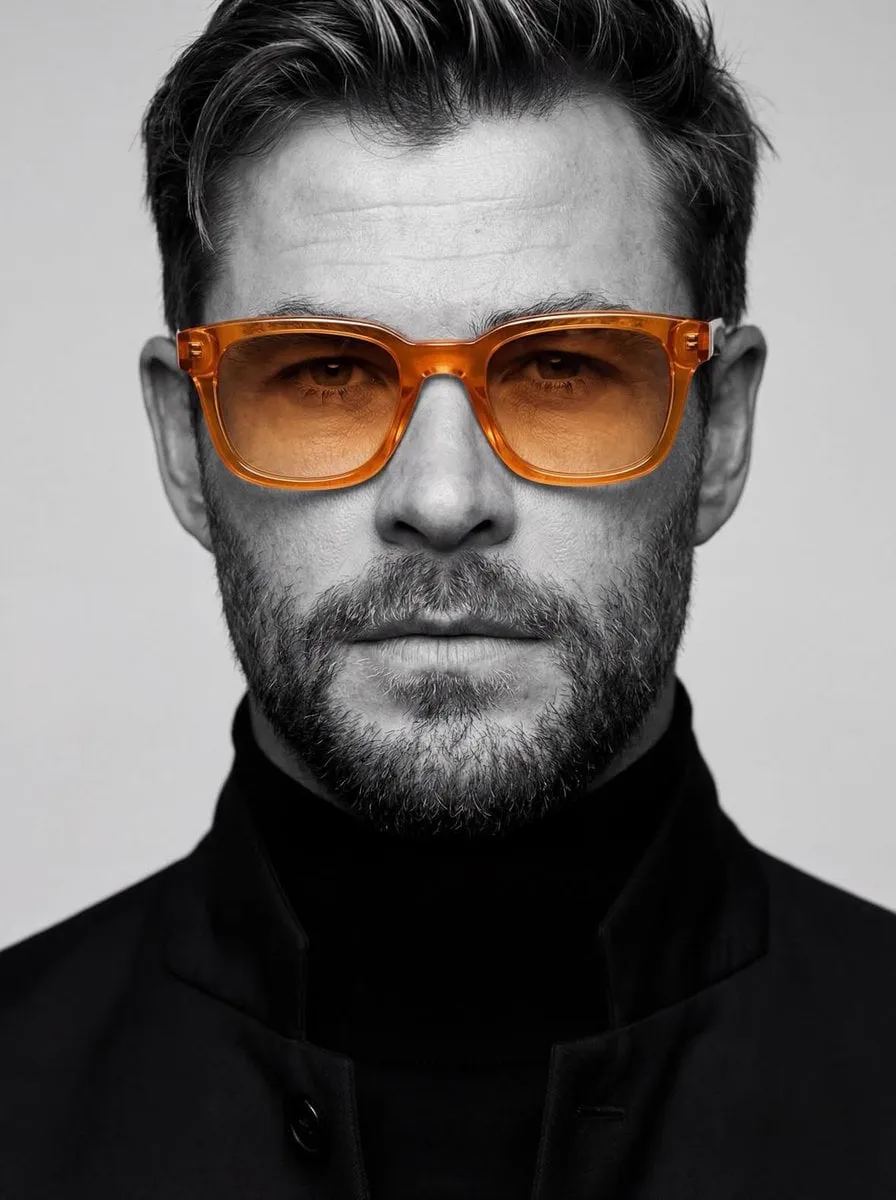

You have probably noticed a curious new wave of faces appearing in social feeds: presenters who never filmed a frame, brand spokespeople who look identical in every shot, channel hosts who somehow release ten videos a day without ever stepping in front of a camera. Those characters are AI avatars, and they have moved well past the gimmick stage into something genuinely useful. If you make videos for a living, or even just for an audience you care about, learning to build and direct a consistent AI avatar can save you enormous amounts of time while opening creative doors that traditional production simply cannot open.
This guide is written for creators, not engineers. It walks through what avatars actually are, why consistency is the make-or-break factor, which kinds of models and tools matter, and how to turn a reusable virtual presenter into real content you can publish across platforms. It is deliberately practical: every section is aimed at getting you from "I saw a cool AI presenter once" to "I have a reliable avatar pipeline of my own."
What an AI avatar really is
Before touching any tool, it helps to separate the idea of an avatar from the machinery behind it. An avatar is not a single generated image or a single video clip. It is a persistent visual identity: a face, a body, a style, a voice that you can reuse across scenes, across videos, and across weeks of content while keeping it recognizably the same person or character. Think of it less as a picture and more as a casting decision you commit to, the way a show commits to a lead actor.
Behind that identity sits a stack of generative models. One model understands and describes the character, another renders it into frames, another keeps the face stable as the scene changes, and often a separate system handles lips, expressions, and even a synthesized voice. When people complain that AI video looks artificial, they are usually describing a breakdown somewhere in that stack: the face drifts between shots, the lighting jumps, the body proportions change from frame to frame. Consistency is not a single feature, and it cannot be bought. It is the result of every layer doing its job and the creator enforcing discipline on top.
The creative payoff of a well-built avatar
There are concrete reasons creators gravitate toward avatars, and it is worth listing them before we get into technique, because technique only matters when it solves a real problem.
The first reason is schedule. A human presenter is bound by availability, energy, and location. They get tired, they need lighting, they need a retake when the phone interrupts. An avatar can record on demand, at two in the morning, in any background you can imagine, with unlimited patience. Teams that publish daily newsletters, product updates, or short explainers in multiple languages find this liberating, because the presenter never needs to re-shoot when a language changes.
The second reason is consistency of brand. When the same character appears week after week, your audience starts to recognize it the way they would recognize a host on television. Over time, the avatar becomes an asset in its own right: a mascot that carries your tone and your visual identity regardless of which platform you publish on. That accumulation is exactly how brands are built, and most creators never get the chance because they cannot find a presenter willing to commit to a daily schedule.
The third reason is scope. An animated presenter can live in fantasy worlds, product demos, historical settings, or abstract environments without a green screen, a set-building budget, or a crew. For explainer and marketing content, that means you are no longer limited to whatever a physical studio can contain. If your next video needs to happen on the moon, the avatar pipeline can take you there for the price of a prompt.
That said, avatars are not a shortcut to good writing. They deliver the same performance a presenter would, which means your script, your pacing, and your story still carry the weight. Think of the avatar as a reliable, endlessly available actor rather than a substitute for thought. A brilliant avatar delivering a flat script is still a flat video.
Consistency is the entire game
If you take away only one idea from this handbook, let it be this: the value of an avatar is proportional to how consistently you can reproduce it. A face that changes subtly from clip to clip erodes trust faster than any script mistake, because viewers notice when a character stops feeling like a specific person. They might not name the problem, but they will feel the unease, and they will not binge-watch a series whose lead keeps changing.
Several factors drive this consistency, and you should understand each one before choosing tools. Character reference is the anchor: you need one canonical description, ideally paired with reference images, that every generation step points back to. Prompt discipline matters because the words you use to describe the character become the seed for its appearance; vague descriptions produce drifting features, while a terse, exact sheet produces a stable face. Model choice matters too, because some models are far better at keeping a face stable across multiple generated frames while others are tuned for a single beautiful still. Finally, framing and composition rules help enormously. If your character follows the same framing, lighting direction, and depth-of-field choices in every scene, your brain fills in the gaps and reads the identity as continuous, even when the model wobbles a little.
Choosing the right model for the job
No single model does everything well, and pretending otherwise leads to disappointment. The smartest approach is to treat model selection as a small pipeline decision rather than picking the most hyped option. You are balancing three things on every generation: quality, speed, and cost, and the right balance depends entirely on what you are trying to do.
For photorealistic talking-head presenters, you want a model with strong facial identity and natural mouth movement. For stylized or animated characters, a different model with a looser, more painterly vocabulary will serve you better, because it will not try to paste a realistic human face onto a cartoon body. For fast iteration, when you are testing a dozen script variations, choose something quick and cheap rather than the slowest, most cinematic render, because you will be discarding most of those attempts anyway. For the final hero shots, spend the time budget on the higher-fidelity option, because this is the footage that will actually reach an audience.
There are also purpose-built avatar pipelines that separate identity, lip-sync, and voice into distinct processes. These give you precise control because each stage can be rerun independently when something goes wrong. A common workflow is to fix the identity first, lock the framing, then animate the speech separately, then generate or select a voice and sync it to the mouth. Isolation like this is a gift: when the lip-sync fails, you do not have to regenerate the whole clip.
What to put in your character sheet
Screenwriters use character sheets, and avatar builders should too. Before you generate anything, write down the canonical description you will reuse everywhere. Include physical traits: hair, eyes, skin tone, body type, and typical clothing, because each of these is a lever the model can pull. Include style cues: whether the character is realistic, semi-stylized, or fully animated, and which art direction you are committing to. Include a consistent lighting intention and a typical backdrop, so scenes feel like they belong together rather than feeling like random renders. And include voice notes if your pipeline supports a synthetic voice, covering tone, pace, and accent.
Keep this sheet short enough to paste into a prompt repeatedly. If it takes more than a few lines to describe your avatar, you will shorten it in practice, which is exactly when drift creeps in. Discipline is the whole secret: the act of repeating the same description across every generation is what makes the avatar feel like a single person. Treat the sheet as sacred, and update it deliberately rather than improvising mid-project.
Building the identity from reference images
Reference images are your most powerful consistency tool. A single good reference of your character gives the model something concrete to anchor to, which cuts dramatically the amount of interpretation the model has to do. The trick is to choose references that are unambiguous: a clear front view of the face, a clean neutral expression, consistent lighting, minimal clutter in the background. If you want variation later, generate from that anchor rather than redefining the character from scratch, because each generation that starts from the anchor inherits its stability.
When you work with multiple references, keep them aligned in style. Mixing a heavily stylized illustration with a photorealistic shot of the same character confuses the model and produces a hybrid nobody would recognize. Build a small reference set that all share the same art direction, then point every scene at that set. Having three or four carefully chosen images beats having a hundred random ones, because the model learns more from alignment than from volume.
Directing the performance
Once your avatar exists, you become a director more than an editor. Decide the emotional tone of each shot and translate it into concrete instructions the model understands: framing, camera distance, expression, gesture, and environment. Do not describe feelings only; describe mechanics. Instead of "she looks nervous," write "she sits at a clean desk, hands placed flat, eyes lowered, one hard key light from the left." Models respond to visual language, so learn to speak in light, composition, and physical behavior. This is a skill you will refine over time, and it is the difference between prompts that produce happy accidents and prompts that produce exactly what you imagined.
Break longer videos into short shots and direct each one. Long single generations tend to drift over time, and they are hard to fix when a mistake appears at frame forty. Short, tightly specified segments give you room to retry each beat independently, to keep the character stable throughout, and to control quality beat by beat. It feels like more work in the editor, but the end result is far more controllable.
Turning avatars into published content
The final step is integration. A reusable avatar lets you build a repeatable template for a series, but you still need to vary the structure so the channel does not feel robotic. Alternate between a face-to-camera intro, narrated B-roll, and on-screen demonstrations. Vary the backgrounds and the pacing so each video feels like its own piece while the character anchors everything. And remember the multiplier effect: publish the same raw assets in multiple formats, because a vertical short, a horizontal long-form cut, and a clipped pull-quote are three pieces of content from one character performance. Divide once, multiply by three.
Wherever you publish, remember the reuse rule from the beginning of this guide: keep the identity sheet stable, keep the references aligned, and keep the framing disciplined. Do that, and your avatar will feel like a person your audience can trust to show up, on time, every single day, without ever needing a cup of coffee, a makeup artist, or a day off.
Common pitfalls and how to avoid them
The most common failure is describing a new character for every scene, which immediately guarantees drift. You get so caught up in making each shot fresh that you forget it is the same person talking. The second most common failure is overloading prompts with so many style words that the face itself gets lost somewhere behind the adjectives. The third is ignoring lighting direction, so shadow placement jumps around and the avatar feels like a different person from shot to shot. The fourth is expecting one render to be perfect and spending your whole budget on retries instead of fixing the identity sheet, which is the actual root cause of most retries.
Every one of these is a discipline problem, not a technology problem, and the fix is always the same: simplify the canonical description, reuse it relentlessly, and blame the process before you blame the model.
Frequently asked questions
What minimum hardware do I need? Most modern avatar pipelines run in the cloud, so a capable laptop and a good internet connection are enough. Heavy local rendering is rarely required, which keeps hardware costs low.
Can I use an avatar in multiple languages? Yes, especially if your pipeline supports multilingual text-to-speech, which lets the same character speak in several languages from the same identity sheet. This is a huge advantage for international channels.
How do I keep the same face across platforms? Treat platforms as outputs, not identities. Define the avatar once, generate mastered assets, then re-encode and reformat for each platform rather than regenerating per platform. The identity lives in the master, not in the platform-specific files.
Is it okay to use a real person's likeness? Only with clear rights and consent. For owned brand characters, build your own identity from scratch rather than mimicking someone specific. Avoid the legal and ethical trap entirely by creating an original character.
How long does a single 30-second avatar video take? It depends on the model and fidelity, but with a warm identity sheet and short shots, a rough edit can come together in minutes, with the high-fidelity pass taking the bulk of the remaining time. Budget far more for iteration than for the first render.
Final thoughts
AI avatars are a genuine shift in how individual creators scale video output, but they reward discipline over hype. Nail the identity once, build a thin repeatable sheet, direct each shot in visual terms, and reuse the character relentlessly across formats. The early pace-up is modest, and the compounding is enormous: a character you can trust becomes a library, and a library becomes an efficient channel. Do that, and you will have turned a clever technology into a dependable creative tool you reach for again and again, whether you are making your first video or your five-hundredth.
