
Why background music makes or breaks a video
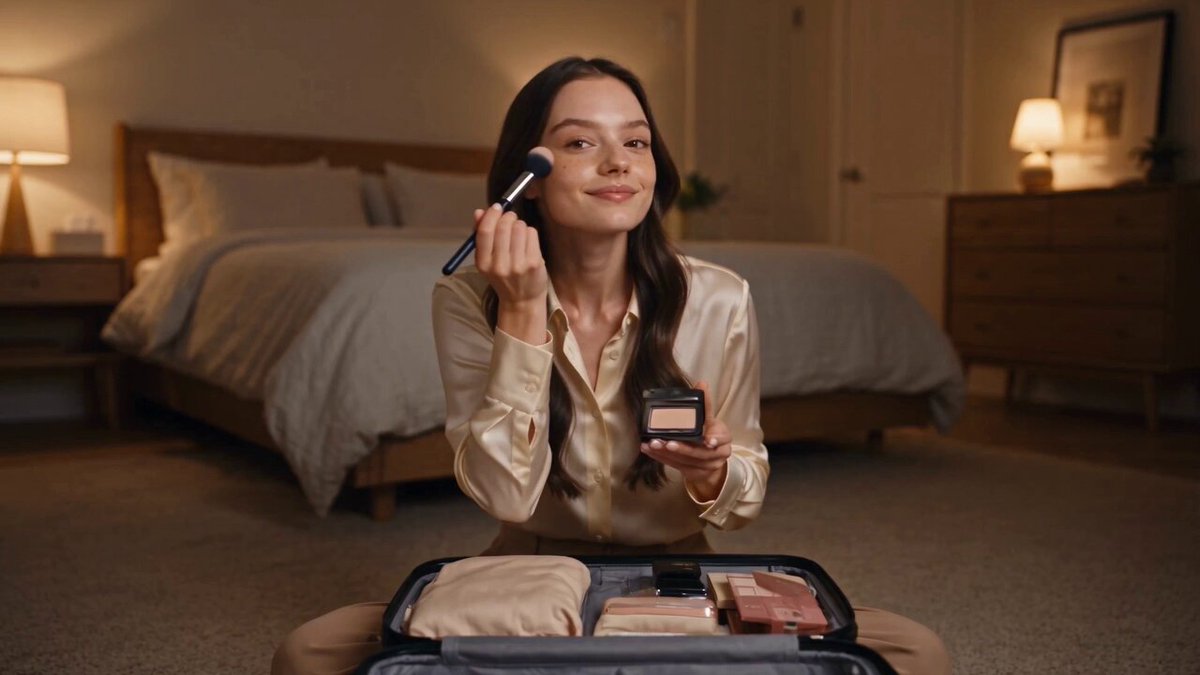
Background music is the fastest emotional shortcut in video. Before a viewer consciously registers the lighting, the wardrobe, or the framing, sound has already told them how to feel about the scene. A slow piano line over a shot of someone packing a suitcase reads as melancholy; the same shot with a driving synth bass reads as a heist. Nothing about the picture changed. Only the soundtrack did.
That is why music selection deserves real production time, not the last ten minutes before export. Creators who treat audio as an afterthought tend to see the same symptoms: retention graphs with a cliff in the first fifteen seconds, comments about the video feeling slow, and a vague sense that something is off without being able to name it. More often than not, the fix is audio.
The three jobs a soundtrack performs
A good background track does three jobs at once. It sets pacing, giving the edit a rhythmic spine that the cuts can lock onto. It carries emotion, filling in the subtext that a camera cannot show. And it provides continuity, stitching together shots filmed on different days, in different locations, with different light, into something that feels like one continuous piece of work.
When one of those jobs fails, the whole video feels weaker. A track that sets great pace but the wrong mood makes a sincere documentary feel like a commercial. A track with the right mood but a wandering tempo makes the edit feel sloppy even when every cut is technically clean.
What viewers notice without knowing it
Most viewers will never say the music was mixed four decibels too hot under the narration. They will just say the video was hard to follow. Similarly, they will not compliment a well-ducked music bed, but they will stay longer. Treating audio as invisible craft work is the right mental model: your goal is not for people to notice the music, it is for them to feel it and keep watching.
How AI music generation fits into a video workflow
Generative music tools have moved from novelty to practical production asset. A text-to-music model takes a written description and returns an original audio file, usually within seconds to a couple of minutes. Some tools also analyze an uploaded video or a script to suggest a mood, then generate something that matches.
The appeal for video creators is obvious. You can describe exactly what you need, such as warm lo-fi hip hop at 82 BPM with brushed drums, upright bass, no vocals, ninety seconds long, calm but hopeful, and get something close in one pass instead of auditioning fifty library tracks hoping one fits.
What text-to-music does well
Generation excels at specificity and iteration. Need the same track but thirty seconds longer, or with the drums pulled back, or in a different key? Regenerating usually beats searching. It is also useful for placeholder tracks during editing: you can cut an entire sequence to a rough generated bed, then refine the final track once the edit is locked.
Where a curated library still wins
Generated music can drift toward the generic, especially when your prompt is vague. It also struggles with strong cultural specificity, recognizable genre conventions, and anything that depends on a very particular recording character. If your video needs an authentic vintage soul feel or a specific regional folk instrument played in a specific style, a curated library or a commissioned track will usually get you closer.
A practical hybrid: generate for pacing and temp tracks, then decide whether the final version needs a library replacement. Many creators end up generating most of their beds and reserving library searches for hero moments like an opening title sequence.
Write a music brief before you generate anything
The single biggest quality jump comes from writing a brief before you touch a prompt box. A brief is a short document, even five lines, that describes what the music must do. It forces decisions that would otherwise be made randomly by whatever the model produces first.
Map the emotional arc
List the beats of your video and the emotion each should carry. A five-minute explainer might move from curiosity to tension to relief to confidence. Your music does not need to change with every beat, but it should probably change once or twice, or evolve gradually so the ending does not feel identical to the opening.
Define tempo, instrumentation, and texture
Tempo is the most useful control you have. For talking-head content, 70 to 95 BPM keeps the track under the voice without competing. For fast montages, 110 to 130 BPM. For cinematic openers, 60 to 80 BPM with long sustained notes. Instrumentation narrows the palette: acoustic guitar and soft piano for warmth, analog synth and muted drums for tech, strings and low brass for drama.
Texture matters just as much as instrument choice. Sparse with lots of space and single notes is a completely different product from dense and layered with constant motion, even when the instruments are the same.
Set hard constraints
Write down the non-negotiables before generating: exact duration or loop requirement, no vocals, no melodic lead that competes with narration, and an ending that resolves rather than fades if you need a hard out. Constraints are not limitations on creativity; they are what make a generation usable without a second round of surgery.
A brief for a product explainer might read: four minutes total, three sections, calm confidence, no vocals, steady 90 BPM, light percussion only in the final section, must end on a resolved note within ten seconds of the outro.
Prompt patterns that produce usable tracks
The four-part prompt formula
A reliable structure is genre and era, instrumentation, mood and energy, then structure and constraints.
Example one: mid-tempo indie folk, fingerpicked acoustic guitar, soft brushed drums, upright bass, warm and reflective, builds gently, no vocals, clean ending, one hundred seconds.
Example two: dark ambient electronic, pulsing sub-bass, distant metallic textures, tense and curious, steady energy throughout, loopable, no percussion hits, sixty seconds.
Describing structure with time markers
Models respond well to plain-language structure notes. Starting with solo piano for eight seconds, adding strings at the twenty-second mark, reaching full arrangement by forty seconds, and resolving in the final ten seconds gives the model a map. Even if it does not follow the plan exactly, the output usually has more movement than a prompt that only names a genre.
Using negative prompts
Tell the model what to avoid: no vocals, no spoken word, no sudden loud hits, no dramatic key changes, no orchestral stabs, no distortion. This is especially important for background beds, where a single unexpected crash can wreck a calm interview and force you to start over.
Iterate in small steps
Change one variable at a time. If you adjust genre, tempo, and instrumentation simultaneously, you learn nothing about which change helped. Keep a short text file of prompts that worked alongside the resulting files, and you build a personal preset library quickly. Within a month you will have a handful of templates that reliably produce usable beds for your channel or client.
Licensing and rights: staying safe when you publish
What generated and royalty-free actually mean
Generated audio from a reputable tool is typically cleared for commercial use under the tool's terms, and the track is not registered with content-matching systems by the tool itself. Library music marketed as royalty-free is also usable, but usually under a license that defines where you can publish, whether you can monetize, and whether you need attribution. Always read the actual terms rather than relying on the phrase royalty-free, which is a marketing shorthand rather than a legal category.
Platform claims and content matching
Automated rights systems scan uploads and sometimes flag music that is legitimately yours. This is more common when a generated track closely imitates a well-known composition or when the same stems were reused across many uploads. Keep your original project files and the generation record so you can respond to a claim with evidence rather than guesswork.
Keep a paper trail
Save, for every published video: the tool used, the date, the prompt, the raw generated file, and a screenshot of the license terms in effect at the time. This takes two minutes and has saved plenty of creators from losing revenue during a dispute. It also helps when a client asks months later whether a track can be reused in a paid campaign.
Editing music to picture: beats, ducking, and dynamic range
Cutting on beats
Mark the beat grid in your editor and align major cuts to it, then deliberately break the pattern once or twice so the edit does not feel mechanical. Not every cut needs to land on a beat. In fact, rhythmic cuts on every beat quickly feel like a slideshow rather than a film.
Ducking dialogue
Lower music under narration using volume automation or a sidechain compressor. A common starting point is 12 to 18 dB of reduction under speech, with a fast attack and a release around 200 to 400 milliseconds so the music breathes back naturally. Also high-pass the music around 200 Hz and gently scoop 1 to 4 kHz where speech intelligibility lives.
Loudness targets
Platforms normalize playback, so crushing your mix does not make it louder, only flatter. Aim for a true peak around minus one dBTP and an integrated loudness near the platform target, commonly around minus fourteen LUFS for video platforms. Leave the dynamics intact; contrast between quiet and loud sections is what makes a soundtrack feel alive.
Vertical and short-form pacing
Short-form edits reward faster musical movement. Choose tracks with an early lift, ideally within the first two seconds, and avoid long intros. If your source track has a slow build, trim it so the drop arrives sooner. On vertical video, viewers decide whether to keep watching almost instantly, and the music has to earn that decision alongside the visuals.
Sound effects and ambience: the layer most creators skip
Ambience beds
A quiet room tone under every scene prevents the jarring silence that appears when music drops out. Generate or record thirty seconds of neutral ambience and loop it at low level throughout the video. It costs almost nothing and makes cuts feel smoother, because the ear no longer notices the sudden absence of sound.
Transition accents
Short whooshes, risers, and impacts give your cuts weight. Used sparingly, they make a transition feel intentional; used on every cut, they make the video exhausting. A good rule is one accent per major section change, plus one on the final logo or ending card.
Foley and tactile detail
For product videos and hands-on tutorials, small sounds do enormous work: a lid clicking shut, a page turning, a keyboard press, fabric shifting. These can be generated, recorded on a phone, or pulled from a sound effects library. Layer them slightly under the music bed so they register subconsciously rather than drawing attention away from the point you are making.
A repeatable end-to-end workflow
Here is a workflow you can reuse on almost any project, illustrated with a four-minute documentary-style product story.
Read the script aloud with a stopwatch. Note where you naturally pause and where energy rises. Those moments are your musical landmarks.
Build a temp bed. Generate two or three rough tracks at different tempos and drop them under the edit. Do not aim for perfection; you are testing how the picture feels with rhythm underneath.
Lock the edit to the temp track. Cut picture to the rhythm you like, then stop. Changing music after locking picture is far easier than changing picture after locking music.
Generate the final track. Apply everything you learned from the temp version. Add structure markers, tighten the constraints, and generate three variations. Choose the one that supports the narration instead of competing with it.
Layer ambience and accents. Add a room tone bed, one accent per section change, and any foley that sells the on-screen action.
Mix and check on three systems. Headphones for detail, laptop speakers for the mid-range reality most viewers hear, and a phone speaker for the worst-case scenario. If the narration is still clear on the phone, your mix is working.
Normalize, export, and archive. Store the prompt, the raw file, and the final mix together. Future you will want to make a longer version or a follow-up video in the same sonic world, and having the source material makes that a ten-minute job instead of an hour.
Common mistakes and how to avoid them
Choosing music before locking the edit. Rhythmic needs change once the cut is final. Pick a temp bed early, then commit to the real track late.
Letting music carry the whole emotional load. If a scene only works because of the soundtrack, the scene itself is underdeveloped. Music should amplify meaning, not substitute for it.
One track for a five-minute video with no variation. Long-form content needs at least one musical shift, a change of instrumentation, or a temporary drop-out to reset attention.
Ignoring the first three seconds. The opening is where retention is won. Start with the strongest musical moment you have, or begin with silence for one beat and let the track enter with impact.
Mixing only on headphones. Headphones hide how badly a mix translates to phone speakers. Always run the mobile check before publishing.
Reusing one generated track across an entire series. It saves time, but viewers start to associate the music with the show rather than the moment. Rotate three or four tracks so each episode feels distinct.
Forgetting to document the license. A track that feels free today can become a problem if you cannot show where it came from. Documentation takes two minutes and protects the whole project.
FAQ: quick answers for creators
How long should a background music track be?
Match the finished runtime of the section it supports, plus a few seconds of headroom for trimming. If the track is shorter than the video, edit the music rather than looping it endlessly, because obvious loops become distracting after the third repetition. For sections longer than three minutes, generate two contrasting tracks and crossfade between them.
Can generated music be used in monetized videos?
Usually yes, provided the tool's terms grant commercial rights and you comply with them. Read the specific license that applied on the date you generated the file, keep a copy of it, and avoid prompts that imitate a specific artist or song, since that introduces risk regardless of the tool's terms.
Do I need stems for video editing?
Stems make ducking, trimming, and remixing far easier. If your tool offers individual tracks for drums, bass, harmony, and melody, take them. If not, you can still work with a single file using EQ and volume automation, but you will have less control over busy sections.
What tempo works best for talking-head videos?
Somewhere between 70 and 95 BPM with sparse instrumentation. Faster tracks create a subconscious sense of urgency that can conflict with calm explanation. Slower than 70 BPM risks feeling sleepy unless the visuals are equally contemplative.
How do I stop music from drowning out narration?
Duck the music under speech, high-pass it at around 200 Hz so it does not fight the low end of a voice, and carve a gentle dip in the 1 to 4 kHz range. Then check on a phone speaker, which is where most under-mixed narration problems become obvious.
Should I loop one track or generate several?
Generate several, even if you only use two. Having a variation ready when a section drags is worth the extra generation. Keep a folder of unused beds organized by mood and tempo, and your next project starts with a head start.
