

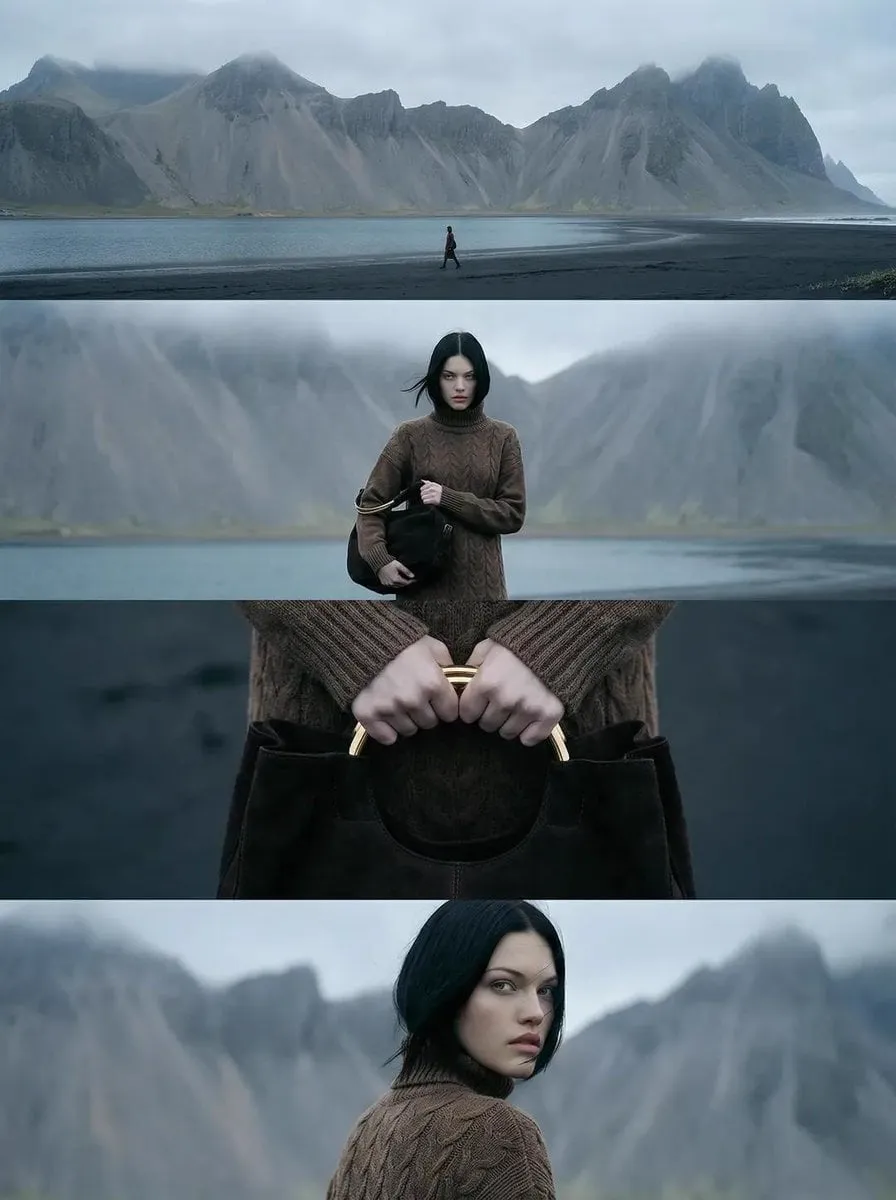
Why AI Video Ads Changed the Production Math
Businesses used to pick between two unsatisfying options for video advertising: hire a production crew for something polished but slow, or shoot on a phone and hope the improvised result feels authentic enough to convert. Generative video tooling has collapsed that tradeoff. One person with a laptop can now put together a scripted, branded, captioned ad in an afternoon and produce five variations before the next morning.
That speed matters because ad platforms reward freshness. Creative fatigue sets in fast. The fifteen-second clip that earns a strong click-through rate in week one often decays noticeably within a few weeks. When each new version costs hours instead of weeks, testing becomes routine rather than a quarterly event.
There are honest limits worth naming before you start building a workflow. Generated footage still struggles with fine hand interaction, legible text inside the frame, and long uninterrupted camera moves. The practical strategy is not to replace live footage everywhere. It is to use generation where it is strongest: establishing shots, stylized environments, abstract transitions, product-in-context scenes, and presenter segments that would otherwise require a studio booking.
The businesses getting the most out of this shift treat AI as a production accelerator inside a disciplined process, not as a button that removes the need for a process. The rest of this guide lays out that process in detail.
The End-to-End Workflow for an AI Ad Video
Step 1: Brief and offer clarity
Before opening any tool, write down four things: who the ad is for, the single action you want them to take, the one benefit you are selling, and the format the platform requires. A vertical nine-by-sixteen clip for a feed placement has a completely different rhythm than a horizontal sixteen-by-nine clip for a website hero.
A useful test is the one-sentence brief. If you cannot describe the ad in a single sentence, the generation stage will produce beautiful footage that says nothing. Keep the sentence visible while you work.
Step 2: Script with shot intent
Write the script in two columns: what the viewer hears and what the viewer sees. The audio column carries the promise and the call to action. The visual column carries the proof. Every line of voiceover should have a matching visual instruction, and any line without one is usually a line you can cut.
Keep the script short. A fifteen-second ad supports roughly thirty to thirty-five spoken words. A thirty-second ad supports seventy to eighty. Reading your script aloud with a stopwatch is the fastest quality check available and it costs nothing.
Step 3: Storyboard beats, not artwork
You do not need illustrated frames. You need a beat sheet that says, for each shot: subject, action, camera feel, duration, and the generated or filmed asset it will use. A six-column table in a document is enough. This beat sheet is what you paste into generation tools, and it is also what prevents you from generating endless attractive clips that never form a story.
Step 4: Generate in passes
Generate one pass per shot type rather than mixing everything at once. Start with establishing and environment shots, because they are the most forgiving. Then generate product or subject shots. Then handle any presenter or voice segments. Grouping by shot type keeps your prompts consistent and makes it obvious when one prompt is producing a look that will not cut together with the others.
For each shot, generate three to five variants and pick one immediately. Saving twenty options for later is how a two-hour project becomes a two-day project.
Step 5: Assemble, grade, caption
Import into an editor, cut to the beat of your music, add a light color adjustment so shots share a similar contrast curve, then burn in captions. Most feed-based viewing happens with sound off, so captions are not an accessibility bonus; they are the primary delivery mechanism for your message.
Matching the Generation Method to the Shot
Text-to-video
Best for environments, mood pieces, abstract transitions, and anything where the specific identity of the subject does not matter. Prompt with a clear subject, a camera instruction, lighting, and a style reference. Vague poetic prompts produce unpredictable results; specific physical descriptions produce repeatable ones.
Image-to-video and reference frames
When you need a specific product, person, or location, start from a still image and animate it. This gives you far more control over composition and brand appearance. A clean product photograph on a simple background, animated gently, often looks more premium than an elaborate generated scene.
Avatar and presenter tools
If the ad needs a face and a voice, presenter tools let you build a talking segment without booking talent. Write short sentences, avoid tongue twisters, and keep head-and-shoulders framing. A presenter read works best for trust-building messages: explanations, testimonials delivered as scripted narration, and direct offers.
Hybrid: live footage plus generated inserts
This is the most reliable approach for small teams. Shoot the product on a phone with decent lighting, then use generated footage for everything you cannot shoot: the busy street, the stylized background, the slow-motion texture shot, the on-brand animation. Viewers rarely notice the seam when the color and motion match.
Assembling a Lean Toolkit That Scales
You do not need a large stack. You need one tool per job, and you need to know which job each tool does best.
| Job | What to look for |
|---|---|
| Script and beat sheet | Any document or notes app; speed matters more than features |
| Still image creation | Strong prompt adherence and consistent style controls |
| Video generation | Shot length, motion realism, and aspect-ratio support |
| Voiceover | Natural pacing, multiple languages, easy re-records |
| Editing | Fast trimming, caption burn-in, vertical and horizontal presets |
| Asset storage | Simple naming convention and version history |
Two rules keep the stack lean. First, standardize on one aspect ratio per campaign so you are not regenerating everything twice. Second, name files with a consistent pattern such as campaign-shot-version so you can find the approved take in seconds.
Before committing to any paid tier, test whether the free or trial version can complete a full thirty-second ad end to end. Many tools look generous until you reach the export stage, where watermarks or resolution limits appear. Building one complete ad on the free tier tells you exactly where the walls are.
Shot-List Templates for Three Common Ad Formats
15-second vertical social ad
Six shots, roughly two to three seconds each. Shot one is a pattern interrupt: unexpected motion or a bold visual question. Shots two and three introduce the problem and the product. Shots four and five show the product in use with a clear benefit. Shot six is the offer and call to action with captions large enough to read on a phone held at arm's length.
30-second explainer
Use a three-act structure. Act one, about eight seconds, states the problem in the customer's own language. Act two, about fifteen seconds, walks through three concrete steps or features with a matching visual for each. Act three, about seven seconds, restates the outcome and gives one instruction. Avoid cramming five features into act two; three is the practical maximum for retention.
Local service promotion
Local ads convert on specificity. Show the neighborhood, the storefront, the team, or the equipment, and name the service area in the caption. Generated footage handles the atmospheric shots while a genuine photo or short clip of the actual business anchors credibility. End with hours, location, and a single booking action.
Voice, Music, and Captions Done Properly
Voice quality is the fastest way to make an otherwise good ad feel cheap, and the fastest way to fix a weak one. Generate voiceover in short segments rather than one long take. Short segments let you re-record a single sentence without touching the rest, and they give you natural breathing room in the edit.
Match pacing to the placement. Feed scrolling rewards a brisk read with clear emphasis on the first three words. Website hero videos can be slower and calmer because the viewer opted in.
Music should support, not compete. Choose a track with a steady pulse, then cut your shots on the beat. A simple trick is to place your most important visual moment exactly on a musical accent; it makes an amateur edit feel intentional.
Captions deserve real design attention. Use a heavy, high-contrast font with a subtle shadow, keep lines under about six words, and place them where platform interface elements will not cover them. Vertical placements typically reserve the lower portion for buttons and descriptions, so caption around the middle third.
Finally, check audio levels. Dialogue around minus twelve to minus six decibels, music about twelve decibels below the voice, and a true peak ceiling that avoids clipping on phone speakers.
Brand Consistency Across Generated Shots
Generated shots tend to drift: a different color temperature, a different lens feel, a slightly different version of the same product. Three habits prevent that drift.
First, lock your look with a written style line and reuse it verbatim in every prompt. Something like soft window light, muted teal and warm sand palette, shallow depth of field. Consistency comes from repetition, not creativity in the prompt.
Second, use reference frames. Start each shot from an approved still so composition and color stay anchored to a single source of truth.
Third, grade after assembly, not before. Apply one adjustment layer or look across the whole timeline, then fix individual shots only if they still stand out. This single step is what makes a set of generated clips feel like one production rather than a collage.
Also standardize brand elements you add in the edit rather than generate: logos, lower thirds, end cards, and typography. Generated text is unreliable, and a mangled logo destroys trust instantly.
Quality Control, Compliance, and Common Mistakes
The review loop
Run three passes. The technical pass checks resolution, aspect ratio, audio levels, caption sync, and safe margins. The message pass checks whether a stranger understands the offer in the first three seconds. The compliance pass checks claims, disclosures, rights, and platform policy. Keep a one-page checklist and reuse it for every ad; consistency beats memory every time.
Rights are worth attention. Confirm you have permission for any real person appearing in the ad, any trademark visible in frame, and any music track you use. If a generated clip places a recognizable brand on a shirt or a storefront, regenerate it.
Mistakes that wreck AI ad videos
- Too many ideas in one ad. One offer, one action, one clear benefit.
- Unreadable captions on a phone screen. Test on an actual device, not just the editor preview.
- Shots that are beautiful but unrelated. Every visual should carry information.
- Inconsistent subjects between shots. Use reference frames for anything recurring.
- Long unbroken camera moves. Generated motion degrades over time; cut more often.
- No call to action until the final frame. State the action early and repeat it at the end.
- Ignoring sound-off viewing. If the ad fails muted, it fails for most of the audience.
Measuring, Iterating, and Scaling What Works
Track three numbers per ad: the first three seconds of retention, the click-through rate, and the conversion rate on the landing page. Retention tells you whether the opening hook works. Click-through tells you whether the offer and call to action land. Conversion tells you whether the ad attracted the right people, which is often a targeting issue rather than a creative one.
When an ad performs, do not simply run it longer. Change one variable at a time and test: a different hook, a different opening shot, a different voice, a different call to action. Because AI generation makes revisions cheap, single-variable testing becomes practical for small teams.
Build a small library of winning components: hooks that held attention, openings that stopped the scroll, closings that converted. Recombining proven pieces is faster and safer than starting from a blank timeline every time.
FAQ
How long does an AI-generated ad take to produce?
A fifteen-second vertical ad with six shots usually takes three to five hours for someone familiar with the tools, including script, generation, edit, captions, and review. The first project with a new tool typically takes twice that, mostly because of prompt iteration and export settings.
Do I still need to shoot anything?
For product-focused ads, yes. A short phone clip or a clean photo of the actual product or location usually outperforms a fully generated alternative because it is verifiably real. Use generation for everything around it.
Can AI handle the voiceover in multiple languages?
Yes, and this is one of the biggest advantages. Translate the script carefully rather than literally, re-record the voice segments, and adjust caption line breaks per language. Budget extra review time for languages you do not speak.
Is generated footage allowed in paid ad placements?
Most platforms allow it and require disclosure only in specific political or synthetic-media contexts. Check the current policy for the placement you are using, and always confirm rights for real people, trademarks, and music.
What resolution and aspect ratio should I export?
Export at least 1080 by 1920 for vertical placements, 1920 by 1080 for horizontal, and 1080 by 1080 for square. Keep frame rate consistent across the timeline, and deliver at a high bitrate so the platform does not recompress heavily.
How many variants should I test?
Start with three: your strongest concept, a shorter version of it, and one version with a completely different opening shot. Three variants are enough to learn something, and few enough that you can actually produce them well.
What if my generated clips look inconsistent?
Rewrite your prompt as a fixed style line plus a variable subject line, regenerate from approved reference stills, and apply a single color look across the entire timeline. Inconsistency is almost always a prompt discipline problem, not a tool limitation.
How do I keep costs predictable as I scale?
Standardize on one generation tool and one editing tool, produce in batches, and reuse approved assets across campaigns. Track how many generated shots actually make the final cut; a low hit rate on a specific shot type usually means that shot should be filmed or photographed instead.
