
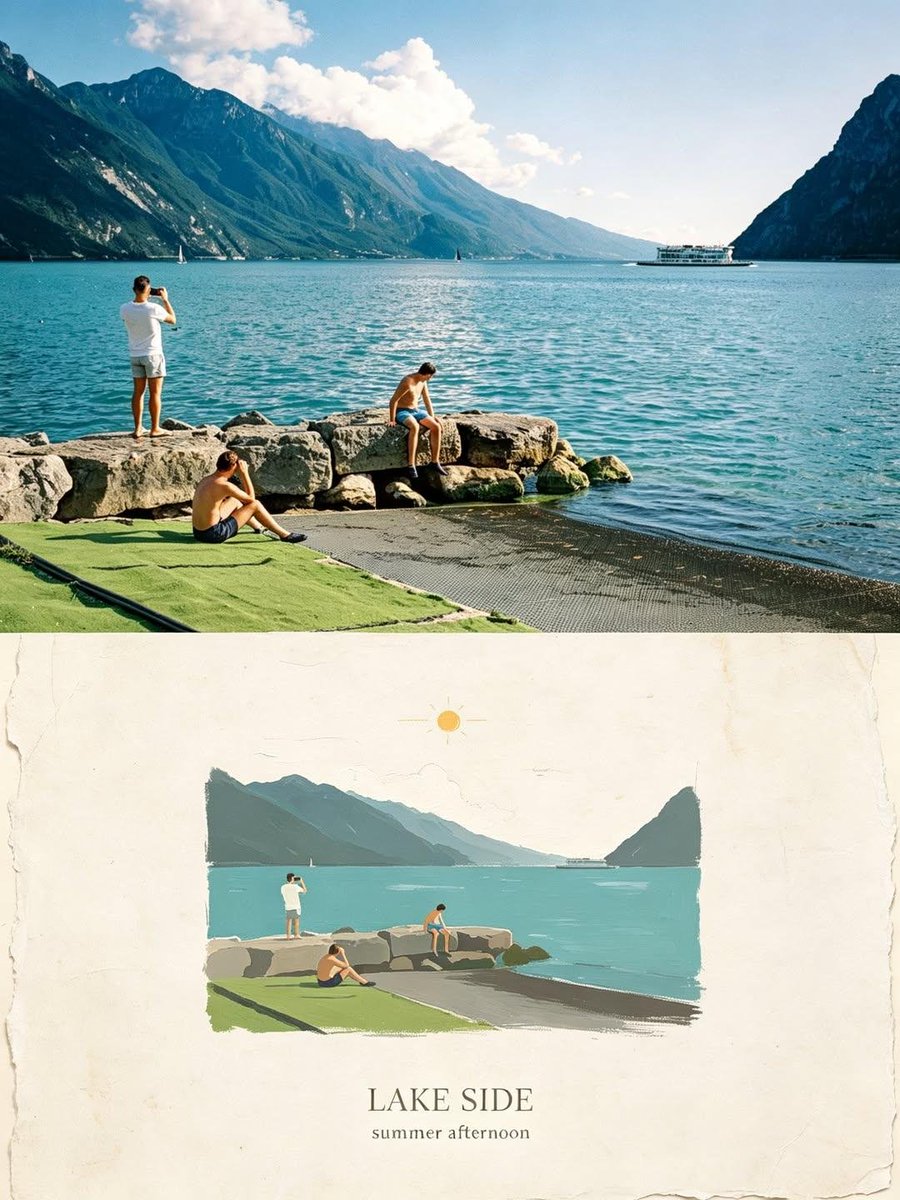
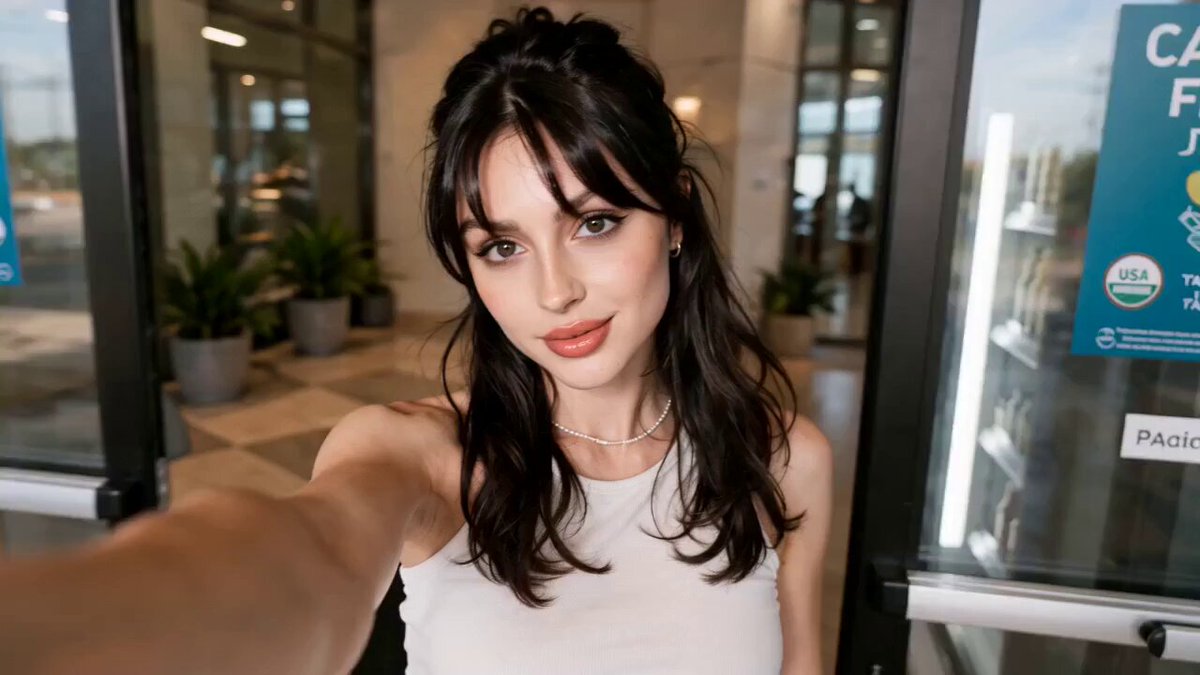
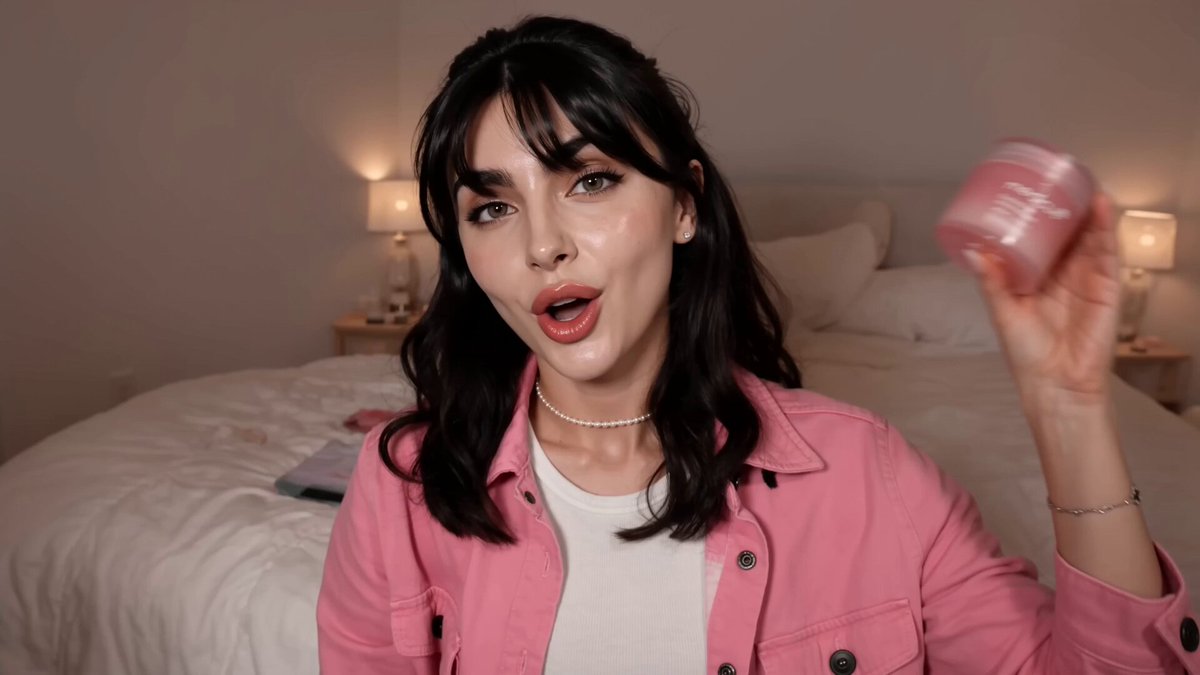
Consistency is the hardest problem in AI video production. Producing one striking clip is easy; producing twelve shots of the same character across a city street, a kitchen, and a desert without the face quietly morphing into someone else is where most projects stall.
This guide is about that second problem. It covers how reference image fusion works under the hood, how to build a reusable character bible, a keyframe-first production workflow, prompt patterns that protect identity, how to pick tools for each stage, and a troubleshooting section for the failures you will inevitably hit.
Why Character Consistency Breaks in Generative Video
The drift problem in plain terms
Every generative video model is predicting what should come next given what it has already seen. When you start a new shot, the model has no memory of the previous shot. It knows only your text prompt and whatever images you supply. If the prompt says "a woman with dark curly hair in a red coat," the model samples from the entire distribution of women with dark curly hair in red coats. Each shot is a fresh roll of the dice.
Drift is what happens when those independent rolls accumulate. Shot one gives you a rounder face and warmer skin. Shot four sharpens the cheekbones. Shot nine shifts the hair volume. Individually every frame looks fine. Together they look like a recast.
Four kinds of consistency you manage separately
Most teams treat consistency as a single problem. It is really four:
- Identity consistency — bone structure, eye spacing, nose shape, skin tone, apparent age. Hardest to fake and the first thing viewers notice.
- Wardrobe and prop consistency — the same jacket, the same scarf knot, the same scratched watch. Easier to control, easiest to forget between shots.
- Stylistic consistency — grain, contrast, lens character, color temperature, palette. Subtler drift here reads as "these shots do not belong together."
- Performance consistency — posture, gait, gesture vocabulary, vocal tone. Most often ignored, and most often the reason a cut feels wrong.
A character can pass an identity check and still feel like a different person because the walk changed.
Why text prompts alone cannot hold a face
Text is a low-bandwidth channel for visual identity. Words like "distinctive," "angular," or "warm" each map to enormous regions of image space. Even a meticulously written forty-token facial description leaves thousands of plausible faces. Reference images collapse that space dramatically: instead of describing the face, you show it.
How Reference Image Fusion Actually Works
References as conditioning, not content
Reference fusion means supplying one or more images that the model treats as conditioning input rather than as material to copy. Depending on the tool, this appears as a reference slot, an identity input, a saved subject library, or an inline instruction to follow the person in the attached image.
The model projects the reference into the same internal space it uses for text and for the video latents it is generating, then biases generation toward that region. The result is a strong gravitational pull toward the reference — not a hard constraint. That distinction matters, because it explains why fusion reduces drift rather than eliminating it.
Reference quality beats reference quantity
Three excellent references usually outperform fifteen mediocre ones. A good set looks like this:
- Neutral expression, even lighting — so the model reads structure rather than mood.
- Multiple angles — front, three-quarter, and profile cover geometry a single photo hides.
- Consistent lighting between references — a hard noon shot and a soft window shot will fight each other.
- No occlusion — hair across one eye, a hand on the cheek, or a heavy shadow on the jaw removes information the model needs.
Avoid mixing dramatic beauty lighting, heavy makeup variation, or different haircuts inside one reference set. You are describing an identity, not a portfolio.
Identity references versus style references
Some tools accept both subject references and style references. Keep them conceptually separate. If a reference image carries both a distinctive face and a distinctive look, changing the look for scene three may drag the face with it. Where possible, supply a clean, plainly lit identity reference and describe the look in text or with a separate style anchor.
Embeddings, tokens, and saved subjects
Many platforms let you register a subject once and reuse it by name. Behind the scenes this is usually a stored conditioning vector — sometimes called an identity embedding or subject token. The practical benefit is repeatability: you stop re-uploading images and start referencing an asset that stays constant across sessions. Treat saved subjects as production assets. Version them, and never overwrite one mid-project.
Build a Character Bible Before You Generate Anything
The seven assets every recurring character needs
Before generating a single shot, assemble:
- A master portrait — front-facing, neutral, high resolution. This is your source of truth.
- A turnaround sheet — front, three-quarter left, three-quarter right, profile, back.
- An expression sheet — neutral, smiling, concerned, surprised, angry. Expressions reveal how the face deforms.
- A wardrobe sheet — every outfit used in the project, rendered flat and clearly lit.
- A proportion reference — full body, so the model learns height and build relative to the frame.
- A palette card — color anchors for skin, hair, clothing, and the overall grade.
- A motion note — two or three sentences describing posture and gait, pasted verbatim into prompts.
Assembling this takes an hour and saves days.
File naming and folder structure
Adopt a convention and never deviate:
/character/mara/
  identity_front_v1.png
  identity_3q_left_v1.png
  identity_profile_v1.png
  wardrobe_coat_red_v2.png
  motion_note.txt
Version numbers matter. When an experiment goes wrong, you need to know exactly which asset was involved. Inconsistent filenames are the most common reason a team cannot reproduce a shot that "worked yesterday."
Lock the vocabulary, not just the images
Write the character description once, then paste it unchanged into every prompt. Improvising synonyms — "curly dark hair" in one prompt, "wavy black locks" in another — reintroduces the variance you already paid to remove. Keep a canonical paragraph and reuse it verbatim, appending only scene-specific details.
A Keyframe-First Production Workflow
Generating full-motion clips straight from a prompt is the fastest route to inconsistency, because every variable moves at once. The reliable approach inverts it: lock stills first, then animate.
Step 1 — Approve the master portrait
Generate the master portrait using your identity reference and canonical description. Iterate until it is exactly right. Do not settle. Every downstream shot inherits its flaws.
Step 2 — Generate the turnaround and expression sheets
Using the approved portrait as the new reference, generate the remaining angles. Re-approve. If the profile looks like a different person, you have a geometry problem that will resurface under camera movement.
Step 3 — Build scene keyframes as stills
For each scene, generate a still using the identity reference plus scene-specific description: location, time of day, wardrobe, action, framing. Change one variable at a time. If the face degrades when you add rain, you have isolated the cause.
Step 4 — Animate with image-to-video
Feed the approved keyframe into an image-to-video model with a description of motion only: what moves, how, and how much. Because the first frame is fixed, identity drift within the shot is limited to whatever the model invents as frames progress.
Step 5 — Keep shots short and overlap them
Long clips accumulate drift. Generate four to six seconds, then continue from the last frame of the previous clip when frame continuation is available. Overlap by a beat so you have handles in the edit.
Step 6 — Repair what survived
Some drift is inevitable. Fix it in post with a face restoration or identity-transfer pass, a relight to match surrounding shots, and a grade that unifies the sequence. A final color pass hides more inconsistency than people expect, because the eye reads mismatched skin tones as mismatched identities.
Prompt Patterns That Protect Identity
Anchor first, decorate second
Put the identity anchor at the start of the prompt: "the character from the reference image, a woman in her thirties with..." Then add scene detail. Early tokens carry more weight in practice, and they survive truncation when prompts run long.
Describe wardrobe in layers, not adjectives
Weak: "wearing a stylish red coat." Strong: "wearing a knee-length wool coat in deep brick red, single-breasted, wide collar, two visible dark buttons." Specificity stops the model from reinterpreting the garment between shots.
One motion instruction per clip
Compound instructions — "she turns, stands, walks toward the window, and picks up a cup" — force the model to invent transitions, and invented transitions are where faces break. Keep one clear action per clip.
Negative constraints worth keeping
Forbidding things is weak guidance, but a few negatives help: no facial hair changes, no glasses, no hat, no extreme close-up, no full profile turn. Use them only when you have seen a specific failure repeatedly. A giant negative list consumes prompt space without adding information.
Fix a seed where the tool allows it
If your tool exposes seeds, reuse one across shots of the same scene. It does not guarantee consistency, but it stabilizes the noise pattern that drives micro-variation in texture and lighting.
Choosing the Right Tool for Each Stage
Image-to-video versus text-to-video
Text-to-video is for exploration. Image-to-video is for production. If a shot matters, it starts from an approved still. Tools such as Runway, Kling, Luma, and the Sora line all support image-conditioned generation to varying degrees, so verify current capabilities rather than trusting a fixed list — the market shifts quarterly.
| Stage | What you need | Look for |
|---|---|---|
| Concepting | Fast iteration, low stakes | Text-to-image with style presets |
| Identity lock | Multi-reference support | Saved subjects or identity embeddings |
| Animation | Frame continuation | Image-to-video with last-frame chaining |
| Repair | Frame-level control | Face restoration, identity transfer |
| Finish | Uniform look | Relight, upscale, color grade |
Supporting passes
- Face restoration or identity transfer fixes drift in the final frames of a clip.
- Relighting reconciles lighting direction between shots generated separately.
- Upscaling comes last, because restoration and relight models behave better at native resolution.
When a single tool is enough
If your project is one location, one outfit, and under ten shots, a single image-to-video tool with decent reference support will carry you. Multi-tool pipelines pay off only when scenes diverge sharply in lighting or environment, or when a series demands a stable look across dozens of shots.
Common Mistakes and How to Fix Them
Face melt during camera turns
Turning heads is the classic failure point. Fix it by generating the three-quarter view as a still first, then animating from that frame rather than asking the model to rotate through an unseen angle.
Wardrobe colors shifting between shots
Color drift usually comes from lighting description, not the wardrobe description. Unify the light source first — "soft overcast daylight from camera left" — and the garment will follow.
Style bleed from references
If your identity reference has a strong look, that look leaks into every shot. Swap in a flatter, neutral-lit reference and move the styling into text.
The stiff puppet problem
Over-anchoring produces a character who barely moves. Loosen the prompt's descriptive density, keep the reference image, and let motion instructions breathe. Consistency should not cost all expressiveness.
Reference set contamination
If two references show slightly different jawlines, the model averages them into a third, unfamiliar face. Audit your reference set for internal disagreement before blaming the model.
Scaling Consistency Across a Series
Version control for prompts and assets
Store prompts as text files next to the assets they produced, with the seed and settings recorded. When a client asks for "one more shot like scene four," you want to open a folder, not reconstruct a workflow from memory.
Review loops and approval gates
Approve at three points: master portrait, turnaround, and scene keyframes. Catching a geometry error at the keyframe stage costs minutes. Catching it after animation costs a full regeneration pass.
Budgeting effort realistically
The first character in a project absorbs most of the setup time. The second and third reuse the folder structure, prompt templates, and grading approach, so per-character cost drops sharply. Plan the hardest character first, then template the rest.
FAQ
How many reference images should I use?
Three to five well-lit, consistent images from different angles is the sweet spot for most tools. Beyond that, returns flatten and lighting inconsistencies start to average into a blurry identity.
Can I reuse one character across different tools?
Partly. Export your reference set as clean, neutral images and re-register the subject in each tool. Identity embedding formats are not interchangeable, so the visual reference is the portable asset.
What if my character is non-human?
The workflow holds, but proportions matter more. Build a turnaround of the creature early and be explicit about scale relative to the frame, because models often default to human proportions when left unguided.
Do I need to re-upload references every session?
If the platform supports saved subjects, no. If it does not, keep a single folder with the exact reference set and upload it together each time rather than grabbing files at random.
How do I fix a clip where only the last second drifts?
Trim to the last clean frame, then continue from that frame into a new generation. Repairing a short tail is far cheaper than regenerating the whole shot.
Is consistency easier with stylized characters?
Usually yes. Animated and illustrated styles tolerate minor structural variation because the eye has fewer real-world fidelity cues. Photoreal humans remain the hardest case.
Final Checklist
- Master portrait approved and versioned
- Turnaround and expression sheets generated and stored
- Canonical character paragraph written once and pasted verbatim
- Wardrobe and palette references collected
- Motion note written in two or three sentences
- Every shot starts from an approved still, not a text prompt
- Clips capped at four to six seconds with overlapped handles
- Seeds recorded alongside prompts
- Restoration, relight, and grade applied before delivery
- Folder structure documented so the series can be extended later
Consistency is not a single setting you switch on. It is a chain of small decisions — reference quality, keyframe discipline, vocabulary control, and post-production repair — each reducing variance a little more. Build the chain deliberately and a character can carry an entire series instead of a single clip.
