
What an AI Director Assistant Actually Does
Most video generators answer a single question: what should this clip look like? An assistant layer answers a harder set of questions: why this clip, in this order, with this framing, and how does it connect to the next one? That shift from clip generation to scene construction is what separates a novelty tool from a production tool.
A director-style assistant sits between your script and the generation model. It reads a scene, extracts the dramatic beats, proposes coverage, drafts prompts, flags continuity risks, and suggests where a cut, dissolve, or match move would carry the story forward. You stay in the director's chair; the layer handles the repetitive work that is easy to forget under deadline pressure.
In practice, that layer does five things:
- Parsing: turning prose into structured scene data such as location, time of day, characters present, and emotional temperature.
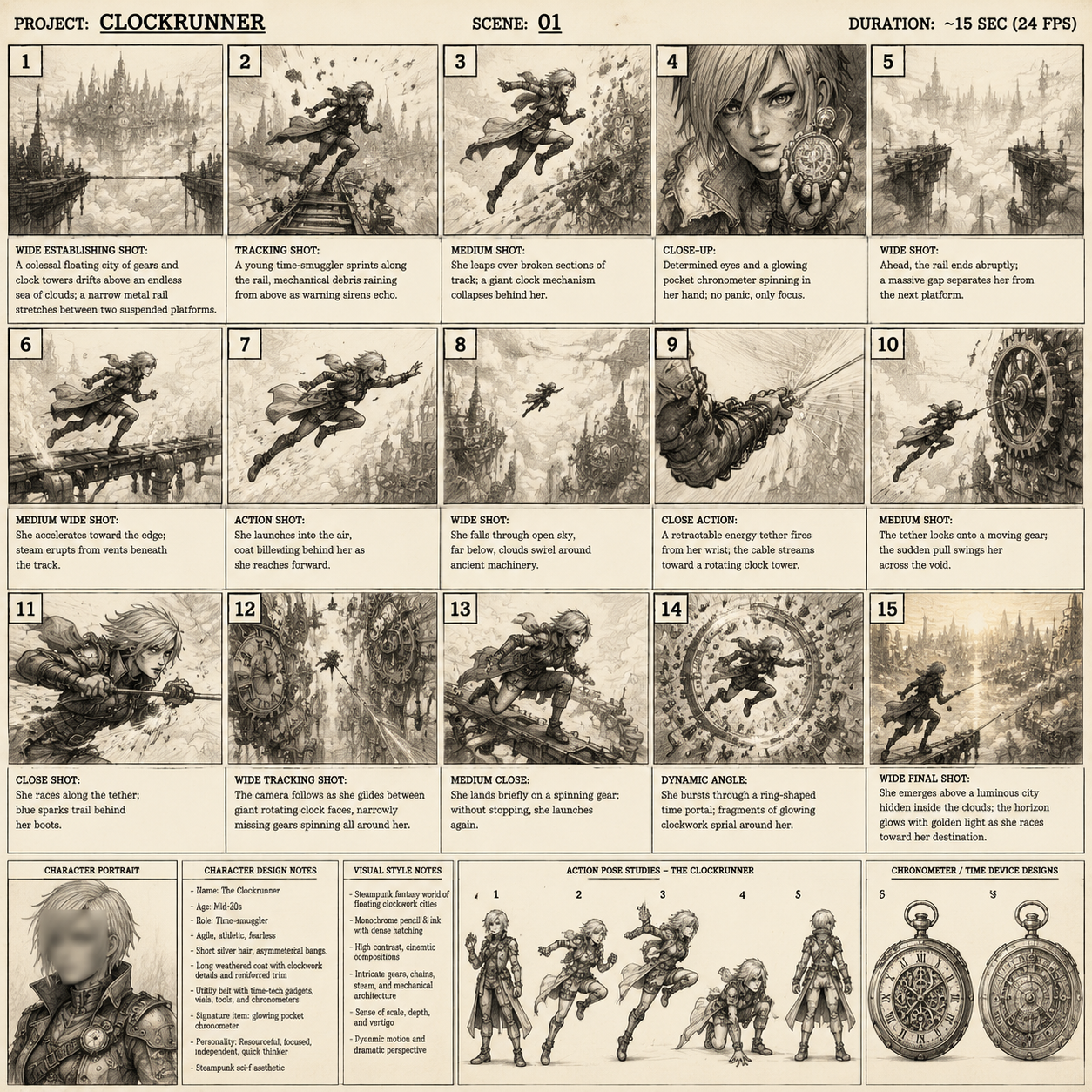
- Planning: proposing coverage — wide, medium, close, insert, reaction — instead of one literal illustration of a sentence.
- Prompt construction: expanding a one-line idea into subject, action, camera, lighting, and aesthetic attributes.
- Continuity checks: comparing wardrobe, props, color temperature, and facial features across shots.
- Assembly logic: recommending transitions and ordering so a sequence reads as a scene rather than a slideshow.
The value is not that the assistant is more creative than you. It is that it never forgets to ask about the eyeline, the screen direction, or whether the character is holding the same mug in shot four as in shot two.
The Core Workflow: From Script Beat to Finished Shot
1. Break the script into beats and shot units
A beat is a change: someone decides something, learns something, or refuses something. Mark beats before you touch a generator. A three-minute scene usually holds six to twelve beats. Each beat needs one to three shots, and each shot needs one clear idea. If a shot is trying to deliver two ideas, split it.
2. Generate and prune a shot list
Ask for coverage, then delete aggressively. Ten shots that each do a job beat twenty that repeat the same information. A useful rule: if you can cut a shot and the scene still makes sense, cut it, then check whether anything was lost. Most amateur sequences fail from redundancy, not from missing coverage.
3. Build prompts from a structured template
Freeform prompting produces pretty accidents. A template produces repeatable results. Keep the field order stable across a project so that when a take fails, you can trace exactly which variable changed. Store every working prompt next to the shot it produced.
4. Review, rank, and iterate
Generate in small batches of three to five per shot, pick the best, and write down why it won. Those notes become the project's prompt library — accumulated craft knowledge that a new collaborator can read in an afternoon.
5. Assemble early
Cut your selects together before you have polished everything. Rough assembly reveals whether the scene works as rhythm and information flow. Fixing a story problem with a new shot is far cheaper than fixing it after twenty finished clips.
Translating Narrative Intent into Prompt Design
The five-part prompt spine
A prompt that survives iteration usually covers five fields: subject, action, camera, light, and look. Keep them in the same order every time.
Weak version: a sad man walks down a street at night.
Strong version: a middle-aged man in a soaked wool coat walks away from camera down a rain-slicked alley, medium-wide tracking shot from behind at walking pace, sodium streetlights with wet reflections, desaturated blue with amber highlights, shallow depth of field.
The second version is not more poetic — it is more specific. It tells the generator what to photograph, not how the audience should feel. Emotion comes from framing, movement, and light, not from adjectives like "sad."
Negative instructions and guardrails
Negative phrasing is underestimated. Statements such as "no camera shake," "no subtitles," "no lens flare," or "steady framing throughout" remove whole categories of failure before generation begins. Keep a standing list of negatives per project, and add to it every time a take fails for a predictable reason.
Reference frames and image-to-video seeds
When a shot must match an existing look, start from a still image rather than text. A single approved reference frame locks palette, lens character, and costume detail far more reliably than a paragraph. Use text for motion, and images for identity.
One variable at a time
When a shot is not working, change one field per batch. Changing lighting, framing, and wardrobe simultaneously gives you a better take you cannot reproduce. Structured iteration is slower on the first pass and dramatically faster on the tenth.
Camera and Composition: A Practical Grammar
Shot size is the most efficient storytelling tool you have. The table below is a useful shorthand when writing prompts or briefing an assistant.
| Shot | Typical purpose | Prompt phrasing |
|---|---|---|
| Wide | Establish geography | "wide establishing shot, full environment visible" |
| Medium | Dialogue and action | "medium shot, waist up, eye-level" |
| Close | Emotion and detail | "close-up, face fills frame, soft background" |
| Insert | Information | "insert shot, hands turning a key, tight framing" |
| Over-the-shoulder | Relationship to space | "over-the-shoulder shot, foreground shoulder soft" |
Movement needs motivation
A slow push-in on a face works because the audience leans in with it. A drifting camera over a landscape works because the scene invites wandering. Movement without motivation reads as noise, and generators will happily add motion to a shot that did not need any. Decide whether the camera moves before you describe how.
Blocking and depth control
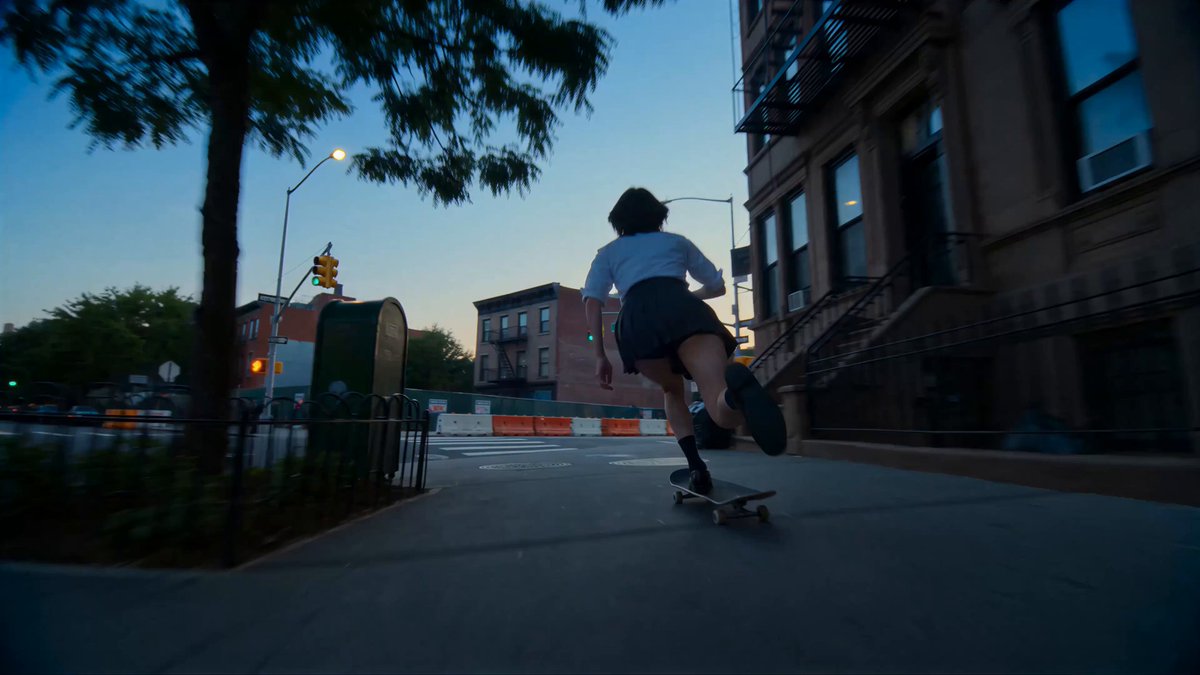
Describe where people are in the frame and how far apart they stand. "Two figures, one at the edge of frame, the other centered, five meters apart" produces better staging than "two people talking." Depth cues — foreground blur, mid-ground subject, background silhouettes — make synthetic footage feel photographed rather than rendered.
Screen direction and eyelines
If a character walks left to right in one shot, they should continue left to right until the geography changes. Inconsistent screen direction is one of the most common reasons AI sequences feel disorienting, and it is entirely preventable with a shot list that records direction next to each clip.
Consistency Across Shots: Characters, Wardrobe, Props
Build identity kits
An identity kit is a short, frozen block of text plus two or three approved reference images per character. It lists face shape, hair, age, build, signature clothing, and any recurring prop. Paste that block into every prompt where the character appears. Do not paraphrase it. Repetition is the point.
Lock the world, not just the people
Locations need the same treatment. Record wall color, furniture placement, window position, and time of day. If a scene spans an afternoon, note how the light should shift across the sequence so the change reads as intentional.
Continuity audits
Before assembly, review all shots of a scene side by side at low resolution. You are looking for wardrobe changes, hair length, prop disappearance, and color shifts between clips. Fixing these at the still-frame stage is fast; fixing them after you have built a timeline is tedious.
Accept controlled variation
Perfect consistency can look lifeless. Allow small, planned differences — a loosened tie, a jacket removed — as long as they follow the story. The goal is continuity of meaning, not pixel-identical repetition.
Pacing, Transitions, and Scene Linking
Pacing follows the dramatic arc
Shot length should track the pressure in the scene. Early beats breathe; late beats accelerate. A rough guide for a two-to-three-minute sequence:
| Narrative phase | Average shot length | Cutting style |
|---|---|---|
| Setup | 6–10 seconds | Wide coverage, longer holds |
| Development | 4–6 seconds | Alternating sizes |
| Escalation | 2–4 seconds | Tighter framing, faster cuts |
| Resolution | 5–12 seconds | Hold, then release |
Transition logic
Cut on action when movement should carry momentum forward. Use a match cut when two shots share a shape, color, or motion and you want a visual rhyme. Reserve dissolves for passage of time, and reserve hard cuts for the moment a scene changes its mind.
Sound as a linking device
Even in silent assembly, plan where ambience, music, and effects will bridge shots. A room tone that continues across a cut makes two separate generations feel like one space. When you generate or source audio, decide early whether a beat lands on a visual cut or on a sound cue.
Choosing the Right Generation Model per Shot
Different shots deserve different engines. Rather than defaulting to one model for a whole project, route each shot according to what it must accomplish.
Decision criteria
- Stylization level: photoreal, painterly, animated, or archival-looking.
- Motion complexity: static framing, simple push, or multi-subject interaction.
- Shot duration: short inserts versus long unbroken takes.
- Identity stability: does a recurring face need to survive the shot?
- Iteration speed: how many attempts can you afford before the deadline?
A practical routing pattern
Use a realism-optimized model for dialogue coverage and close-ups where faces carry the scene. Use a stylized or motion-friendly model for establishing shots, dream sequences, and transitions where texture matters more than likeness. Use image-to-video whenever a shot must match a reference still. Keep a second option for every shot in your list so a recurring failure never blocks the day's work.
Troubleshooting: Common Failure Modes and Fixes
Character drift across shots. Fix with an identity kit, image references, and shorter shot durations. Long takes give the model more time to invent.
Hands and small objects morphing. Reduce their prominence, shoot wider, or place the action behind a foreground element. Insert shots of hands are better generated at a slight angle than straight on.
The camera ignores the instruction. Simplify to one movement per shot. Two simultaneous instructions, such as "orbit while pushing in," frequently collapse into neither.
Flicker and texture crawl. Shorten the clip, stabilize the subject, and avoid high-frequency patterns like stripes, fences, and fine foliage in the background.
Static, lifeless takes. Add a motivated movement, a background action, or a lighting change across the shot. Perfect stillness is rare in real footage.
Style whiplash between clips. Reuse the same look block — palette, contrast, grain, lens character — in every prompt for the scene.
A great take you cannot reproduce. Log the prompt, seed, reference image, and model version immediately. Reproducibility is the difference between a lucky project and a reliable pipeline.
Building a Repeatable Production Pipeline
Structure makes creativity sustainable. A simple, durable setup:
- One folder per scene, with subfolders for stills, generations, sound, and exports.
- A naming convention that encodes scene, shot, take, and date, so sorting is automatic.
- A shot bible: shot list, prompt template, identity kits, look blocks, and negative list in one document.
- Review gates: after the shot list, after rough assembly, and before final polish.
- A client or collaborator log, recording what changed and why.
Assign clear roles if you work in a team: one person owns story and shot list, one owns prompt craft and generation, one owns continuity and assembly. On solo projects, treat those as separate passes rather than separate jobs — do not judge framing while you are still writing dialogue.
FAQ
Do I still need a shot list if the model can generate from a paragraph?
Yes. A paragraph produces a clip; a shot list produces a scene. The list is where pacing, coverage, and continuity decisions live, and it is the document you return to when a take fails.
How many takes should I generate per shot?
Three to five is a healthy default for most shots, fewer for simple inserts, more for complex group action or identity-critical close-ups. Stop as soon as one take clearly does the job.
Can an assistant fix bad acting or weak dialogue?
No. It can improve framing, coverage, and pacing, but performance and writing remain your responsibility. Vague emotional writing produces vague footage no matter how good the tooling is.
What about audio?
Treat audio as a parallel track from the start. Decide which beats land on music, ambience, or dialogue, and cut your visuals to that rhythm. Sequences assembled with sound in mind almost always feel more professional than picture-only edits.
How do I keep a series consistent across many episodes?
Maintain a shared series bible with character kits, location blocks, look blocks, and recurring negative prompts. Every episode inherits from it. Consistency across a series is a documentation problem before it is a generation problem.
Is this workflow useful for vertical short-form video?
Absolutely, with adjustments. Vertical framing favors close-ups and medium shots, faster cuts, and text-safe areas at the top and bottom. Keep establishing shots brief and lean on inserts to convey context quickly.
When should I stop iterating?
When a shot communicates its idea clearly and cuts together without friction. Chasing perfection on every clip consumes the time you need for the shots the audience will actually remember.
