
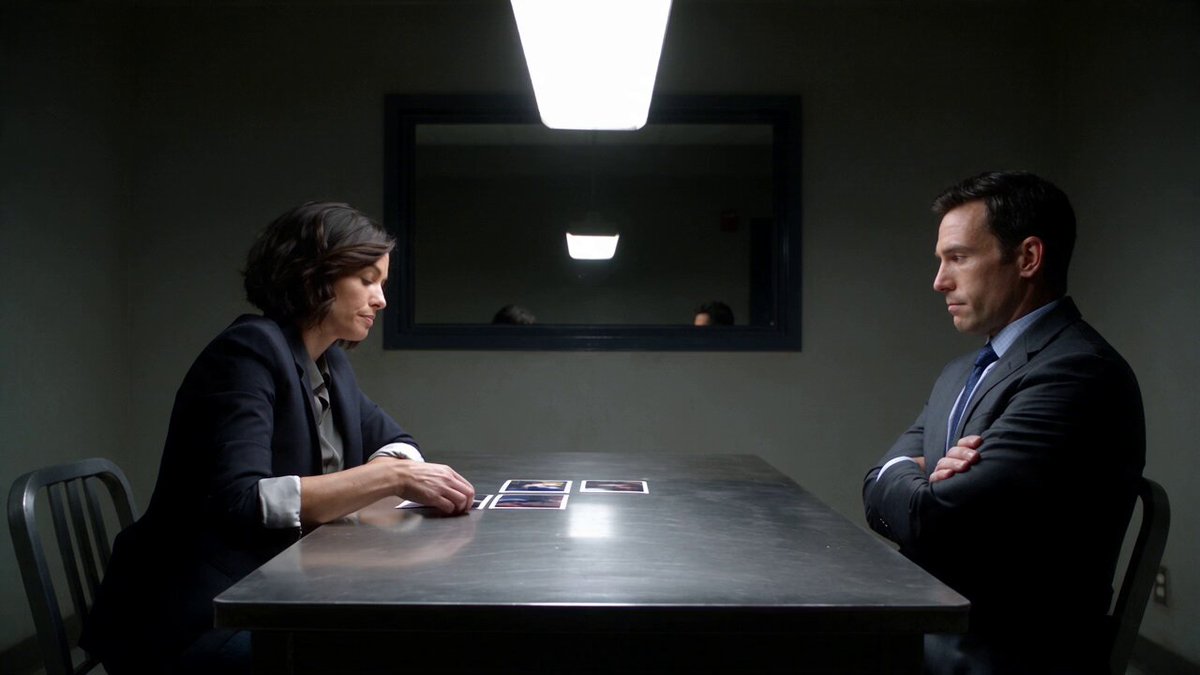



Most people who try to make a video with generative tools start in the wrong place. They open a text-to-video model, paste a paragraph, and hope the output looks like the film playing in their head. It rarely does. The gap is not model quality — it is direction. A camera operator does not invent the scene; a director decides what the audience sees, when they see it, and how it should feel. The same discipline applies to AI video, and it is exactly what an AI directing layer is designed to supply.
An AI director is not a single button. It is a workflow: analyze the script, break it into scenes and shots, define visual language, generate a storyboard, translate each board into a generation prompt, then review the result and reshoot only what fails. This guide walks through that pipeline end to end, with the decision criteria, prompt patterns, and common failure modes you need to make it produce something coherent rather than a collection of pretty clips.
Why Direction Matters More Than Generation
A generative video model is an extremely capable but extremely literal crew member. Give it a vague instruction and it will fill the gaps with whatever is statistically most common. Give it a precise instruction and it will execute with surprising fidelity. The difference between an amateur AI video and a professional-looking one is almost never the model — it is the specificity of the brief behind each shot.
Consider a simple line of script: "She waits for him at the train station." A model asked to render that directly will produce a generic wide shot of a person on a platform. A director asks different questions. Is she hopeful or resigned? Is the station crowded or empty? Do we see her face immediately, or do we hold on her hands until he arrives? Is the camera static, or does it drift toward her as the train sound rises? Those choices carry the meaning. The model only carries the pixels.
This is why script-to-storyboard pipelines matter. They force the interpretive decisions to happen before generation, when changes are cheap. Rewriting a shot list costs nothing. Regenerating forty shots because the emotional arc was wrong costs hours and, depending on your tooling, real money.
The three outputs of a directing pass
A disciplined AI directing pass produces three artifacts before any video is generated:
- A scene breakdown — who is present, where, what changes, and what the scene is emotionally doing.
- A shot list — an ordered list of coverage with framing, movement, duration, and purpose for each shot.
- A storyboard — still frames that define composition, lighting, wardrobe, and color for each shot.
Everything after that is execution. If you can hand these three documents to a human crew and they could shoot the scene, you have a brief strong enough for a video model.
What an AI Director Actually Does
It helps to think of the AI directing layer as four connected capabilities rather than one feature. Understanding them separately makes it easier to troubleshoot when output goes wrong.
Script analysis and scene segmentation
The first job is semantic. The system reads your script and identifies characters, locations, props, emotional tone, and the beats that change the scene's direction. Good segmentation splits the script into units that each have a single dramatic function — a reveal, a reversal, an escalation, a pause. Bad segmentation splits by word count, which produces shots that end mid-thought.
You can do this manually in a document, and for a short project that may be the right call. For anything beyond a few minutes, automating the first pass and then editing it saves real time.
Shot design and visual language
Once scenes are segmented, the system proposes coverage: establishing wide, medium two-shot, close-up on the reaction, insert of the object that matters. It also assigns a visual treatment — lens feel, depth of field, camera movement, palette. This is where an AI director earns its name, because it should be making choices that serve the story rather than decorating the frame.
Storyboard generation
Storyboards are the bridge between language and image. They are not final art and should not be treated as such. Their value is that they lock composition, relative scale, eyeline direction, and lighting mood before you spend generation effort on motion. A rough board that is compositionally correct is worth far more than a beautiful render that ignores the geography of the scene.
Continuity management
This is the hardest part and the one most likely to break a project. If your protagonist wears a red jacket in shot three, she must still be wearing it in shot twenty-seven. If the kitchen window faces east in the establishing shot, sunlight cannot stream through it from the west later. An AI director maintains a consistency ledger — character descriptors, wardrobe, location details, time of day, prop states — and injects the relevant entries into every prompt that touches that element.
The Script-to-Storyboard Pipeline, Step by Step
Here is a practical sequence you can run with almost any combination of tools. The order matters more than the software.
Step 1: Normalize the screenplay into scene units
Strip formatting noise. Convert your script into clean scene blocks with a slug line, a short action description, dialogue, and a one-line statement of dramatic purpose. That last element is the one most people skip, and it is the one that keeps later decisions honest. If you cannot state what a scene is doing in one sentence, the shot list will drift.
Step 2: Extract entities and tone
Build a simple table: characters, locations, recurring props, time of day, weather, and emotional register. This table becomes your consistency reference. Add physical descriptors that will matter visually — age range, build, hair, signature clothing, distinguishing features. Be specific enough to be reproducible and generic enough to avoid likeness problems with real people.
Step 3: Generate the shot list before generating images
Write or generate coverage for each scene. For a two-minute narrative piece, expect roughly fifteen to thirty shots. Each entry should include shot number, scene number, framing, subject, action, camera movement, approximate duration, and the reason the shot exists. If a shot has no reason, cut it. AI video is expensive in time; unused coverage is the most common waste in beginner projects.
Step 4: Produce storyboard frames
Create one still per shot. Start with composition and blocking. Iterate on lighting and palette second, detail last. A useful constraint: if you squint at the frame and cannot tell where the eye should go, the composition is not finished.
Step 5: Translate boards into motion prompts
For each shot, write a prompt that contains the subject description, action, environment, framing, camera behavior, lighting, palette, and style reference. Attach the storyboard frame as an image reference where your tool supports it. This step is where most quality is won or lost.
Step 6: Assemble and reshoot selectively
Cut the generated shots together on a timeline with temp music and scratch dialogue. Watch it once without pausing and note where attention drops. Reshoot only those shots. Rebuilding an entire sequence because one shot is weak is the fastest way to exhaust a project.
Writing Prompts That Read Like Directing Notes
A video prompt is not a description. It is an instruction to a crew. The most reliable prompts are structured into a few predictable slots, written in a consistent order, so you can debug them systematically when something goes wrong.
Camera, lens, and movement
Specify framing (wide, medium, close), angle (eye level, low, high, over-the-shoulder), movement (static, slow push in, handheld follow, crane up), and lens character (shallow depth of field, wide-angle distortion, telephoto compression). Movement and framing do the storytelling work; lens character does the polish.
Lighting and color as emotional cues
Name the source and the mood. "Warm practical lamps behind the subject, cool moonlight from the window, deep shadows on the left side of frame" gives a model far more to work with than "moody lighting." Tie palette to emotional state and keep it consistent across a scene: a sequence that shifts from desaturated blue to warm amber is telling the audience something even without dialogue.
Performance and blocking
Describe what the body is doing, not what the character feels. "She keeps her hands in her pockets and does not turn to face him" is directable. "She is sad" is not. Blocking — where people stand relative to each other and to the camera — communicates relationships faster than any facial expression a model can render.
A reusable prompt skeleton
Subject and wardrobe, then action, then environment and time of day, then framing and camera movement, then lighting and palette, then style and grain, then continuity notes. Keeping the order fixed across every shot in a sequence makes the whole film feel authored rather than assembled.
Keeping Characters and Locations Consistent
Consistency is the single biggest technical obstacle in AI video, and it is solved by process rather than by hope.
First, write a locked character sheet for each principal: a fixed text description and, where possible, a reference image used identically across every shot. Second, define location sheets the same way — architecture, key furniture, window direction, dominant colors. Third, keep a continuity log that records state changes: a jacket gets wet in scene four, so it stays wet until scene nine.
When a shot comes back inconsistent, do not rewrite the whole prompt. Change one variable at a time. Most inconsistency comes from three sources: a reference image that is too far from the target framing, an ambiguous descriptor that the model interprets differently at different scales, or a prompt that has grown so long the important descriptors are diluted.
Choosing Tools for Each Stage
Different stages reward different tools, and mixing them deliberately beats forcing one app to do everything.
- Screenplay and breakdown: a plain structured document, or a script analysis tool that outputs scene tables.
- Storyboarding: image generation with strong reference and control features, plus a way to keep a consistent style preset.
- Motion: a video model that accepts image-to-video and supports camera instructions; pick one model per project where possible so grain and color science stay uniform.
- Assembly: any editor with a timeline, markers, and the ability to swap shots without disturbing sync.
- Continuity: a spreadsheet. Unglamorous, and more reliable than memory.
Decision criteria when comparing options: does it accept image references, does it respect camera language, how long can a clip be, how stable is character identity across shots, and how expensive is a failed take in time? For narrative work, stability beats maximum resolution almost every time.
Common Mistakes That Break a Sequence
Prompting per shot without a plan. You end up with beautiful clips that do not cut together because eyelines, screen direction, and scale are inconsistent.
Overloading a single prompt. Ten competing ideas produce a muddled frame. Split into more shots instead.
Ignoring screen direction. If a character exits frame right, they should re-enter from frame left in the next shot unless you deliberately want disorientation.
Generating dialogue shots first. Performance-heavy shots are the hardest to get right. Lock the geography of the scene with simpler coverage before attempting them.
Treating storyboards as final art. Time spent perfecting a board that will be replaced by motion is time not spent on the shot list, where decisions actually compound.
No duration planning. Clips generated without a target length rarely cut to the rhythm you want. Write approximate durations into the shot list and generate with them in mind.
Planning Time, Effort, and Iteration
The practical rule is that pre-production effort scales linearly while generation effort scales unpredictably. A strong shot list and board set turn generation into a checklist. A weak one turns it into an endless search for the right clip.
Budget your iterations per shot rather than per project. A typical realistic split: two or three attempts for static coverage, five or more for anything involving hands, crowds, or complex motion. If a shot exceeds that, the problem is usually conceptual — the idea is not achievable in a single clip and should be split into two.
Quality Control: Reviewing Footage Like an Editor
Watch the assembled sequence three times with different注意力 — first for story clarity, then for continuity errors, then for technical faults like warped hands, flickering textures, or drifting backgrounds. Keep a numbered fault list and fix in order of audience impact, not in order of how annoying the fault is to you.
A useful test: mute the audio and watch. If you cannot follow the story from the images alone, your coverage is missing something structural, and no amount of prompt polishing will fix it.
FAQ
Do I need a finished screenplay before starting?
You need a scene-level plan. A full screenplay helps, but a one-page treatment with clear beats is enough to produce a shot list. What you cannot skip is a stated dramatic purpose for each scene.
How many storyboard frames should I make?
One per shot, plus alternates for anything you are unsure about. For a two-minute narrative, that usually means fifteen to thirty frames.
Can one tool handle everything?
It can, but you will usually get better results by using a script analysis tool for breakdown, an image model for boards, a video model for motion, and an editor for assembly. The handoff between stages is where quality is protected.
Why do my characters keep changing appearance?
Usually because continuity descriptors are inconsistent or reference images vary in framing. Lock a character sheet, reuse the same reference image, and change one variable at a time when debugging.
How long should individual AI clips be?
Short enough to cut cleanly — typically three to eight seconds. Longer generations tend to accumulate drift, and short clips give you flexibility in the edit.
Is storyboarding worth it for a short social video?
Yes, in reduced form. Even a six-shot list with a stated purpose per shot will outperform improvised prompting, and it takes only a few minutes to write. Direction is the cheapest part of the process and the one that most determines whether the final result feels intentional.
