
Generative video stopped being a novelty the moment it started fitting into real production schedules. Directors now storyboard with moving images instead of static frames, editors receive usable coverage from a single prompt, and small teams deliver spots that would previously have required a full crew. The interesting question is no longer whether AI can make a clip. It is how AI changes the shape of a production day.
The shift is structural rather than magical. Generation is only one step in a longer chain that includes planning, look development, motion, sound, assembly, and delivery. Teams that understand the whole chain get predictable output. Teams that treat a model as a vending machine get lucky once and then spend weeks chasing consistency.
This guide breaks down what is actually changing in filmmaking, where the bottlenecks still are, and how to build a workflow that survives contact with a deadline.
Why generative video moved from demo to production tool
The jump did not come from one breakthrough. It came from several improvements stacking at the same time: longer coherent clips, better temporal stability, native audio generation, and cheaper inference. A model that once produced a beautiful four-second drift now produces a thirty-second sequence where a character walks, turns, and speaks without their face melting between frames.
Equally important, generation became controllable. Camera moves can be specified. Motion strength can be tuned. Reference images can anchor identity. Depth and pose data can be fed in to keep a shot on rails. That control is what turns a generator into a camera you can direct rather than a slot machine you can only hope to please.
The practical consequence is that previsualization and final footage are converging. A director can generate an animatic that carries the actual lighting and lens character of the intended shot, then use it as a reference for the live-action or fully synthetic version. Notes become visual instead of verbal. That single change removes an enormous amount of miscommunication from a production.
The five layers of a modern AI video pipeline
Almost every working pipeline, whether it belongs to a solo creator or a mid-size studio, breaks into the same five layers. Skipping a layer is the most common reason a project stalls midway.
Script and shot breakdown
Everything begins with a structured breakdown: scene, beat, shot, duration, camera intent, and audio intent. Models handle structured prompts far better than prose paragraphs. If your breakdown lives in a spreadsheet or a structured document, you can generate, regenerate, and reassign shots without losing track of what belongs where.
Look development
This layer defines palette, contrast, grain, lens behavior, and the reference frames that define the visual grammar. Locking a small set of approved stills here saves hours later, because every generated shot can be compared against them for drift.
Motion and performance
Here you decide how much of the movement is generated versus driven by reference video, pose data, or motion capture. Documentaries and dialogue scenes usually benefit from heavy reference driving. Montages and dream sequences can lean into free generation.
Audio
Dialogue, ambience, and music increasingly arrive as part of the same generation pass. Treat generated audio as a scratch track until it passes a critical listen. Room tone and reverb tails are the usual giveaways that a track was machine-made.
Assembly and finishing
Conform, grade, stabilize, retime, and mix. This layer is where an AI-heavy project either looks like a film or looks like a folder of clips. Never skip a proper grade and a proper mix, even on short-form work.
What genuinely improved in generative video quality
Three quality dimensions matter most in a production context, and all three have moved noticeably.
Temporal coherence. Objects keep their shape across a shot. Reflections track. Shadows behave. Cloth folds follow the body. Early generators produced frames that were individually convincing but collectively unstable; that gap has narrowed sharply for short and medium shots.
Physical plausibility. Weight reads correctly more often. A glass being set down lands with appropriate mass. Liquids pour with believable viscosity. This matters because viewers forgive stylization but punish physics errors instantly, even if they cannot name what felt wrong.
Camera language. The vocabulary of cinema is now expressible in prompts and controls: dolly in, slow crane up, handheld drift, rack focus, anamorphic flare. This is a bigger deal than it sounds. Camera language is how a scene communicates point of view, and the ability to specify it directly has turned generic generation into authored cinematography.
What has not improved as fast: long takes with multiple characters interacting, complex hand manipulation, and precise continuity across cuts. Plan around these limits instead of fighting them.
Character consistency: the core technical problem
Ask any filmmaker who has wrestled with an AI-heavy scene what broke first, and the answer is almost always the face. Identity drift across shots is the single biggest obstacle to narrative work, because a story depends on the audience believing they are watching the same person throughout.
There are three practical ways to hold identity:
-
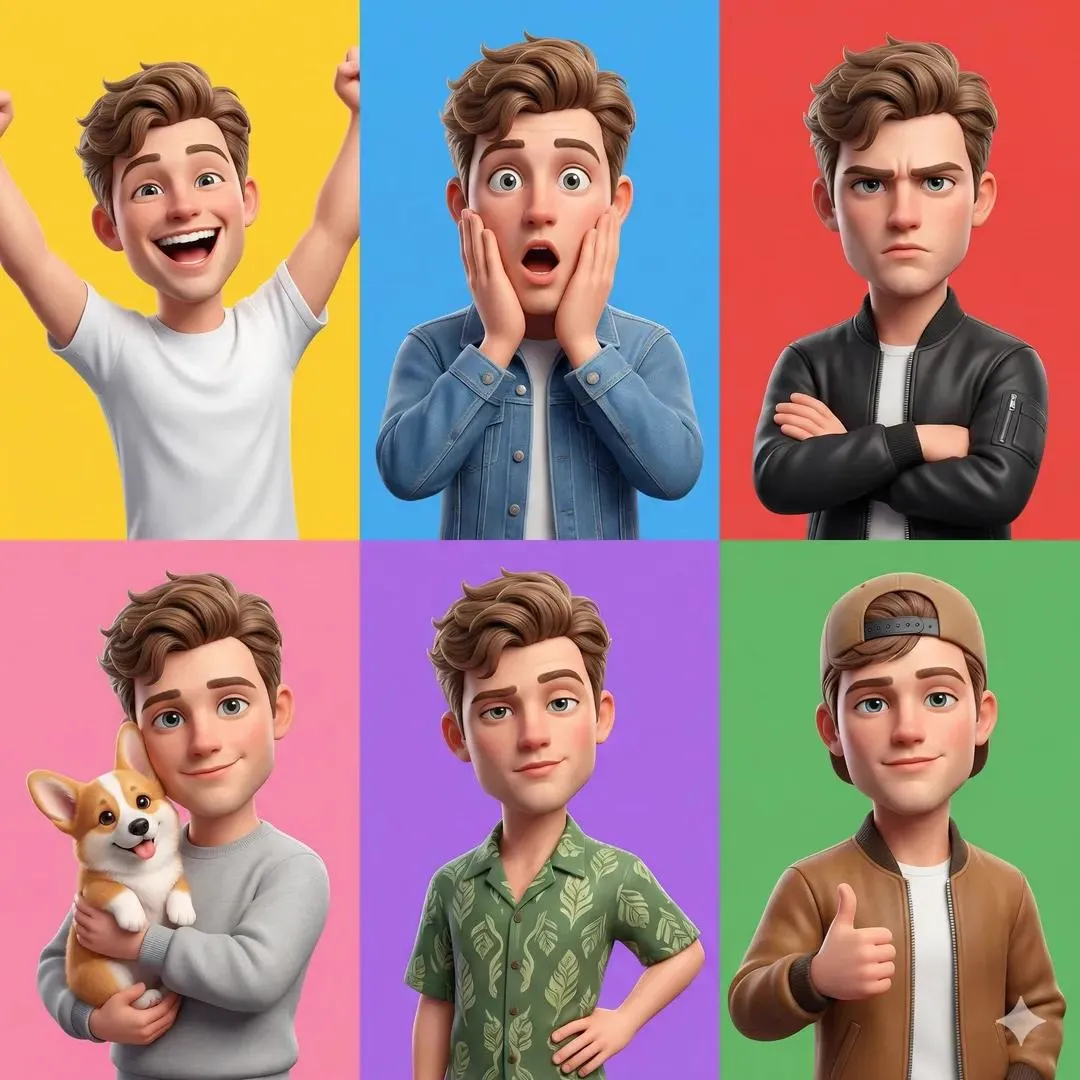
Multi-image reference fusion. Feed several angles, expressions, and lighting conditions of the same character and let the model fuse them into a stable representation. The more varied the reference set, the more robust the result in unusual poses.
-
Shot-level identity locking. Generate a handful of approved frames for a character at the start of a scene and reuse them as anchor references for every subsequent shot. Treat these frames as a costume fitting: once approved, they are not up for debate.
-
Modular generation with post unification. Generate body and performance separately from the face, then unify in post with a face-replacement or identity-transfer pass. This costs more time but gives the most control for close-ups.
A useful rule: the wider the shot, the more tolerant the audience is of identity variation; the tighter the shot, the more reference discipline you need. Budget your consistency effort accordingly rather than spreading it evenly across every shot.
Hosted premium models versus open-weight models
A practical decision framework helps more than loyalty to any single tool.
Choose a hosted, premium model when you need the highest possible fidelity for hero shots, native synchronized audio, long clip duration, and minimal infrastructure work. The tradeoffs are cost per generation, rate limits, content policy constraints, and less control over the underlying pipeline.
Choose open-weight models when you need volume, reproducibility, fine-tuning, or on-premises privacy. The tradeoffs are hardware cost, engineering time, and a steeper path to top-tier output. Many teams settle into a hybrid: open-weight for exploration, iteration, and coverage; premium hosted generation for the handful of shots that carry the film.
Three questions decide most cases:
- How many generations will this project need before it locks? High iteration favors open weight.
- Does the work involve sensitive footage or client confidentiality? That often forces local inference.
- Do you need synchronized dialogue and effects in one pass? That currently favors hosted multimodal models.
AI director agents and automated shot planning
A newer category of tool sits above the generators and acts less like a renderer and more like a first assistant director. These planning agents take a script or treatment and produce a shot list, suggest coverage, assign camera movements, and choose which model or pipeline best fits each shot.
The value is not that the agent replaces creative judgment. It is that it removes the blank-page paralysis and the repetitive logistics. A director can review a proposed shot sequence, delete two shots, merge three others, and hand the revised plan back for generation. What used to take a day of prep now takes an hour, and the revision cycle can happen five times instead of once.
Where these agents genuinely help: coverage planning, continuity tracking, prompt structuring, and budget estimation for generation volume. Where they still fall short: subtext, performance nuance, and the judgment call about when a scene should not be cut at all. Keep a human on those decisions.
GPU economics and infrastructure planning
Generative video is compute-hungry in a way that still images never were. A single second of high-quality output can consume many times the compute of a still frame, and iteration multiplies that. Planning infrastructure is now part of producing.
A few working principles:
- Separate exploration from final rendering. Fast, low-resolution drafts on modest hardware; high-resolution final passes on the best available resource. Never iterate at final quality.
- Queue and batch. Group generations overnight where possible. Throughput improves and you avoid burning a whole day watching progress bars.
- Cache aggressively. Approved character references, look frames, and depth passes should be stored and reused rather than regenerated.
- Budget by shot, not by project. Estimate generation counts per shot type and multiply. Close-ups with dialogue are expensive; wide establishing shots are cheap. Knowing the distribution prevents nasty surprises.
For teams without dedicated hardware, renting capacity by the hour is often cheaper than owning it, provided you can keep the pipeline saturated. Idle GPUs are the real cost driver.
End-to-end workflow: a ninety-second narrative short
Here is a workflow that holds up in practice.
Step 1: Write for the format. Ninety seconds is roughly eight to twelve shots. Write a script that a viewer can follow without exposition, and mark the emotional beat of each shot.
Step 2: Build a shot table. Columns for shot number, description, duration, camera move, audio intent, model choice, and status. This table becomes the single source of truth.
Step 3: Develop the look. Produce three to five approved stills that define palette, contrast, and lens character. Reject anything that does not match before you generate a single second of motion.
Step 4: Lock characters. Generate a reference sheet per character: front, three-quarter, profile, and two emotional states, in consistent lighting. Approve and freeze.
Step 5: Generate drafts at low resolution. Get every shot to a watchable state before polishing any of them. Assembling a rough cut early reveals story problems while they are still cheap to fix.
Step 6: Replace weak shots. Identify the two or three shots that break the film and regenerate them with tighter reference control or a hybrid approach.
Step 7: Generate audio. Dialogue, ambience, and music. Keep a scratch track and a final track separate so you can swap without relinking everything.
Step 8: Conform and grade. Unify color, grain, and contrast across all sources. This step does more for perceived quality than any upgrade in model choice.
Step 9: Mix and deliver. Level dialogue, carve space for music, and deliver in the correct aspect ratio and codec. Do not skip loudness normalization.
Step 10: Document the pipeline. Save prompts, seeds, references, and settings per shot. The next project will reuse half of it.
Mistakes that quietly ruin AI-assisted films
Chasing fidelity before structure. Beautiful shots that do not cut together produce a mood reel, not a story. Lock the cut first.
Generating at final quality too early. It is slow, expensive, and discourages the revision that improves the film.
Ignoring sound. Most of the perceived quality gap between amateur and professional AI work lives in the mix, not the pixels.
Over-relying on one model. Different shots suit different generators. A montage shot and a dialogue close-up rarely want the same tool.
Letting identity drift slide. One inconsistent shot pulls the audience out of the story more than a slightly soft frame ever will.
No version discipline. Without naming conventions and a shot table, you will lose the good take among forty near-identical files.
How crew roles are shifting
Generation does not delete jobs; it redistributes them. The work of a director of photography increasingly includes prompt and reference design alongside lighting. Editors spend more time selecting from generated coverage and less time assembling from a fixed set of takes. VFX artists move toward pipeline and identity unification rather than rotoscoping.
New roles are appearing too: prompt and look supervisors, model pipeline engineers, and continuity leads who track character references across episodes. Small teams gain the most, because a three-person unit can now cover ground that previously required a department. The constraint shifts from labor to judgment: deciding what is worth making.
Frequently asked questions
Can AI-generated video carry a full narrative film? For short and mid-length work, yes, provided the story is designed around the strengths and limits of generation. Long-form features still benefit from hybrid approaches, mixing synthetic and captured footage.
Do I need expensive hardware? Not necessarily. Renting capacity or using hosted models gets most projects to completion. Local hardware becomes worthwhile when volume, privacy, or fine-tuning demands it.
How do I avoid the generic AI look? Lock a specific look before generating, use real reference photography, and grade deliberately. The generic look usually comes from default settings and no color work, not from the technology itself.
Is generated footage usable in commercial work? It depends on the license terms of the specific model, the territory, and the client's requirements. Review terms per project and keep documentation of every generated asset.
What is the biggest time sink? Regenerating shots to fix identity drift. Solving consistency up front saves more schedule than any rendering optimization.
Should I generate audio separately? Usually yes for dialogue scenes, where you want control over timing and performance. Unified generation is convenient for ambience and single-pass shots.
Where this leaves filmmakers
The direction of travel is clear: generation becomes infrastructure, and taste becomes the differentiator. When anyone can produce a competent shot, the value moves to shot selection, pacing, performance direction, and sound. Those are craft skills, and they transfer directly from traditional filmmaking.
The teams that will do well are the ones treating generative video as one component in a disciplined pipeline rather than a shortcut that replaces one. Build the shot table. Lock the references. Draft cheap, finish carefully, and mix like it matters, because it does.
