
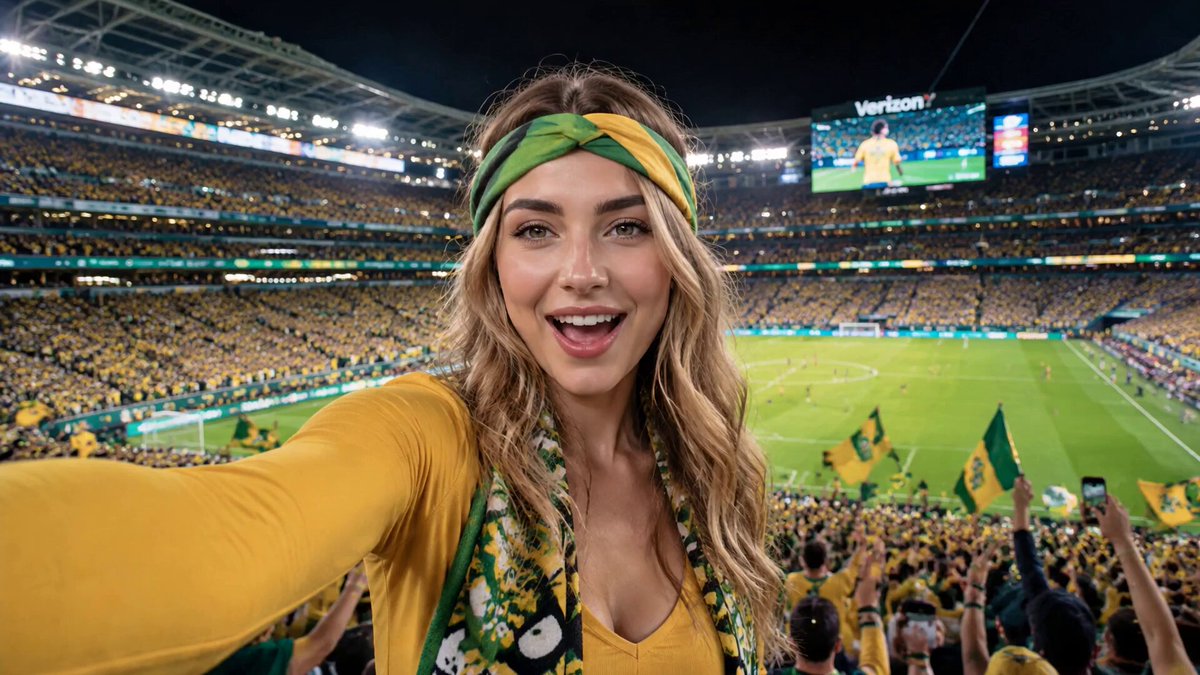

Football is the most-watched sport on the planet, and the content pipeline around it never sleeps. Between highlights, tactical breakdowns, transfer announcements, sponsor spots, and fan edits, demand for fresh visuals outruns what any small production team can shoot. AI video generation has become a practical answer: you can now build convincing football sequences — training-ground drills, stadium entrances, slow-motion strikes, floodlit celebrations — without a crew, a stadium booking, or a licensing budget. This guide covers the full workflow, from shot design and model choice to prompting, consistency, and the finishing pass that makes generated clips look intentional.
Why AI Video Generation Changed Sports Production
Traditional sports content has a hard bottleneck: access. Getting a camera pitchside, capturing a player emerging from the tunnel, or filming a crowd in full voice requires permissions, timing, and money. Stock libraries fill part of the gap, but the same dozen clips appear in every edit and rarely match the mood of a script.
Generative video removes most of that friction. A producer can describe a rainy Tuesday night under floodlights and have usable footage within minutes, which changes three things. Iteration becomes cheap — five visual directions can be tested before committing to one. Scale becomes possible — vertical, square, and long-form variants all derive from a single foundation. Niche becomes viable — a futsal community, a regional league, or a grassroots women's club can finally get custom visuals.
The catch is that football is one of the hardest subjects to fake convincingly. Everything that makes the sport thrilling also makes it difficult to generate coherently, and understanding those constraints is the foundation of any reliable workflow.
What Makes Football Unusually Hard for AI
Generic AI video demos show a single subject moving slowly in a clean environment. Football is the opposite: many bodies, fast action, constant occlusion, and a camera that is itself moving.
Motion density and occlusion
In a real match, twenty-two players plus officials and a crowd are in constant motion, crossing in front of one another continuously. Models struggle when limbs overlap, when a ball is partially hidden, or when several players converge in a small area. The result is the classic failure mode: a player who grows a third leg for four frames, or a ball that changes shape mid-flight.
The practical response is to design shots around motion clarity. Wide shots with a clean ball trajectory, single-player close-ups, and controlled drills work far better than chaotic goalmouth scrambles. When you do need a scramble, keep it to two or three seconds and cut away before artifacts compound.
Camera language that must be imitated
Football has its own cinematography grammar: the low tracking shot behind the goal, the sideline dolly, the crane rising over the stand, the handheld tunnel walk. Models respond well to explicit camera instructions and poorly to vague ones. A prompt that says cinematic produces something generic; a prompt that says slow dolly left at grass level, ball entering frame from the right, shallow depth of field gives the model a target it can actually hit.
Light, weather, and atmosphere
Floodlit night games, low winter sun, rain-slicked pitches, breath vapour in cold air, lens flare, and dense crowd bokeh are all strong atmospheric cues — and all difficult to render consistently. Atmosphere is where AI football footage either looks impressive or instantly fake. Fog and rain hide detail, which helps. Crisp midday sun exposes every hand and jersey fold, which hurts.
The takeaway is simple: treat football generation as a shot-design problem, not a prompt-luck problem.
Choosing the Right Model for Each Shot Type
No single model is best at everything. The productive approach is a small repertoire, with each tool assigned to the job it does best.
Match model strengths to shot purpose
Generative video tools fall into a few practical families:
- Cinematic realism models excel at photoreal environments, natural lighting, and slow camera moves. Use them for stadium exteriors, tunnel walks, crowd shots, and hero moments.
- Fast draft models prioritise speed over fidelity. Use them for animatics, timing tests, and camera-angle exploration.
- Stylised and animation models handle illustrated, comic, or motion-graphic looks. Use them for tactical explainers, social bumpers, and branded segments where realism is not the goal.
- Image-to-video models are the workhorse of consistency. Generate a strong still, then animate it, and frame-to-frame stability improves dramatically.
- Identity and reference tools help keep a kit, a crest, or a face recognisable across shots.
Resolution, duration, and aspect ratio
Decide the delivery format before generating anything. A 16:9 broadcast cut, a 9:16 vertical short, and a 1:1 social tile have different framing logic, and reframing after the fact crops away the very detail you paid for.
Duration matters too. Most models produce short clips best, and quality often degrades as duration increases. Rather than fighting for a twelve-second continuous shot, plan sequences as a series of three-to-five-second beats. Sports editing is cut-driven anyway, so short clips are an advantage rather than a limitation.
Draft cheap, finish expensive
A reliable budget pattern: generate many low-cost drafts, select the ten percent that work compositionally, then regenerate only those at full quality. This keeps spend predictable and lets you explore aggressively early, when decisions are still cheap to change.
Writing Football Prompts That Hold Together
Prompting for football is a discipline with its own conventions. The goal is specificity that constrains the model without overloading it.
The five-part prompt formula
A prompt that consistently produces usable footage usually contains five elements:
- Subject — who or what is in frame: a striker in a red kit, a goalkeeper in gloves, a referee, a wall of supporters.
- Action — the specific movement: sprinting onto a through ball, striking with the inside of the foot, jumping for a header.
- Camera — position, movement, and lens: low behind the goal, slow tracking right, 35mm equivalent, shallow depth of field.
- Environment — pitch, weather, time of day, background: wet grass, floodlights, packed stand blurred behind.
- Mood and grade — the emotional register: tense, triumphant, documentary, muted teal-and-orange grade.
Keeping all five in one sentence per shot makes prompts readable and reproducible. It also makes A/B testing straightforward: change one element, keep the rest fixed, and you learn what actually moved the result.
Negative prompts and continuity anchors
Negative prompts are underused in sports work. Typical exclusions worth adding: extra limbs, distorted ball, warped goalposts, text overlays, watermarks, duplicated players, floating equipment.
Continuity anchors are short descriptors you repeat verbatim across shots — kit colour, crest position, pitch texture, light direction. Repeating them does not guarantee consistency, but it meaningfully narrows the drift between clips.
Iterating without losing what worked
Keep a running prompt log. When a shot works, save the exact prompt, seed if available, and settings. When it fails, note which element you changed. After twenty or thirty generations you will have a personal library of reliable fragments, which is far more valuable than any generic prompt template.
A Step-by-Step Football Video Workflow
This workflow scales from a single social clip to a multi-shot campaign.
Step 1 — Storyboard the sequence first
Write the sequence as a shot list before opening any tool. Each line should specify shot size, action, camera, and duration. A thirty-second piece typically needs eight to twelve shots, most of them two to four seconds long. This document becomes both your generation checklist and your editing blueprint.
Step 2 — Generate stills before video
Use an image model to produce key frames. Stills are cheap, fast, and easy to iterate on, and they let you lock composition, kit colours, and lighting before committing to expensive video generation. Review them as a contact sheet: do the shots feel like they belong to the same match?
Step 3 — Animate selected shots
Convert approved stills into clips with an image-to-video model, using short durations and modest motion strength. Movement should be motivated: a player turning, a camera pushing in, a ball rolling. Avoid asking for complex multi-action sequences in a single clip.
Step 4 — Assemble and pace
Bring everything into your editor and cut to a temporary track. Pacing is where AI footage becomes convincing: quick cuts hide imperfections, and sound carries continuity that visuals alone cannot. Cut on motion, cut on impact, and never hold a generated shot longer than it can sustain.
Step 5 — Sound design and finishing
Crowd ambience, boot strikes, whistle blasts, and commentary-style voice under a sequence do more for perceived realism than another hour of regeneration. Layered audio also masks small visual inconsistencies, which is why the best AI sports edits are usually sound-first.
Keeping Visual Consistency Across Shots
Consistency is the difference between a sequence that reads as one match and a sequence that reads as unrelated clips. Four techniques do most of the work:
- Anchor on a reference image. Keep one approved frame open and describe it in every subsequent prompt.
- Limit the palette. Two kit colours, one pitch tone, one light condition. Fewer variables means fewer contradictions.
- Reuse camera positions. Audiences accept variety, but not impossible geography. If the sun is behind the goal in shot one, it should still be there in shot five.
- Order cuts deliberately. A wide shot between two close-ups resets attention and buys tolerance for small differences.
Where consistency still fails, cover it with editing: a cutaway, a crowd insert, a graphic overlay, or a brief black frame before a title card.
Post-Production: From Raw Clips to Finished Footage
Generated footage rarely ships untouched. A short finishing pass closes most of the remaining gap.
Stabilisation, upscaling, and cleanup
Apply mild stabilisation to camera-move shots, then upscale to delivery resolution using a detail-preserving upscaler rather than a simple resample. For persistent artifacts — a warped ball, a flickering jersey — the fastest fixes are usually a crop, a short speed ramp, or a track-and-paint patch over two or three frames.
Colour grading and grain matching
Uniform grading is a powerful unifier. Pull all clips toward one look, add subtle grain, and match black levels across shots. A light vignette and a consistent contrast curve do more for cohesion than regenerating problem clips. If your sequence mixes generated and real footage, grade the real footage toward the generated look rather than the reverse — it is cheaper and usually more convincing.
Common Mistakes to Avoid
- Asking for too much in one clip. Multi-action prompts produce mush. One action, one camera move.
- Skipping the still stage. Going straight to video wastes time and budget on compositions that were never going to work.
- Ignoring the ball. The ball is the viewer's focal point and the most common artifact. Frame it clearly and keep its motion plausible.
- Generating in the wrong aspect ratio. Decide delivery format first, always.
- Over-relying on realism. Stylised, graphic, and animated treatments are often more effective and far easier to control.
- Holding shots too long. Generated footage has a shorter attention window than real footage. Cut earlier than feels natural.
- Neglecting sound. Silent generated footage almost always looks synthetic.
Rights, Disclosure, and Responsible Use
AI-generated sports content sits in a sensitive area. Real club crests, league marks, sponsor logos, and player likenesses are protected, and creating footage that implies a real player or club said or did something is a legal and reputational risk.
Safe practice looks like this: use invented kits and generic crest shapes, avoid real player faces, label synthetic footage where your platform or audience expects it, and keep a record of how each clip was produced. If a client needs real-brand assets, treat that as a licensing conversation rather than a prompt detail.
FAQ
How long does a thirty-second AI football video take to produce?
With a locked shot list and approved stills, one editor can usually finish a thirty-second sequence in a day. The first pass — concept, prompt development, and stills — takes longest. Once your prompt library exists, later projects move noticeably faster.
Can AI generate a full match?
No, and attempting it is usually a mistake. Generative models are strongest in short, well-designed beats. Use them for sequences, teasers, stylised explainers, and inserts, not continuous gameplay simulation.
Do I need video generation experience?
You need editing instincts more than technical knowledge. Understanding pacing, composition, and sound design matters more than knowing which sampling setting to choose.
Which is better, text-to-video or image-to-video?
Image-to-video generally wins on consistency because you control composition before motion is introduced. Text-to-video is useful for exploration and for shots where you have no strong reference in mind.
How do I stop the ball from morphing?
Keep the ball large in frame, put it in predictable motion, keep clips short, and avoid crowded scenes. If it still distorts, cut on the strike rather than showing the follow-through.
What is the biggest bottleneck?
Not generation speed — selection. Most of the work is reviewing output, discarding ninety percent of it, and making confident choices quickly.
Where to Take This Next
Start small. Pick one shot you have always wanted but could never afford — a floodlit tunnel walk, a slow-motion volley from grass level, a crowd erupting as the ball hits the net — and build it end to end: still, animation, sound, grade. That single finished shot teaches more than a week of reading.
From there, expand into sequences: three shots, then eight, then a full thirty-second piece with a coherent look. Build your prompt library as you go, and keep a folder of reference frames that define your visual language. The teams getting the most out of AI football video are not the ones with the most tools — they are the ones with the clearest shot lists and the discipline to cut early.
