
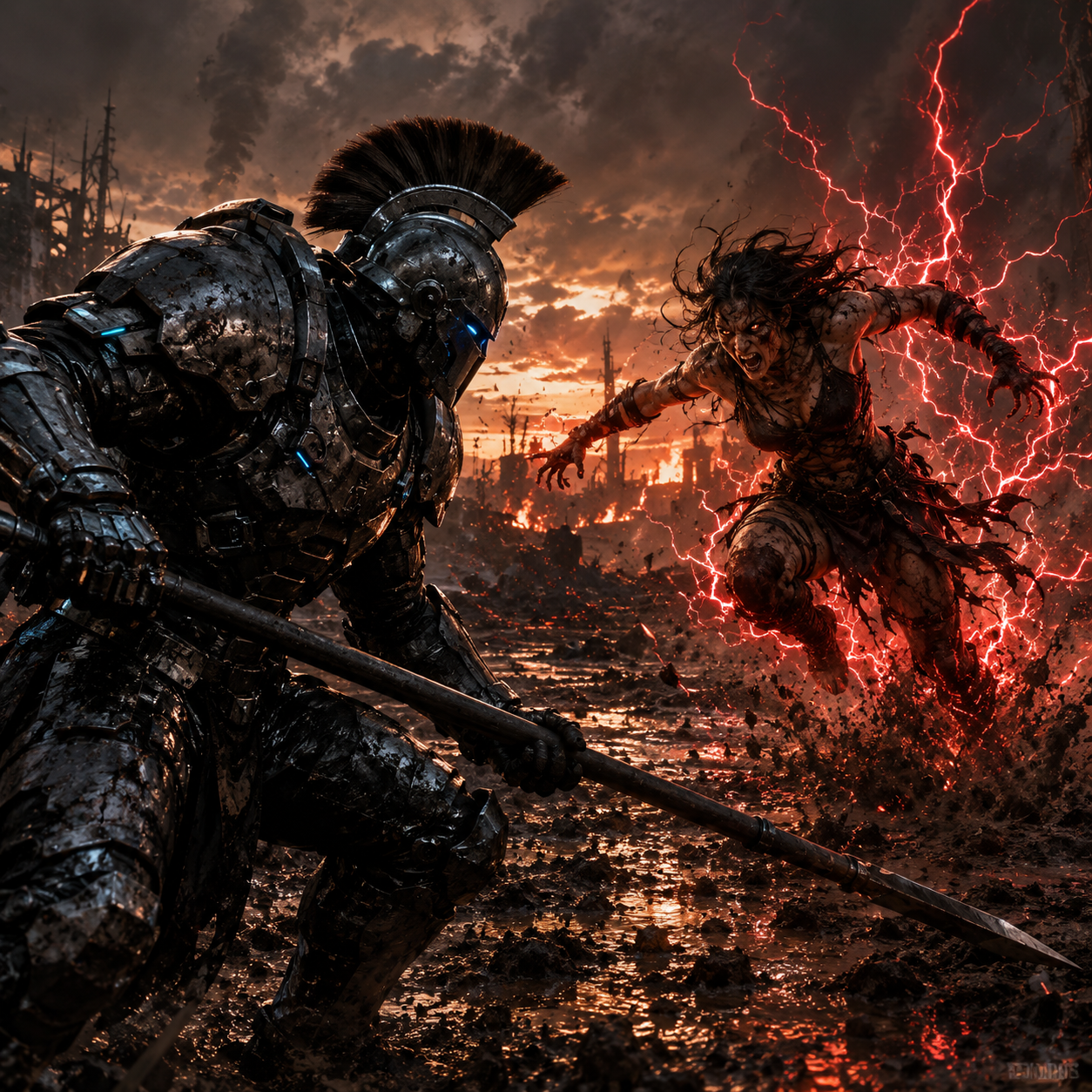
Image-to-video is the quiet revolution in generative media. Text-to-video gets the headlines, but the most reliable way to control what a model produces is to give it a reference image. Start with a photo, a rendered frame, or a character design, and the model animates it: a portrait blinks, a product rotates, a concept sketch becomes a cinematic shot. In 2025 this capability has moved from demo to production, and it is reshaping how marketing teams, filmmakers, and independent creators produce moving images.
This guide covers the state of AI image-to-video: the model architectures driving the latest results, the competition among leading tools, the techniques that keep characters and styles consistent, and the practical workflows that turn a still image into finished motion.
Why Image-to-Video Is the Control Layer for AI Video
Text is a lossy way to describe a picture. When you ask a video model for "a red sports car at sunset," the model invents its own red sports car: the exact shade, the body shape, the reflections are all its choices. An image-to-video model starts from an actual image, so the car is the car. The prompt only describes what moves and how.
This control matters in every serious use case. Brands need their product to look like their product, not like an approximation. Filmmakers need a character's face to match the concept art. Marketers need the visual style of a campaign to survive from storyboard to final video. Image-to-video is the mechanism that delivers that consistency, which is why it has become the backbone of production-grade generative workflows.
The Current Landscape in 2025
The generative AI market is on a trajectory toward trillions of dollars in value by the end of the decade, and video generation is one of its fastest-growing segments. More importantly, the technology has crossed a maturity threshold. The tools that felt like toys two years ago now produce footage that holds up on a phone screen, a billboard, or a cinema display. Image-to-video capabilities specifically have improved along three axes: motion naturalness, temporal coherence, and adherence to the reference image.
The result is that image-to-video has become a standard step in creative pipelines rather than an experimental flourish. Teams use it for pre-visualization, for expanding a single hero image into a looping background, for animating product photography, and for maintaining character design across dozens of generated shots.
Why 2025 Is a Turning Point
Two forces converged this year. On the technology side, model architectures matured: diffusion-based video models now integrate with large language models, which improves prompt understanding, and hybrid transformer designs have made longer, more coherent sequences possible. On the demand side, every content operation discovered that it needs volume and speed, and still images are far cheaper to produce and curate than video. Image-to-video is the bridge between the two.
The practical consequence is that a single static asset can now generate an entire family of motion content: a wide shot, a slow push-in, a camera orbit, a close-up with parallax. This is the single biggest efficiency gain in generative video today, and it is why the technique deserves a place in every creator's workflow.
Model Architecture Trends That Matter
Understanding a little architecture helps you choose tools and write better prompts. The most important trend is the hybridization of video diffusion models and large language models. The language model handles the semantic layer: it parses your prompt, plans the action, and helps the diffusion model allocate attention to the right parts of the frame over time. The diffusion model handles the visual layer: it denoises frames while maintaining motion coherence. When the two are well integrated, you get clips that obey complex instructions like "the character turns to camera and smiles" rather than drifting into generic movement.
The second trend is the rise of motion-aware conditioning. New models accept additional inputs beyond the reference image: depth maps, pose skeletons, edge maps, or a text description of the camera move. These inputs let you control the structure of the motion, not just its appearance. A depth map tells the model where objects are in space; a pose skeleton tells it where a human figure is and how it moves. Image-to-video workflows that combine a reference image with a conditioning input are dramatically more predictable.
The third trend is temporal coherence engineering. Early video models drifted: textures changed, faces morphed, backgrounds warped. Modern architectures add temporal attention layers and consistency losses that keep a pixel's identity stable across frames. This is what makes a five-second clip look like a continuous shot instead of a slideshow of similar frames.
Character and Style Consistency: Multi-Image Fusion
The hardest problem in generative video has always been keeping the same character, costume, and lighting across multiple shots. Image-to-video solves the single-shot version of this problem, but a film or campaign needs the character to look identical across a hundred shots generated at different times.
The leading technique is multi-image fusion: the model ingests several reference images of the same subject, from different angles or in different outfits, and builds an internal identity model. When you then generate a new shot, the identity model constrains the output. This is dramatically more reliable than describing the character in text on every prompt.
To use it well, build a reference sheet first. Generate or collect three to six images of the subject: a front view, a side view, a close-up of the face, a full body, and the key outfit. Keep the lighting description consistent across your prompts. The model fuses the references, so contradictory references produce a mush: if one reference shows blue eyes and another shows brown, the identity will flicker. Curate the sheet like a casting director.
The Competitive Field: Flux, Runway, Sora, and the Asian Market
No single model dominates image-to-video in 2025, and the right choice depends on the job. The Flux series has a reputation for photorealism and precise prompt interpretation, which makes it a strong default for product visualization and commercial work. The Runway Gen-4 generation brought reliable character and scene consistency, a long-standing weak point, and its director-friendly controls fit narrative workflows. The OpenAI Sora series excels at complex motion and cinematic language, producing shots that feel physically grounded and intentionally directed.
In the Asian market, Kling AI has grown rapidly on the strength of its motion quality and cultural fit for regional content, while MiniMax Hailuo offers strong physics and natural movement at accessible price points. The ecosystem also includes a long tail of specialized models: some tuned for anime, some for realistic humans, some for camera motion, some for fast iteration. The mature approach is to treat the model field as a toolbox and to match each shot type to the model that was built for it.
Building a Practical Image-to-Video Workflow
Start with the asset. Curate or generate the reference image at high resolution; the model can only output what it can read. Fix obvious defects before generation, because artifacts in the source propagate into motion.
Next, write the motion prompt separately from the appearance. The reference image carries appearance; the prompt should describe what changes: the camera move, the subject's action, the lighting shift, the duration and aspect ratio. Separating the two makes both easier to control.
Then iterate at low cost. Generate a short test clip, review the motion, and adjust. The typical failure modes are identifiable: if the subject warps, strengthen the reference conditioning or add a pose input; if the motion is too subtle, say so explicitly in the prompt; if the camera is static when you wanted movement, describe the move in cinematic terms like "slow dolly-in" or "handheld orbit."
Finally, batch with care. Once a prompt and reference combination works, it usually works repeatedly. Save the combination as a preset, then generate the variations you need: different durations, different crops, different loop points. This is where image-to-video becomes an assembly line instead of a one-off experiment.
Applications Across Industries
Marketing teams use image-to-video to animate campaign key visuals into social clips and display ads, multiplying a single photoshoot into dozens of assets. E-commerce teams animate product photos into 360-degree-style rotations and lifestyle loops. Film and animation studios use it for pre-visualization: a concept painting becomes a moving storyboard before any expensive production begins.
Publishing and media teams turn editorial illustrations into animated headers. Game studios animate character concept art to evaluate how a design moves. Education teams convert static diagrams into explainer sequences. In every case the pattern is the same: the still image is the source of truth, and the model adds the dimension of time.
Choosing the Right Model for the Job
Make the decision with four criteria. Fidelity: how closely does the output match the reference image? Motion quality: does the movement look physical and intentional, or wobbly and generic? Control: can you steer the camera, the action, and the timing? Speed and cost: how quickly can you iterate, and what does the iteration cost at your volume?
For a brand asset that must match a specific product, fidelity and control matter most; choose a model known for photorealism and conditioning support. For narrative scenes where a character appears across many shots, consistency features like multi-image fusion matter most. For rapid social content, speed and cost matter most, and a lighter model that is good enough will outperform a premium model you are afraid to iterate with. Test the shortlist on your actual assets rather than on demo prompts.
Prompt Patterns That Work
A reliable motion prompt structure is: subject, action, camera, environment, light, duration, style. For example: "The ceramic mug rotates slowly on a turntable, camera orbits right, soft studio lighting, warm background, 5 seconds, photorealistic." The reference image supplies the mug's exact appearance; the prompt supplies the rest.
For character shots: "The character walks from left to right, medium shot, shallow depth of field, natural window light, subtle smile, 6 seconds, cinematic." Keep the action simple in early iterations. Complex multi-step actions like "turns, picks up a cup, and drinks" are where models fail most often; build them incrementally or split them into separate clips.
For loops, say so explicitly: "looping seamless" or "the motion ends where it began." Some models have a dedicated loop mode. Loops are essential for website backgrounds, ad creatives, and animated wallpapers, and they fail silently: the loop seam is only visible on repeat, so always watch the loop twice.
Post-Processing and Finishing
Raw image-to-video output benefits from a finishing pass. Upscale the clip if the model produced a lower resolution than your target. Apply color grading to match the brand or the campaign look. Add grain to unify generated footage with shot footage. And always review the audio side: most generation pipelines output silent video, so plan the music, voice-over, and sound effects as part of the same workflow, not as an afterthought.
Frame interpolation can extend short clips into smoother, longer ones, and it pairs well with image-to-video output, which is often slightly under 24 frames per second in feel. If the motion has a robotic stutter, interpolation or a subtle motion blur pass usually fixes it.
FAQ
Can image-to-video preserve my exact product?
With a good reference image and a model with strong fidelity, yes. The product's shape, color, and texture come from the image; the prompt only controls motion and environment. Verify with a test clip before scaling up.
Why does my generated character change appearance between shots?
Because each generation re-invents the details unless you constrain it. Use multi-image fusion with a curated reference sheet, keep lighting language consistent, and prefer models with explicit consistency features.
Is text-to-video better than image-to-video?
They are different tools. Text-to-video is better when you have no existing visual and want full freedom. Image-to-video is better when you need control, brand fidelity, or character consistency. Most production workflows use both: text to explore ideas, images to lock them down.
How long should my generated clips be?
Three to ten seconds for most platforms. Short clips are more reliable and easier to edit into sequences. Use multiple short clips with consistent references rather than one long risky generation.
What is the fastest way to learn?
Pick one image-to-video model, take a single reference image, and generate fifty variations with different motion prompts. Compare the results in a grid. You will learn more about the model, the prompt language, and the failure modes in one session than in a week of reading.
Final Thoughts
Image-to-video is the control layer that makes generative video usable in production. The architecture trends are moving toward better integration of language and vision, the competitive field is deep and specialized, and the techniques for consistency are mature enough to build campaigns around. The practical path forward is simple: start with a strong reference image, keep the motion prompt separate, iterate cheaply, and match the model to the job. Do that consistently, and a single still image can become an entire library of moving content.
