
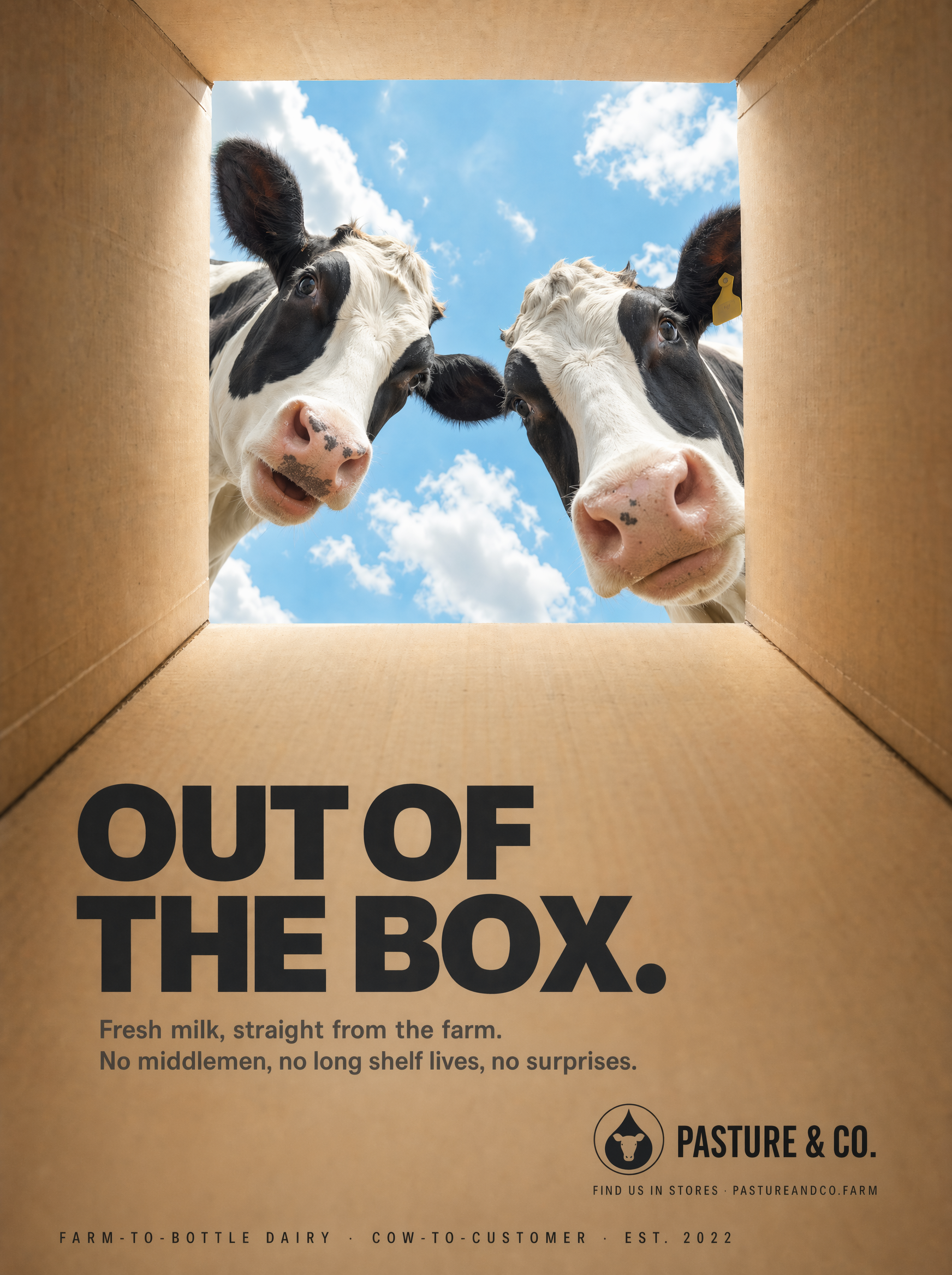

Most disappointing AI-generated visuals fail for the same three reasons: the shot was never clearly imagined, the subject drifted between frames, and the result was published without a sound pass or a trim. The tools are not the problem. Generation is fast, cheap, and widely available; what separates scroll-stopping work from forgettable output is the process wrapped around it.
This guide covers that process: how to write a shot brief that survives iteration, how to choose between stills and motion for each beat, how to keep characters and worlds consistent, how to direct camera movement, and how to finish with sound and a quality check. Nothing here depends on one platform, because the specific models change faster than the craft.
Fifteen years ago, producing a striking frame required a camera, a lighting kit, a location, and a crew. Today it requires a sentence and a few seconds. When production cost approaches zero, the scarce resource becomes taste: knowing which of forty candidates is the one, and which nineteen seconds of a thirty-second generation are worth keeping.
That shift changes how you should spend your time. Prompting is only one step in a chain that includes brief-writing, anchoring, selecting, cutting, and mixing. Beginners spend almost all their effort on the step with the lowest ceiling. Professionals spread effort across the chain, and most of them spend more time editing and mixing than generating.
A useful mental model: you are not asking a machine to make art. You are briefing a very fast, very literal, very forgetful collaborator who has never seen your project. Everything you leave out, it invents. Everything you state twice, it tends to honor.
Build a written shot brief before you open a tool
The single highest-leverage habit is to write the brief in plain text before generating anything. A brief that could be handed to a human photographer, covering subject, action, environment, camera, light, and style, produces coherent frames. A one-line vibe prompt produces whatever the model defaults to.
The six slots
- Subject — who or what, with specifics: age, wardrobe, material, condition, expression.
- Action — what is happening at the exact instant of the frame.
- Environment — place, weather, time of day, relevant background elements.
- Camera — framing, angle, lens behavior, depth of field.
- Light — direction, quality, color temperature, source.
- Style — medium and reference language: editorial photograph, cel-shaded animation, matte painting, print ad.
Lock environment, light, and style for a scene, then vary only subject and action to build a sequence that feels like one world.
Reuse beats retyping
Keep briefs in a table with one row per shot and a status column. That file becomes both a prompt library and a production tracker: six weeks later, the same world can be regenerated in minutes instead of being rebuilt from memory.
State your exclusions
Add a standing block of negative constraints — no text or watermarks, no extra limbs, no plastic skin, no oversaturated halos — and append it automatically rather than retyping it every time.
Match the generation mode to the job
Stills, short clips, and long sequences are different technologies with different failure modes. Using the wrong one is the most common reason a project stalls.
Stills excel at composition, lighting, and material detail: fabric weave, rust, wet asphalt, brushed metal. They are also the cheapest way to explore a direction before committing to motion. Generate five to ten candidate frames, pick the one that reads best at thumbnail size, and treat it as the visual anchor for everything that follows.
Short clips handle single, well-defined movements well: a slow push in, a head turn, fabric in wind, water breaking. They struggle with sustained complex action and precise hand interaction. If a shot needs two distinct actions, split it into two shots; short movements generate more reliably and cut tighter anyway.
Long sequences are an editing problem, not a generation problem. Assemble short clips that each nail one beat, and let cuts, transitions, and sound carry the narrative. Attempting a continuous ninety-second generation in one pass almost always produces drift and morphing.
A quick way to decide: if you need to compare looks, generate stills. If you need atmosphere and motion, generate a three-to-five-second clip. If you need a story, open a timeline.
Prompt architecture that survives iteration
Front-load the important information
Generators weight earlier tokens more heavily. Put the subject first, then action, environment, camera, light, and style. A close-up of a woman in a wet wool coat stepping off a night bus, sodium streetlights, 35mm, shallow depth of field, outperforms the same details buried under three lines of style notes.
Describe causes, not moods
Words like beautiful, amazing, and high quality carry no information. Amber sodium streetlights, cracked terracotta, brushed aluminum, and cold blue window fill do. If you want a mood, describe what creates it rather than naming it.
Change one variable at a time
When a result misses, resist rewriting everything. Log what you changed and what improved. This feels slow for the first ten generations and is dramatically faster afterward, because you build a personal map of how the model responds.
Use structure, not volume
Most tools support light emphasis syntax, grouping, and separation of style from content. Three or four well-chosen clauses beat a paragraph of stacked modifiers, and a separable style clause means you can restyle a scene without regenerating its content logic.
Keep characters, products, and worlds consistent
Consistency is what separates a portfolio piece from a folder of unrelated experiments, and it is the part most worth systematizing.
Use image references where available. Supply two to four references of the same subject from different angles and lighting conditions, then describe only what changes. Reference-driven workflows reduce identity drift far more than any amount of text-only description.
Write an invariant sheet anyway. Keep a short list of distinguishing features — scar placement, jacket color, hair length, product finish — and repeat those words verbatim in every prompt. Details that matter should appear in text every single time, not only in a reference the model may under-weight.
Anchor worlds, not just people. Pick one or two frames that define the look of an environment, note the palette, light direction, and grain treatment, and reference them for every shot in that world. Ten shots sharing a palette read as art direction; ten drifting shots read as indecision.
Check before you batch. Generate one test frame and compare it to your anchor at thumbnail size. Color and lighting drift show up faster at small size than at full resolution. Fix the prompt before spending time on a full batch.
Direct motion and camera like an editor
State camera movement as instruction: slow dolly in, lateral truck left, static tripod, gentle handheld. Phrases like cinematic motion mean nothing to a generator. If your tool offers motion controls or trajectory inputs, use them alongside the text so the two reinforce each other.
Keep generated shots short — three to five seconds for most work. Longer clips accumulate artifacts and lose coherence, and every shot should earn its place: it establishes, it reveals, or it reacts.
To reduce the classic failures — faces melting, hands reforming, architecture bending — avoid extreme close-ups on hands unless the shot demands it, favor movements the model handles well such as turning, walking away, or broad gestures, skip rapid camera whips, and keep backgrounds simpler when character motion is complex. When a shot warps anyway, generate three alternatives and keep the cleanest instead of trying to salvage one broken take.
If you are mixing generated clips with live footage, match motion blur, grain, and color response. A short grade pass — lifted blacks, a touch of grain, unified color temperature — does more for believability than any prompt tweak.
Treat sound as half the production
Audiences forgive imperfect visuals far more readily than bad audio. A silent generated clip feels unfinished; the same clip with ambience and a considered music bed feels professional.
Build audio in three layers: ambience such as room tone, weather, or traffic to place the scene; spot effects such as footsteps, cloth, or a door to sync attention to action; and one music bed to carry emotional tone, ducked under any voice. Keep music simple. A single instrument or sustained pad usually outperforms a busy score on short clips.
Sync effects manually to the cut. Generated audio often drifts from the visual beat, so place the step, click, or impact on the exact frame the action lands. For synthesized dialogue, write for spoken rhythm rather than written prose, keep lines short, slow the pacing slightly, and add room reverb so the voice sits inside the space instead of floating above it.
The end-to-end workflow, step by step
- Write the brief — scene, shots, subject, style, one row per shot.
- Run a style test — two or three stills to confirm direction. Disposable by design.
- Lock anchors — hero frame, invariant sheet, palette notes.
- Draft the shot list — generate stills first; animate only the frames that earn it.
- Generate motion in batches — three variations per shot against the same brief.
- Select ruthlessly — keep the best take, discard the rest without regret.
- Assemble on a timeline — cut for rhythm and trim every shot to its strongest second.
- Add sound — ambience, effects, music, then dialogue.
- Grade and finish — unify color, add grain, check loudness consistency.
- Export every format you need — vertical, square, and widescreen from the same edit.
Time allocation matters as much as order. A workable split is roughly 20 percent brief, 30 percent generation and selection, 30 percent editing and sound, and 20 percent finishing and delivery. Beginners invert it, spending most of their effort on prompting and almost none on sound or assembly, which is exactly why the result looks unfinished.
Quality control: the pre-publish checklist
Run every finished piece through the same list, because the failures are predictable.
- Anatomy and detail: hands, teeth, ears, jewelry, signage text — inspect at full resolution.
- Continuity: wardrobe, props, hair, time of day, direction of light across shots.
- Motion artifacts: warping, flicker, unstable edges, background drift.
- Audio: clipped peaks, uneven loudness, effects landing off the beat.
- Small-screen legibility: does the frame read on a phone at arm's length?
- Delivery specs: aspect ratio, resolution, duration, caption safe areas, file size.
Common mistakes worth naming: choosing from a pile of variations by exhaustion rather than criteria; describing moods without their causes; adding more modifiers to fix a compositional problem; skipping sound because the visuals are not final; and treating one good frame as proof the workflow scales.
FAQ
How many prompt variations before moving on? Three. If three misses do not clarify what is wrong, the problem is usually in the brief, not the wording.
Do I need separate tools for images and video? Not necessarily, but strong results often come from generating stills in one place and animating them in another. Judge tools by output quality, not by feature coverage.
How do I keep a character consistent across many shots? Reference images from multiple angles, an invariant sheet repeated verbatim, and a thumbnail comparison against your anchor before each batch.
Is generated audio good enough for final delivery? Ambient beds and effects usually are. Dialogue benefits from a cleanup pass — de-essing, leveling, room tone — or recording separately.
What resolution and duration should I target? Match the destination platform's native specs and keep clips as short as the story allows. Short clips generate more reliably and edit more flexibly.
What if a client wants changes months later? Keep the brief and anchors. You can regenerate the same visual language on demand instead of reverse-engineering it.
Where this goes next
The durable skills here — structured briefs, anchors, short shots, layered sound, disciplined selection — describe how visual storytelling works rather than how any one model behaves. Models will keep improving at anatomy, motion, and clip length. Your judgment about what to make, what to keep, and how to assemble it will keep being the difference between output that looks generated and work that looks directed. Start with one scene, one brief, and three shots, and finish it completely, including sound.
