
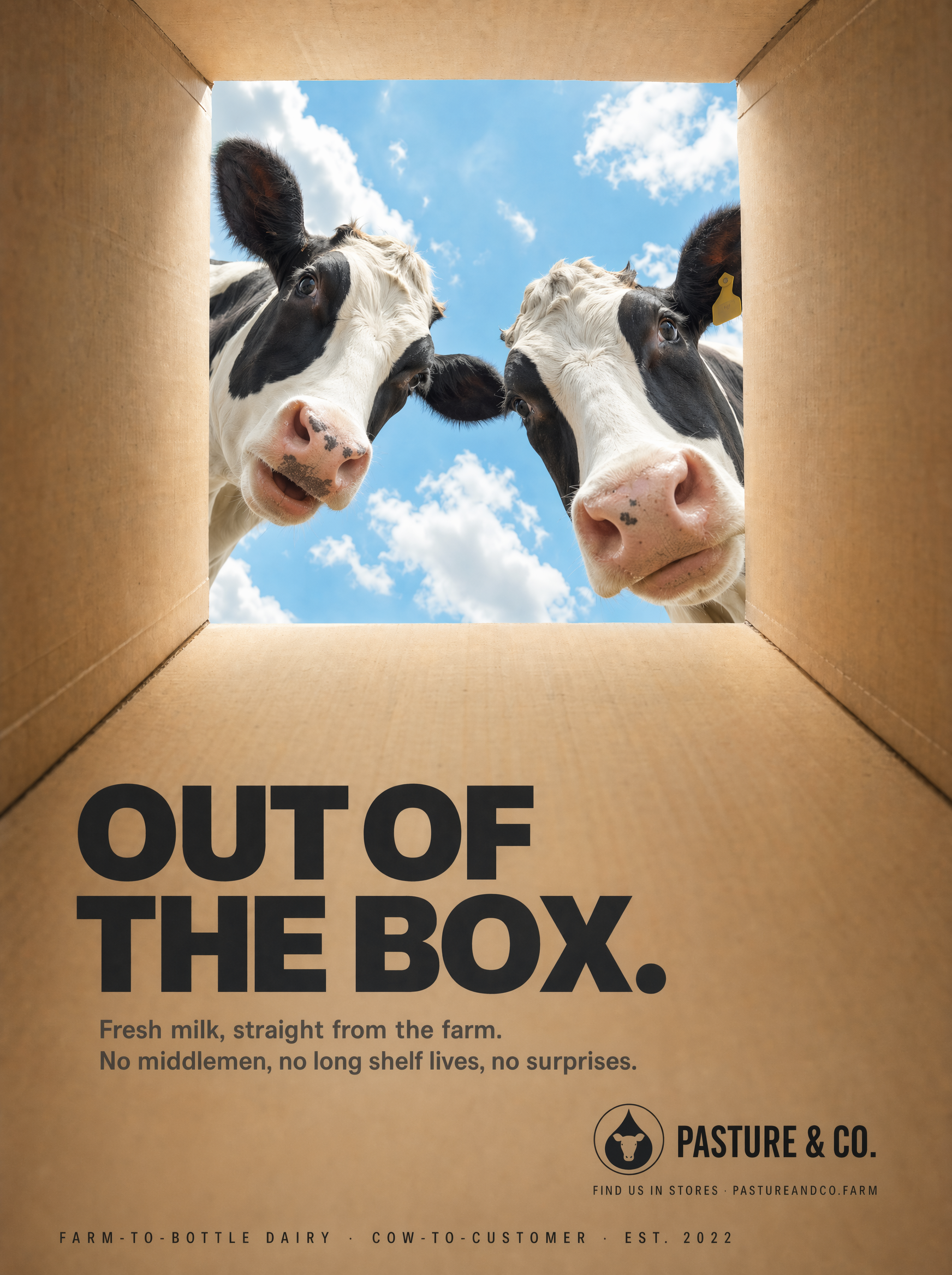



Advertising has always been a game of attention. In 2025, that game is being played at a speed and scale that human teams alone can no longer sustain. Consumers now expect messages tailored to their interests, delivered in formats that feel native to each platform, and refreshed faster than ever. Artificial intelligence has moved from a supporting tool to the center of campaign design, audience analysis, and content distribution. Brands that understand how to integrate AI into their advertising workflows gain a real competitive edge; those that treat it as a buzzword risk falling behind.
This guide breaks down the most effective AI strategies for advertising: producing video at scale, reaching audiences with precision, optimizing creative in real time, and navigating the ethical and regulatory questions that come with the territory. Each section includes practical guidance you can apply to your own campaigns.
Why AI Moved to the Center of Advertising
The shift did not happen overnight. For years, marketers used AI quietly — for bidding algorithms, predictive scoring, and basic automation. What changed recently is that AI now touches the entire advertising lifecycle, from the first spark of an idea to the final performance report.
Three forces are driving this transformation. First, consumer expectations: people respond to messages that feel personal, and generic creative is increasingly ignored. Second, channel fragmentation: campaigns must run across search, social, video, and display, each with its own format, tone, and best practices. Third, creative velocity: the half-life of a digital ad is short, and testing many variations quickly is now a requirement, not a luxury. AI addresses all three — personalization, multi-channel coordination, and rapid iteration.
The business case is also clear. AI reduces the cost of producing creative assets, shortens the time from idea to campaign, and improves performance through continuous optimization. In competitive markets, these advantages translate directly into market share.
AI-Powered Video Production: Speed and Scale
Video is the most engaging ad format, and it is also historically the most expensive to produce. AI has changed that equation. Text-to-video and image-to-video technologies have matured to the point where brands can generate realistic, on-brand video assets in minutes rather than weeks.
For a brand team, this means three practical opportunities. First, concept testing: generate multiple versions of an ad — different scenes, different moods, different voiceover styles — before committing to a full production. Second, localization: adapt a single master video into regional variants with different languages, cultural references, or product angles. Third, volume: produce enough creative variants to feed testing frameworks that need dozens of versions per campaign.
A practical video production workflow with AI looks like this. Start with a clear creative brief that defines the message, the audience, and the visual direction. Next, generate a library of base assets — hero images, product shots, character visuals — using AI image tools. Then use video generation models to bring those assets to life: motion, camera moves, and scene transitions. Finally, assemble the best takes in an editing tool, add audio, captions, and branding, and export platform-ready versions.
Quality matters, however. Consumers can quickly tell when content is cheaply generated, and authenticity affects trust. The winning approach is hybrid: use AI to generate raw material and explore directions, then use human judgment to select, refine, and finish. The goal is not to replace the creative team but to multiply its output.
Reaching the Right Audience: Micro-Segmentation and Personalization
Mass messaging is dead. In 2025, the most effective campaigns treat the audience not as a single block but as a collection of micro-segments defined by behavior, intent, and context.
AI excels at this. Machine learning models can analyze behavioral data — past purchases, browsing patterns, engagement history, and even real-time signals — to predict which message will resonate with which person at which moment. Instead of one campaign for a broad demographic, you can run dozens of tailored variants, each speaking to a specific need state.
The practical implications are significant. Creative that reflects the viewer's context — their language, their region, their stage in the buying journey — consistently outperforms generic creative. Personalization is not just about the product; it is about the entire experience of the ad: the opening frame, the tone of the copy, the call to action, and even the format.
Predictive modeling takes this a step further. Instead of reacting to what audiences have already done, models estimate future behavior — who is likely to churn, who is ready to buy, who responds to which incentive. Advertising budgets flow toward the highest-probability opportunities, and creative is matched to predicted intent. This is not science fiction; it is standard practice among the fastest-growing brands.
Dynamic Creative Optimization
Dynamic creative optimization (DCO) is where personalization meets automation. A DCO system assembles ads in real time from modular elements — headlines, images, videos, offers, and calls to action — selecting the combination most likely to perform for each individual impression.
The advantage over manual testing is speed. Where a traditional A/B test might compare two versions over several weeks, a DCO engine can test dozens of combinations across thousands of impressions and learn which elements drive conversions. Over time, the system allocates more budget to winning combinations and less to losers.
DCO works best when the creative assets are genuinely modular. This is where AI generation becomes an enabler: instead of hand-producing each variant, teams generate a library of assets with AI and let the optimization engine assemble them. The combination of generative AI and DCO creates a flywheel — more assets, more tests, more learning, better performance.
There are practical limits to keep in mind. A DCO system is only as good as its assets and its data. If the asset library is thin, the system cannot explore meaningfully. If the audience data is poor, the personalization will be shallow. Invest in both before expecting miracles from the engine itself.
A/B Testing and Iteration Loops
Advertising success has always been measured by experimentation, but AI compresses the iteration cycle dramatically. What used to take weeks — designing, producing, and launching a test — can now be done in days or hours.
The key is to build testing into the workflow rather than treating it as an afterthought. Before a campaign launches, define the hypotheses: which message, which visual, which audience. During the campaign, monitor performance in near real time. Afterward, feed the learnings back into the next round of creative.
One caution: with more variants comes the risk of over-testing small differences that do not matter. Focus on testing meaningful variables — the core message, the offer, the visual concept — rather than superficial details. The goal of iteration is insight, not activity.
It also helps to standardize the testing process. Keep a central log of what was tested, what the results were, and what you concluded. This institutional memory compounds over time: each campaign starts from the accumulated knowledge of the last, instead of reinventing the wheel.
Content Distribution and Cross-Platform Automation
Creating great ads is only half the battle; getting them in front of the right people at the right time is the other half. AI-powered distribution automates the tedious parts of multi-channel publishing.
Modern campaigns run across search, social, video, and display — often in multiple regions and languages. Manually resizing, reformatting, and scheduling every variant is a full-time job. Automation handles the mechanical work: adapting aspect ratios, generating platform-specific captions, and scheduling posts for optimal engagement windows.
Cross-platform synchronization is where the real leverage appears. A single campaign asset can be transformed into a vertical video for one platform, a square version for another, and a text-and-image ad for a third — all from one master file. Performance data flows back from every platform into a central dashboard, so you can see which creative wins where and reallocate budget accordingly.
The key is to keep the human in charge of strategy while automation handles execution. Define the campaign goals, the audience, and the guardrails; let the system handle the repetitive distribution work; and review the aggregated results to make the next strategic decision.
Ethics, Transparency, and Data Governance
AI-powered advertising raises legitimate questions about transparency, privacy, and fairness, and brands that ignore them do so at their peril.
Transparency is about disclosure: when AI-generated content is used, especially in contexts where consumers might reasonably assume human creation, clear labeling protects trust. This is not just a legal question; it is a brand question. Consumers reward honesty and punish deception.
Privacy is the more complex challenge. Personalized advertising depends on data, and regulations — GDPR in Europe, KVKK in Turkey, and similar frameworks elsewhere — constrain how that data can be collected, stored, and used. Compliance is not optional. The practical approach is to design for privacy from the start: collect only what you need, store it securely, honor consent, and give users control over their data.
There is also the question of creative ownership. When an AI model generates an asset, who owns the output? The answer depends on the tool's terms of service and on local copyright law. Before scaling AI-generated creative, review your agreements and establish clear internal policies about what is acceptable for your brand.
Finally, consider fairness. Models trained on biased data can reproduce bias in targeting, excluding or overexposing certain groups. Regular audits of campaign delivery and messaging help catch problems before they become reputational damage.
Measuring ROI Across Channels
AI changes advertising economics, and your measurement should reflect that. Traditional ROI calculations capture the cost of production and media; AI-enabled campaigns should also account for the value of speed, learning, and flexibility.
A practical framework starts with unit economics: cost per acquisition, return on ad spend, and lifetime value. But AI campaigns generate a second kind of value — data. Every test teaches you something about your audience, and that learning compounds across campaigns. Measure not only what the campaign sold, but what it revealed.
Multi-channel attribution remains imperfect, but AI improves it by integrating signals across platforms and modeling the customer journey more accurately. Use the insights to reallocate budget toward the channels and creatives that truly drive results.
Set a regular reporting rhythm. Weekly, review the metrics that matter; monthly, review the learning log and adjust the strategy. This cadence keeps the flywheel turning and prevents small problems from growing into budget leaks.
Building an AI-Ready Team and Workflow
The technology matters, but the organization matters more. Teams that succeed with AI advertising share several practices.
First, they treat AI as a craft to be learned, not a magic button. The best results come from people who understand both the tool and the marketing problem. Invest in training and hands-on experimentation. Second, they standardize workflows: asset libraries, naming conventions, testing templates, and review processes. Standardization is what makes speed sustainable. Third, they keep humans in the decision loop for judgment calls — brand voice, ethical boundaries, and big strategic bets.
Finally, start small. Pick one campaign, one channel, and one AI capability — video generation, say, or DCO — and run a controlled experiment. Measure the results against a baseline, document what you learn, and expand from there. The brands that win will not be the ones with the most impressive technology demos; they will be the ones with the most reliable systems for turning AI capability into campaign performance.
FAQ
Q1. Do I need a large budget to use AI in advertising? — No. Many capable tools are available at modest cost, and you can start with one use case. The bigger investment is team time for learning and workflow design.
Q2. Will AI replace creative teams? — Not in the foreseeable future. AI multiplies what creative teams can produce and frees them from repetitive tasks, but strategy, taste, and judgment remain human strengths.
Q3. Is AI-generated advertising content legal? — Generally yes, but you must respect the tool's terms of service, disclose AI use where required, and ensure you have rights to any source material.
Q4. How do I handle privacy regulations? — Work with your legal team, collect only necessary data, honor consent, and choose tools with strong compliance practices. Privacy by design is the safest approach.
Q5. What should I measure first? — Start with the metrics that connect to revenue: cost per acquisition, return on ad spend, and conversion rate. Add learning metrics once the basics are stable.
Conclusion
AI has transformed advertising from a discipline of craft and intuition into one of craft, data, and speed. The practical strategies in this guide — AI-powered video production, micro-segmentation, dynamic creative optimization, disciplined iteration, ethical data use, and honest measurement — form a coherent system for modern brand growth. The technology is accessible; the differentiator is execution. Start with one campaign, build the workflow, measure honestly, and scale what works.
