
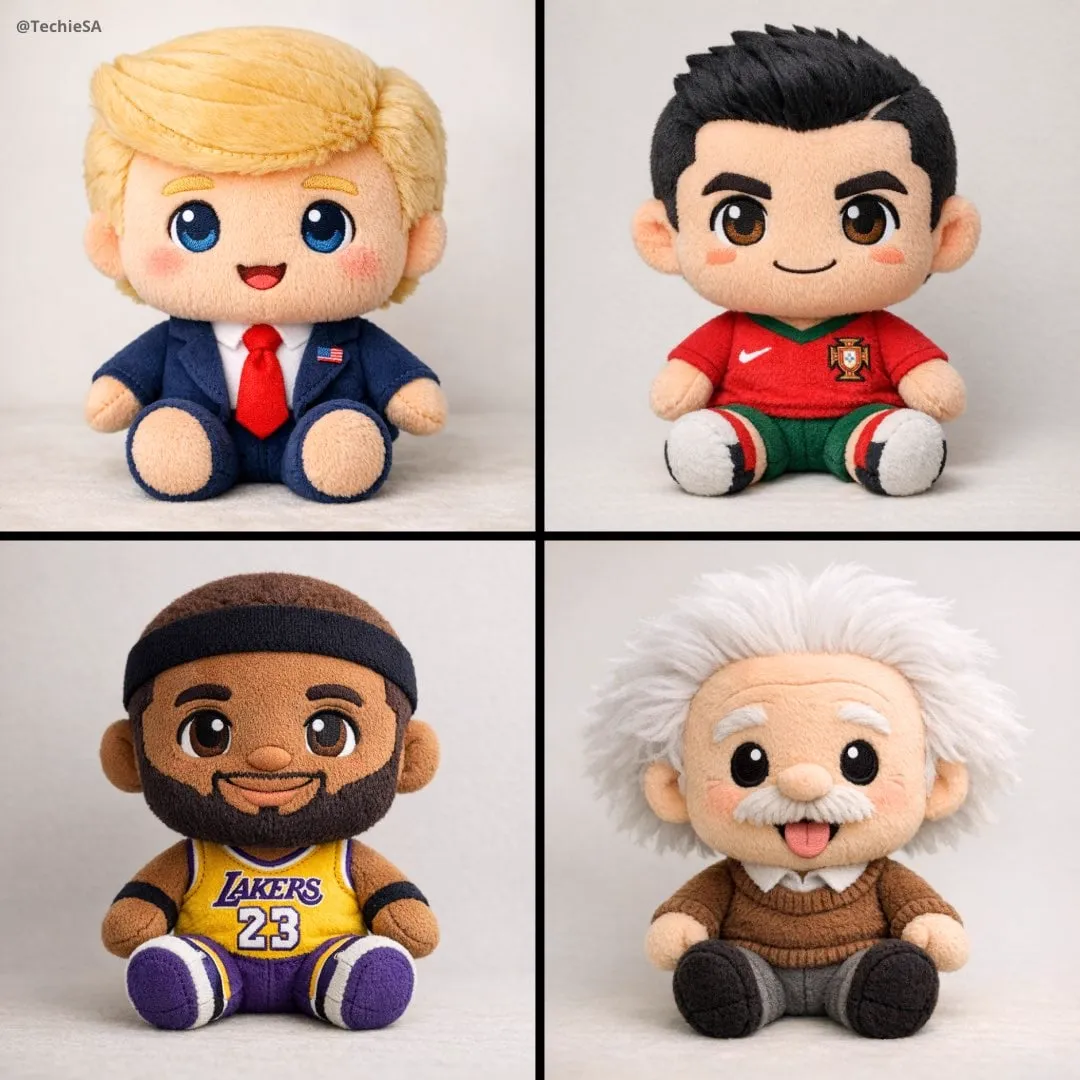
Short-form video has become the default surface for brand discovery, and the volume of clips required to stay visible keeps climbing. Teams that once shipped two posts a week now need dozens of variants across platforms, languages, and audience segments. That pressure is what pushed automated influencer marketing from a novelty into a production discipline: a repeatable system for creating a consistent on-camera persona, generating clips at scale, and testing them against real performance data.
This guide walks through the whole pipeline — persona design, scripting, generation, localization, quality control, and measurement — with the decision criteria and failure modes that matter. It is tool-agnostic on purpose. The workflow survives whatever generator you happen to use this quarter.
Why Automated Influencer Marketing Changed the Production Math
Human creator partnerships still deliver the strongest trust signals, but they come with structural constraints: limited availability, rising rates, scheduling friction, and inconsistent output quality across a long campaign. An AI-driven approach inverts those constraints. The persona never cancels, never changes haircuts between shoots, and produces a localized variant in a new language without a reshoot.
The economics are the obvious draw. Once a persona model and a production template exist, the marginal cost of clip number fifty is a fraction of clip number one. That matters because short-form performance is fundamentally a volume game with a long tail: most clips underperform, a small number break out, and the only reliable way to find the breakouts is to publish enough well-constructed attempts.
But the volume argument only works if consistency holds. An audience that notices the face shifting between videos, the voice changing timbre, or the wardrobe resetting every clip will stop treating the persona as a person and start treating it as an ad. The whole system lives or dies on continuity.
There is also a disclosure reality. Most major platforms expect synthetic media to be labeled, and audiences are increasingly literate about it. The teams that handle this best do not hide the AI nature of the persona — they make it part of the brand story. A clearly disclosed virtual host with a defined personality outperforms a poorly disguised one almost every time.
The Four Layers of an AI Influencer Pipeline
Think of the system as four layers stacked on top of each other. Skipping a layer is the most common reason campaigns stall after a promising first week.
Layer 1 — Strategy and audience mapping
Before any generation happens, define who the persona speaks to and what job it does. A virtual host for a skincare brand answers different questions than one for a B2B analytics tool. Write down three to five recurring content pillars — for example: myth-busting, product demo, customer objection, behind-the-scenes, trend reaction. Each pillar should map to a funnel stage. If every pillar is top-of-funnel entertainment, you will generate enormous reach and almost no conversion.
Layer 2 — Visual identity and persona design
This layer produces the reference assets: face, body proportions, wardrobe sets, signature accessories, default lighting, and voice profile. Treat it like casting plus costume design. The output is a persona bible — a document plus an image and audio reference folder that every future generation must match.
Layer 3 — Production and generation
Here you turn scripts into clips: shot lists, camera language, b-roll, captions, music, and edits. This is where automation earns its keep, because the same shot template can be reused hundreds of times with different scripts and hooks.
Layer 4 — Distribution, testing, and iteration
Publishing is not the end. Every clip is an experiment. Tag each asset with its pillar, hook type, and variant so that after twenty or thirty posts you can see which combinations actually hold attention. The feedback loop feeds back into layer 1 and layer 2 — sometimes the persona needs a wardrobe adjustment, sometimes an entire pillar should be retired.
Designing a Persona That Survives Repetition
Consistency is easier to design in than to repair later. Start by locking the variables that viewers recognize instantly: face structure, hair, skin tone, eye color, and the two or three wardrobe pieces that appear in most clips. Then define the variables that can rotate without breaking recognition: background location, outfit variations, accessories, and lighting mood.
Build a reference sheet with at least eight to twelve angles of the same face in consistent lighting — front, three-quarter left, three-quarter right, profile, slight low angle, slight high angle. These images become your comparison set. Whenever new generations come back, place them side by side with the reference sheet at thumbnail size. If the face reads as a different person when shrunk to a phone screen, reject it. Small-screen recognition is the only test that matters.
Voice deserves the same rigor. Decide on pace, pitch range, accent, and verbal tics. A persona that says the same three or four signature phrases across clips builds familiarity faster than one that always sounds generic. Record a short voice reference and keep it with the visual assets.
Finally, write the persona's boundaries. What will this character never talk about? Which claims are off-limits? Which competitors are never named? Boundaries prevent the slow drift that turns a clean brand voice into something inconsistent and occasionally embarrassing.
Scripting for Short-Form: Hook, Proof, Payoff
Most weak AI-generated videos are not weak because of the visuals. They are weak because the script gives the viewer no reason to stay past the first second.
Use a three-beat structure. The hook is a single sentence that creates tension, contradicts a common belief, or names a specific problem. The proof is one concrete demonstration, number, or before-and-after. The payoff is the resolution plus a low-friction next step.
Keep one idea per clip. If your script has the word "also" in it more than once, you are probably trying to fit two videos into one. Split it.
Write for the ear, not the eye. Read every script out loud before generating. Sentences that look fine on a page often collapse when spoken at the pace short-form demands. Aim for roughly 90 to 140 words of spoken copy for a 30-second clip, depending on pacing and pauses.
Design the visual beats alongside the words. Mark where the shot should change, where text should appear on screen, and where a demonstration needs a close-up. A script with visual beats built in generates far more usable footage than a wall of dialogue.
Generating Clips: Shot Lists, Prompt Patterns, and Camera Language
A shot list converts a script into generation tasks. A typical 30-second clip might contain six to nine shots: an opening medium shot of the persona speaking, two or three cutaways to product or environment, one close-up detail, one reaction shot, and a closing frame with the call to action.
Camera language is where output quality separates. Vague prompts produce vague footage. Specify shot size (wide, medium, close-up), angle (eye level, slightly low, overhead), movement (static, slow push in, handheld drift, orbit), lens feel (shallow depth of field, wide environmental), and lighting (soft window light, warm practical, hard directional). These descriptors are not decoration — they determine whether a clip feels like a produced ad or a stock montage.
Motion control is the second lever. Small, motivated movement reads as professional. Large, unmotivated movement reads as artificial. When in doubt, ask for less movement: a slow push in on a static subject often outperforms a complex camera move that introduces visual artifacts.
Generate in batches rather than one clip at a time. Produce three to five variations of each shot with slightly different framing, then edit the best takes together. This costs little extra time and dramatically reduces the chance that a single flawed take derails the whole video.
Keep a prompt library. When a shot works, save the exact description with a note about what made it work. Over a few months this library becomes the most valuable asset in the system — more valuable than any single generator subscription.
Localization Without Losing the Persona
Localization is often the single biggest return on an automated pipeline, because the same script can serve multiple markets without reshooting anything. But there is a right way and a lazy way.
The lazy way is auto-dubbing the English audio and burning in translated subtitles. It works for information-dense content and fails for anything personality-driven, because tone, humor, and rhythm do not survive literal translation.
The better approach is layered. First, adapt the script culturally rather than translating it word for word — change the reference points, the examples, and the objections that matter locally. Second, regenerate the spoken audio in the target language with the persona's voice profile preserved as closely as possible. Third, localize on-screen text properly, including right-to-left layout for Arabic and Hebrew scripts and different line-breaking rules for Japanese and Chinese.
Dialect matters more than language. A single Arabic script that reads naturally in one market can feel stilted in another. If you are targeting multiple regions, budget for separate script adaptations rather than one shared translation.
Track which localizations actually perform. It is common to discover that a smaller market outperforms the primary one on engagement, which should change where you invest production effort next quarter.
Quality Control: The Pre-Publish Checklist
A formal checklist saves more embarrassment than any amount of taste. Run every clip through the same sequence before it leaves the editing room.
Identity checks come first: does the face match the reference sheet at thumbnail size? Is the hairline, jawline, and eye spacing consistent with previous clips? Are the hands anatomically plausible, especially in gestures and product holds? Are teeth and mouth shapes natural during speech?
Technical checks come next: lip sync tolerance, audio levels normalized across the whole catalog, no clipped consonants, captions timed to speech rather than to the waveform, safe margins for platform UI overlays, and correct aspect ratios per destination.
Brand checks close it out: logo placement, color accuracy, spelling of product names, consistent pronunciation of the brand, correct legal disclaimers, and a visible synthetic-media disclosure where the platform requires one.
Finally, do a phone test. Watch the clip on an actual phone at arm's length with the sound at half volume. If the hook still lands and the captions are readable, ship it. If not, fix the hook before touching anything else.
Measurement: What to Track and What Misleads You
Vanity metrics feel productive and change nothing. Views and follower counts are useful context, not decision inputs. Track these instead:
- Hook rate: the percentage of viewers still watching after three seconds. This is the single best predictor of whether a clip will scale.
- Hold rate: average watch time divided by clip length. Below roughly 40 percent usually means the middle sags.
- Saves and shares: the strongest signals that content is genuinely useful rather than merely seen.
- Click-through and conversion rate, segmented by content pillar rather than aggregated across the account.
- Comment sentiment: read the comments, do not just count them. Complaints about realism or disclosure are early warnings worth acting on.
Compare like with like. A myth-busting clip and a product demo have different natural benchmarks, so segment reporting by pillar before drawing conclusions. And give every test enough volume — three posts is an anecdote, thirty is a pattern.
It also helps to separate creative variables from distribution variables. If a clip underperforms, was the hook weak, or was it published at a bad time to a cold audience? Log both so you do not misattribute the result.
Common Mistakes and How to Avoid Them
Chasing realism above all else. Audiences forgive stylization far more readily than they forgive the uncanny. A slightly stylized persona with a strong voice often outperforms a hyper-realistic one that occasionally glitches.
Generating before scripting. Volume without structure produces a large folder of unusable footage. Script first, then generate to the script.
Skipping the persona bible. Six weeks in, nobody remembers which wardrobe set is canonical, and consistency collapses.
No disclosure. Beyond platform policy, undisclosed synthetic media is a trust liability that compounds the moment it is discovered.
Treating every platform identically. Vertical framing, pacing, caption style, and sound conventions differ. Re-edit rather than cross-post.
Over-automating the edit. Captions and cuts benefit from automation; rhythm and pacing still benefit from a human pass.
Ignoring the comments. The comment section is the cheapest audience research available.
Scaling before a pillar works. Prove one content pillar before building a factory around it.
FAQ: Practical Questions Before You Build
How many clips do I need before I can judge whether this works?
Plan for at least thirty published clips spread across three or four pillars. Anything less and you are guessing.
Can one persona serve multiple products?
Yes, if the products share an audience and the persona's expertise is plausible for all of them. Stretching a skincare host into automotive content breaks the character.
How do I keep voice consistent across languages?
Lock the pace, pitch range, and signature phrases as a spec, then adapt the script around those constants rather than translating literally.
What is the realistic production time per clip once the system exists?
After the persona and templates are built, a 30-second clip typically takes two to four hours including scripting, generation, editing, and quality control. The first ten clips take far longer.
Should the audience know the host is AI?
Yes. Disclose it clearly and make it part of the brand's identity. Transparency turns a potential objection into a differentiator.
What is the best way to start a pilot?
Pick one audience, one product, one persona, and three content pillars. Produce five clips per pillar over two weeks, publish on a fixed schedule, and review hook rate and hold rate before deciding to expand. Keep the pilot small enough that a failure is instructive rather than expensive, and document every prompt and script so the second run is faster than the first.
Automated influencer marketing is not a shortcut around strategy. It is a way to execute a strategy at a volume that human-only production cannot match. Build the persona carefully, script before you generate, hold a hard quality bar, and let the performance data decide what gets scaled.
