

Search behavior and video feeds now feed each other. A phrase someone types into a search box tends to show up as a spoken hook in the videos they are recommended minutes later. That link is the reason keyword research still pays off for creators who have never written a blog post, and the reason AI research tools have become a normal part of a video workflow rather than a novelty.
This guide walks through a complete, repeatable process: finding trending phrases, grouping them by meaning, scoring them, turning them into hooks and scripts, handing the script to a generation pipeline, publishing with the right metadata, and measuring what actually worked. It is written for creators, small marketing teams, and solo editors who publish video regularly and want research to do more than fill a spreadsheet.
Why Search Demand Still Decides Which Videos Get Watched
Recommendation systems do not invent demand. They amplify it. When thousands of people search the same phrasing in the same week, the platform reads that as a strong topic signal and begins testing related videos with similar audiences. A creator who matches the phrasing gets a head start. A creator describing the same idea in different words competes for the same attention with worse odds.
The practical consequence is that keyword research no longer stops at titles and descriptions. It shapes the topic you pick, the hook you say out loud in the first five seconds, the on-screen text in the opening frame, the chapter names, the captions, the file names, and the follow-up videos you queue next.
Consider a channel about home espresso. The head term espresso machine review is saturated and vague. A clustered research pass surfaces narrower phrases such as why my espresso tastes sour, espresso ratio for light roasts, and portafilter basket size explained. Each implies a different viewer, a different kind of visual proof, and a different retention curve. The first needs diagnostic footage shot close to the machine. The second needs a scale and a timer visible on screen. The third needs labeled comparison shots. Bundling all three into one video produces a muddled result that satisfies nobody and ranks for nothing in particular.
Short-form video hides the keyword layer more effectively than long-form, but it does not remove it. The phrase is usually spoken in the first two seconds, printed on screen, and repeated in the caption. Long-form video is more forgiving about phrasing but far less forgiving about structure, because viewers arrive with a specific question and leave the moment the video stops answering it.
The useful mental model is this: research tells you what problem the viewer already knows they have. Your job is to meet that problem with the shortest credible path to a resolution.
What an AI-Assisted Research Stack Actually Does
AI tools in this space are not magic. They compress four tasks that used to consume an afternoon each. Knowing which task you are outsourcing matters more than the logo on the tool.
Autocomplete and question mining
Harvest every suggestion, related search, and People Also Ask variant for your seed terms. The value is not the list itself but the modifiers. Watch for how, why, best, versus, for beginners, not working, and too. Modifiers reveal intent: comparison, troubleshooting, purchase, or learning. Sort harvested phrases by modifier type before you do anything else.
Semantic clustering instead of single keywords
A model can group five hundred phrases into thirty meaning-based clusters in seconds. String overlap is a poor grouping method because it merges unrelated phrases and splits related ones. Meaning-based grouping is what prevents cannibalization, where three of your videos fight for the same query and all three underperform. Give every cluster a human-readable name and one primary phrase. That name becomes the working title of the video.
Trend velocity and seasonality
Volume is a lagging indicator. Slope is a leading one. A phrase with modest volume that has doubled over ninety days is usually a better bet than a flat phrase with ten times the volume. Plot two lines for each cluster: search interest over time and upload volume over time. When interest rises and upload volume stays flat, you have a window. When both rise together, you are already late unless your production is fast.
Format and competitor gap analysis
Pull the top ten results for the primary phrase and record four things: format, runtime, whether the question is answered in the first thirty seconds, and the production level. Then read the comments. Questions asked repeatedly in comments, and never answered by the video, are the most reliable gap signal available. That is where a follow-up video comes from.
| Signal | Where it comes from | Decision it drives |
|---|---|---|
| Modifier type | Autocomplete and question mining | Whether the video is a tutorial, comparison, or explainer |
| Cluster count | Semantic grouping | How many videos the topic should become |
| Trend slope | Ninety-day interest history | Whether to publish this week or next month |
| Comment questions | Competitor comment sections | What the follow-up video covers |
| Production level of top results | Manual review | How much polish the video needs to compete |
A Repeatable Workflow: From Seed Topic to Ranked Keyword List
Step 1: Seed with viewer language, not industry language. Write ten phrases the way a frustrated viewer would type them at eleven at night. Avoid internal jargon. If your team says output pipeline and your viewer says export keeps failing, the seed is export keeps failing.
Step 2: Expand aggressively, then filter. Generate two hundred to one thousand candidate phrases. Remove anything with no plausible video format, anything that is purely informational in a way a text page answers better, and anything outside your credible expertise.
Step 3: Cluster and name. Group into twenty to forty clusters. Every cluster gets a name, a primary phrase, and two to five supporting phrases. If a cluster name cannot be said naturally in a spoken hook, the name is wrong.
Step 4: Score each cluster. A simple weighted model is enough:
| Criterion | Weight | What a high score looks like |
|---|---|---|
| Intent clarity | 30 | You can state the viewer's problem in one sentence |
| Trend slope | 25 | Rising over ninety days, uploads lagging |
| Competition quality | 20 | Top results are outdated, vague, or off-format |
| Production feasibility | 15 | You can shoot or generate it with available assets |
| Series potential | 10 | It naturally produces three or more follow-ups |
Score each cluster from one to five, multiply by the weight, and sort. Anything above roughly seventy percent of the maximum becomes a candidate for the next four weeks.
Step 5: Map each cluster to a format. Tutorial, comparison, teardown, listicle, story-driven explainer, or short-form hook. Format is a research decision, not a creative mood. A troubleshooting cluster wants a diagnostic structure. A comparison cluster wants a decision table. An explainer cluster wants a myth-first structure.
Step 6: Write a one-page brief per video. The brief contains the primary phrase, supporting phrases, the viewer's stated problem, the promised outcome, the proof shot that makes the outcome credible, the hook line, the thumbnail text, and the follow-up video it sets up. One page. If it takes two pages, the video is trying to do two videos worth of work.
Translating Keywords Into Hooks and Scripts
A keyword list does not become a script by itself. The creative work is converting a phrase into a promise.
Hook patterns by intent
- How-to clusters: name the failure first, then the fix. Saying this is what causes the problem earns more attention than saying here is how to fix the problem.
- Comparison clusters: name the stake, not the products. The viewer cares about what they lose by choosing wrong.
- Explainer clusters: name the misconception. Starting with the thing most people believe, then dismantling it, holds attention better than a definition.
- Troubleshooting clusters: say the symptom exactly as it was searched. Precision here signals expertise faster than any credential.
Structuring the first fifteen seconds
Three beats, no more. Beat one states the problem in the viewer's words. Beat two states what the video will deliver and roughly how long it takes. Beat three is a proof glimpse, a shot of the result, the fixed machine, the finished frame, the working export. Skipping the proof glimpse is the most common reason a well-researched video loses viewers in the first ten seconds.
Keeping keyword language natural in speech
Speak the primary phrase once in the first fifteen seconds and once near the resolution. Do not repeat it mechanically; that reads as manipulation and viewers hear it immediately. Supporting phrases belong in chapters, on-screen labels, and the description, where they help the platform without hurting the experience.
A useful test: read the script aloud. If any sentence exists only to host a phrase, cut it or rewrite it. Research should shape what you say, not dictate the words like a scripted advertisement.
Turning a Script Into Shots, B-Roll, and Visual Prompts
The strongest bridge between research and production is a visual prompt formula. It keeps generated footage consistent and makes the shots reproducible when you need to regenerate a single clip six weeks later.
Use this order: subject, action, environment, lens, lighting, motion.
- Subject: who or what, with one distinguishing detail
- Action: the specific verb, not a general activity
- Environment: location plus one texture cue that grounds it
- Lens: wide, medium, close, macro, or shot on a phone
- Lighting: soft window light, single hard source, overcast, practical lamps
- Motion: slow push in, static, handheld follow, locked-off pan
Example for a cooking explainer: close-up of a stainless steel pan, butter melting and foaming, home kitchen countertop with a wooden cutting board, macro lens, soft window light from the left, locked-off shot. Every element earns its place. Vague prompts produce vague footage, and vague footage weakens the proof that makes a researched video credible.
Three consistency habits do most of the work:
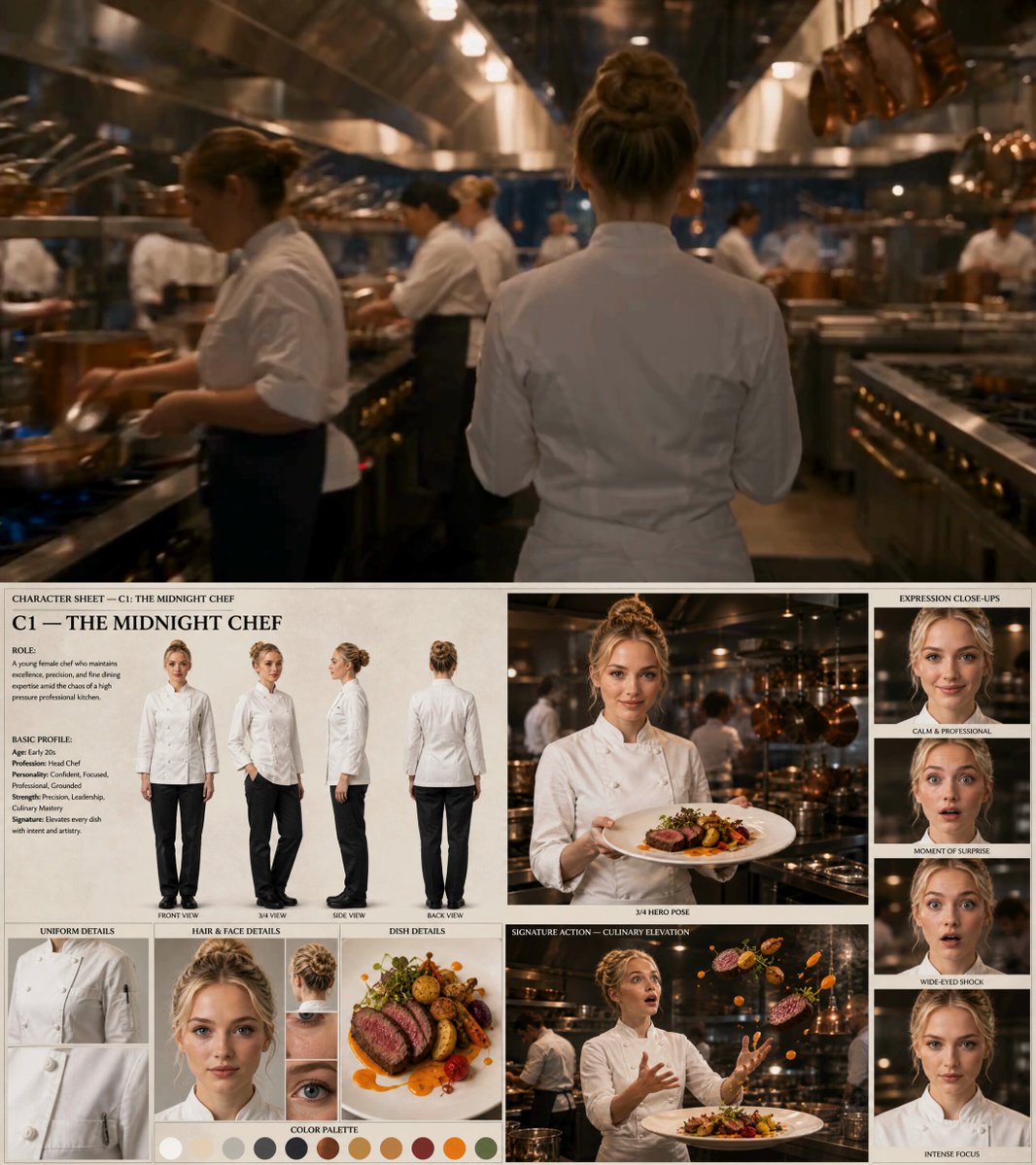
- Create a reference image for recurring characters or products and reuse it across every shot.
- Keep a shared style line, a fixed set of descriptive tokens, appended to every prompt in the project.
- Generate three variants per shot, pick one, and label the rest so you can revisit them when the edit changes.
Also plan your shot list against the script beats, not against the transcript. Each beat needs at least one shot that proves it. Beats without proof shots are the ones viewers skip, and skipped beats are what the retention graph shows you the following week.
Choosing the Right Generation Approach Per Video Type
Not every video deserves the same production approach. Match the approach to what the viewer actually needs from the footage.
| Video type | What matters most | Sensible approach | Acceptable trade-off |
|---|---|---|---|
| Tutorial with a real skill | Trust and clarity | Real footage plus generated inserts | Slightly slower production |
| Product or interface demo | Accuracy | Screen capture with generated transitions | Less cinematic polish |
| Faceless narrative | Visual consistency | Image-to-video with a locked reference | Fewer camera moves |
| Educational or data-heavy | Legibility | Motion graphics over generated backgrounds | Shorter runtime |
| Trend response | Speed | Templates, stock, and light generation | Lowest originality |
Three decision questions cut through most of the ambiguity. Does the viewer need to believe a real person did this? Does an object have to match reality exactly? Is being three days early worth a noticeable drop in quality?
If the answer to the first question is yes, keep a human on camera for the key beats and use generated footage for transitions, b-roll, and abstract explanations. If the answer to the second is yes, use screen recording or photographed assets rather than generated ones. If the answer to the third is yes, accept a template-driven look and revisit the video later with a better version once the trend has validated the topic.
The failure mode is applying one approach to every video. Channels that generate everything end up with a uniform texture that viewers recognize and skim. Channels that shoot everything run out of capacity and stop publishing. Mixing deliberately is what keeps both quality and cadence intact.
Publishing Details That Compound
Research that never reaches the metadata is wasted effort. These are the fields that carry the most weight and take the least time.
Titles. Front-load the primary phrase within the first four or five words. Keep the title under roughly sixty characters so it does not truncate on mobile. Do not promise something the video does not deliver, because the retention drop costs more than the click earns.
Thumbnails. Three to five words maximum, one focal subject, high contrast between subject and background. If the thumbnail text repeats the title verbatim, one of them is doing no work. Use the thumbnail to state the outcome and the title to state the topic.
Descriptions and chapters. The first two lines should restate the promise in plain language, because they appear in search results and previews. Add timestamps for anything over six minutes. Chapters also give you a natural place to use supporting phrases without stuffing the spoken script.
Captions and transcripts. Upload a corrected transcript rather than relying on automatic captions. This improves accessibility and gives the platform clean text to match against queries, which matters more for talk-heavy content than most creators assume.
File names before upload. Rename the export using the primary phrase in plain words. It is a small signal, but it costs nothing and keeps your archive searchable.
Series linking. If research produced a cluster with five videos, link them as a playlist and reference the next video inside the current one. Cluster-level watch time is what turns a single successful video into a durable topic position.
Pinned comment. Ask the exact follow-up question your research already surfaced. The answers become the next research pass with almost no additional work.
Measuring Results and Feeding the Loop
Research without a feedback loop degrades within a month. Five metrics are enough to manage the cycle.
| Metric | What it tells you | Action threshold |
|---|---|---|
| Three-second retention | Whether the hook matched intent | Below seventy percent, rewrite hooks |
| Average view duration | Whether the body kept the promise | Below forty percent, restructure |
| Click-through rate | Whether title and thumbnail agree | Below four percent, retest thumbnail |
| Search versus feed share | Whether the topic is demand-led | Mostly feed, revisit keyword fit |
| Saves and shares | Whether the video solved something | High saves, build follow-ups |
The routine that works is small and boring. Once a week, review the five metrics for the last three videos and write one sentence about what you would change. Once a month, re-cluster the phrases that came out of comments and search suggestions, and retire clusters that have stopped moving. Once a quarter, prune your list and pick the next batch of four topics.
The most common mistake at this stage is measuring everything and changing nothing. A weekly review with one decision attached beats a dashboard nobody reads.
Common Mistakes That Kill Keyword-Driven Video
Chasing head terms. Broad phrases have volume and no clear promise. The video becomes a survey of the topic and satisfies no specific viewer. Fix: build on clusters, not single phrases.
Stuffing phrases into the voiceover. Viewers hear it as filler and leave. Fix: one spoken use near the start, one near the resolution, everything else in metadata and on-screen labels.
One video per phrase without clustering. You publish five near-identical videos and split your own audience. Fix: one video per cluster, with the primary phrase as the anchor.
Ignoring locale and phrasing. Research done in one language or region often does not transfer. Fix: re-run harvesting per market instead of translating a finished list.
Mismatched hook and topic. The hook promises a comparison, the video delivers a tutorial. Fix: read the brief aloud and confirm the promise matches the format.
Generic thumbnails. Stock imagery with no outcome stated gets clicked less and watched less. Fix: show the before and after, or the fix itself.
No transcript. Talk-heavy videos lose usable text. Fix: correct and upload captions with every upload.
Publishing without a follow-up plan. A single video on a rising topic leaves the audience with nowhere to go. Fix: plan three videos per promising cluster before you publish the first.
Treating research as a one-time task. Trends rotate. Fix: schedule the monthly re-cluster and actually keep it.
FAQ
How many phrases should one video target? One primary phrase and two to five supporting phrases within the same cluster. More than that and the video loses focus; fewer and you leave discoverability on the table.
Do AI-generated videos rank as well as filmed ones? They rank when they answer the query better and hold attention longer. The production method is not the ranking factor. Credibility is, which is why proof shots matter more than polish for tutorial and troubleshooting topics.
How often should I refresh keyword research? Re-cluster monthly, re-score quarterly. If your niche moves fast, shorten the cycle. If it moves seasonally, align the review with the season rather than the calendar month.
What if a trending phrase is only hours old? Publish a short-form response first, because speed beats depth in the first day, then schedule the long-form version once you can add real proof and structure. Two assets, one cluster.
Do I need paid research tools? Not to start. Autocomplete, related searches, comment sections, and your own search history cover most of the daily work. Paid tools help mainly with volume, historical trends, and exportable datasets when you are managing many clusters at once.
How do I handle multiple languages or regions? Run the harvesting step separately for each market. Phrasing and intent diverge quickly, and translated lists routinely miss the way viewers actually describe their problem.
What is the fastest sign that research is working? Search-driven views rising alongside stable or improving three-second retention. Views alone can come from a lucky thumbnail; retention alongside search traffic means the topic and the promise matched.
Put together, the loop is straightforward: harvest in the viewer's language, cluster by meaning, score by slope and competition, write a one-page brief, turn the brief into a hook and a shot list, choose the generation approach that matches what the viewer needs to believe, publish with metadata that carries the phrases, and review five metrics every week. None of the individual steps is complicated. The advantage comes from running all of them on a schedule while most channels run one or two.
